
Real Heat for Harrison County's Long Winters.
Wood, gas, pellet, and electric fireplace resources for Bethany, Cainsville, Eagleville, Gilman City, Ridgeway, and every farm and rural address in between. Find the right unit for your home and connect with a trusted local hearth retailer.
Every Project Starts From One of These Five Situations
Farmhouse heating in Harrison County, Missouri.
Harrison County sits along the Iowa border in north-central Missouri, home to about 5,400 people spread across farmland, hardwood draws, and small crossroads towns. Winters here average 16°F on the cold nights, with a heating season on par with places like Sioux Falls, SD—not as brutal as Duluth or International Falls, but enough that furnaces and stoves both run hard from October into April. Oak, hickory, walnut, and maple grow throughout the county's woodlots and fence lines, and a lot of households still cut and split their own firewood off family ground rather than buying it.
This hub is a roll-up of hearth resources for the whole county—retailers, service techs, and fuel suppliers that cover Bethany and the outlying towns of Cainsville, Eagleville, Gilman City, Hatfield, Mount Moriah, New Hampton, and Ridgeway. Because the county's population is small and spread out, dealers and technicians often travel in from nearby regional centers to reach farm properties. Pick your fuel below for installation costs, unit recommendations, and dealer coverage specific to your town.
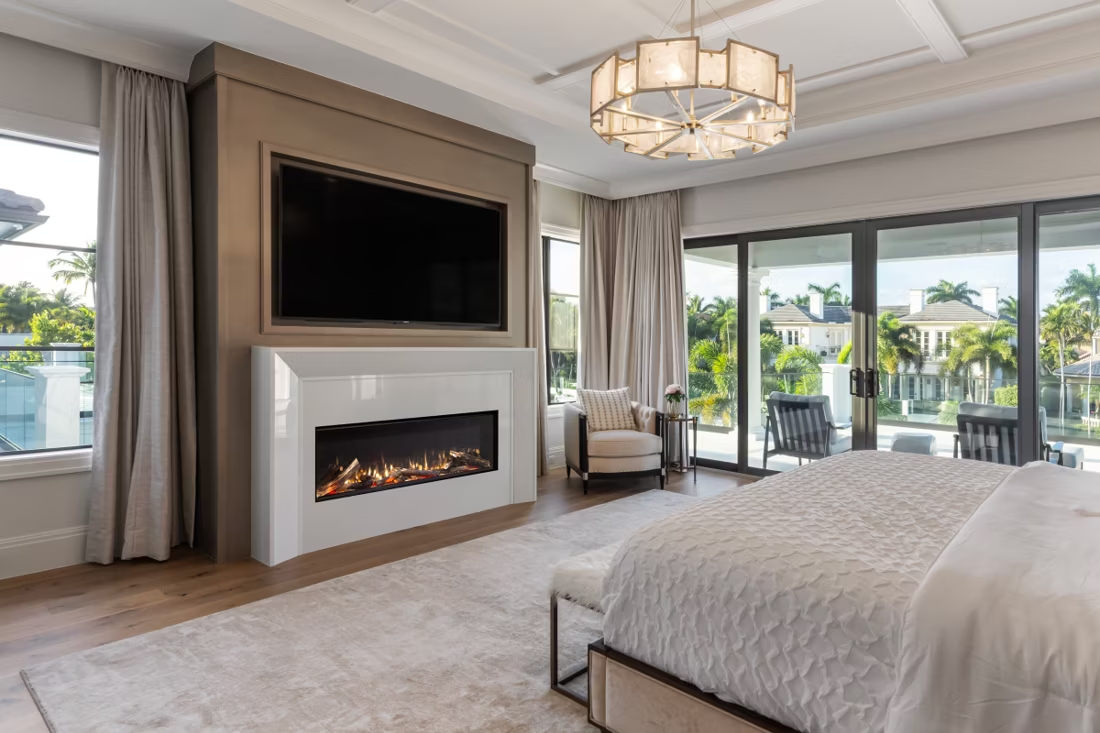
Four fuels. One honest answer for Harrison County.
Three steps. No salesperson until you're ready.
Tell us about your project
Your zip code, your situation, and the fuel you're leaning toward—or let the answers point you to one.
See what's actually available
The brands dealers within 100 miles genuinely carry—real options, never a catalog mirage.
Get your dealer & Project Guide
A trusted local dealer, plus the free Project Guide & Parts List that names every component of the job.
Frequently Asked Questions
Which fuel works best in Harrison County?
It depends on the home and how you already heat it. Wood is common on Harrison County farms—oak, hickory, walnut, and maple from woodlots and fence rows make for a hot, long-burning fire, and a wood stove or insert doubles as backup heat if the power goes out on a rural line during an ice storm. Gas is the convenience option; since most of the county runs on propane delivery rather than piped natural gas, a propane fireplace or insert gives instant heat without hauling wood, and it doesn't depend on a chimney draft. Pellet stoves are a solid middle ground for households that want wood-style heat without splitting and stacking—Lignetics and Indeck Energy Services both supply the region. Electric fireplaces work well as supplemental heat in a bedroom or den but aren't sized to carry a farmhouse through a January cold snap on their own. Plenty of Harrison County homes run two fuels—wood or propane as the main heat source, electric for ambiance in a room that doesn't need much extra warmth.
Do I need a permit to install a fireplace in Harrison County?
Within Bethany city limits, new wood stoves, wood inserts, gas appliances, and pellet stoves generally require a building permit through the city, and any propane line work needs to be done by a licensed gas-fitter. Outside city limits, in unincorporated parts of the county, permitting requirements are lighter and often handled at the point of septic or electrical work rather than a dedicated hearth permit—but it's still worth a call to the Harrison County Courthouse in Bethany to confirm before you install. Electric fireplaces usually don't need a permit unless you're hardwiring a built-in unit and adding a new circuit. Most local hearth retailers who install in the county already know which jurisdictions require what, so they'll typically handle the paperwork as part of the job.
Are there air quality restrictions on wood burning in Harrison County?
No—Harrison County doesn't have the kind of winter inversion or non-attainment issues that trigger burn advisories in some western basins. There's no local ordinance restricting when you can run a wood stove or fireplace. That said, new wood-burning appliance installations should still meet current EPA emissions standards, and a well-seasoned load of oak or hickory (split and dried at least six months to a year) will always burn cleaner and hotter than green wood cut off the same fence row, regardless of any regulation.
Can one local hearth retailer handle all four fuel types?
Coverage varies more here than in a bigger county, simply because Harrison County's population is small and there isn't a hearth showroom on every corner. Some dealers based in or near Bethany carry a mix of wood, gas, and pellet units with electric as a smaller line item; others focus more narrowly and refer out for fuels they don't stock. If you're comparing fuel types side by side, it's worth checking which retailer on this hub lists all four before you drive in, since some multi-fuel comparisons may mean visiting a dealer based a bit further out in a neighboring county.
How does service work in rural areas of Harrison County?
Most chimney sweeps and gas techs serving Harrison County are based in or near Bethany and drive out along the county's farm-to-market roads to reach outlying properties around Cainsville, Eagleville, Gilman City, and Ridgeway. Expect a modest travel charge for calls well outside Bethany, and expect scheduling to run tighter in fall—August through October is the best window to book annual sweeping or gas inspection before the first hard freeze. If your place is on a gravel road that gets rough in winter, it's worth flagging that when you book, since some techs prefer to finish rural routes before the first snow.
What's the typical cost range for fireplace installation across all fuel types in Harrison County?
Wood stove or insert installation: roughly $4,000–$8,500 for a typical farmhouse install, more if new chimney or hearth pad work is needed. Propane fireplace, insert, or stove: roughly $4,000–$9,500, with the gas line and tank hookup often driving the higher end for homes that don't already have propane service to the house. Pellet stove or insert: roughly $4,000–$7,000 installed. Electric fireplace: $200–$2,500 for the unit itself, with $300–$1,000 in labor for anything beyond a plug-and-play wall unit. Exact numbers depend on your home's existing setup—see the county + fuel pages above for cost detail tied to specific local dealers.
Can a fireplace actually lower my heating bill?
Yes—by creating a comfort zone. A furnace heats every square foot of the house just to warm the one room you're in; a gas fireplace on low burns roughly a sixth of the gas a typical furnace does. Set the furnace around 55–60 degrees as a baseline, then heat the rooms your family actually uses. Families who heat this way commonly save $20–$60 a month.
Can I install a fireplace myself?
If you're putting a fire in your house on purpose, it's best to work with an expert. Unless you're genuinely experienced in framing, gas line, vent pipe, and the national code on clearances to combustibles, have a professional do it—and ideally the same company that sells you the fireplace, so warranty, service, and liability all live under one roof.
I know I want a fireplace—where do I actually start?
Do two things today: snap a photo of the wall or fireplace you want to transform, and take a tape measure to the space—width, height, depth. Those two artifacts answer most of a hearth professional's first questions. Then settle fuel (wood, gas, pellet, or electric) and set a realistic budget: $3,900–$5,500 covers fireplace, vent, and basic install for most homes.
What is an in-home preview and do I need one?
It's a visit where a hearth professional measures your space, confirms the model you picked actually works in your home, and walks the specs—framing, gas line, venting, finish work—before anything is ordered. Some details you just can't know until you see the house. Never make a down payment without one; it's the single most-skipped step that burns buyers.
Stove and Fireplace Dealers in Harrison County
Listings include WhyFire partner dealers, dealers we have verified as authorized for the brands we recommend, and established local businesses that carry hearth products. Every listing shows which one it is. The ones marked Preferred run on WhyFire's software, so they can show you real pricing and book your appointment right here. No manufacturer pays for placement. How we verify dealers →
Montana Log & Hearth, Llc.
Jamesport Stove & Chimney
Steinhauser Woodworks
Find your fireplace in Harrison County.
Pick your fuel below and we'll match you with a trusted local dealer, plus a free Project Guide & Parts List—the exact parts, vent kit, and recommended installer for your project in Harrison County.
Find Your Fireplace →