
Consistent, Low-Maintenance Heat for Ozark Winters.
Thermostat-controlled warmth for Battlefield homes, without the splitting and stacking. Find the right pellet stove or insert and connect with a trusted local dealer.
Every Project Starts From One of These Five Situations
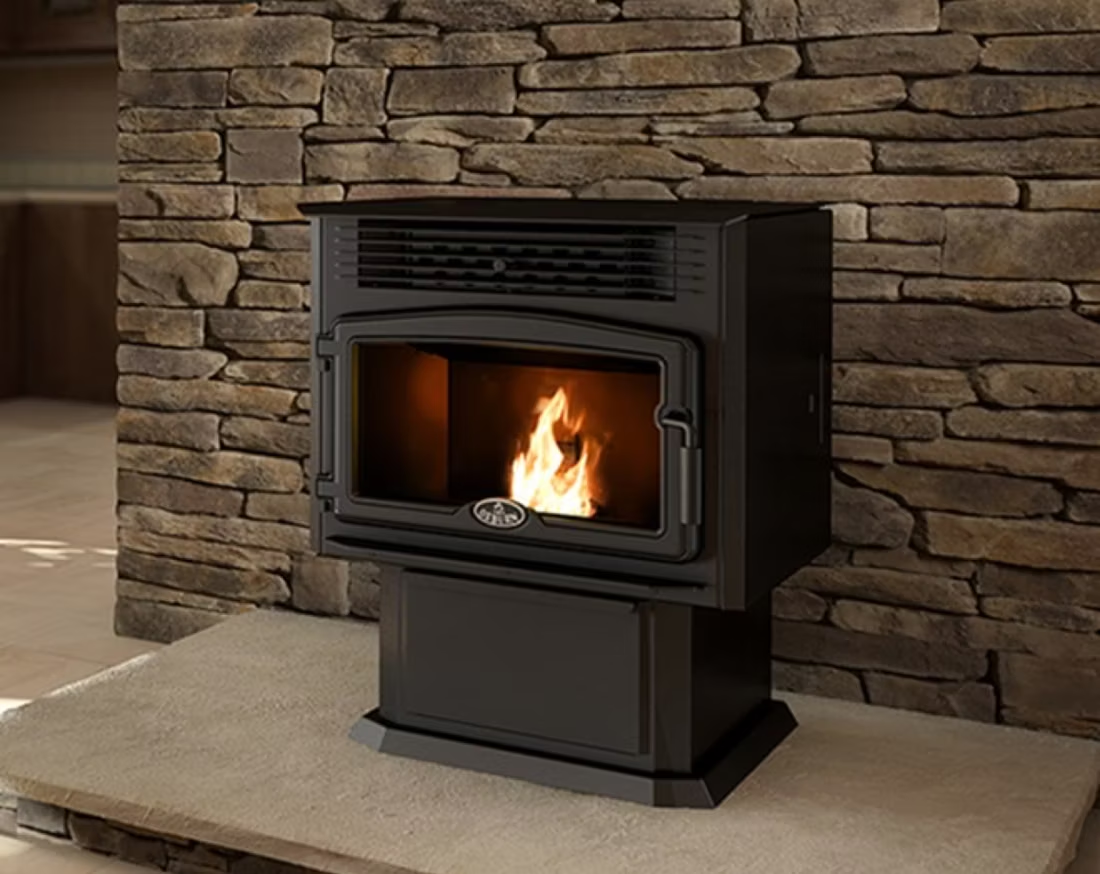
Load the hopper, set the thermostat, and let it run.
Battlefield sits on the Ozark Plateau in Greene County at about 1,280 feet, in climate zone 4A with a moderate winter heating load and average winter lows around 22°F. That's a real winter—cold enough that most homes need dependable supplemental or primary heat from November through February—but nowhere near the extremes of a place like Duluth, MN, where the winter heating load runs more than double. It's a climate well suited to pellet appliances, which are built to run efficiently and consistently without demanding constant attention on the coldest nights.
The Ozarks are hardwood country—oak, hickory, walnut, and maple all grow locally, which keeps traditional wood heat popular here. But a growing number of Battlefield homeowners choose pellet instead, trading the splitting, stacking, and chimney creosote of cordwood for a hopper that feeds itself and a burn that stays clean for weeks at a time. Regional pellet supply comes through brands like Lignetics and Indeck Energy Services, distributed at farm and hardware stores throughout the Springfield metro area. One thing worth planning for: pellet stoves run on electricity to power the auger and blower, and Battlefield is served by Ozark Electric Cooperative at roughly 14 cents per kWh—so a battery backup or small generator is worth discussing with your installer given the ice storms that occasionally hit this part of Missouri.
Three steps. No salesperson until you're ready.
Tell us about your project
Your zip code, your situation, and the fuel you're leaning toward—or let the answers point you to one.
See what's actually available
The brands dealers within 100 miles genuinely carry—real options, never a catalog mirage.
Get your dealer & Project Guide
A trusted local dealer, plus the free Project Guide & Parts List that names every component of the job.
Frequently Asked Questions
How much does a pellet stove installation cost in Battlefield?
Most pellet stove and insert installations in the Battlefield area fall between $3,000 and $6,000 installed, depending on whether it's a freestanding stove or an insert going into an existing fireplace, and whether new venting has to be run. Because Battlefield sits just outside Springfield, homeowners here have access to several established hearth dealers for competing quotes rather than a single local option—worth taking advantage of before committing to a unit.
What size pellet stove do I need for my home?
With Battlefield's moderate winter heating load and average winter lows near 22°F, most homes here don't need the largest BTU-output units sold—that's more relevant in harsher northern climates. A stove rated for 40,000–50,000 BTU comfortably heats an open floor plan of 1,500–2,000 square feet in this climate, while smaller units work fine as supplemental heat for a single living area. A local dealer will size the unit to your actual square footage, insulation, and ceiling height rather than a rule of thumb.
Pellet stove vs. wood stove—which makes more sense in Battlefield?
Given how much oak, hickory, walnut, and maple grows around Greene County, wood heat has an obvious appeal here—cheap or free fuel if you cut your own. But pellet stoves trade that for real convenience: no splitting, no stacking, no seasoning wood for a year before it's burnable, and a fraction of the creosote buildup, which means less chimney maintenance. Pellet stoves also burn more consistently overnight, since the auger feeds fuel automatically instead of requiring you to reload logs. If convenience and clean burning matter more to you than free fuel, pellet is usually the better fit for a Battlefield home.
Where can I buy pellets in the Battlefield area?
Regional brands like Lignetics and Indeck Energy Services supply much of the pellet fuel sold through farm and hardware retailers around Springfield and Greene County. Availability tends to be strongest in early fall—buying your season's supply before the first cold snap avoids the picked-over shelves that show up mid-winter. Your local hearth dealer can usually point you toward the closest reliable supplier and tell you which pellet brands burn cleanest in the stove you buy from them.
Will my pellet stove work if the power goes out?
Not without backup power. Pellet stoves rely on an electric auger to feed fuel and a blower to distribute heat, so a standard unit shuts down the moment power is lost—unlike a wood stove, which keeps burning regardless. Ozark Electric Cooperative service in Battlefield is generally reliable, but ice storms do occasionally knock out power in this part of Missouri for a day or more. If backup heat during outages matters to you, ask your dealer about battery backup systems or plan for a small generator sized to run the stove's auger and blower.
Do I need a permit to install a pellet stove in Battlefield?
Most jurisdictions in Greene County require a building permit for a new solid-fuel appliance installation, including pellet stoves, and the unit itself needs to carry current EPA certification. Requirements can vary slightly depending on whether you're inside Battlefield city limits or unincorporated Greene County, so it's worth confirming with the local building department before work starts. Most hearth dealers handle the permit application as part of the installation, so this rarely falls on the homeowner to manage directly.
How much maintenance does a pellet stove actually need?
Less than a wood stove, but not zero. Plan on emptying the ash pan every few days during regular use, cleaning the glass as needed, and doing a deeper cleaning of the burn pot, exhaust fan, and venting once a season—usually before the first cold stretch in fall. Most owners handle the routine cleaning themselves; an annual professional service visit, similar to a furnace tune-up, catches wear on the igniter, auger motor, and gaskets before it becomes a mid-winter breakdown.
Pellet stove vs. gas fireplace—which is right for my home?
Gas fireplaces offer instant on-off heat at the flip of a switch or remote, with no fuel to load or ash to empty, and many models run through a battery-backed pilot that works during a power outage. Pellet stoves require more hands-on involvement—filling the hopper, emptying ash—but deliver a real flame and radiant heat that many homeowners find more satisfying than gas, plus lower fuel costs than propane in areas without natural gas service. For a Battlefield home without a fireplace already in place, gas is often simpler to install; for homeowners who want the closest thing to a wood fire without splitting logs, pellet is the better trade-off.
What's the best pellet stove for a Battlefield home?
For most homes in this climate, mid-size units from Harman, Lopi, or Quadra-Fire cover the range from supplemental to whole-room primary heat without needing the largest output models built for far colder regions. Harman stoves in particular are known for handling a wider range of pellet quality without jamming the auger—a practical advantage if you end up switching between Lignetics, Indeck, or whatever brand is in stock locally that week. A dealer walkthrough of your home's layout and insulation will narrow it down to a specific model and size.
Why is my open fireplace making my house colder?
Open fireplaces suck—literally. As the fire burns, it consumes air your furnace already paid to heat and pulls it out through the chimney, so the house is actually colder after the fire goes out than before you lit it. An insert fixes this: it seals the chimney, puts fixed glass across the front, and turns that hole in your house into a real heat source.
Are pellet stoves loud?
They make some noise—there are two fans running plus an auger motor that turns as it feeds pellets. But there's a real range: premium models are engineered quiet, and the best offer a whisper-quiet mode you can comfortably watch TV next to. If noise matters in your room, ask to hear a stove running before you buy—it's a five-minute test that saves years of annoyance.
Can I install a fireplace myself?
If you're putting a fire in your house on purpose, it's best to work with an expert. Unless you're genuinely experienced in framing, gas line, vent pipe, and the national code on clearances to combustibles, have a professional do it—and ideally the same company that sells you the fireplace, so warranty, service, and liability all live under one roof.
How much should I budget for a fireplace?
For an average home—covering the fireplace, the vent pipe, and basic installation—a budget between $3,900 and $5,500 gives you a lot of options across wood, gas, and pellet. By the time you add finish work, gas line, and electrical, the average complete installation lands between $5,000 and $12,000 all-in. In a remodel or new build, a good rule is to put about 2.5% of the total project cost toward the fireplace.
Nearby Dealers
Hearth shops serving Battlefield and the surrounding area. Every listing shows whether it is a WhyFire partner, a dealer we have verified as authorized for the brands we recommend, or a local business carrying hearth products. No manufacturer pays for placement. How we verify dealers →
Meek's The Builder's Choice
Country Side Cottage
Aaron's Fireplace Co.
Hmi Fireplace Shop
Nixa Hardware
Smitty's Chimney Service
Abc Block And Brick
Missouri Stove & Chimney
Pellet Brands Stocked Around Battlefield
Manufacturers will point you to the nearest stocking dealer.
Find your pellet stove in Battlefield.
Tell us about your home and heating goals, and we'll match you with a trusted local dealer and send over a free Project Guide & Parts List—the exact equipment, vent kit, and recommended installer for your Battlefield pellet project.
Find Your Fireplace →