
Steady Warmth Without the Woodpile, Right Here in Fenton.
Fenton's winters dip into the low 20s most nights, and a pellet stove or insert delivers thermostat-controlled heat without the splitting, stacking, or ash of a wood setup. Find the right unit and get matched with a trusted local dealer.
Every Project Starts From One of These Five Situations
A thermostat-like fire for St. Louis County winters.
Fenton sits along the Meramec River in St. Louis County, in climate zone 4A with a winter heating load comparable to a typical Midwest season and winter lows averaging 22°F. That's a real Midwest winter—colder and longer than the Gulf Coast, but nowhere near the sustained sub-zero stretches you'd see in a place like Minneapolis or Duluth. It's exactly the kind of moderate-but-serious cold where a pellet stove earns its keep: enough heating demand to matter for a full season, without needing the 20-hour overnight burns that a place like Bozeman, Montana requires from a wood stove.
The hardwood forests of the Ozark foothills nearby—oak, hickory, walnut, and maple—supply much of the regional pellet market, including brands like Lignetics and Indeck Energy Services that are common on shelves at St. Louis-area hearth and hardware stores. Because pellet stoves rely on an auger motor and blower fan rather than a wood-fed flame, they draw a modest amount of electricity from Union Electric (Ameren Missouri)—at the local residential rate of about 12.6 cents per kWh, running a stove costs only pennies a day, though a battery backup is worth having for winter ice storms. With no regional air-quality non-attainment designation or burn-ban history in the St. Louis area, pellet stoves here run without the kind of curtailment restrictions homeowners face in smoggier basins out West.
Three steps. No salesperson until you're ready.
Tell us about your project
Your zip code, your situation, and the fuel you're leaning toward—or let the answers point you to one.
See what's actually available
The brands dealers within 100 miles genuinely carry—real options, never a catalog mirage.
Get your dealer & Project Guide
A trusted local dealer, plus the free Project Guide & Parts List that names every component of the job.
Frequently Asked Questions
How much does a pellet stove or insert installation cost in Fenton?
Most pellet stove and insert installations in the Fenton area run in the $3,000 to $6,500 range, with the spread driven mainly by venting. A pellet insert going into an existing masonry fireplace—using the chimney chase to run a smaller PL-vent liner—tends to land on the lower end. A freestanding pellet stove in a room without an existing chimney, needing a new through-wall vent kit and a fresh hearth pad, sits at the higher end. A local dealer can give you a firm number after seeing your fireplace or the wall you're venting through.
Is a pellet stove a good fit compared to burning wood in Fenton?
Fenton sits close to the oak, hickory, and walnut hardwood stands of the Ozark foothills, so cordwood is genuinely plentiful here—plenty of local homeowners still burn wood for that reason. But pellet stoves solve a different problem: no splitting, stacking, or hauling, no daily tending, and a hopper that can run 24-plus hours on a single fill with a simple thermostat dial. For homeowners in Fenton's newer subdivisions without easy wood storage, or anyone who wants heat that behaves like a furnace rather than a campfire, pellet is usually the better fit.
Where can I buy pellet fuel near Fenton?
Hardwood pellets from regional producers like Lignetics and Indeck Energy Services are the most common bags on shelves at St. Louis-area hearth shops and farm-supply stores, typically running $250 to $320 per ton depending on the season and how far ahead you buy. Buying a season's supply—usually 2 to 3 tons for an average Fenton home—in late summer before demand picks up is the standard way to avoid the price bump that hits in November and December.
Do I need a permit to install a pellet stove in Fenton?
Yes—new pellet stove and insert installations typically require a building permit through the City of Fenton Building Department, or through St. Louis County if your property falls outside city limits. The good news is that pellet venting is simpler to permit than a masonry wood chimney: most installs use a small-diameter PL-vent or PVC pipe running straight through an exterior wall, which local inspectors are very familiar with. Most hearth dealers handle the permit paperwork as part of the installation.
Will my pellet stove still work if the power goes out?
Not without a backup plan. Pellet stoves depend on electricity to run the auger motor and combustion blower, so a power outage from an ice storm on the Ameren Missouri (Union Electric) grid will stop the stove cold, unlike a wood stove. Many Fenton homeowners pair their pellet stove with a small battery backup unit or a portable generator sized for the stove's modest draw—most units pull under 500 watts, so even a compact backup can keep it running through a multi-hour outage.
What size pellet stove or insert do I need for my Fenton home?
For a typical Fenton home with a moderate-but-steady winter heating season and winter lows in the low 20s, a mid-size pellet stove rated around 40,000 to 60,000 BTUs will comfortably heat an open living area of 1,200 to 2,000 square feet. Smaller units in the 8,000 to 30,000 BTU range work well for a single room or as supplemental heat alongside central HVAC. Because Fenton's winters are moderate compared to points farther north, oversizing is the more common mistake—a local dealer can size the unit to your actual square footage and insulation rather than guessing high.
What's the difference between a pellet stove and a pellet insert?
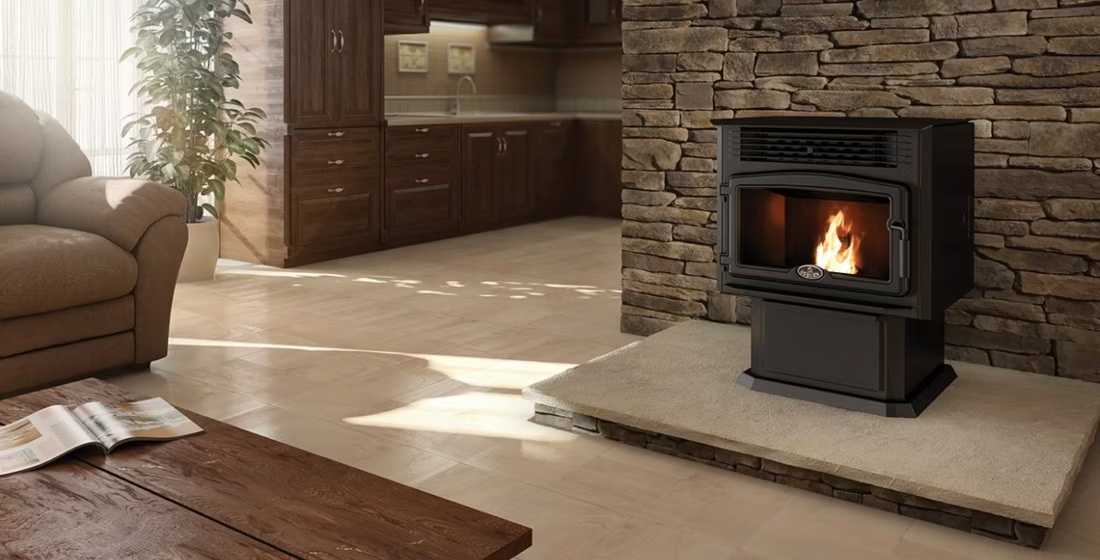
A pellet stove is a freestanding cabinet unit that sits on a hearth pad and vents through a wall or existing chimney chase—it can go almost anywhere in a room. A pellet insert is built to slide into an existing masonry fireplace opening, sealing off the old open hearth and venting up through the original chimney with a smaller stainless liner. Fenton has plenty of older homes with wood-burning fireplaces that never got much use; converting one of those to a pellet insert is a common project, since it keeps the existing look while adding real, adjustable heat output.
How much maintenance does a pellet stove need?
Pellet stoves need more frequent light maintenance than a wood stove needs deep cleaning. Plan on emptying the ash pan every few days during regular use, wiping down the burn pot weekly to keep the air holes from clogging with clinker, and cleaning the hopper and auger area a few times each season. Most manufacturers also recommend an annual professional service to check the blower motors, gaskets, and venting—budget $150 to $250 for that visit through a local hearth dealer.
Pellet stove vs. gas fireplace—which should I choose for my Fenton home?
Gas fireplaces offer instant on-off heat with no fuel storage and no moving parts to maintain, which is appealing if your home already has natural gas service. Pellet stoves burn a renewable, regionally produced fuel, often at a lower operating cost per BTU than propane or in homes without gas service, and many owners like the visible flame and the fact that they're not tied to a utility gas line. If your Fenton home already has gas plumbed in, that convenience is hard to beat for a primary living space; if you don't, or if you want a hedge against gas price swings, a pellet stove is a strong, low-hassle alternative to wood.
Why is my open fireplace making my house colder?
Open fireplaces suck—literally. As the fire burns, it consumes air your furnace already paid to heat and pulls it out through the chimney, so the house is actually colder after the fire goes out than before you lit it. An insert fixes this: it seals the chimney, puts fixed glass across the front, and turns that hole in your house into a real heat source.
Why is a fireplace insert so efficient?
An insert does two things: it seals the chimney completely, so you stop losing air you already paid to heat, and it radiates warmth into the room through the firebox and glass. Most add a heat-exchange fan that pulls cool room air underneath, wraps it around the hot firebox, and pushes it back out warm. Your home is more efficient before you've even lit the first fire.
Does a fireplace add value to my home?
On average, a fireplace adds back to the home about the same amount you spent installing it. Add the monthly savings from heating the rooms you actually use instead of the whole house—often hundreds of dollars a year—and the value case is strong before you even count what a fire does for how your family uses the room.
Can I install a fireplace myself?
If you're putting a fire in your house on purpose, it's best to work with an expert. Unless you're genuinely experienced in framing, gas line, vent pipe, and the national code on clearances to combustibles, have a professional do it—and ideally the same company that sells you the fireplace, so warranty, service, and liability all live under one roof.
Nearby Dealers
Hearth shops serving Fenton and the surrounding area. Every listing shows whether it is a WhyFire partner, a dealer we have verified as authorized for the brands we recommend, or a local business carrying hearth products. No manufacturer pays for placement. How we verify dealers →
English Sweep
Fireplace And Grill Center
Fireside Hearth & Grill Center
Arnold Stove & Fireplace Center
Forshaws
Savvy Surroundings
Summer Classics By Forshaw
Gas Appliance Service LLC
Villa Lighting Supply
Brighthouse Living
Pellet Brands Stocked Around Fenton
Manufacturers will point you to the nearest stocking dealer.
Find your pellet stove in Fenton, Missouri.
Tell us about your home and heating goals, and we'll match you with a trusted local Fenton-area dealer and send over a free Project Guide & Parts List—the exact parts, vent kit, and recommended installer for your pellet project.
Find Your Fireplace →