
Pellet stoves are rare in Dunklin County—here's how to get one done right.
With winter lows averaging 27°F and only about 3,800 heating degree days a year, most Dunklin County homes run on gas furnaces or electric heat. Pellet stoves are a niche choice here—but if you want one, we'll match you with a dealer who can actually source and install it.
Every Project Starts From One of These Five Situations
In Dunklin County, gas and electric heat already do the job.
Dunklin County sits in the flat cotton-and-soybean delta of Missouri's Bootheel, far from the Ozark hill country where wood and pellet heat are part of daily life. At a mixed-humid climate zone 4A with an average winter low of 27°F and roughly 3,803 heating degree days a season, winters here are noticeably milder than the northern-tier stretches where pellet stoves earn their keep as serious primary heat—think International Falls or Fargo territory, where HDD counts run two to three times higher. Between Kennett, Malden, and Campbell, most homes lean on gas furnaces or electric heat pumps from local utilities and cooperatives, and that's simply enough heat for a Bootheel winter.
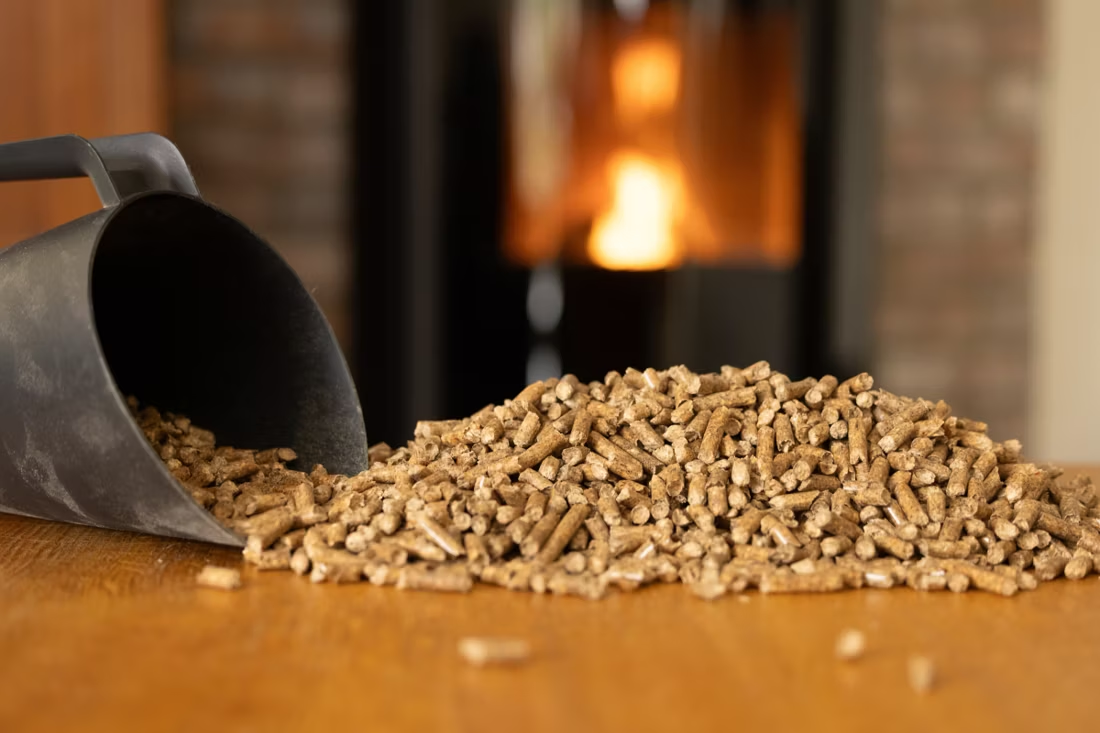
That doesn't mean pellet stoves are impossible here—regional brands like Lignetics and Indeck Energy Services do supply the wider mid-South market, and a handful of homeowners install pellet stoves for supplemental heat or ambiance, particularly in older farmhouses or outbuildings. But the local dealer base is thin, which means service, parts, and venting expertise usually come from a dealer covering a wider swath of southeast Missouri or northeast Arkansas rather than a shop down the street. If you're one of the few people in Dunklin County genuinely considering a pellet stove, working with a dealer who understands the logistics—pellet supply, hopper sizing, venting—matters more here than in a market where pellet heat is the norm.
Three steps. No salesperson until you're ready.
Tell us about your project
Your zip code, your situation, and the fuel you're leaning toward—or let the answers point you to one.
See what's actually available
The brands dealers within 100 miles genuinely carry—real options, never a catalog mirage.
Get your dealer & Project Guide
A trusted local dealer, plus the free Project Guide & Parts List that names every component of the job.
Frequently Asked Questions
Are pellet stoves actually available in Dunklin County?
Yes, but it's a niche market. Because most Dunklin County homes rely on natural gas or electric heat and winters are relatively mild (27°F average winter low, about 3,803 heating degree days), there isn't a dense network of local pellet stove dealers the way you'd find in a colder region. Regional pellet supply brands like Lignetics and Indeck Energy Services do serve the broader mid-South, so pellets themselves are obtainable, but the stove and installation side usually comes from a dealer who covers a wider territory across southeast Missouri or into northeast Arkansas rather than a shop in Kennett or Malden itself.
What does a pellet stove installation cost in Dunklin County?
Because pellet stoves are uncommon here, there isn't a well-established local price benchmark the way there would be for a gas furnace conversion. Nationally, a pellet stove install—unit, venting, and labor—typically runs $3,000 to $6,000, and that's a reasonable starting range to expect in Dunklin County. Because the nearest qualified installer may be based outside the county, factor in a possible trip charge or freight cost on the stove itself. A dealer consultation will give you a firm number based on your specific home.
Dunklin County has plenty of oak and hickory—why isn't wood or pellet heat more common?
It's a fair question given the hardwood forests along the St. Francis River bottoms—oak, hickory, walnut, and maple all grow in the area. But Dunklin County's economy and land use are built around row-crop agriculture, not timber, so there's no local tradition of firewood cutting or pellet milling the way you'd find in a forested region. Combine that with winters mild enough (27°F average low) that supplemental solid-fuel heat isn't a necessity, and most homeowners simply never had a reason to install a wood or pellet appliance—gas and electric heat handle the job fine.
Will a pellet stove work if the power goes out?
No—and this matters in a region that sees its share of spring storms and winter ice. Pellet stoves rely on an electric auger to feed fuel and a blower to circulate heat, so a power outage shuts them down unless you have a battery backup or generator running the unit. If backup heat during outages is your main goal, a wood stove or a gas fireplace with a battery-backed ignition system is a more reliable choice for Dunklin County than a pellet stove.
Do I need a permit to install a pellet stove in Dunklin County?
Most likely yes, though requirements vary depending on whether you're inside Kennett, Malden, Campbell, or unincorporated county land—check with your local building office before installation. Pellet stoves still require proper venting and clearance to combustibles even though they burn cleaner than cordwood, and a qualified installer will typically handle the permitting as part of the job. Given how few installers in the area regularly do this work, confirm your installer has actually pulled a solid-fuel appliance permit before.
Where do I buy pellet fuel in Dunklin County?
Don't expect a dedicated pellet fuel retailer in town. Regional brands like Lignetics and Indeck Energy Services supply the broader mid-South market, and bags typically show up at farm supply stores or big-box retailers in larger nearby markets like Poplar Bluff or Jonesboro rather than directly in Kennett or Malden. If you install a pellet stove, plan on stocking up a season's worth of bags at once rather than counting on frequent local restocking.
What size pellet stove do I need for a Dunklin County home?
Given the mild climate here—a 27°F average winter low and roughly 3,803 heating degree days—most Dunklin County homeowners who install a pellet stove are looking for supplemental heat in one room or a farmhouse addition, not whole-home primary heating. A small to mid-size unit (rated for 1,000-1,500 sq ft) is usually plenty for a den or living area, and sizing up further rarely makes sense given how few nights actually demand it. A dealer consultation will confirm based on your room layout and insulation.
Should I get a pellet stove or a gas fireplace instead?
For most Dunklin County homes, gas is the more practical answer. Natural gas and propane appliances are widely serviced locally, work with instant on-off convenience, and don't depend on hauling and storing bags of fuel. Pellet stoves offer a real-flame look and lower fuel cost per BTU in colder markets, but in a mild-winter area with a thin dealer network, the convenience gap tips clearly toward gas for anyone who isn't specifically drawn to the pellet-stove experience.
Is a pellet stove even worth considering in Dunklin County?
If you want ambiance, a supplemental heat source for one room, or you simply prefer the pellet-stove experience over gas, it can still be worth it—plenty of homeowners in mild-winter regions install one for exactly those reasons. What matters more here than in a colder market is finding a dealer who's genuinely equipped to size, vent, and service the unit, since it's not the default heating choice in the Bootheel. That's exactly the matching problem we solve—we'll connect you with a dealer who covers Dunklin County and knows how to do this correctly, not just whoever's closest.
How often does a pellet stove need cleaning?
A clean pellet stove is a happy pellet stove. Plan on cleaning the burn pot about once a week when you're burning regularly—ash and clinkers gum up the air holes just like a pellet barbecue. Most pellet stove problems trace back to skipped cleaning that nobody explained up front. Some designs make it easy with a trapdoor burn pot: pull a lever and the gunk drops into the ash pan.
Why is a fireplace insert so efficient?
An insert does two things: it seals the chimney completely, so you stop losing air you already paid to heat, and it radiates warmth into the room through the firebox and glass. Most add a heat-exchange fan that pulls cool room air underneath, wraps it around the hot firebox, and pushes it back out warm. Your home is more efficient before you've even lit the first fire.
How much should I budget for a fireplace?
For an average home—covering the fireplace, the vent pipe, and basic installation—a budget between $3,900 and $5,500 gives you a lot of options across wood, gas, and pellet. By the time you add finish work, gas line, and electrical, the average complete installation lands between $5,000 and $12,000 all-in. In a remodel or new build, a good rule is to put about 2.5% of the total project cost toward the fireplace.
What is an in-home preview and do I need one?
It's a visit where a hearth professional measures your space, confirms the model you picked actually works in your home, and walks the specs—framing, gas line, venting, finish work—before anything is ordered. Some details you just can't know until you see the house. Never make a down payment without one; it's the single most-skipped step that burns buyers.
Pellet Brands Stocked Around Dunklin County
Manufacturers will point you to the nearest stocking dealer.
Find your pellet stove in Dunklin County.
Pellet heat is a niche choice in Dunklin County, but if it's right for your home, we'll match you with a qualified regional dealer and send you a free Project Guide & Parts List—the exact parts, including the vent kit, and a dealer who can actually install it here.
Find Your Fireplace →