
Electric fireplace heat, sized right for Dunklin County homes.
From Kennett to Malden, Senath, and the farm country in between, electric fireplaces and inserts deliver instant, no-venting heat for Bootheel homes—matched with a trusted local dealer who wires it correctly the first time.
Every Project Starts From One of These Five Situations
Convenient heat for the Bootheel's mild but humid winters.
Dunklin County sits in the flat Missouri Bootheel, mostly under 300 feet of elevation and surrounded by cotton, soybean, and rice ground rather than woodland. Climate zone 4A means winters that average around 27°F at the low end and roughly 3,800 heating degree days—noticeably milder than the Ozark counties a couple hours west, and nothing close to the extremes of a place like Fargo or Duluth. Cold does arrive here, though, often with the ice storms the Bootheel is known for, and county housing stock runs the gamut from older farmhouses in Kennett and Senath to a large share of manufactured and mobile homes on rural lots.
That mix of mild HDD numbers, flat terrain with little accessible woodland, and a lot of manufactured housing is exactly why electric fireplaces are a standard, sensible choice here. There's no chimney to build, no clearance-to-combustibles calculation for wood framing, and no venting path to plan around—which matters in homes on piers or in additions where running a flue simply isn't practical. Power comes through either the City of Kennett's municipal electric system or SEMO Electric Cooperative out in the rural county, and either way an electric fireplace or insert plugs into the existing service without the gas line work that a natural-gas or propane unit requires. Wood and pellet heat, by contrast, barely register in Dunklin County—there's no national forest land nearby for cutting permits, and the humid, moderate winters don't create the demand for cordwood heat you'd see in the Ozarks or further north.
Three steps. No salesperson until you're ready.
Tell us about your project
Your zip code, your situation, and the fuel you're leaning toward—or let the answers point you to one.
See what's actually available
The brands dealers within 100 miles genuinely carry—real options, never a catalog mirage.
Get your dealer & Project Guide
A trusted local dealer, plus the free Project Guide & Parts List that names every component of the job.
Frequently Asked Questions
How much does it cost to install an electric fireplace in Dunklin County?
Plug-in electric fireplaces and freestanding stoves are the cheapest option—many run $200 to $800 and need nothing more than a standard 120V outlet, so there's effectively no install cost beyond delivery and setup. Built-in electric inserts or wall-mounted units that need a dedicated circuit typically run $1,500 to $4,000 installed, including a licensed electrician's time to run new wiring from the panel. Because there's no chimney, no flue, and no gas line, electric installs are consistently the least expensive fireplace option in the county—a fraction of what a vented gas or wood-burning install would cost.
Are electric fireplaces a good fit for manufactured and mobile homes in Dunklin County?
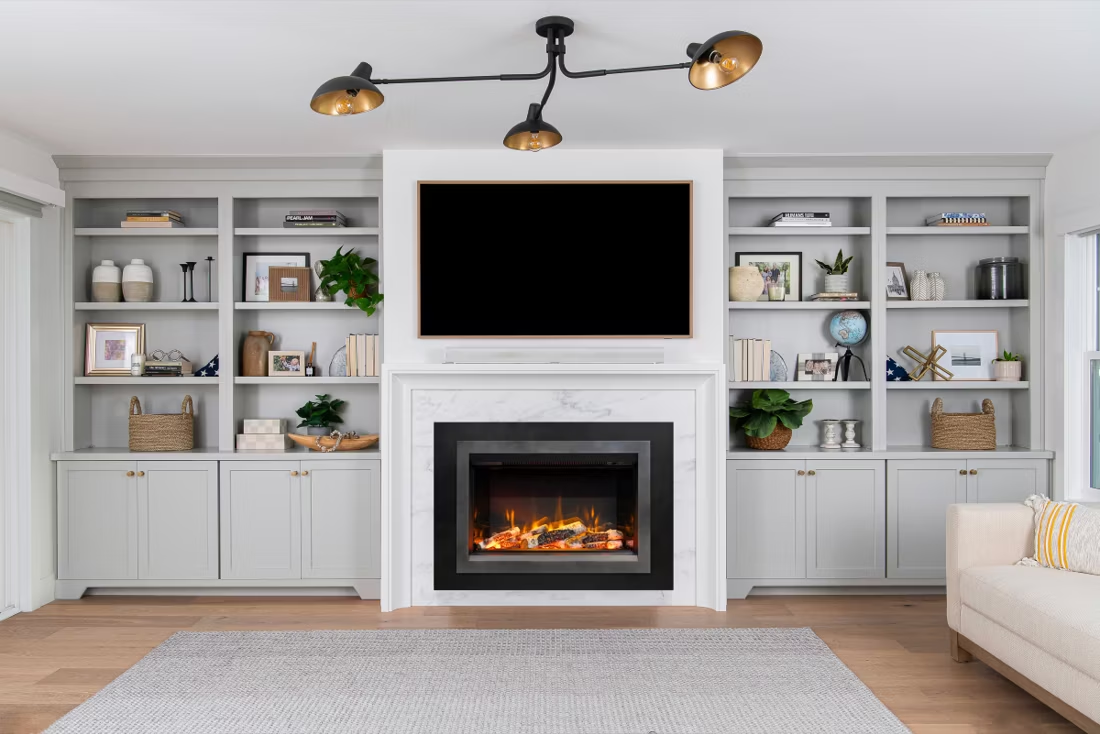
Yes, and it's one of the main reasons electric is such a common choice in this part of the Bootheel, where manufactured and mobile homes make up a large share of rural housing. Electric units don't require the clearance-to-combustibles distances or roof penetrations that wood stoves need, and they don't run afoul of HUD manufactured-home construction standards the way solid-fuel appliances can. Plug-in freestanding units are popular with renters and homeowners who want zero permanent modification, while insert-style units can be set into an existing fireplace surround or built-in cabinet opening without any structural work.
Will an electric fireplace keep my home warm during a winter storm power outage?
No—this is worth being direct about. Dunklin County has seen serious ice storms over the years, and any electric fireplace, whether it's on SEMO Electric Cooperative's rural lines or Kennett's municipal system, goes dark the moment the grid does. If outage resilience matters to your household, ask a local dealer about pairing the fireplace with a portable generator, or consider a propane unit with battery-backed ignition for a room where backup heat is a priority. For everyday supplemental warmth in a house with reliable power, though, electric performs exactly as advertised and needs no fuel storage or venting to worry about.
Do I need a permit for an electric fireplace install in Dunklin County?
A plug-in unit needs no permit at all—it's treated like any other appliance you plug into the wall. A built-in insert or wall unit that requires a new dedicated circuit is a different story: within Kennett, Malden, or Senath city limits, the electrical work needs a permit through the city, pulled by your licensed electrician. Dunklin County doesn't enforce a county-wide building code in unincorporated areas, but the work still has to meet National Electrical Code standards, and most reputable installers pull permits as a matter of course even where it isn't strictly required.
What's the difference between a plug-in electric fireplace and a built-in electric insert?
A plug-in unit is a freestanding or wall-mounted appliance that runs off a standard household outlet—it's the fastest and cheapest way to add electric heat and flame ambiance to a room, and it can move with you if you rent or relocate. A built-in electric insert is designed to be set permanently into a fireplace opening, a mantel surround, or a custom-framed wall cavity, usually wired to a dedicated circuit for full heater output. Inserts generally offer more realistic flame effects and higher, steadier heat output, which matters more in larger Bootheel farmhouses than in a single bedroom or den.
Electric vs. gas fireplace—which is right for my Dunklin County home?
Both are standard, workable choices here. Natural gas service is available within Kennett city limits for homes already on the line, and propane fills in across the rest of the rural county. Gas delivers stronger, whole-room heat output and, with the right ignition system, can keep working through an outage on battery backup—useful given the county's history with ice storms. Electric wins on simplicity and upfront cost: no gas line, no venting, and a much shorter path from decision to installed fireplace. Many homeowners here choose electric for a bedroom, sunroom, or secondary living space and reserve gas for the main living area if they want backup-capable heat.
How much does it cost to run an electric fireplace in Dunklin County?
Most electric fireplace heaters draw around 1,500 watts on their heat setting. Running one for a few hours an evening adds a modest amount to a monthly bill on either SEMO Electric Cooperative or Kennett's municipal electric rates—flame-only mode with the heater off uses only a trickle of power, closer to a nightlight. Because there's no fuel to buy, store, or haul, the ongoing cost is simpler to predict than wood or propane, even if the per-hour heat cost runs a bit higher than a wood stove burning free, self-cut oak or hickory.
Can an electric fireplace be my primary heat source in Dunklin County?
Generally no—with roughly 3,800 heating degree days and winter lows averaging around 27°F, most Dunklin County homes rely on a central heat pump or furnace as the primary system, with an electric fireplace layered in as zone heat for the room people actually live in. That's a reasonable strategy here: it lets you turn down the central thermostat and heat the living room or den directly on cold evenings without asking a single appliance to carry the whole house.
What about wood or pellet stoves in Dunklin County?
They're rare here, and it's worth saying plainly rather than pretending otherwise. Dunklin County's Bootheel geography is flat farmland—cotton, soybeans, rice—with little of the accessible woodland or public-land cutting permit infrastructure you'd find in the Ozark counties to the west. Local hardwoods like oak, hickory, walnut, and maple do grow in the county's bottomland stands, but there's not much of a wood-heating culture built around them, and the milder, humid winters don't push demand the way a harsher climate would. Pellet stoves are even less common, though bagged pellets from regional suppliers like Lignetics or Indeck Energy Services can be sourced for the occasional stove already in place. For the vast majority of Dunklin County homeowners looking to add supplemental heat today, electric and gas are the practical options.
Does an electric fireplace need a vent or chimney?
No—that's its superpower. An electric fireplace needs a wall and an outlet, period. No vent pipe, no gas line, no clearances to design around, which is why it works in bedrooms, offices, apartments, and walls where venting a gas or wood unit would be impractical or impossible. Installation is typically the simplest and least expensive of any fireplace type.
Can I put a TV above my fireplace?
Yes—with an asterisk. Fireplaces are hot and TVs don't like heat. Either put a mantel between them to deflect rising warmth, or choose a fireplace with heat-management technology that creates a cool zone on the wall above—the wall stays around 125 degrees, barely warm, while the room still gets full heat. If you like clean lines and don't want a mantel, heat management is the answer.
How much should I budget for a fireplace?
For an average home—covering the fireplace, the vent pipe, and basic installation—a budget between $3,900 and $5,500 gives you a lot of options across wood, gas, and pellet. By the time you add finish work, gas line, and electrical, the average complete installation lands between $5,000 and $12,000 all-in. In a remodel or new build, a good rule is to put about 2.5% of the total project cost toward the fireplace.
Does a fireplace add value to my home?
On average, a fireplace adds back to the home about the same amount you spent installing it. Add the monthly savings from heating the rooms you actually use instead of the whole house—often hundreds of dollars a year—and the value case is strong before you even count what a fire does for how your family uses the room.
Find your electric fireplace in Dunklin County.
Tell us about your home and we'll match you with a trusted local dealer, plus a free Project Guide & Parts List—the wiring, the insert, and the right size for your space.
Find Your Fireplace →