
Find the right fireplace for your Dunklin County home.
Fireplace resources for every town in Dunklin County—from Kennett to Malden, Senath to Hornersville. Connect with a trusted local hearth retailer who knows what actually works in the Bootheel.
Every Project Starts From One of These Five Situations
Mild-winter heating in Missouri's Bootheel.
Dunklin County sits in the flat alluvial farmland of Missouri's Bootheel—cotton, soybean, and rice country with a humid subtropical climate (zone 4A). Winters here are noticeably milder than in the northern half of the state: average lows around 27°F and a winter heating season with less than half the heating load of a place like Fargo, ND. That mild climate changes which fuels actually make sense. Gas and electric fireplaces are the practical choices for most homes here, since the heating season is short enough that a full wood-burning setup rarely pencils out as primary heat. Wood-burning fireplaces still exist in older Dunklin County homes, fueled by local oak, hickory, walnut, and maple from field windbreaks and river-bottom timber, but they're typically used for ambiance or backup during ice storms rather than day-to-day heat—this county's cleared agricultural land doesn't offer the public timber access that drives wood heat in forested counties further west. Pellet stoves follow the same pattern: brands like Lignetics and Indeck Energy Services do supply the wider mid-south region, but local demand for pellet as a primary heat source is thin.
What you'll find on this hub: gas and electric hearth retailers, service technicians, and fuel suppliers serving every community in the county—Kennett as the county seat, plus Malden, Senath, Hornersville, Campbell, and Cardwell. We've also included honest notes on wood and pellet options for the smaller number of homeowners who want them for supplemental or aesthetic use. Pick your fuel below to drill into local dealers, installation costs, and the resources that match your specific project.
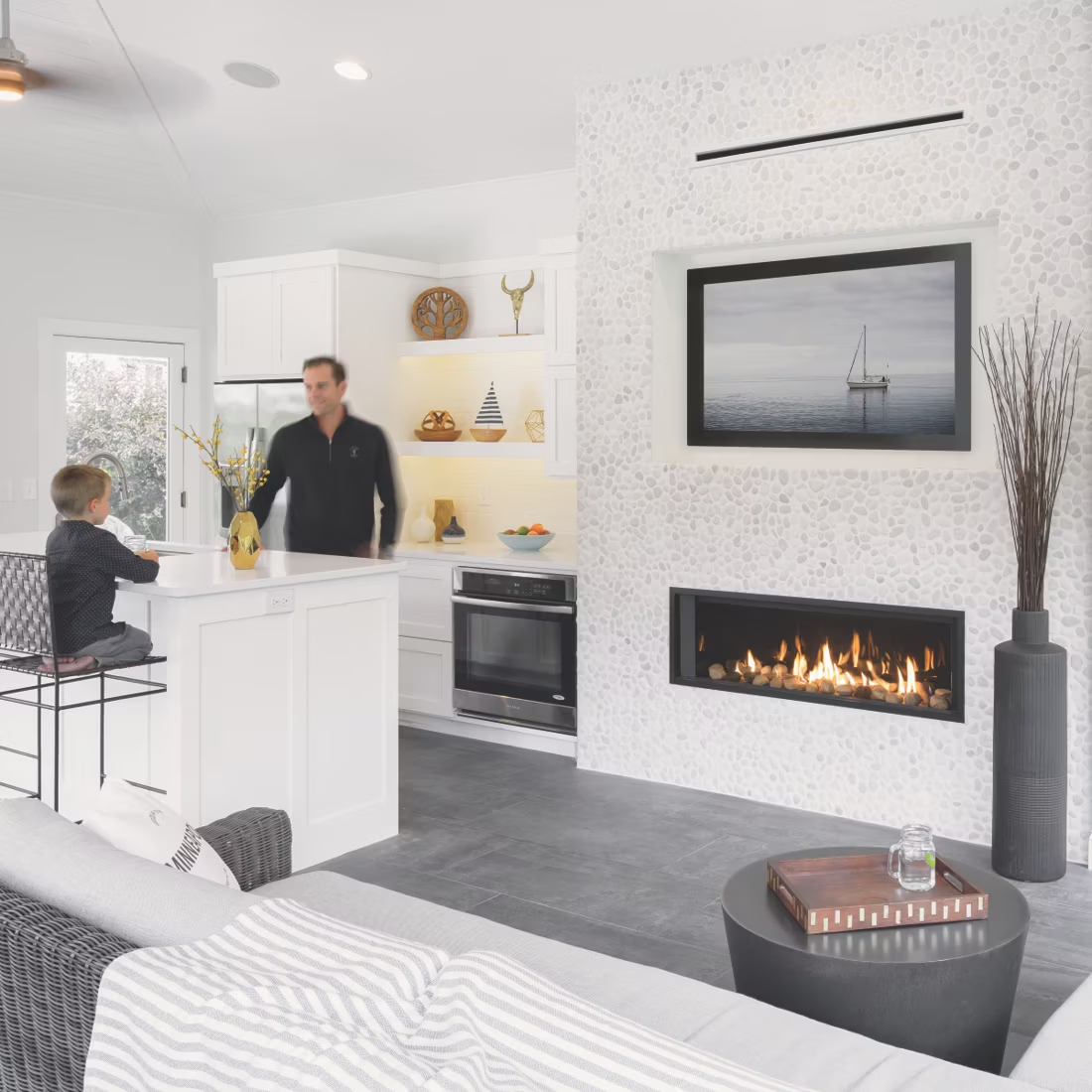
Four fuels. One honest answer for Dunklin County.
Three steps. No salesperson until you're ready.
Tell us about your project
Your zip code, your situation, and the fuel you're leaning toward—or let the answers point you to one.
See what's actually available
The brands dealers within 100 miles genuinely carry—real options, never a catalog mirage.
Get your dealer & Project Guide
A trusted local dealer, plus the free Project Guide & Parts List that names every component of the job.
Frequently Asked Questions
Which fuel works best in Dunklin County?
Gas is the most common choice for full-time heat in Dunklin County—natural gas where lines reach, propane on rural farmsteads outside city limits. It makes sense given the climate: average winter lows near 27°F and a heating season with roughly half the heating load of a northern city like Minneapolis, MN. Electric fireplaces are popular as supplemental heat and ambiance in bedrooms, sunrooms, and manufactured homes. Wood-burning fireplaces do exist here, mostly in older farmhouses, and burn well-seasoned local oak, hickory, walnut, or maple from field windbreaks and river-bottom timber—but they're used for backup warmth during ice storms and aesthetic appeal more than as a primary heat source, since Dunklin County doesn't have the public forest access that drives wood heat in counties further west. Pellet stoves are rare for the same climate reasons; regional suppliers like Lignetics serve a small local base rather than a widespread market. Most homeowners here go gas or electric for primary heat and add wood only if they specifically want that look and feel.
Do I need a permit to install a fireplace in Dunklin County?
Usually yes, for anything beyond a plug-in electric unit. Gas fireplace inserts, gas log sets, and gas stoves generally require a permit and licensed gas-fitter for the connection work, filed with the local building or zoning office—Kennett handles its own permitting within city limits, while unincorporated areas and smaller towns like Malden and Senath typically route through the county. Built-in electric fireplaces that require new wiring or a dedicated circuit usually need an electrical permit; simple plug-and-play electric units generally don't. If you're adding a wood-burning insert to an older masonry fireplace, that still requires a permit even though wood isn't the primary fuel of choice locally. Most local dealers installing gas or electric units in Dunklin County handle the permitting as part of the job.
Are there air quality restrictions on wood burning in Dunklin County?
No. Dunklin County has no non-attainment designation and no winter inversion pattern like the mountain and basin counties further west experience, so there are no burn bans or advisory days tied to wood smoke. That said, because wood heat is already uncommon here—most homes rely on gas or electric—you're unlikely to encounter any local air-quality messaging around fireplace use at all. If you do run a wood-burning fireplace or insert, the flat Bootheel terrain simply doesn't trap smoke the way a basin or mountain valley does.
Can one local hearth retailer handle both gas and electric?
Yes—most hearth retailers serving Dunklin County carry both gas fireplaces, inserts, and stoves alongside electric units, since those are the two fuels with real local demand. Few dealers keep a significant wood or pellet stove line in stock, given how uncommon those fuels are as primary heat sources in this climate. If you specifically want a wood-burning insert for one of the older Bootheel farmhouses, expect a smaller in-store selection and possibly a special order through a regional supplier rather than same-week installation.
How does service work in the rural parts of Dunklin County?
Outside Kennett and Malden, Dunklin County is almost entirely flat farmland dotted with smaller towns—Senath, Hornersville, Campbell, Cardwell. Technicians based in Kennett, and some traveling from nearby Poplar Bluff or Sikeston, cover the whole county with a modest travel fee for outlying farmsteads. Because gas and electric units dominate locally, most service calls involve gas-line and pilot/IPI inspections or electrical connection checks rather than annual chimney sweeps. Older homes with legacy wood-burning fireplaces still benefit from a periodic chimney inspection, especially after ice storms, when creosote buildup or animal nesting in an unused flue can go unnoticed for a season or two.
What's the typical cost range for fireplace installation across fuel types in Dunklin County?
Gas fireplace, insert, or stove: roughly $3,500–$9,000, with the lower end for straightforward inserts into an existing masonry opening and the higher end for new propane tank hookups on rural properties. Electric fireplace: $200–$2,500 for the unit itself, plus $300–$1,000 in labor for anything beyond a simple plug-and-play wall unit. Wood-burning inserts, where a homeowner specifically wants one, typically run $4,000–$8,000, reflecting the smaller local install base and reliance on regional suppliers for oak, hickory, and walnut units rather than an in-county wood-stove market. Pellet stoves are rarely installed here at all—pricing tends to run $4,000 and up once you factor in shipping and setup for a unit that isn't commonly stocked locally.
Wood, gas, pellet, or electric—how do I choose?
Match the fuel to your life, not the other way around. Wood: lowest fuel cost and total power-outage independence, but you're hauling and stacking. Gas: press a button, set a thermostat, no maintenance to speak of. Pellet: wood economics with automatic feeding, in exchange for weekly cleaning and a need for electricity. Electric: plugs in anywhere with honest supplemental heat. Nobody regrets the fuel that fits how they actually live.
What is an in-home preview and do I need one?
It's a visit where a hearth professional measures your space, confirms the model you picked actually works in your home, and walks the specs—framing, gas line, venting, finish work—before anything is ordered. Some details you just can't know until you see the house. Never make a down payment without one; it's the single most-skipped step that burns buyers.
Can a fireplace actually lower my heating bill?
Yes—by creating a comfort zone. A furnace heats every square foot of the house just to warm the one room you're in; a gas fireplace on low burns roughly a sixth of the gas a typical furnace does. Set the furnace around 55–60 degrees as a baseline, then heat the rooms your family actually uses. Families who heat this way commonly save $20–$60 a month.
Does a fireplace add value to my home?
On average, a fireplace adds back to the home about the same amount you spent installing it. Add the monthly savings from heating the rooms you actually use instead of the whole house—often hundreds of dollars a year—and the value case is strong before you even count what a fire does for how your family uses the room.
Stove and Fireplace Dealers in Dunklin County
Listings include WhyFire partner dealers, dealers we have verified as authorized for the brands we recommend, and established local businesses that carry hearth products. Every listing shows which one it is. The ones marked Preferred run on WhyFire's software, so they can show you real pricing and book your appointment right here. No manufacturer pays for placement. How we verify dealers →
Paragould Monument
Acme Brick Company
Environments Pools & Spa
R & R Sales And Service
Find your fireplace in Dunklin County.
Tell us about your home and we'll match you with a trusted local dealer and a free Project Guide & Parts List—the exact parts, venting, and recommended installer for your Dunklin County project.
Find Your Fireplace →