
Pellet Heat Is Rare in Clarkson Valley—But Not Unheard Of.
Most Clarkson Valley homes run on natural gas, but a handful of homeowners still choose a pellet stove for a basement, sunroom, or workshop. We'll help you figure out if it fits your home and connect you with a trusted local dealer.
Every Project Starts From One of These Five Situations
A Small Suburb Where Pellet Stoves Are the Exception, Not the Rule.
Clarkson Valley is one of St. Louis County's smallest incorporated cities—about 2,600 residents tucked into the 63005 zip code west of the city, in an area of newer subdivisions built with builder-grade natural gas fireplaces rather than wood-burning masonry. Winters here are moderate by Midwest standards: average lows around 22°F and a winter heating load that's a fraction of what a place like Minneapolis or Fargo sees each winter. There's no air quality restriction on solid-fuel appliances in the area, which isn't why pellet stoves are rare here—it's simply that natural gas is the default and most homes were never built to accommodate a chimney or hearth for solid fuel.
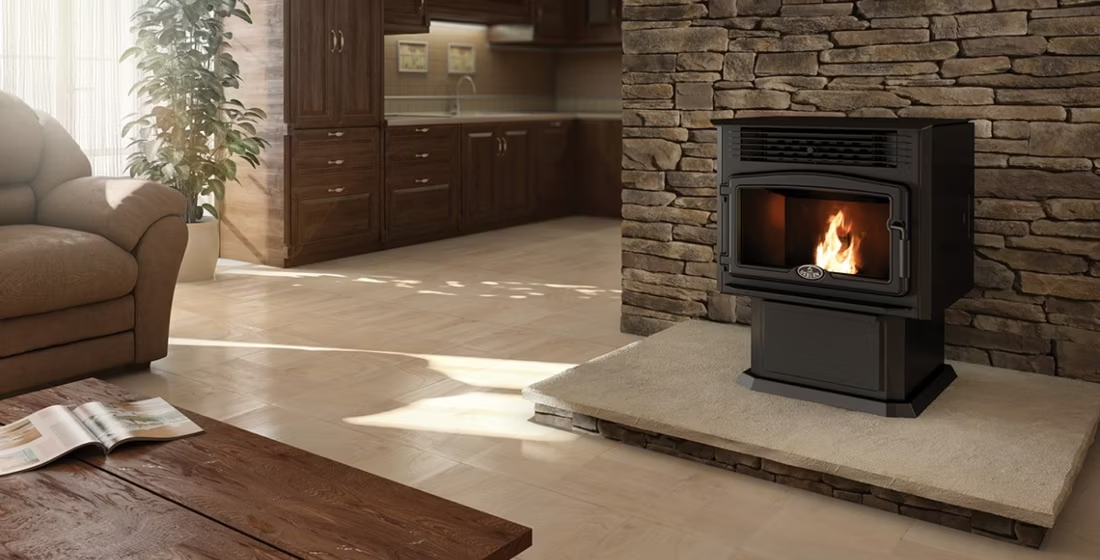
That said, pellet stoves do show up in Clarkson Valley from time to time—usually in finished basements, sunrooms, or detached workshops where a homeowner wants visible flame and supplemental zone heat without running new gas line or building a masonry chimney. Pellets for these units typically come through St. Louis-area hearth and farm-supply retailers, sourced from Midwest producers like Lignetics and Indeck Energy Services. If you're one of the homeowners considering it, we'll help you figure out whether it's the right fit for your space and match you with a dealer who actually installs and services them in this market.
Three steps. No salesperson until you're ready.
Tell us about your project
Your zip code, your situation, and the fuel you're leaning toward—or let the answers point you to one.
See what's actually available
The brands dealers within 100 miles genuinely carry—real options, never a catalog mirage.
Get your dealer & Project Guide
A trusted local dealer, plus the free Project Guide & Parts List that names every component of the job.
Frequently Asked Questions
How much does a pellet stove installation cost in Clarkson Valley?
Because pellet stoves are a niche request in this market, pricing tends to track the broader St. Louis metro rather than a Clarkson Valley-specific range. Expect roughly $3,500 to $6,500 for a freestanding pellet stove with a through-wall vent kit, and more if the installer needs to add a dedicated electrical circuit for the auger and blower motor. Pellet inserts for an existing masonry fireplace run somewhat higher once a liner and hopper clearance are factored in. Given how few installers in this specific area regularly work with pellet appliances, it's worth getting matched with a dealer who actually stocks and services them rather than calling a general contractor.
Are pellet stoves actually common in Clarkson Valley, or is this a rare install?
They're rare. Most homes in Clarkson Valley were built with natural gas fireplaces or furnaces already in place, and the city's small footprint means there isn't the same wood-heat or solid-fuel culture you'd find in a more rural part of Missouri. When a pellet stove does go in here, it's usually a homeowner adding supplemental heat to a finished basement, sunroom, or workshop—not replacing a primary heat source. That's worth knowing going in: you're not choosing the default option, you're choosing a specific one for a specific reason.
Where do I buy pellets if I install a stove near Clarkson Valley?
Clarkson Valley itself doesn't have pellet retailers given its size, so most owners buy through St. Louis-area hearth shops or farm-and-home stores that stock bagged pellets from Midwest producers like Lignetics and Indeck Energy Services. Regional pellet pricing across the Midwest typically runs in the $250 to $300 per ton range, and most stoves burn 1 to 2 forty-pound bags per day of steady use, so plan for seasonal storage of pellets in a dry garage or basement area rather than expecting curbside delivery like you might get with firewood in more rural counties.
Do I need a permit to install a pellet stove in Clarkson Valley?
Yes. Clarkson Valley is a small municipality that relies on St. Louis County's building and electrical permit process for most residential work, and a pellet stove installation typically triggers both a mechanical permit for the vent penetration and an electrical permit if a new circuit is run for the appliance. Most established hearth dealers handle this paperwork as part of the installation quote, which is one more reason to work with a dealer who's done this specific type of install before rather than a general handyman.
Does a pellet stove need a chimney, or can it go in a home without one?
This is actually one of the appeals of a pellet stove in a subdivision like Clarkson Valley, where most homes don't have a masonry chimney built for solid fuel. Pellet stoves vent through a small-diameter pipe—typically 3 or 4 inches—straight out an exterior wall, so they can go into a basement, sunroom, or workshop that has no fireplace at all. That's a meaningfully easier install than a wood stove would require in the same home, and it's part of why pellet occasionally gets a look here even though wood-burning appliances essentially don't.
Will a pellet stove keep my house warm if the power goes out?
No—and this matters if backup heat is part of why you're considering one. Pellet stoves rely on an electric auger to feed fuel and a blower to distribute heat, so when Union Electric (Ameren Missouri) service drops during an ice storm, the stove shuts down along with your furnace. If emergency backup heat during outages is the priority, a battery-backed gas unit is a better fit for this area than pellet. Pellet stoves here are chosen for supplemental comfort and ambiance, not storm resilience.
How much maintenance does a pellet stove actually require?
More hands-on than a gas fireplace, less than a wood stove. Expect to empty the ash pan every few days of regular use and refill the pellet hopper daily or every couple of days depending on burn rate. An annual professional cleaning of the burn pot, auger, and exhaust venting is recommended before each heating season, typically running $150 to $200 through a qualified hearth technician. Skipping that annual service is the most common cause of poor performance and error codes on pellet units.
Pellet vs. gas—which makes more sense for a Clarkson Valley home?
For most homeowners here, gas wins on pure convenience: natural gas service is standard throughout the area, and a gas insert or fireplace gives you instant, thermostat-controlled heat with no fuel handling. Pellet stoves require you to load fuel and empty ash regularly, and they need electricity to run at all. Where pellet earns a look is in spaces without existing gas infrastructure—a detached workshop, a basement far from the gas line—where running new gas service would cost more than the pellet stove itself, or for homeowners who specifically want a renewable, wood-based fuel source without the mess of cordwood.
What size pellet stove do I need for my home?
Clarkson Valley's winters are moderate—average lows around 22°F and a winter heating load nowhere near what a place like Duluth or Burlington sees—so pellet stoves here are almost always sized for supplemental zone heat rather than whole-home output. A 40,000 to 50,000 BTU unit is typically enough to comfortably heat a finished basement, sunroom, or open living area up to roughly 1,500 square feet. A trusted local dealer will want to see the room's insulation, ceiling height, and window exposure before finalizing a recommendation, since oversizing a pellet stove wastes fuel just as much as undersizing leaves you cold.
Why is my open fireplace making my house colder?
Open fireplaces suck—literally. As the fire burns, it consumes air your furnace already paid to heat and pulls it out through the chimney, so the house is actually colder after the fire goes out than before you lit it. An insert fixes this: it seals the chimney, puts fixed glass across the front, and turns that hole in your house into a real heat source.
How often does a pellet stove need cleaning?
A clean pellet stove is a happy pellet stove. Plan on cleaning the burn pot about once a week when you're burning regularly—ash and clinkers gum up the air holes just like a pellet barbecue. Most pellet stove problems trace back to skipped cleaning that nobody explained up front. Some designs make it easy with a trapdoor burn pot: pull a lever and the gunk drops into the ash pan.
Can a fireplace actually lower my heating bill?
Yes—by creating a comfort zone. A furnace heats every square foot of the house just to warm the one room you're in; a gas fireplace on low burns roughly a sixth of the gas a typical furnace does. Set the furnace around 55–60 degrees as a baseline, then heat the rooms your family actually uses. Families who heat this way commonly save $20–$60 a month.
Does a fireplace add value to my home?
On average, a fireplace adds back to the home about the same amount you spent installing it. Add the monthly savings from heating the rooms you actually use instead of the whole house—often hundreds of dollars a year—and the value case is strong before you even count what a fire does for how your family uses the room.
Nearby Dealers
Hearth shops serving Clarkson Valley and the surrounding area. Every listing shows whether it is a WhyFire partner, a dealer we have verified as authorized for the brands we recommend, or a local business carrying hearth products. No manufacturer pays for placement. How we verify dealers →
Summer Classics By Forshaw
Brighthouse Living
Fireside Hearth & Grill Center
Fireplace And Grill Center
English Sweep
Forshaws
Gas Appliance Service LLC
Savvy Surroundings
C Bennett Building Supply
Arnold Stove & Fireplace Center
Villa Lighting Supply
Pellet Brands Stocked Around Clarkson Valley
Manufacturers will point you to the nearest stocking dealer.
See If a Pellet Stove Makes Sense in Clarkson Valley.
Tell us about your space—basement, sunroom, or workshop—and we'll help you figure out if a pellet stove is the right call, then match you with a trusted local dealer and a free Project Guide & Parts List for your project.for pellet heat in Clarkson Valley.=empty}
Find Your Fireplace →