
Real Flame Look, Zero Wood, Zero Mess.
Supplemental zone heat and a realistic flame for Clarkson Valley homes, without a chimney, cordwood, or venting. Find the right unit and connect with a trusted local dealer.
Every Project Starts From One of These Five Situations
Convenience heat for a fast-growing St. Louis suburb.
Clarkson Valley is a small, affluent city of roughly 2,600 residents tucked into western St. Louis County at about 634 feet elevation. Winters here are moderate by national standards—average lows sit around 22°F and the area sees a moderate winter heating load, nowhere near the extremes of a place like Duluth or Bismarck. That climate profile, combined with large newer homes built with central HVAC as the primary heat source, is exactly why electric fireplaces have become the default choice for homeowners here who want fire without the fuel logistics.
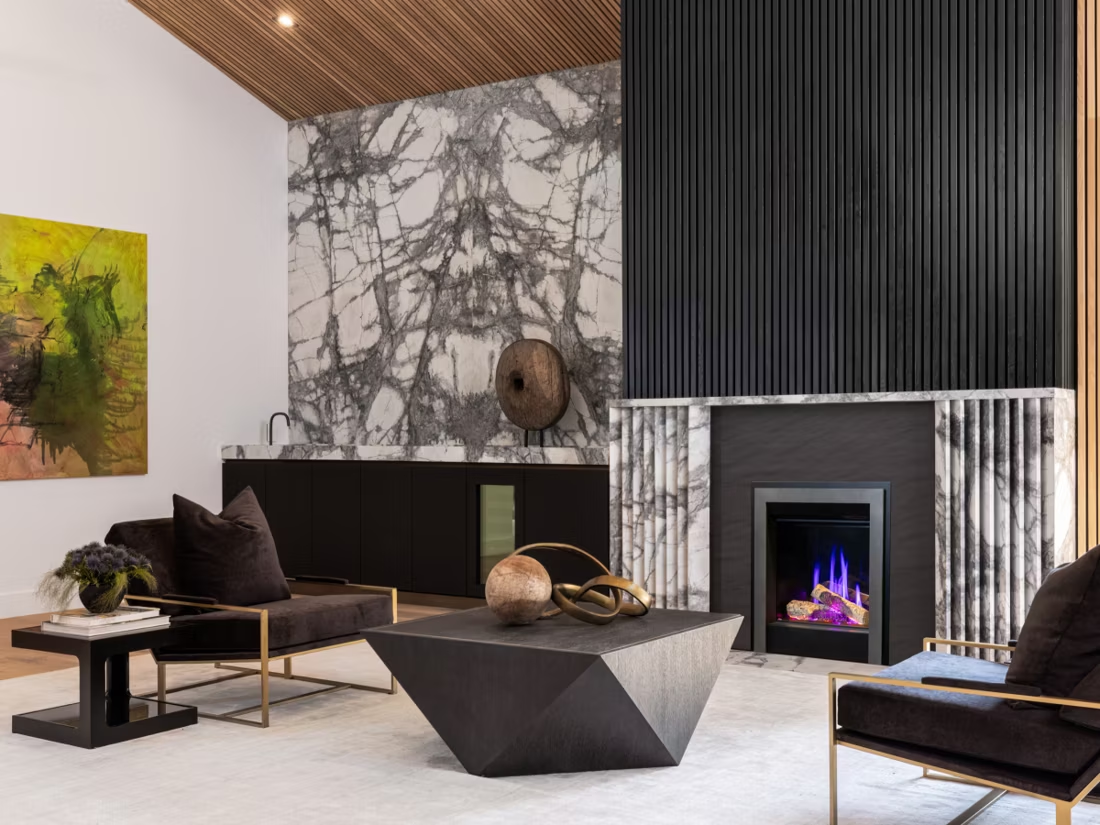
Many Clarkson Valley homes were built with a masonry fireplace as an architectural feature rather than a real heat source, and wood burning never really took hold in this part of St. Louis County—there's no local cutting culture and no need for it. An electric insert drops into that same existing firebox and gives the room ambiance and supplemental warmth with none of the ash, smoke, or annual sweep. Power comes from Union Electric Co. (Ameren Missouri) at a residential rate of about 12.6 cents per kWh, which keeps running costs modest even for daily use through a Missouri winter.
Three steps. No salesperson until you're ready.
Tell us about your project
Your zip code, your situation, and the fuel you're leaning toward—or let the answers point you to one.
See what's actually available
The brands dealers within 100 miles genuinely carry—real options, never a catalog mirage.
Get your dealer & Project Guide
A trusted local dealer, plus the free Project Guide & Parts List that names every component of the job.
Frequently Asked Questions
How much does an electric fireplace installation cost in Clarkson Valley?
A plug-in freestanding or wall-mount electric fireplace runs $300 to $900 installed, since most just need an existing outlet and a mounting bracket. A built-in electric insert or a linear wall unit set into an existing masonry fireplace or a new stud wall typically runs $1,500 to $3,500, and that range usually includes an electrician running a dedicated 120V or 20-amp circuit—common in Clarkson Valley's larger homes where the fireplace sits far from an existing outlet. Local dealers will quote a firm number after seeing the room and the electrical panel.
Can I convert my existing masonry fireplace to electric?
Yes, and it's one of the more common projects in this part of St. Louis County. Because wood burning was never widespread in Clarkson Valley's newer subdivisions, a lot of existing masonry fireboxes are essentially decorative. An electric insert slides into that opening, uses no venting or chimney liner at all, and gives you a realistic flame with real supplemental heat. The main variable is whether the firebox already has power nearby—if not, an electrician runs a line, which is the bulk of the added cost over a simple plug-in unit.
Do I need a permit to install an electric fireplace in Clarkson Valley?
A plug-in unit that uses an existing outlet typically doesn't require a permit. If your installer needs to run a new dedicated circuit—common for built-in inserts and larger linear units—that electrical work generally requires a permit through St. Louis County, since Clarkson Valley relies on the county for building and electrical inspections. A licensed electrician working with your hearth dealer will usually pull that permit as part of the job.
Will an electric fireplace actually heat my room, or is it just for looks?
Most electric fireplaces put out around 5,000 to 9,000 BTUs from a 1,500-watt heater, which is enough to comfortably warm a single room—a great room, den, or primary bedroom—but not a whole house. Given Clarkson Valley's moderate winters and the fact that most homes here already run central HVAC, that's the right amount of heat: supplemental warmth for the room you're actually sitting in, with the flame effect running independently of the heater if you just want ambiance in shoulder-season months.
What does it cost to run an electric fireplace in Clarkson Valley?
With Union Electric Co. (Ameren Missouri) residential rates around 12.6 cents per kWh, a typical 1,500-watt unit running on full heat costs about 19 cents an hour, or roughly $1.50 for an eight-hour evening. That's meaningfully cheaper than the national average electric rate, which is part of why electric inserts pencil out well here as daily supplemental heat rather than an occasional-use novelty.
What happens to my electric fireplace during a power outage?
It goes dark—electric fireplaces have no function without grid power, no battery backup, and no manual override. That's a real tradeoff compared to a wood-burning setup, though wood was never common here to begin with. If backup heat during an outage matters to you, a gas fireplace with a standing pilot or intermittent pilot ignition and battery backup is worth considering alongside electric, and several local dealers carry both fuel types so you can compare side by side.
What are the best electric fireplace brands to look at?
Dimplex, Napoleon, SimpliFire, and Amantii all make well-regarded linear and insert-style units with realistic LED flame technology that holds up over years of daily use—worth prioritizing over big-box brands if you want the flame effect to still look convincing five years in. Touchstone is a solid mid-range option for smaller rooms. A local hearth dealer can show you the flame quality in person, which matters more with electric units than almost any spec sheet.
Electric vs. gas fireplace—which is right for my Clarkson Valley home?
Gas gives you real heat output, works during a power outage with the right ignition system, and can be installed as a true zone-heat solution, but it requires venting and a gas line—either natural gas or a propane tank, since not every part of St. Louis County has natural gas at the curb. Electric skips venting and gas lines entirely, installs almost anywhere with power, and costs less upfront, but only offers supplemental heat and stops working when the grid does. For a great room used daily for ambiance and light supplemental warmth, electric is usually the simpler, lower-cost answer. For a room where you want real backup heat, gas is worth the extra installation complexity.
Is a wood-burning fireplace an option in Clarkson Valley instead of electric?
Technically yes, but it's uncommon here. Clarkson Valley sits in a fully residential, fairly dense part of St. Louis County with no nearby public land for cutting permits and no established local wood-heat culture the way you'd find in more rural parts of the state. A handful of homeowners with existing wood-burning fireplaces do still burn oak, hickory, or walnut occasionally for atmosphere, but most who want the fireplace experience without hauling and stacking cordwood choose an electric insert instead, which is why it's become the default upgrade path for older masonry fireboxes in the area.
Do electric fireplaces actually produce heat?
Yes—most put out around 4,800–5,000 BTUs from a standard outlet, which comfortably warms a bedroom, office, or den as a comfort-zone heater. What they won't do is carry a whole house the way wood, gas, or pellet can. Think of electric as ambiance-first with honest supplemental heat: flames on with no heat in July, flames plus warmth in January.
Can I put a TV above my fireplace?
Yes—with an asterisk. Fireplaces are hot and TVs don't like heat. Either put a mantel between them to deflect rising warmth, or choose a fireplace with heat-management technology that creates a cool zone on the wall above—the wall stays around 125 degrees, barely warm, while the room still gets full heat. If you like clean lines and don't want a mantel, heat management is the answer.
Does a fireplace add value to my home?
On average, a fireplace adds back to the home about the same amount you spent installing it. Add the monthly savings from heating the rooms you actually use instead of the whole house—often hundreds of dollars a year—and the value case is strong before you even count what a fire does for how your family uses the room.
Should the dealer who sells my fireplace also install it?
Ideally, yes. A fireplace project involves vent pipe, gas line, electrical, and often tile or stone. Hire three or four separate trades and you own the liability and the game of telephone between them. One company selling and installing means one accountable party, start to finish—ask about factory training, on-time completion records, and what happens if an inspection fails.
Nearby Dealers
Hearth shops serving Clarkson Valley and the surrounding area. Every listing shows whether it is a WhyFire partner, a dealer we have verified as authorized for the brands we recommend, or a local business carrying hearth products. No manufacturer pays for placement. How we verify dealers →
Summer Classics By Forshaw
Brighthouse Living
Fireside Hearth & Grill Center
Fireplace And Grill Center
English Sweep
Forshaws
Gas Appliance Service LLC
Savvy Surroundings
C Bennett Building Supply
Arnold Stove & Fireplace Center
Villa Lighting Supply
Electric Service in Clarkson Valley
An electric fireplace's heater draws about 1,500 watts—pennies per hour at local rates.
Union Electric Co - (Mo)
Find your electric fireplace in Clarkson Valley.
Tell us a bit about your home and we'll match you with the right electric fireplace or insert—and connect you with a trusted local dealer who can size the circuit, handle the install, and hand you a free Project Guide & Parts List.
Find Your Fireplace →