
Keep Your Family Warm and Safe—No Matter What
Most Chesterfield subdivisions were built on Spire natural gas lines, so wood heat is the exception here, not the rule. For the homeowners on wooded lots near the Missouri River bluffs who still want it, here's how to do it right—and who can install it.
Every Project Starts From One of These Five Situations
The exception in a gas-first suburb.
Chesterfield sits in the Missouri River valley at about 515 feet, in climate zone 4A with a solid winter heating season, real winter, with average lows around 22°F, but nowhere near the deep-cold wood-heat culture of a place like Duluth or Bismarck. Most of the city's housing stock was built out over the last four decades, with Spire Missouri gas lines threading through nearly every subdivision from Wild Horse Creek Road to the Chesterfield Valley. Builders overwhelmingly chose gas fireplaces, or skipped a hearth entirely, rather than framing in a masonry chimney.
That's the real reason wood ranks as a niche choice here—not because burning is restricted. St. Louis County has no winter-inversion air quality problems and no burn-ban history the way some Western basins do. Still, a smaller group of Chesterfield homeowners do add a wood stove or insert: often on larger wooded lots near the bluffs above the river bottoms, where oak, hickory, walnut, and maple regularly come down in storms, or in older homes around Olde Towne Chesterfield and Baxter Road that predate the gas-ready subdivisions. If that's your situation, the information below is written for you.
Three steps. No salesperson until you're ready.
Tell us about your project
Your zip code, your situation, and the fuel you're leaning toward—or let the answers point you to one.
See what's actually available
The brands dealers within 100 miles genuinely carry—real options, never a catalog mirage.
Get your dealer & Project Guide
A trusted local dealer, plus the free Project Guide & Parts List that names every component of the job.
Frequently Asked Questions
Is it realistic to install a wood stove or fireplace in Chesterfield?
Yes, though you'll be in the minority. Chesterfield's newer subdivisions were built with gas fireplaces as the standard hearth option, and many of the planned communities in West St. Louis County carry deed restrictions on exterior chimneys and visible wood smoke. None of that makes wood burning illegal—it just means most Chesterfield installs happen on older properties or larger wooded lots where a masonry chimney or Class A pipe run is straightforward. If you're in a newer subdivision, check your HOA covenants before you commit to a design.
What does a wood stove installation cost in Chesterfield?
There's no single number, since so few installs happen here relative to gas, but a straightforward freestanding wood stove with new Class A chimney pipe typically runs in the $4,000 to $8,500 range around the St. Louis metro, depending on the stove, roof height, and whether you're venting through an existing chase or building new. An insert into an existing masonry fireplace—more common in Chesterfield's older neighborhoods—usually costs less, since the chimney is already in place. A local dealer will give you a firm number after seeing your home.
Do I need a permit to install a wood stove in Chesterfield?
Yes. New wood-burning appliances require a building permit through the City of Chesterfield's Department of Planning & Public Works, and the installer needs to meet current EPA 2020 NSPS emissions standards along with local clearance-to-combustible rules. Most hearth dealers who work in this area pull the permit as part of the installation, so it's not something you'll typically manage yourself. If your home is on unincorporated St. Louis County land at the edge of the city limits, permitting runs through the county instead.
What firewood species are common around Chesterfield?
Oak, hickory, walnut, and maple make up most of the hardwood coming down locally—no surprise given how much of Chesterfield's terrain along the Missouri River bluffs and nearby conservation land is mixed hardwood forest. Oak and hickory are the better long-burn, high-BTU choices for a wood stove; walnut and maple burn a little faster and are good for shoulder-season fires. Most local firewood comes from tree services and land-clearing operations rather than public land permits, since there isn't national forest land nearby the way there is out West.
Why don't more Chesterfield homes have wood-burning fireplaces?
Timing and infrastructure, mostly. Chesterfield incorporated in 1988 and much of its housing was built afterward, right as gas fireplaces were becoming the default builder option nationally. With Spire Missouri gas mains already run through most subdivisions for furnaces and water heaters, adding a gas fireplace during construction was simple and cheap, while a masonry wood chimney added real cost. The result is a city where gas fireplaces are the norm and wood-burning units are the exception, mostly found in homes built before that shift or on larger, wooded lots.
Wood vs. gas—which fits a Chesterfield home better?
For most Chesterfield homeowners, gas wins on convenience: instant on-off heat, no ash or wood handling, and a gas line that's likely already run to the house. Chesterfield's winters are real but moderate—a solid winter heating season and average lows near 22°F—so the case for wood as essential backup heat is weaker here than it would be in, say, rural Minnesota. Wood still makes sense if you want a genuine fire, have a wooded lot generating your own firewood, or want a heat source that works without electricity during a storm. Most local hearth dealers will tell you honestly that gas is the more common request in this market.
Can I convert an old masonry fireplace into a wood-burning insert?
Yes, and it's one of the more common wood-heat projects in Chesterfield's older neighborhoods, like Olde Towne Chesterfield and the areas around Baxter Road. An EPA-certified wood insert fits into your existing masonry opening with a stainless liner run up the flue, which dramatically improves heat output and cuts creosote buildup compared to an old open fireplace. Because you're using an existing chimney, the cost is usually lower than a new freestanding stove installation elsewhere in the house.
Are there any air quality restrictions on wood burning in Chesterfield?
No. St. Louis County doesn't have the winter-inversion air quality problems that trigger burn bans in some Western cities, and there's no nonattainment designation affecting wood smoke here. The practical restrictions homeowners run into are usually private, not regulatory—subdivision HOA covenants that limit exterior chimneys or wood smoke, particularly in the newer planned communities in West St. Louis County. Check your covenants, not the county code, before planning a new wood-burning install.
Wood stove vs. pellet stove—does either make sense in Chesterfield?
Both are minority choices here, for similar reasons—Chesterfield's housing stock and gas infrastructure push most homeowners toward gas fireplaces. Between the two, wood tends to make more sense for homeowners on wooded lots with their own firewood supply or those who want heat that works without power. Pellet stoves—sold regionally under brands like Lignetics and distributed through suppliers like Indeck Energy Services—offer easier, more automated operation and cleaner burns, but need electricity to run the auger and blower, which takes away the storm-backup advantage. If you're set on a non-gas hearth, a local dealer can walk you through both.
Why is my open fireplace making my house colder?
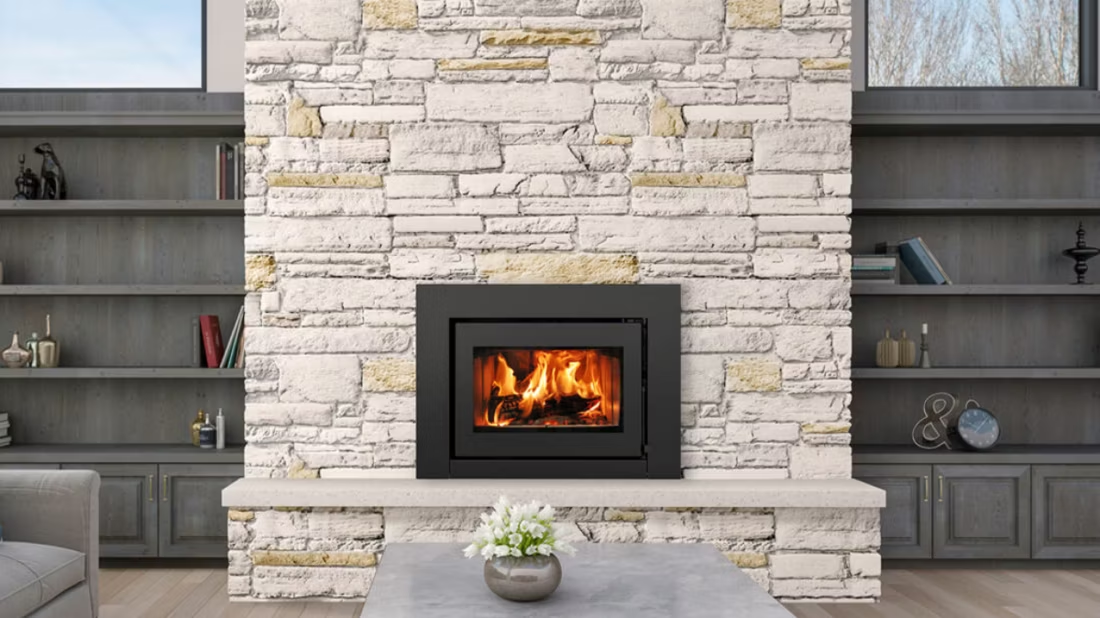
Open fireplaces suck—literally. As the fire burns, it consumes air your furnace already paid to heat and pulls it out through the chimney, so the house is actually colder after the fire goes out than before you lit it. An insert fixes this: it seals the chimney, puts fixed glass across the front, and turns that hole in your house into a real heat source.
Why won't my new wood stove get going like my old one?
New wood stoves are 70%+ efficient, so far less heat goes up the flue—which also means less draft to get a fire established. The rule: build a genuinely hot fire for about 45 minutes before you choke it down. Skip that and you get smoke in the room, creosote in the chimney, and a fire that never takes off. Most performance complaints trace straight back to this.
Can a fireplace actually lower my heating bill?
Yes—by creating a comfort zone. A furnace heats every square foot of the house just to warm the one room you're in; a gas fireplace on low burns roughly a sixth of the gas a typical furnace does. Set the furnace around 55–60 degrees as a baseline, then heat the rooms your family actually uses. Families who heat this way commonly save $20–$60 a month.
Can I install a fireplace myself?
If you're putting a fire in your house on purpose, it's best to work with an expert. Unless you're genuinely experienced in framing, gas line, vent pipe, and the national code on clearances to combustibles, have a professional do it—and ideally the same company that sells you the fireplace, so warranty, service, and liability all live under one roof.
Nearby Dealers
Hearth shops serving Chesterfield and the surrounding area. Every listing shows whether it is a WhyFire partner, a dealer we have verified as authorized for the brands we recommend, or a local business carrying hearth products. No manufacturer pays for placement. How we verify dealers →
Brighthouse Living
Summer Classics By Forshaw
Fireside Hearth & Grill Center
Fireplace And Grill Center
Gas Appliance Service LLC
English Sweep
Forshaws
Savvy Surroundings
C Bennett Building Supply
Arnold Stove & Fireplace Center
Villa Lighting Supply
Find your wood stove in Chesterfield.
Tell us about your home and whether you're working with an existing chimney or starting fresh, and we'll match you with a trusted local dealer and send over a free Project Guide & Parts List—the exact parts, including the vent kit, for your Chesterfield wood project.
Find Your Fireplace →