
Real Fireplace Warmth, No Chimney Required.
From HOA subdivisions to finished basements, electric fireplaces fit where wood and gas can't go. Find the right unit and connect with a trusted local dealer.
Every Project Starts From One of These Five Situations
Built for HOA subdivisions and interior rooms.
Chesterfield sits in the St. Louis suburbs at about 515 feet elevation, with winters that average a low around 22 degrees and a fairly long, moderately cold heating season most winters—cold enough to want supplemental heat, but nowhere near the sub-zero stretches of a place like Fargo or Duluth. Much of the city was built out from the 1980s through the 2000s as planned subdivisions and HOA communities, and it's common for those covenants to restrict or prohibit wood-burning stoves and other solid-fuel appliances outright. That's a big reason wood and pellet heat are essentially non-factors here, while gas and electric are the two fuels homeowners actually choose between.
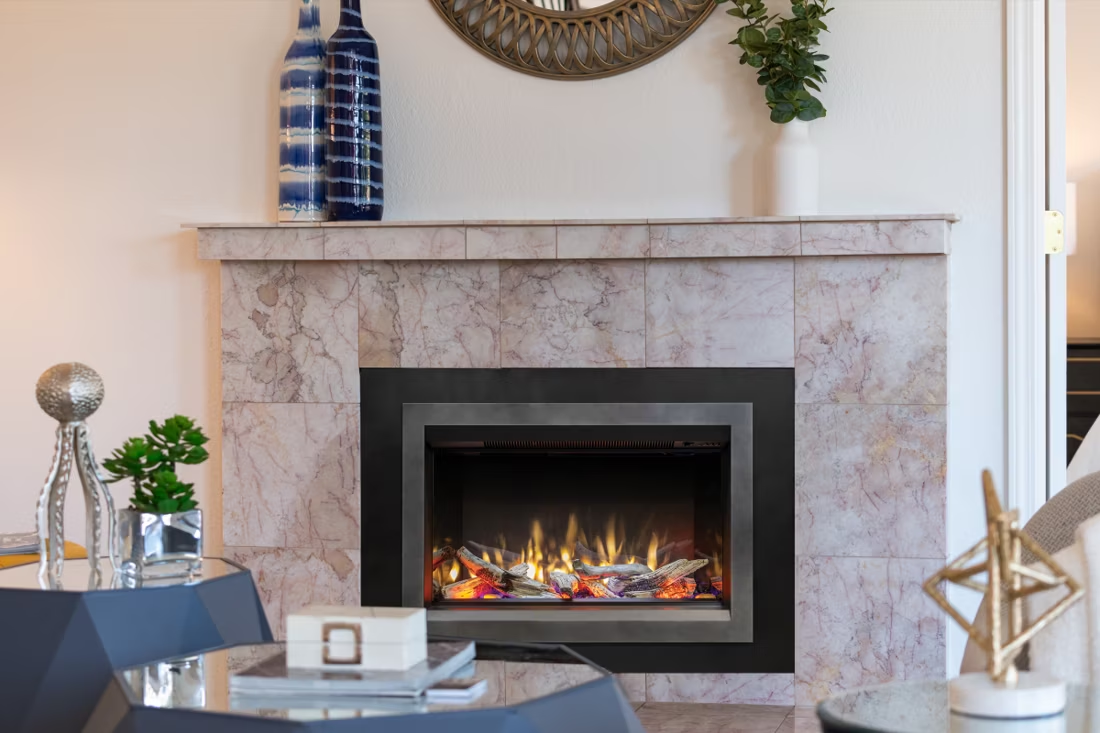
Electric fireplaces have become especially popular in Chesterfield's newer subdivisions, finished basements, and condo or townhome developments because they need no chimney, no gas line, and no combustion air—just a standard or dedicated outlet. That makes them the only realistic option in many interior rooms and primary bedrooms where running venting to the exterior isn't practical or allowed. Union Electric Co. (Ameren Missouri) serves nearly every Chesterfield address, and at roughly $0.1256 per kWh, a typical electric fireplace costs pennies an hour to run—inexpensive supplemental warmth for shoulder-season evenings when firing up the whole-house furnace feels like overkill.
Three steps. No salesperson until you're ready.
Tell us about your project
Your zip code, your situation, and the fuel you're leaning toward—or let the answers point you to one.
See what's actually available
The brands dealers within 100 miles genuinely carry—real options, never a catalog mirage.
Get your dealer & Project Guide
A trusted local dealer, plus the free Project Guide & Parts List that names every component of the job.
Frequently Asked Questions
How much does an electric fireplace installation cost in Chesterfield?
Plug-in freestanding or mantel-style electric fireplaces run about $300-$1,200 installed since they use an existing outlet and need no wiring work. Wall-mounted or built-in units that require a dedicated 120V or 240V circuit typically run $1,200-$3,500 once an electrician is involved, including custom surrounds or cabinetry. Converting an existing wood-burning masonry fireplace to an electric insert generally lands in the $800-$2,500 range depending on insert size and whether new outlet wiring is needed inside the firebox. A local hearth dealer can give you a firm number after seeing the space.
Do I need a permit for an electric fireplace in Chesterfield?
In most cases, no. A plug-in electric fireplace or insert that runs off an existing outlet doesn't trigger a permit. If you're adding a new dedicated circuit for a built-in unit, that electrical work needs to be pulled through the City of Chesterfield's building division (or St. Louis County, if your address falls in an unincorporated pocket), and it has to be done by a licensed electrician. Since there's no venting, gas line, or chimney involved, electric installs are by far the simplest fireplace permitting process of any fuel type in Chesterfield.
What does it cost to run an electric fireplace in Chesterfield?
Most electric fireplace inserts draw about 1,500 watts on the heat setting. At Union Electric Co.'s residential rate of roughly $0.1256 per kWh, that works out to around 19 cents an hour of use—about $1.50 for an 8-hour evening. Compare that to running a gas fireplace or firing up the central furnace for the same stretch, and electric is usually the cheapest way to take the chill off a single room without heating the whole house.
Why don't more homes in Chesterfield burn wood?
Chesterfield's growth happened almost entirely inside planned subdivisions and HOA communities built from the 1980s onward, and many of those covenants restrict or prohibit wood-burning stoves and fireplaces outright—a big reason wood is essentially absent here despite plenty of local oak, hickory, walnut, and maple in the region. Pellet stoves face the same HOA restrictions plus a lack of nearby fuel infrastructure; Chesterfield isn't near the pellet production hubs you'd find in a heavier wood-heat market. Gas and electric are the two fuels homeowners here actually choose between, and electric wins in homes where running a gas line or exterior venting isn't practical.
Electric vs. gas fireplace—which is right for my Chesterfield home?
Gas fireplaces put out real heat and can genuinely take the edge off a room on a 22-degree morning, but they require a gas line and either direct venting or careful vent-free compliance. Electric fireplaces install almost anywhere—no gas line, no venting, no combustion byproducts—but they're realistically a supplemental or ambiance heat source rather than a primary one. For a finished basement, a bedroom, or a condo where running gas isn't an option, electric is the practical answer. For a great room or a home where you want meaningful heat output on the coldest St. Louis nights, gas is usually worth the added installation complexity.
What size electric fireplace do I need?
Sizing an electric fireplace is mostly about the visual—the firebox width relative to your wall or mantel opening—since nearly all residential units use the same 1,500-watt heating element regardless of size. A 1,500-watt insert will noticeably warm a 200-400 sq ft room but won't replace central heat across Chesterfield's fairly long, moderately cold winter heating season. If real supplemental heat output matters more than looks, ask about blower CFM rather than assuming a wider fireplace throws more heat—wattage is capped by standard household circuits either way.
Can I put an electric fireplace in an interior room with no chimney or exterior wall?
Yes—this is one of the main reasons homeowners choose electric in Chesterfield. Since there's no combustion, no venting, and no makeup air requirement, an electric fireplace or insert can go on any interior wall, in a finished basement, or in a condo unit where running a flue to the exterior isn't possible. It's also why electric is often the default fireplace option in Chesterfield's newer townhome and multi-family developments, where individual chimneys were never built into the structure.
Can I convert my existing wood-burning fireplace to electric?
Yes. An electric insert can slide into most existing masonry fireboxes, giving you the look of a fire without the ash, creosote, or chimney maintenance. Since electric inserts don't vent, an unused chimney can simply be capped—a smart move on its own to stop drafts and keep animals out. Local dealers carry inserts sized to fit standard masonry openings, and installation is usually a half-day job: mount the insert, run power to it, and finish the surround.
Will an electric fireplace work during a power outage?
No—this is the one real trade-off worth knowing. Electric fireplaces need power to run both the heating element and the flame-effect display, so they go dark along with everything else during an outage. If backup heat during winter storms matters to you, a vented gas fireplace with a standing pilot or battery-backup ignition is the better fit. For everyday supplemental warmth and ambiance in a Chesterfield home on Union Electric's grid, though, electric fireplaces remain the simplest, least expensive fireplace to install in almost any room.
Can I put a TV above my fireplace?
Yes—with an asterisk. Fireplaces are hot and TVs don't like heat. Either put a mantel between them to deflect rising warmth, or choose a fireplace with heat-management technology that creates a cool zone on the wall above—the wall stays around 125 degrees, barely warm, while the room still gets full heat. If you like clean lines and don't want a mantel, heat management is the answer.
Do electric fireplaces actually produce heat?
Yes—most put out around 4,800–5,000 BTUs from a standard outlet, which comfortably warms a bedroom, office, or den as a comfort-zone heater. What they won't do is carry a whole house the way wood, gas, or pellet can. Think of electric as ambiance-first with honest supplemental heat: flames on with no heat in July, flames plus warmth in January.
How much should I budget for a fireplace?
For an average home—covering the fireplace, the vent pipe, and basic installation—a budget between $3,900 and $5,500 gives you a lot of options across wood, gas, and pellet. By the time you add finish work, gas line, and electrical, the average complete installation lands between $5,000 and $12,000 all-in. In a remodel or new build, a good rule is to put about 2.5% of the total project cost toward the fireplace.
Can a fireplace actually lower my heating bill?
Yes—by creating a comfort zone. A furnace heats every square foot of the house just to warm the one room you're in; a gas fireplace on low burns roughly a sixth of the gas a typical furnace does. Set the furnace around 55–60 degrees as a baseline, then heat the rooms your family actually uses. Families who heat this way commonly save $20–$60 a month.
Nearby Dealers
Hearth shops serving Chesterfield and the surrounding area. Every listing shows whether it is a WhyFire partner, a dealer we have verified as authorized for the brands we recommend, or a local business carrying hearth products. No manufacturer pays for placement. How we verify dealers →
Brighthouse Living
Summer Classics By Forshaw
Fireside Hearth & Grill Center
Fireplace And Grill Center
Gas Appliance Service LLC
English Sweep
Forshaws
Savvy Surroundings
C Bennett Building Supply
Arnold Stove & Fireplace Center
Villa Lighting Supply
Electric Service in Chesterfield
An electric fireplace's heater draws about 1,500 watts—pennies per hour at local rates.
Union Electric Co - (Mo)
Find your electric fireplace in Chesterfield.
Tell us about your home and project, and we'll match you with a trusted local dealer and send a free Project Guide & Parts List—the exact parts you need and who to call in Chesterfield.
Find Your Fireplace →