
Find the right pellet stove for your Chariton County home.
Clean, consistent heat for the cold nights around Keytesville, Salisbury, and Brunswick—without the daily wood-splitting. Find the right unit and connect with a trusted local dealer.
Every Project Starts From One of These Five Situations
Consistent heat without the wood pile.
Chariton County is farm country—rolling grain and cattle ground in north-central Missouri, with small towns like Keytesville, Salisbury, Brunswick, and Mendon spread across roughly 750 square miles. Winters here bring an average low around 18°F and about 5,257 heating degree days, cold enough that most homes run a primary furnace hard from November through March and lean on a stove for the coldest stretches or as backup when the power grid or propane truck lets them down. Unlike parts of the country dealing with wood-smoke non-attainment zones, Chariton County has no air quality restrictions on burning—there's no curtailment schedule to check before you load a hopper.
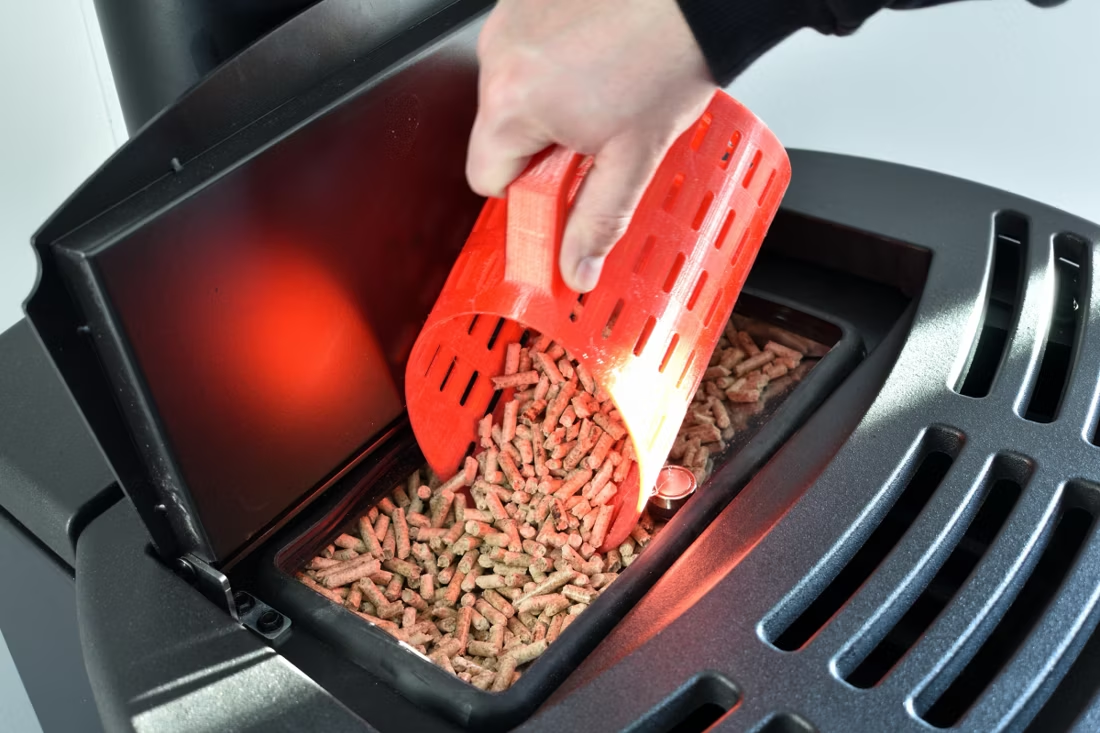
The county's oak, hickory, walnut, and maple stands feed a real regional hardwood-pellet supply chain—Lignetics and Indeck Energy Services both source and distribute pellets used throughout mid-Missouri, so fuel isn't something you have to drive to Kansas City or St. Louis to find. Pellet stoves appeal to a specific kind of Chariton County household: farmers who don't have time to split and stack cordwood every fall, retirees who want heat without hauling wood, and anyone supplementing a propane furnace who wants a lower monthly fuel bill without giving up the convenience of a thermostat-like control on the hopper.
Three steps. No salesperson until you're ready.
Tell us about your project
Your zip code, your situation, and the fuel you're leaning toward—or let the answers point you to one.
See what's actually available
The brands dealers within 100 miles genuinely carry—real options, never a catalog mirage.
Get your dealer & Project Guide
A trusted local dealer, plus the free Project Guide & Parts List that names every component of the job.
Frequently Asked Questions
How much does a pellet stove installation cost in Chariton County?
Most pellet stove and insert installations run in the $3,000 to $6,000 range, with the low end covering a freestanding stove vented through an exterior wall in a home that already has a hearth pad, and the higher end covering an insert conversion into an existing masonry fireplace or a longer horizontal vent run. Chariton County doesn't enforce a countywide residential building code, so whether a permit is required often comes down to whether you're inside city limits—Keytesville, Salisbury, and Brunswick each handle their own permitting, while rural county homes typically don't need one for an appliance swap. A local dealer can tell you which applies to your address before quoting the job.
What size pellet stove do I need for my home?
With winter lows averaging 18°F and roughly 5,257 heating degree days, Chariton County sits solidly in cold-supplemental-heat territory rather than extreme-cold territory—most homes don't need the largest hopper-capacity units sold for places like Duluth or International Falls. A small stove (under 1,000 sq ft) suits a single room or a farmhouse addition; a medium stove (1,000–2,000 sq ft) covers most main living areas in the older two-story homes common around Keytesville and Brunswick; larger stoves make sense for well-insulated whole-home heating. Older farmhouses with drafty additions or poor insulation often need to size up regardless of square footage—a local dealer will walk your home before recommending a unit.
Pellet stove vs. wood stove—which makes more sense in Chariton County?
Wood is deeply practical here—oak, hickory, walnut, and maple are all locally abundant, and plenty of Chariton County households already cut and split their own. A wood stove also keeps working with zero electricity, which matters during the ice storms that occasionally knock out rural power for days. A pellet stove trades that self-sufficiency for convenience: no splitting, no daily loading, more even heat output, and a cleaner burn with far less ash. For a household that values low-maintenance daily operation and has reliable power, pellet often wins. For a household that wants heat that works no matter what the grid is doing, wood—or a wood stove kept as backup alongside a pellet unit—is the safer bet.
Where can I buy pellets in or near Chariton County?
Lignetics and Indeck Energy Services both supply hardwood pellets distributed through mid-Missouri retailers, and farm supply cooperatives common in this part of the state often stock bagged pellets seasonally alongside other heating fuel. Expect to buy by the ton (fifty 40-lb bags) rather than by the individual bag if you're planning to heat through a full Missouri winter—most pellet-burning households in this climate use somewhere between one and three tons per season depending on how much of the heating load the stove is carrying. Your local dealer can usually point you to the closest reliable pellet source when you buy the stove.
Do I need a permit to install a pellet stove in Chariton County?
It depends on where in the county you live. Chariton County itself doesn't run a countywide residential building code enforcement program, so a permit typically isn't required for rural installations outside incorporated towns. If your home is inside Keytesville, Salisbury, Brunswick, or another incorporated town, check with that town's clerk's office before installing—some require a permit for new venting through an exterior wall. If a permit is needed, most local dealers handle the paperwork as part of the installation rather than leaving it to the homeowner.
What's the best pellet stove for Chariton County's climate?
For a climate with average winter lows around 18°F, mid-sized pellet stoves and inserts from established manufacturers hold up well without needing the biggest hopper on the market. Look for a unit with at least a 40-hour burn time on a full hopper if you want to go a full weekend without refilling, and pay attention to the auto-ignition and thermostat features—most modern units let you set a target temperature and let the auger do the work, which matters if you're heating a farmhouse while running errands into town. A local dealer will match hopper size and BTU output to your square footage and how much of the heating load you want the stove to carry.
How often does a pellet stove need to be cleaned and serviced?
Pellet stoves need more frequent attention than people expect, even though they're cleaner-burning than wood. The ash pan should be emptied every few days to weekly depending on use, the burn pot needs scraping every few days to keep air holes clear, and the glass typically needs wiping every week or two. Beyond that, an annual professional service—checking the auger motor, exhaust blower, gaskets, and venting—is recommended before each heating season starts, similar to how a furnace gets serviced. Skipping the annual service is the most common cause of mid-winter stove failures.
What happens to my pellet stove during a power outage?
Pellet stoves require electricity to run the auger that feeds pellets and the blower that distributes heat, so a standard unit stops working the moment the power goes out—a real consideration in a rural county where ice storms can take down lines for days. Some homeowners pair a pellet stove with a small battery backup or a portable generator sized to run the stove's low wattage draw; others keep a wood stove or fireplace as a no-electricity backup alongside the pellet unit for exactly this reason. If reliable heat during outages is a priority for your household, ask a local dealer about backup power options before you buy.
Pellet vs. propane—which is better for my Chariton County home?
Many Chariton County homes already run on propane for their primary furnace, since natural gas lines don't reach most of the rural county. A pellet stove doesn't replace that furnace, but it can meaningfully cut propane consumption by carrying the heating load in the rooms you actually live in—kitchen, living room, den—while the furnace idles in the background. Pellets also tend to be more price-stable than propane, which can spike sharply during hard winters when regional demand climbs. For households looking to lower a winter propane bill without a full heating system overhaul, a properly sized pellet stove in the main living area is one of the more cost-effective additions available.
Why is a fireplace insert so efficient?
An insert does two things: it seals the chimney completely, so you stop losing air you already paid to heat, and it radiates warmth into the room through the firebox and glass. Most add a heat-exchange fan that pulls cool room air underneath, wraps it around the hot firebox, and pushes it back out warm. Your home is more efficient before you've even lit the first fire.
Why is my open fireplace making my house colder?
Open fireplaces suck—literally. As the fire burns, it consumes air your furnace already paid to heat and pulls it out through the chimney, so the house is actually colder after the fire goes out than before you lit it. An insert fixes this: it seals the chimney, puts fixed glass across the front, and turns that hole in your house into a real heat source.
What is an in-home preview and do I need one?
It's a visit where a hearth professional measures your space, confirms the model you picked actually works in your home, and walks the specs—framing, gas line, venting, finish work—before anything is ordered. Some details you just can't know until you see the house. Never make a down payment without one; it's the single most-skipped step that burns buyers.
How much should I budget for a fireplace?
For an average home—covering the fireplace, the vent pipe, and basic installation—a budget between $3,900 and $5,500 gives you a lot of options across wood, gas, and pellet. By the time you add finish work, gas line, and electrical, the average complete installation lands between $5,000 and $12,000 all-in. In a remodel or new build, a good rule is to put about 2.5% of the total project cost toward the fireplace.
Pellet Brands Stocked Around Chariton County
Manufacturers will point you to the nearest stocking dealer.
Find your pellet stove in Chariton County.
Tell us a bit about your home and we'll send you a free Project Guide & Parts List—the exact parts and vent kit for your pellet stove project, plus a match with a trusted local dealer near Keytesville, Salisbury, or Brunswick.
Find Your Fireplace →