
Every fuel type, every town in Chariton County.
Wood, gas, pellet, and electric fireplace resources for the whole county—from Keytesville down to Brunswick and out along the farm roads toward Mendon and Triplett. Pick a fuel and get matched with a local dealer who actually installs it here.
Every Project Starts From One of These Five Situations
5,257 heating degree days in a county still built on hardwood.
Chariton County is farm country in north-central Missouri, wedged between the Missouri and Chariton rivers, home to just over 3,100 people spread across Keytesville, Salisbury, Brunswick, Mendon, and a scatter of smaller crossroads. Winters here average an 18°F low with 5,257 heating degree days—a real heating season, though noticeably milder than what a place like Madison, Wisconsin sees most winters, and short enough that a lot of households still lean on wood for at least part of it. Oak, hickory, walnut, and maple are the working species in this part of the state, and with farms and timbered river bottoms throughout the county, a fair number of homeowners are cutting and splitting their own firewood rather than buying it in.
There's no air quality non-attainment designation or smoke-management program to navigate here, which is one real advantage of a county this rural—wood stoves and outdoor furnaces don't run into the burn-day restrictions you'd find in a denser or higher-elevation area. What does shape hearth decisions locally is infrastructure: outside Keytesville, Salisbury, and Brunswick, natural gas mains are thin on the ground, so most gas fireplace and insert installs here run on propane rather than piped gas. Pellet stoves have a foothold too, with Lignetics and Indeck Energy Services both distributing into the region. This hub rolls up hearth retailers, service techs, and fuel suppliers across the whole county—pick your fuel below for local dealers, install costs, and recommendations specific to your town.
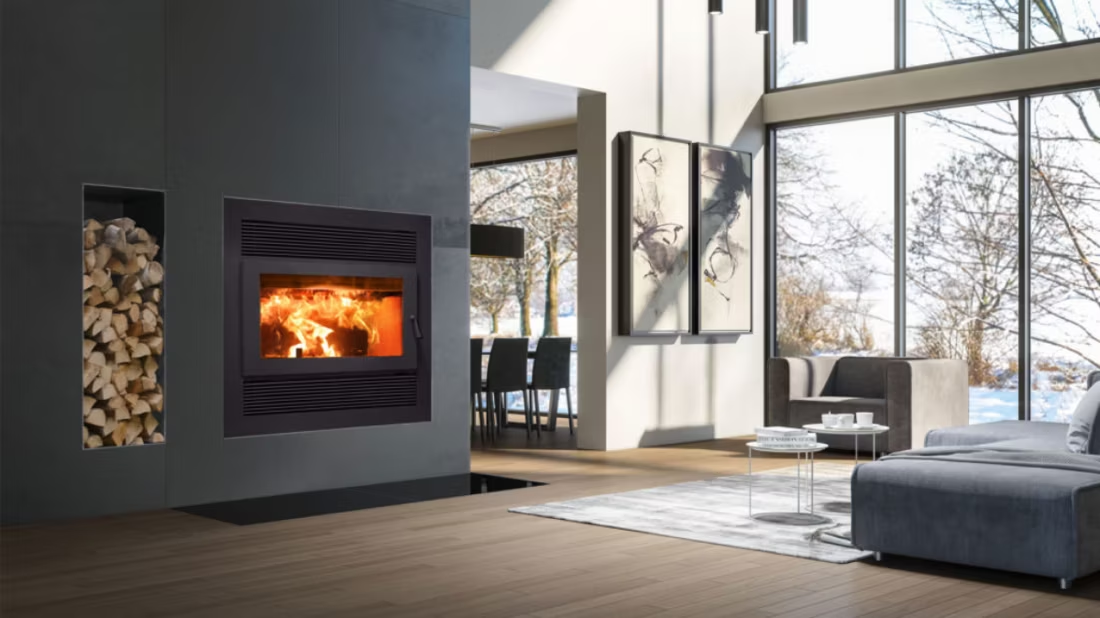
Four fuels. One honest answer for Chariton County.
Three steps. No salesperson until you're ready.
Tell us about your project
Your zip code, your situation, and the fuel you're leaning toward—or let the answers point you to one.
See what's actually available
The brands dealers within 100 miles genuinely carry—real options, never a catalog mirage.
Get your dealer & Project Guide
A trusted local dealer, plus the free Project Guide & Parts List that names every component of the job.
Frequently Asked Questions
Which fireplace fuel makes the most sense in Chariton County?
All four are used here, and the right choice usually comes down to what's already at your property. Wood remains the practical default on a lot of Chariton County farms—oak and hickory split from a home wood lot burn hot and long, and a decent stove will carry a house through an 18°F night without much trouble. Gas fireplaces are common in town, but almost always run on propane rather than piped natural gas once you're outside Keytesville, Salisbury, or Brunswick, so budget for a tank and delivery contract along with the unit. Pellet stoves have picked up real interest locally, helped by Lignetics and Indeck Energy Services both distributing into the region—they're a lower-maintenance option than a wood stove without needing a gas line at all. Electric fireplaces work well as a supplemental unit in a bedroom or den, but with 5,257 heating degree days in a typical winter, they're not doing the job of a primary heat source on their own.
Do I need a permit to install a wood stove, gas insert, or pellet stove in Chariton County?
It depends on where in the county you are. Chariton County doesn't run a unified countywide building permit office the way a more urban county does—if you're inside Keytesville, Salisbury, or Brunswick city limits, permitting typically runs through the town's own clerk or code office, and requirements can differ from one town to the next. Outside incorporated limits, oversight is lighter, though a licensed propane installer will still need to size and connect any gas line and tank correctly, and a new electrical circuit for a built-in electric unit should go through a licensed electrician regardless of jurisdiction. The safest move is a call to your local city hall before you buy anything—most hearth dealers serving this county have done installs in all the local towns and can tell you exactly what's required for your address.
Is natural gas available in Chariton County, or is everything propane?
For most of the county, it's propane. Piped natural gas service is limited to pockets in and around the larger towns, and a lot of rural Chariton County homes—including plenty in Salisbury and Brunswick's outlying areas—run on propane tanks for anything gas-fired, fireplaces included. That's not a downside so much as a different install: your dealer will spec the unit for propane rather than natural gas, and you'll need a tank (owned or leased) and a delivery contract in place before the fireplace gets connected. If you're not sure which service reaches your specific address, that's one of the first questions a local installer will ask before quoting the job.
Can I find one retailer that carries more than one fuel type?
Yes, and in a county this size it's actually the norm rather than the exception. Dealers serving Chariton County tend to carry wood, gas, and pellet lines together rather than specializing in just one, since a single delivery route might cover a wood stove install in Mendon, a propane fireplace in Brunswick, and a pellet stove in Keytesville in the same week. That's useful if you're still weighing options—you can see wood, gas, and pellet units side by side and talk through what actually fits your property, your wood lot situation, and whether propane delivery reaches you. We match you with the retailer whose fuel lineup and service area genuinely covers your address rather than whichever dealer happens to be biggest.
How does installation and service work for rural properties out from the main towns?
Most hearth retailers and service techs covering Chariton County are based in or near Keytesville, Salisbury, or Brunswick and run routes out to the more rural stretches toward Mendon, Triplett, and the river bottoms. Expect a trip charge on the farthest calls, and expect scheduling to get tighter once the weather turns—booking a chimney sweep or propane system check in late summer, ahead of harvest and before the first real cold snap, is the easiest way to avoid a multi-week wait once winter sets in. If your property is well off the main roads, it's worth asking your installer about seasonal access, since a wet fall or an early snow can complicate a farm-lane service call.
What does a fireplace installation typically cost in Chariton County?
Costs track pretty closely with fuel type and how much venting or line work is involved. Wood stove or insert installs generally run $4,000–$8,500, less if you're supplying your own oak or hickory rather than buying it in. Propane fireplace installs run roughly $4,500–$10,000, with the tank and delivery setup as a separate ongoing cost beyond the unit itself. Pellet stove installs typically land around $4,000–$7,000, and running on Lignetics or Indeck Energy Services pellets keeps fuel costs fairly predictable. Electric fireplaces are the cheapest entry point—often $200–$2,500 for the unit, plus a few hundred dollars in labor unless you're adding a dedicated circuit. The county + fuel pages above break these numbers down further with local retailer pricing.
Can a fireplace actually lower my heating bill?
Yes—by creating a comfort zone. A furnace heats every square foot of the house just to warm the one room you're in; a gas fireplace on low burns roughly a sixth of the gas a typical furnace does. Set the furnace around 55–60 degrees as a baseline, then heat the rooms your family actually uses. Families who heat this way commonly save $20–$60 a month.
Does a fireplace add value to my home?
On average, a fireplace adds back to the home about the same amount you spent installing it. Add the monthly savings from heating the rooms you actually use instead of the whole house—often hundreds of dollars a year—and the value case is strong before you even count what a fire does for how your family uses the room.
Wood, gas, pellet, or electric—how do I choose?
Match the fuel to your life, not the other way around. Wood: lowest fuel cost and total power-outage independence, but you're hauling and stacking. Gas: press a button, set a thermostat, no maintenance to speak of. Pellet: wood economics with automatic feeding, in exchange for weekly cleaning and a need for electricity. Electric: plugs in anywhere with honest supplemental heat. Nobody regrets the fuel that fits how they actually live.
How much should I budget for a fireplace?
For an average home—covering the fireplace, the vent pipe, and basic installation—a budget between $3,900 and $5,500 gives you a lot of options across wood, gas, and pellet. By the time you add finish work, gas line, and electrical, the average complete installation lands between $5,000 and $12,000 all-in. In a remodel or new build, a good rule is to put about 2.5% of the total project cost toward the fireplace.
Stove and Fireplace Dealers in Chariton County
Listings include WhyFire partner dealers, dealers we have verified as authorized for the brands we recommend, and established local businesses that carry hearth products. Every listing shows which one it is. The ones marked Preferred run on WhyFire's software, so they can show you real pricing and book your appointment right here. No manufacturer pays for placement. How we verify dealers →
Controlled Aire
White Chimney Heating And Cooling
Clemens Pool, Spa & Fireplace
Get matched with a local Chariton County dealer.
Pick your fuel below and we'll put together a free Project Guide & Parts List—the right unit, the vent kit or propane setup it needs, and the local dealer we recommend for your project.
Find Your Fireplace →