
Real heat, no chimney, no gas line, for Chariton County homes.
With a solid winter heating season and winter lows averaging 18°F, Chariton County still needs real heat—but not every room needs a flue. I'll match you with a trusted local dealer who knows which electric unit actually pulls its weight in a rural Missouri farmhouse.
Every Project Starts From One of These Five Situations
A rural county where wood and propane still do the heavy lifting.
Chariton County is agricultural, sparsely populated at around 3,155 residents, and spread across small towns like Keytesville, Brunswick, and Salisbury with a lot of open farmland between them. In climate zone 5A with a solid winter heating season and winter lows averaging 18°F, the cold here is real, but it's not extreme—comparable to a typical Kansas City or Columbia winter rather than a northern-plains one. Plenty of homes in the county still lean on wood cut from local oak, hickory, walnut, and maple stands, or on propane where there's no natural gas main, which describes most of the unincorporated county. Electric heat fits into that mix less as a whole-house solution and more as a clean, no-maintenance way to add warmth to a specific room without opening up a wall for venting.
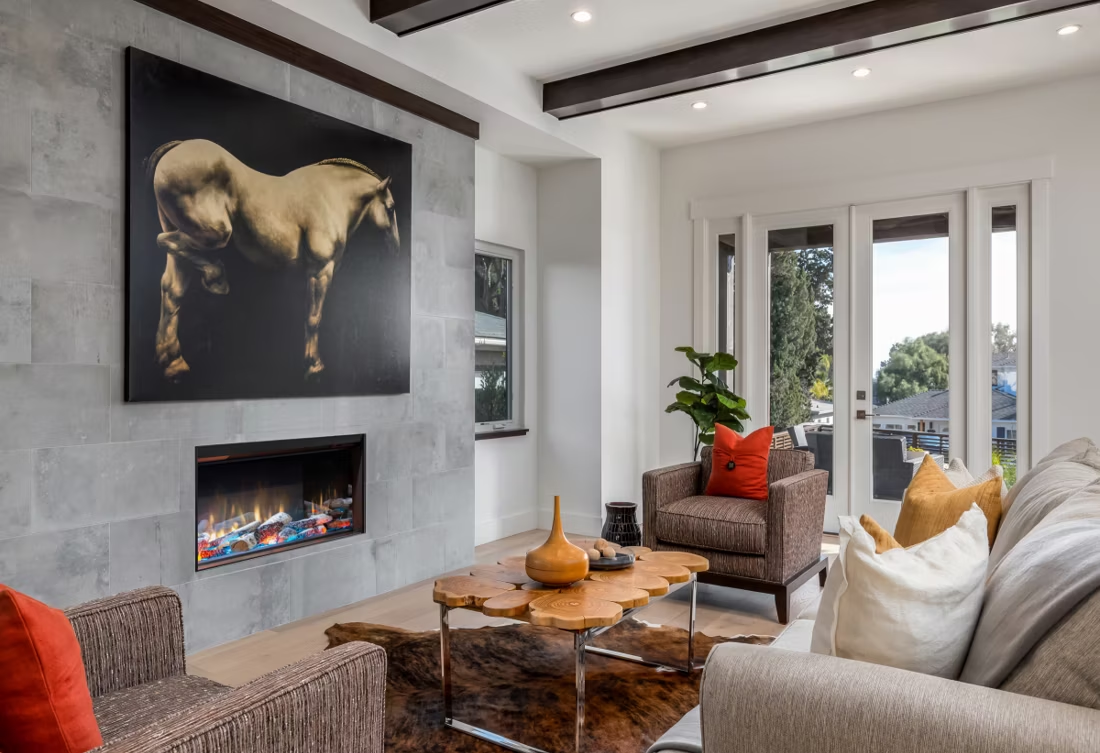
That's the honest role electric fireplaces play here: a 1,500-watt insert or wall unit puts out roughly 5,000 to 9,000 BTUs, enough to noticeably warm a living room or bonus space, but not enough to carry an older, drafty farmhouse through a stretch of single-digit nights on its own. Because there's no combustion, no flue, and no fuel to store, electric units are a straightforward retrofit into an old, unused masonry fireplace or a good fit for a mobile home or add-on room where running gas line or a chimney isn't practical. The tradeoff is that electric heat depends entirely on the grid—and Chariton Valley Electric Cooperative service, like most rural Missouri co-ops, can see outages during winter ice storms, which is worth planning around if you don't have a backup wood stove or generator.
Three steps. No salesperson until you're ready.
Tell us about your project
Your zip code, your situation, and the fuel you're leaning toward—or let the answers point you to one.
See what's actually available
The brands dealers within 100 miles genuinely carry—real options, never a catalog mirage.
Get your dealer & Project Guide
A trusted local dealer, plus the free Project Guide & Parts List that names every component of the job.
Frequently Asked Questions
How much does an electric fireplace installation cost in Chariton County?
Plug-in electric fireplaces and freestanding stoves are the least expensive option, often installed the same day with no electrician needed since they run off a standard outlet. Built-in wall units or mantel packages that need a dedicated 20-amp circuit run higher once you add a licensed electrician's time, typically landing somewhere in the low-to-mid thousands depending on the unit and how far the electrical panel is from the install location. A local dealer can tell you which category your project falls into before you buy anything.
Do I need a permit to install an electric fireplace in Chariton County?
Most plug-in electric fireplaces don't require any permit since there's no gas line, venting, or structural chimney work involved. If you're having a built-in unit hardwired on a new dedicated circuit, a licensed electrician should pull the necessary electrical permit if you're inside city limits—Keytesville, Brunswick, and Salisbury each handle that locally. Out in the unincorporated county, requirements are lighter, but it's still worth having a licensed electrician handle the wiring given how spread out service calls are if something goes wrong later.
Can an electric fireplace actually heat my home through a Chariton County winter?
For most homes here, no—not as the sole heat source. With winter lows averaging 18°F and a solid winter heating season, a typical 1,500-watt electric insert is built to supplement a room, not replace a furnace or the wood stove many rural households already run. Where electric fireplaces do shine is in a sunroom, finished basement, or bonus room that the main heating system doesn't reach well—spaces where you want reliable warmth without adding ductwork or a flue.
What happens to my electric fireplace during a winter power outage?
It goes dark along with everything else on the circuit. Rural Missouri winters bring ice storms that can knock out Chariton Valley Electric Cooperative service for a day or more, and an electric fireplace has no fallback the way a wood stove or vented propane unit does. If backup heat during an outage is a real concern for your household, it's worth pairing an electric fireplace for everyday convenience with a wood-burning appliance or generator for the nights the power actually goes out—a lot of county households already run that combination out of necessity.
What's the difference between an electric insert, a wall-mount unit, and a mantel package?
An electric insert drops into an existing masonry firebox—a good option if you've got an old fireplace in a Chariton County farmhouse that hasn't burned wood safely in years and you want the look back without chimney repairs. A wall-mount unit hangs flush like a flat-screen TV and works well in newer construction or additions. A mantel package pairs a freestanding electric unit with surrounding cabinetry for homes that want a full built-in look without any structural changes. All three plug into standard household wiring or a dedicated circuit, and none require venting.
How much does it cost to run an electric fireplace compared to wood or propane?
At Chariton Valley Electric Cooperative's typical residential rates, running a 1,500-watt electric fireplace for several hours an evening adds a modest amount to a monthly bill—usually less than a tank refill on a propane space heater over the same stretch. It won't beat the cost of wood cut from your own oak or hickory stand, which is close to free once you've got a saw and a truck, but it beats propane on convenience and it beats both on maintenance, since there's no chimney to sweep and no tank to schedule a delivery for.
I have an old, unused fireplace—is an electric insert a good fix?
Often, yes. A lot of older homes around Keytesville and Brunswick have a masonry fireplace that hasn't been used for wood in years, sometimes because the chimney needs liner work or a full rebuild that the homeowner doesn't want to pay for. An electric insert seals into that same opening, gives you real heat and flame appearance, and sidesteps the chimney question entirely since it doesn't vent. It's one of the more common electric projects local dealers handle in the county for exactly this reason.
Electric vs. wood—which makes more sense for my Chariton County home?
Wood, cut from the oak, hickory, walnut, and maple common on county land, remains the lower-cost choice for households that want real primary heat and don't mind splitting and stacking cordwood, and it keeps working through a power outage. Electric costs less upfront, needs zero maintenance, and installs into rooms a wood stove never could—no floor protection, no clearances to combustibles, no chimney. Many households here end up with both: a wood stove or furnace carrying the main heating load, and an electric unit warming a specific room or standing in as ambiance without the work of tending a fire every evening.
What electric fireplace brands are available through local dealers in Chariton County?
Dealers serving Chariton County typically carry mainstream, well-reviewed electric fireplace lines like Dimplex, Napoleon, and Amantii, covering everything from basic plug-in inserts to higher-end mantel packages with realistic flame effects. Availability varies by dealer, and since electric units don't involve regional fuel logistics the way wood or propane pellet brands like Lignetics or Indeck Energy Services do, the bigger factor is usually which dealer stocks a style that fits your space and can handle the electrical work if you're going with a hardwired unit.
Can I put a TV above my fireplace?
Yes—with an asterisk. Fireplaces are hot and TVs don't like heat. Either put a mantel between them to deflect rising warmth, or choose a fireplace with heat-management technology that creates a cool zone on the wall above—the wall stays around 125 degrees, barely warm, while the room still gets full heat. If you like clean lines and don't want a mantel, heat management is the answer.
Do electric fireplaces actually produce heat?
Yes—most put out around 4,800–5,000 BTUs from a standard outlet, which comfortably warms a bedroom, office, or den as a comfort-zone heater. What they won't do is carry a whole house the way wood, gas, or pellet can. Think of electric as ambiance-first with honest supplemental heat: flames on with no heat in July, flames plus warmth in January.
Does a fireplace add value to my home?
On average, a fireplace adds back to the home about the same amount you spent installing it. Add the monthly savings from heating the rooms you actually use instead of the whole house—often hundreds of dollars a year—and the value case is strong before you even count what a fire does for how your family uses the room.
Can I install a fireplace myself?
If you're putting a fire in your house on purpose, it's best to work with an expert. Unless you're genuinely experienced in framing, gas line, vent pipe, and the national code on clearances to combustibles, have a professional do it—and ideally the same company that sells you the fireplace, so warranty, service, and liability all live under one roof.
Get your free Project Guide & Parts List for an electric fireplace in Chariton County.
Tell me a bit about your home and how you plan to use the fireplace, and I'll match you with a trusted local Chariton County dealer and send over a free Project Guide & Parts List—the exact unit, wiring requirements, and recommended installer for your electric heat project.
Find Your Fireplace →