
Consistent, low-maintenance heat for Carter County winters.
From Van Buren to the Current River bottoms, pellet heat gives Ozark homeowners the warmth of a real fire without the wood-splitting. Find the right stove or insert, and connect with a trusted local dealer.
Every Project Starts From One of These Five Situations
Steady heat without the wood pile in Carter County.
Carter County is small—about 1,939 people spread across a county dominated by the Ozark National Scenic Riverways, Big Spring, and thick stands of oak, hickory, walnut, and maple. This is zone 4A country: winters bring regular cold spells into the teens and occasional single-digit nights, but nothing like the sustained deep-freeze of the northern Plains. Wood heat has deep roots here given the surrounding hardwood forest, but a growing number of homeowners—especially those with second homes and cabins along the Current River, or anyone who doesn't want to spend weekends splitting and stacking—are choosing pellet stoves instead.
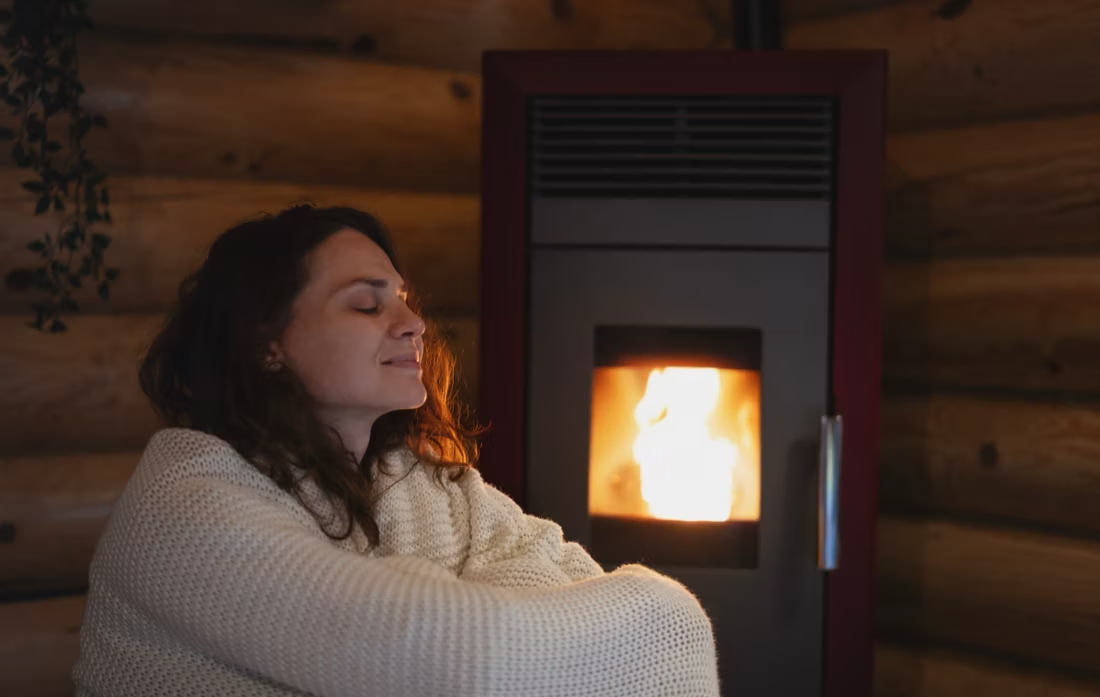
A pellet stove gives you thermostatic, hands-off heat: load the hopper, set it, and walk away, without the daily tending a wood stove demands. Regional suppliers including Lignetics and Indeck Energy Services keep pellets flowing into rural Missouri, though Carter County's small population means most residents plan ahead and buy pellets by the pallet rather than picking up a bag at a time. There's no air quality non-attainment issue in Carter County, so there's no burn-ban complication to weigh—the choice between pellet and wood here comes down to convenience, not regulation.
Three steps. No salesperson until you're ready.
Tell us about your project
Your zip code, your situation, and the fuel you're leaning toward—or let the answers point you to one.
See what's actually available
The brands dealers within 100 miles genuinely carry—real options, never a catalog mirage.
Get your dealer & Project Guide
A trusted local dealer, plus the free Project Guide & Parts List that names every component of the job.
Frequently Asked Questions
How much does a pellet stove installation cost in Carter County?
Most pellet stove installations run in the range of $2,500 to $5,500 in a rural county like Carter, depending on the unit, whether you're venting through an existing masonry chimney or running a new wall-through pellet vent, and whether hearth pad work is needed for code clearance. A pellet insert going into an existing fireplace opening tends to land on the lower end since the chimney cavity is already there. New construction or a stove going into a room with no existing venting path costs more once wall penetration and vent kit materials are factored in. A local dealer will give you a firm number after seeing your home—venting distance and hopper size both move the price.
What size pellet stove do I need for my home?
Sizing depends on square footage, ceiling height, and how drafty the home is—common in older farmhouses around Van Buren and the outlying county. As a general guide, smaller units (under 1,200 sq ft) suit a single main living area or a cabin along the Current River, mid-size units (1,200–2,000 sq ft) cover most Carter County homes, and larger units handle bigger or open-concept layouts. Because pellet stoves run on a hopper and auger rather than manual feeding, oversizing isn't as forgiving a mistake as it is with wood—an undersized unit just won't keep up on the coldest nights of the year. A dealer can size your space accurately during an in-home visit.
Where can I find pellet stove dealers near Carter County?
Carter County's population is small enough that dedicated hearth retailers are limited within the county itself—most homeowners work with dealers based in Poplar Bluff or West Plains who service Van Buren, Ellsinore, and the surrounding rural area. Expect a modest travel charge on installs for homes further out along the Current River or toward the Ripley County line. Look for a dealer who installs what they sell—that keeps warranty coverage and code compliance under one roof rather than split between a retailer and a separate contractor.
What's the difference between a pellet stove and a pellet insert?
A pellet stove is a freestanding unit that sits on a hearth pad and vents through a wall or existing chimney—it can go almost anywhere in the home with the right clearances. A pellet insert is built to slide into an existing masonry fireplace opening, turning an old open hearth into a sealed, thermostat-controlled heat source. For Carter County homes with an existing wood fireplace that's rarely used, an insert is often the simpler upgrade since it reuses the chimney cavity you already have. Homes without an existing fireplace opening are usually better suited to a freestanding stove.
Do I need a permit to install a pellet stove in Carter County?
Most new pellet stove installations require a building permit, and in Carter County that typically means a call to the county building permit office at the courthouse in Van Buren to confirm local requirements—rural Missouri counties vary in how closely they enforce this, but pulling a permit protects you on insurance and resale. Pellet stoves don't carry the same EPA curtailment restrictions that catalytic wood stoves sometimes face in non-attainment areas, and Carter County has no air quality non-attainment designation, so there's no burn-ban season to plan around. Most local dealers will tell you upfront whether they handle the permit paperwork as part of the install.
What's the best pellet stove for Carter County's climate?
Zone 4A winters in Carter County call for a mid-efficiency unit rather than the extreme cold-climate models built for the northern Plains—you're looking at occasional teens and single-digit nights, not the sustained sub-zero stretches of somewhere like Fargo, ND. Standard hopper-fed units from major manufacturers handle the Ozarks fine; the bigger question locally is pellet supply. Lignetics and Indeck Energy Services both distribute into this part of Missouri, so choosing a stove that runs on widely available bag sizes (usually 40-lb bags) keeps you from hunting for a specific brand's proprietary fuel. Ask your dealer which pellet brands are actually stocked near Poplar Bluff or West Plains before you commit to a stove.
How often does a pellet stove need to be cleaned and serviced?
Pellet stoves need more frequent attention than people expect—the ash pot should be emptied every few days of regular use, and the burn pot cleaned weekly to keep the auger feeding cleanly. A full professional service, including the exhaust fan, venting, and hopper mechanism, is recommended once a year, ideally before the first cold snap in late fall. This is lighter-duty than a wood stove's chimney sweep but still important—a dirty burn pot is the most common reason a pellet stove starts smoking or shutting off unexpectedly.
Where can I buy pellets in Carter County?
Because Carter County is thinly populated, pellets aren't always sitting on a shelf close to home—many residents buy by the pallet (roughly a ton, in 40-lb bags) from farm supply stores in Poplar Bluff or West Plains, or arrange delivery through regional distributors that carry brands like Lignetics. Buying a season's supply at once, typically in late summer or early fall before demand picks up, is the common approach here rather than restocking bag by bag. Ask your dealer which suppliers actually deliver into the Van Buren area—delivery radius matters more in a county this size than brand preference.
Pellet stove vs. wood stove—which is right for my Carter County home?
Wood is the traditional choice here given the oak, hickory, and walnut timber that surrounds the county, and it keeps working without electricity—a real advantage during winter power outages in a rural area where restoration can take a while. Pellet stoves need electricity to run the auger and blower, so they're not a backup-heat option during an outage unless paired with a battery backup or generator. In exchange, pellet stoves are far less labor-intensive—no cutting, splitting, seasoning, or daily tending—and burn cleaner with less ash. For a primary residence with reliable power, pellet is often the easier day-to-day choice; for a cabin or hunting property along the Current River where self-sufficiency matters more than convenience, wood still makes sense.
What's the difference between an insert and a zero-clearance fireplace?
An insert is a fireplace that slides into a pre-existing wood-burning fireplace—if you don't have one, there's nothing to insert it into. A zero-clearance fireplace is built into a framed wall, which makes it the answer for remodels and new construction. Simple test: existing masonry fireplace means insert; blank or framed wall means zero-clearance.
Why is my open fireplace making my house colder?
Open fireplaces suck—literally. As the fire burns, it consumes air your furnace already paid to heat and pulls it out through the chimney, so the house is actually colder after the fire goes out than before you lit it. An insert fixes this: it seals the chimney, puts fixed glass across the front, and turns that hole in your house into a real heat source.
Does a fireplace add value to my home?
On average, a fireplace adds back to the home about the same amount you spent installing it. Add the monthly savings from heating the rooms you actually use instead of the whole house—often hundreds of dollars a year—and the value case is strong before you even count what a fire does for how your family uses the room.
Can I install a fireplace myself?
If you're putting a fire in your house on purpose, it's best to work with an expert. Unless you're genuinely experienced in framing, gas line, vent pipe, and the national code on clearances to combustibles, have a professional do it—and ideally the same company that sells you the fireplace, so warranty, service, and liability all live under one roof.
Pellet Brands Stocked Around Carter County
Manufacturers will point you to the nearest stocking dealer.
Find your pellet stove in Carter County.
Tell us a bit about your home and we'll put together a free Project Guide & Parts List for your Carter County pellet project—the exact parts, including the vent kit, and a matched local dealer who can install it right.
Find Your Fireplace →