
Find your electric fireplace in Carter County.
Zero-clearance heat and ambiance for homes across Carter County—from Van Buren to Ellsinore and the rural stretches along the Current River. Find the right unit and connect with a trusted local dealer.
Every Project Starts From One of These Five Situations
Simple heat, no chimney required.
Carter County sits in Missouri's Ozark foothills, a climate zone 4A county with real but not brutal winters—cold snaps happen, but nothing like the sustained sub-zero stretches you'd see in a place like Duluth or Fargo. With a population under 2,000 spread across small towns and a lot of rural acreage along the Current and Jacks Fork rivers, many homes here run on older wiring and modest budgets, which makes electric fireplaces a practical fit rather than a luxury add-on.
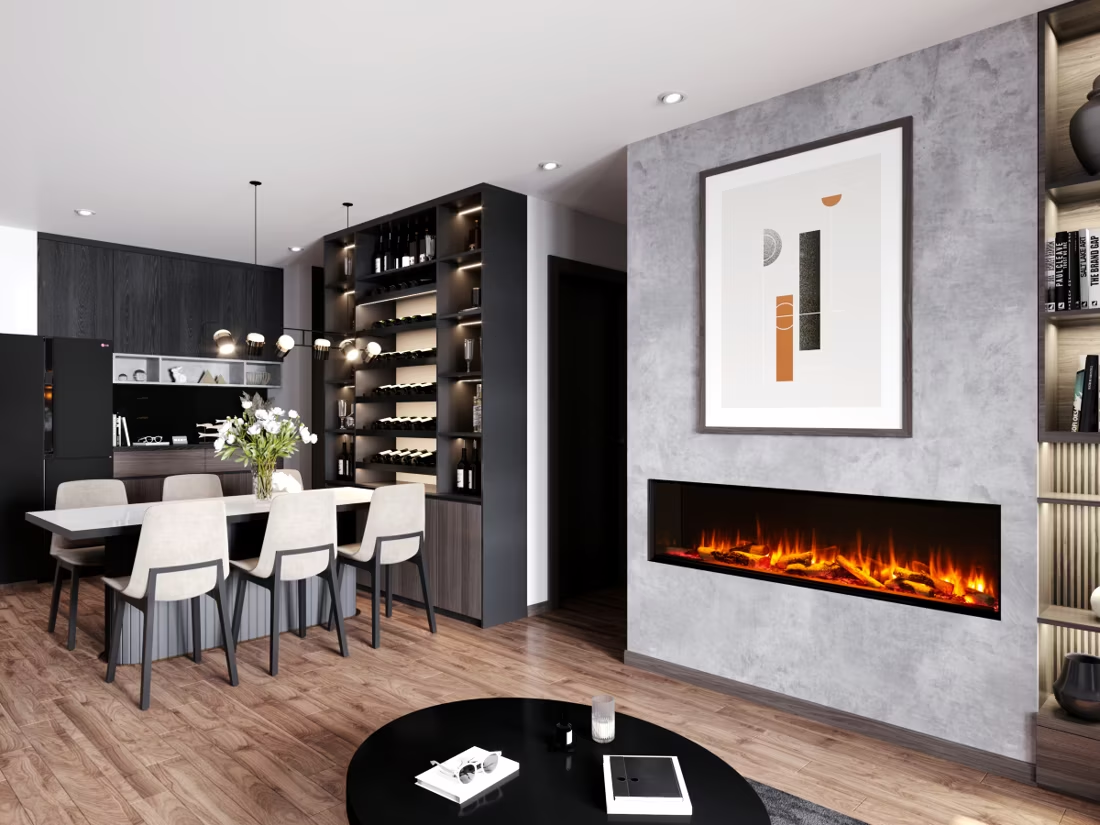
Where local homeowners already burn oak, hickory, and walnut for primary heat, an electric fireplace usually plays a supporting role—supplemental warmth in a bedroom, a den, or a manufactured home where venting a wood or gas unit isn't practical. No chimney, no gas line, no combustion byproducts to vent outside—just a unit that plugs into a standard outlet or, for larger built-ins, a dedicated 240V circuit. For a county without natural gas infrastructure in most areas, that simplicity matters.
Three steps. No salesperson until you're ready.
Tell us about your project
Your zip code, your situation, and the fuel you're leaning toward—or let the answers point you to one.
See what's actually available
The brands dealers within 100 miles genuinely carry—real options, never a catalog mirage.
Get your dealer & Project Guide
A trusted local dealer, plus the free Project Guide & Parts List that names every component of the job.
Frequently Asked Questions
How much does an electric fireplace installation cost in Carter County?
Most electric fireplace installations in Carter County run $400 to $1,200, and a large share of that spread comes down to whether the unit plugs into an existing standard outlet or needs new electrical work. A plug-in insert or wall-mount unit on the low end just needs a nearby outlet. A larger built-in electric fireplace, especially one requiring a dedicated 240V circuit or new wiring run through an older farmhouse or manufactured home, pushes toward the higher end once a licensed electrician is involved. Local dealers can walk your home's existing panel and wiring before quoting a final number.
Do I need an electrician to install an electric fireplace?
It depends on the unit. Many electric fireplace inserts and freestanding units run on a standard 120V outlet and don't require any electrical work beyond what's already in the wall. Larger built-in models, especially ones rated for whole-room heat output, often call for a dedicated 240V circuit—common in newer Carter County construction but not guaranteed in the county's older housing stock, where a licensed electrician may need to run new wiring from the panel. A local dealer can tell you which category your chosen unit falls into before you buy.
Can an electric fireplace actually heat a room, or is it just for looks?
Modern electric fireplaces do real work, not just flicker. Most units in the 1,000-1,500 sq ft heating range use a built-in fan-forced heater rated around 4,600-5,000 BTU, enough to noticeably warm a bedroom, den, or single living space—not a whole Carter County farmhouse. For homes already relying on wood heat from oak or hickory as the primary source, an electric unit is typically used as targeted supplemental heat in a room that's otherwise cold, or as a no-fuss option in a guest space or manufactured home.
Is an electric fireplace a good backup heat source during a power outage?
No—this is the one real tradeoff. Electric fireplaces require power to run both the flame effect and the heater, so during an outage they go dark along with everything else in the house. For rural parts of Carter County where outages can stretch longer during ice storms, many households pair an electric fireplace for everyday convenience with a wood stove or fireplace burning local oak, hickory, or walnut as true backup heat. If outage resilience is a priority, ask a local dealer about that two-fuel combination rather than relying on electric alone.
What's the difference between an electric insert and a built-in electric fireplace?
An electric insert is sized to slide into an existing masonry fireplace opening, converting an old wood-burning firebox into a plug-in electric unit without any venting changes. A built-in electric fireplace is meant for new framing—a wall cutout in a remodel or new construction—and is often wired to a dedicated circuit for full heater output. For Carter County homes with an existing but unused masonry fireplace, an insert is usually the simpler and less expensive path. New construction or a room without a chimney is better suited to a built-in.
Do I need a permit to install an electric fireplace in Carter County?
Most plug-in electric fireplace inserts and freestanding units don't require a building permit since there's no venting, gas line, or structural change involved. If your installation requires new electrical wiring, a dedicated circuit, or panel work, that portion of the job typically does require an electrical permit, handled through Carter County's building department. A local dealer or electrician installing a hardwired unit will usually pull any required permit as part of the job.
How does an electric fireplace compare to a wood stove for a Carter County home?
Wood stoves burning local oak, hickory, or walnut deliver far more heat output, work without electricity during outages, and have real fuel costs tied to what you cut or buy locally. Electric fireplaces offer none of that heat capacity or outage resilience, but they install in minutes, need no chimney or clearance to combustibles beyond the manual's spec, and cost nothing to maintain beyond the occasional bulb or blower replacement. In a county where wood heat is already common and reliable, electric units tend to fill a specific gap—a bedroom, a rental unit, a manufactured home—rather than replace the primary heat source.
Are pellet stoves a better option than electric for supplemental heat in Carter County?
It depends on what you're solving for. Pellet stoves from brands like Lignetics-supplied fuel sources can produce real, sustained heat output and, depending on the model, some can run briefly on battery backup during outages—something no electric fireplace can do. But pellet stoves need a hopper refilled regularly, a vent through an exterior wall, and an annual cleaning. Electric fireplaces need none of that upkeep but also can't function as backup heat. For a low-maintenance supplemental unit in an already wood-heated Carter County home, electric is simpler. For a second real heat source, pellet is worth a look.
Will an electric fireplace work in a manufactured or mobile home in Carter County?
Yes, and this is actually one of the more common installs in rural Carter County's manufactured housing stock. Because electric units don't require venting, gas lines, or a masonry chimney, they avoid most of the structural complications that come with wood or gas installs in manufactured homes. The main thing to check is the home's electrical panel capacity—older manufactured homes sometimes have limited amperage, so a larger built-in unit needing a dedicated 240V circuit may require a panel assessment first. A local dealer can check this before recommending a specific model.
Can I put a TV above my fireplace?
Yes—with an asterisk. Fireplaces are hot and TVs don't like heat. Either put a mantel between them to deflect rising warmth, or choose a fireplace with heat-management technology that creates a cool zone on the wall above—the wall stays around 125 degrees, barely warm, while the room still gets full heat. If you like clean lines and don't want a mantel, heat management is the answer.
Does an electric fireplace need a vent or chimney?
No—that's its superpower. An electric fireplace needs a wall and an outlet, period. No vent pipe, no gas line, no clearances to design around, which is why it works in bedrooms, offices, apartments, and walls where venting a gas or wood unit would be impractical or impossible. Installation is typically the simplest and least expensive of any fireplace type.
What is an in-home preview and do I need one?
It's a visit where a hearth professional measures your space, confirms the model you picked actually works in your home, and walks the specs—framing, gas line, venting, finish work—before anything is ordered. Some details you just can't know until you see the house. Never make a down payment without one; it's the single most-skipped step that burns buyers.
Can a fireplace actually lower my heating bill?
Yes—by creating a comfort zone. A furnace heats every square foot of the house just to warm the one room you're in; a gas fireplace on low burns roughly a sixth of the gas a typical furnace does. Set the furnace around 55–60 degrees as a baseline, then heat the rooms your family actually uses. Families who heat this way commonly save $20–$60 a month.
Find your electric fireplace in Carter County.
Tell us a bit about your home and we'll match you with the right electric fireplace or insert, plus a free Project Guide & Parts List with the exact parts and a recommended local dealer.
Find Your Fireplace →