
The right fireplace for Carter County's Ozark winters.
From Van Buren to Ellsinore, wood, gas, pellet, and electric fireplace resources for every corner of Carter County—plus a way to connect with a local hearth retailer instead of guessing at a big-box store.
Every Project Starts From One of These Five Situations
Hardwood country in the Ozark hills of Carter County, Missouri.
Carter County sits in the Ozark highlands of south-central Missouri, carved by the Current River and anchored by Big Spring—one of the largest freshwater springs in the country—inside the Ozark National Scenic Riverways. It's a county of just under 2,000 residents spread across small towns and river hollows, and it's still thick with the hardwood forest that gives the region its character: oak, hickory, walnut, and maple stands cover the ridges and bottomlands. Carter County sits in climate zone 4A—a mixed-humid climate with real winter cold fronts, freezing nights, and the occasional ice storm, but nothing like the sustained sub-zero stretches you'd see in Duluth or Fargo. Most households here run a heating season from roughly November through March, and a lot of that heat still comes from wood cut on the property or bought from a neighbor down the road.
What you'll find on this hub: hearth retailers, service technicians, and fuel suppliers serving Carter County's towns—Van Buren, Ellsinore, Grandin, Fremont, and the unincorporated communities along the Current River and Highway 60/19 corridors. Because Carter County is small and rural, some residents drive to nearby West Plains or Poplar Bluff for retailer selection—we've noted that below where it applies. Pick your fuel to get local dealer info, install costs, and the resources that match your project, whether you're heating a farmhouse outside Van Buren or a cabin near Big Spring.
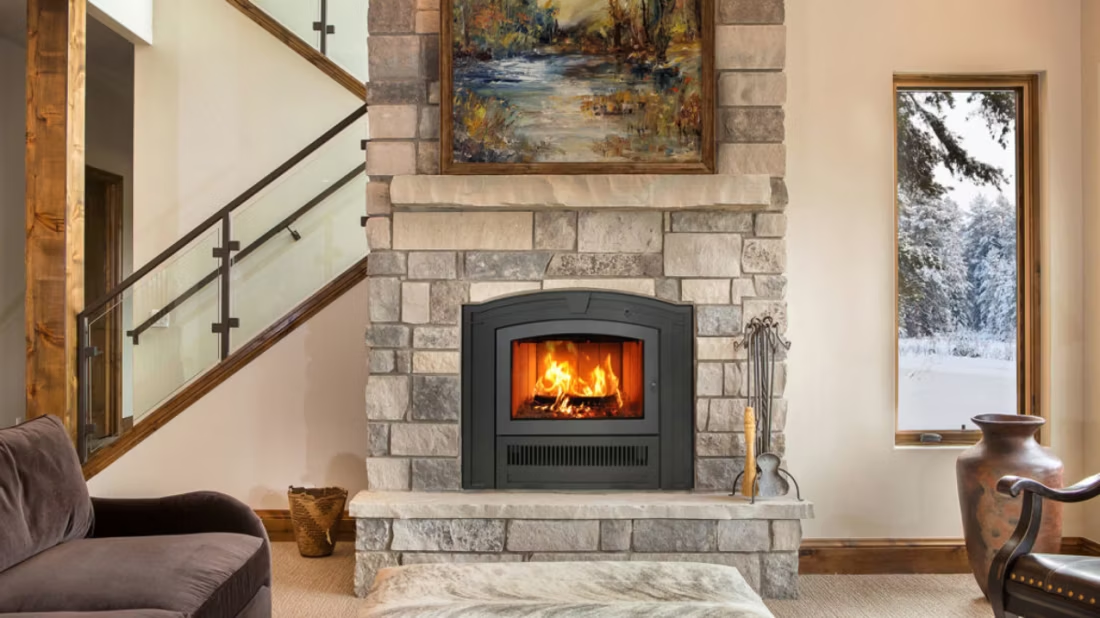
Four fuels. One honest answer for Carter County.
Three steps. No salesperson until you're ready.
Tell us about your project
Your zip code, your situation, and the fuel you're leaning toward—or let the answers point you to one.
See what's actually available
The brands dealers within 100 miles genuinely carry—real options, never a catalog mirage.
Get your dealer & Project Guide
A trusted local dealer, plus the free Project Guide & Parts List that names every component of the job.
Frequently Asked Questions
Which fuel works best in Carter County?
It depends on what's already on your property and how you want to manage the work. Wood is the traditional choice here—Carter County's ridges and bottomlands are thick with oak, hickory, walnut, and maple, and a lot of households still heat primarily with wood they cut themselves or buy locally. A cast-iron or steel wood stove rated for Missouri's mixed-humid climate handles the occasional hard freeze and ice storm without issue. Gas is mostly propane in this part of the county—piped natural gas service doesn't reach most of rural Carter County, so propane tanks and propane fireplace inserts are the practical 'instant heat' option for homes near Van Buren or along Highway 60. Pellet stoves are a solid middle ground if you want wood-style heat without splitting and stacking; Lignetics and Indeck Energy Services both distribute into this part of Missouri. Electric fireplaces work well as supplemental heat in bedrooms or additions, but given the region's cold snaps, they're rarely anyone's sole heat source. Most homes here run wood or propane as primary heat with something smaller for accent rooms.
Do I need a permit to install a fireplace in Carter County?
Carter County doesn't maintain a countywide building code the way larger Missouri counties do, so permitting requirements are handled locally and can vary depending on whether you're inside Van Buren city limits or out in unincorporated county land. Inside Van Buren, check with the city before starting any wood, gas, or pellet installation. In unincorporated areas, there's often no formal permit process, but that doesn't mean the rules go away—manufacturer clearance specifications and NFPA 211 chimney and hearth standards still apply, and your insurance company will care whether the installation was done to code even if the county doesn't require a permit. Gas installations still need a licensed propane technician for the tank and line hookup regardless of permitting. Most local retailers who install regularly in Carter County know exactly what's expected in each jurisdiction and can walk you through it.
Are there air quality restrictions on wood burning in Carter County?
No. Carter County has no designated nonattainment areas or winter burn advisories—it's rural Ozark country with a wide-open airshed and a small population (under 2,000 residents), so wood smoke simply doesn't build up the way it can in a basin or urban valley. That means you won't run into curtailment days or mandatory burn bans here. That said, an EPA-certified wood stove is still worth choosing over an old uncertified one—it burns roughly a third of the wood for the same heat, which matters when you're the one splitting it, and it puts less creosote in your chimney over a season of burning oak and hickory.
Can one local hearth retailer handle all four fuel types?
In Carter County itself, retailer options are limited simply because of the size of the market—this is a county of under 2,000 people. Some households find what they need locally for wood stoves and inserts, since that's the dominant fuel here, but for a wider selection across gas, pellet, and electric, many Carter County residents drive to dealers in West Plains or Poplar Bluff, both about 45 minutes to an hour away depending on which part of the county you're in. Those larger-market dealers typically carry all four fuel types and can show working displays if you're still deciding. We've flagged which fuel types local versus nearby-city dealers cover so you know before you drive.
How does service work in rural areas of Carter County?
Most chimney sweeps and gas techs who cover Carter County are actually based out of West Plains or Poplar Bluff and drive in on a schedule, so expect a modest travel fee—often in the $40–$80 range—for service calls out to the hollows along the Current River or the more remote stretches near Fremont and Hunter. Booking ahead of hunting season and the first hard freeze (typically September through October) is easier than trying to get an emergency call answered in January. If you're heating with wood, get your chimney swept before the season starts—a summer's worth of dust plus a full season of oak and hickory smoke is exactly the buildup that causes chimney fires.
What's the typical cost range for fireplace installation across all fuel types in Carter County?
Costs in Carter County tend to run a bit below national averages because labor rates in this part of rural Missouri are lower than in metro markets. Wood stove or insert installation: roughly $3,500–$7,500 for a typical install, more if new chimney chase construction is involved. Propane fireplace, insert, or stove: roughly $3,500–$8,500 depending on whether you already have a tank and line in place or need both installed from scratch. Pellet stove or insert: roughly $3,800–$6,500 for most installs. Electric fireplace: $200–$2,500 for the unit itself, plus $300–$900 in labor for anything beyond a plug-and-play wall unit. Exact numbers depend on your home's construction and which dealer you use—see the county + fuel pages above for more detail tied to specific retailers.
Can a fireplace actually lower my heating bill?
Yes—by creating a comfort zone. A furnace heats every square foot of the house just to warm the one room you're in; a gas fireplace on low burns roughly a sixth of the gas a typical furnace does. Set the furnace around 55–60 degrees as a baseline, then heat the rooms your family actually uses. Families who heat this way commonly save $20–$60 a month.
Wood, gas, pellet, or electric—how do I choose?
Match the fuel to your life, not the other way around. Wood: lowest fuel cost and total power-outage independence, but you're hauling and stacking. Gas: press a button, set a thermostat, no maintenance to speak of. Pellet: wood economics with automatic feeding, in exchange for weekly cleaning and a need for electricity. Electric: plugs in anywhere with honest supplemental heat. Nobody regrets the fuel that fits how they actually live.
What is an in-home preview and do I need one?
It's a visit where a hearth professional measures your space, confirms the model you picked actually works in your home, and walks the specs—framing, gas line, venting, finish work—before anything is ordered. Some details you just can't know until you see the house. Never make a down payment without one; it's the single most-skipped step that burns buyers.
Can I install a fireplace myself?
If you're putting a fire in your house on purpose, it's best to work with an expert. Unless you're genuinely experienced in framing, gas line, vent pipe, and the national code on clearances to combustibles, have a professional do it—and ideally the same company that sells you the fireplace, so warranty, service, and liability all live under one roof.
Stove and Fireplace Dealers in Carter County
Listings include WhyFire partner dealers, dealers we have verified as authorized for the brands we recommend, and established local businesses that carry hearth products. Every listing shows which one it is. The ones marked Preferred run on WhyFire's software, so they can show you real pricing and book your appointment right here. No manufacturer pays for placement. How we verify dealers →
Richards Heating And Cooling
West Plains Door & Building Supply
Find your fireplace fit in Carter County.
Tell us about your project and we'll match you with a trusted local dealer and send over a free Project Guide & Parts List—the exact parts, including the vent kit, and the dealer we recommend for your fuel and home in Carter County.
Find Your Fireplace →