
Real flame look, zero venting hassle in Ballwin.
No chimney, no gas line, no permit headaches—just plug in or hardwire and enjoy real heat. Find the right electric fireplace or insert, and connect with a trusted local dealer serving St. Louis County.
Every Project Starts From One of These Five Situations
The fireplace built for finished basements and no-chimney homes.
Ballwin sits in climate zone 4A at 621 feet, with winters that average a low of 22°F and a heating season that adds up to roughly the load you'd see over about a five-month winter—cold enough to want supplemental warmth, but nowhere near the extremes of a place like Fargo or Duluth. Much of the city's housing stock dates to the ranch and split-level boom of the 1960s through the '80s, and a large share of those homes have finished basements without an existing chimney or masonry flue. That's exactly the situation where electric fireplaces earn their keep.
Union Electric (Ameren Missouri) serves Ballwin at a residential rate around 12.56 cents per kWh, which keeps the cost of running a 1,500-watt electric insert or wall unit modest—usually well under 20 cents an hour on the highest setting. Unlike wood-burning fireplaces, which are rarely installed as new construction in Ballwin's established subdivisions given HOA restrictions and the lack of existing masonry chimneys in most homes, electric units need no venting, no gas line, and in many cases no permit at all if they're a plug-in model. For homeowners who want the look and supplemental warmth of a fireplace without cutting into a wall or running a flue through two stories, electric is often the most realistic option.
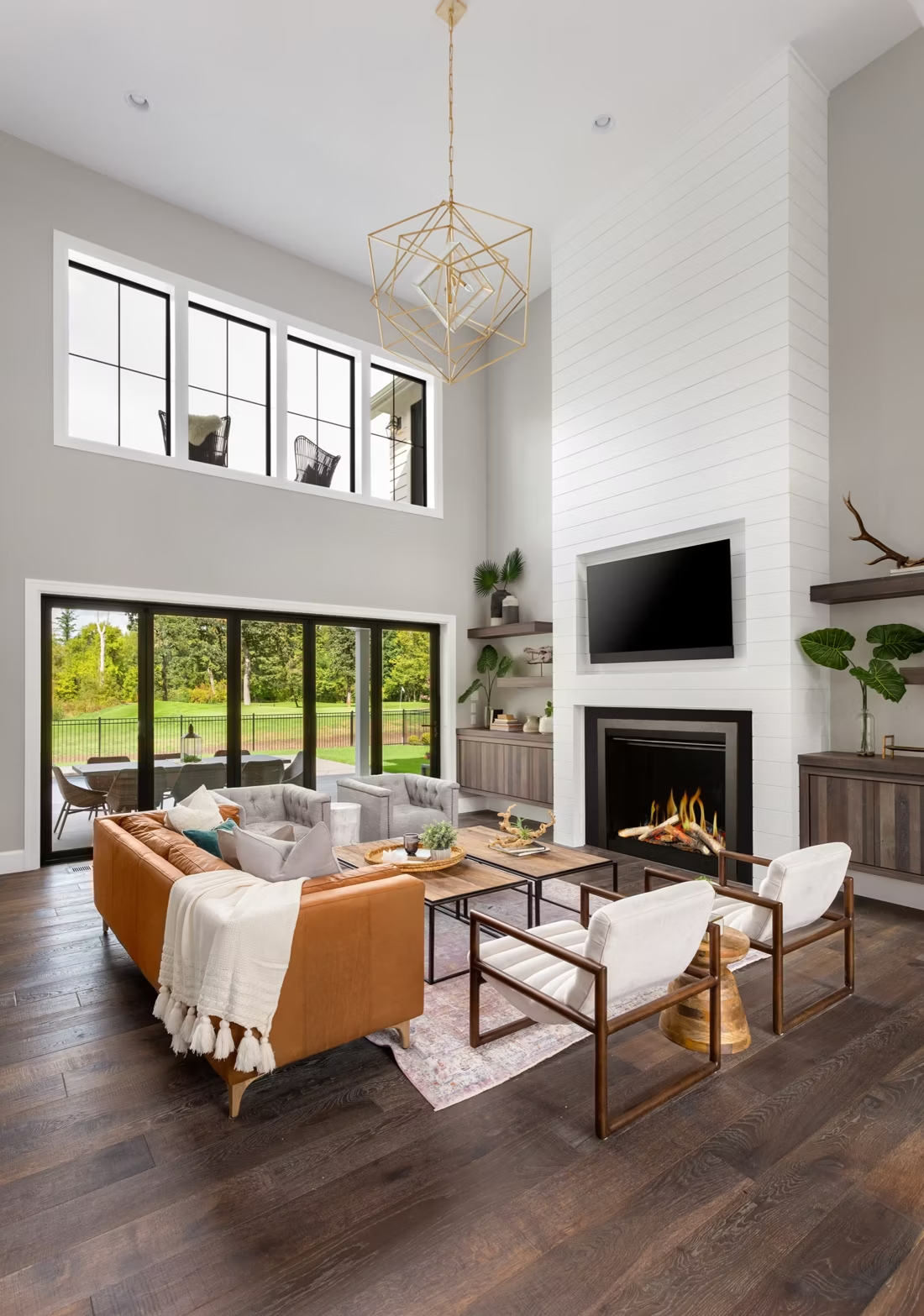
Three steps. No salesperson until you're ready.
Tell us about your project
Your zip code, your situation, and the fuel you're leaning toward—or let the answers point you to one.
See what's actually available
The brands dealers within 100 miles genuinely carry—real options, never a catalog mirage.
Get your dealer & Project Guide
A trusted local dealer, plus the free Project Guide & Parts List that names every component of the job.
Frequently Asked Questions
How much does it cost to install an electric fireplace in Ballwin?
Costs vary a lot by unit type. A plug-in electric insert or freestanding stove that uses a standard 120-volt outlet typically runs $250 to $700 installed, since there's no wiring or venting work involved. A built-in wall unit or a full mantel package that needs a dedicated circuit, in-wall wiring, or minor carpentry runs $800 to $2,500 in most Ballwin homes. If you're converting an existing wood-burning fireplace to an electric insert, expect the lower end of that range since the surround and hearth are already in place. A local dealer can give you a firm number after seeing your space.
Do I need a permit to install an electric fireplace in Ballwin?
It depends on the unit. A plug-in electric fireplace that runs off an existing outlet doesn't require a permit—it's treated like any other appliance. A hardwired built-in unit that needs a new dedicated circuit does require an electrical permit through the City of Ballwin's Department of Public Works, and the work should be done by a licensed electrician. Most hearth dealers either handle this coordination directly or can refer you to an electrician who's done the work before in Ballwin's subdivisions.
How much does it cost to run an electric fireplace in Ballwin?
At Union Electric's (Ameren Missouri) residential rate of about 12.56 cents per kWh, a typical 1,500-watt electric fireplace running on high costs roughly 19 cents per hour. Most owners run their unit a few hours a night in the living room or finished basement during the coldest months—call it $15 to $30 a month in additional electric cost for regular winter use. That's a fraction of what running the furnace harder would cost, which is part of why electric fireplaces work well as zone heat for a single room rather than a home's primary heat source.
Are electric fireplaces a good fit for finished basements?
Yes—this is one of the most common installs requested in Ballwin. A large share of the city's split-level and ranch homes have finished basements that were never built with a chimney or flue, which rules out wood or a vented gas fireplace without major construction. An electric insert or wall-mounted unit solves that: no venting required, minimal clearance needed, and most models are rated for use in a fully enclosed room. It's a practical way to add fireplace ambiance and a bit of supplemental heat to a basement rec room or home theater setup.
Electric vs. gas fireplace—which is right for my Ballwin home?
Gas fireplaces are a standard option in Ballwin for homes with natural gas service already run to the house—they produce real heat output and can serve as a legitimate secondary heat source during a cold snap. Electric fireplaces don't produce as much raw heat, but they cost far less to install since there's no gas line or venting, work in basements and condos where running a flue isn't practical, and can be replaced easily since there's no permanent gas connection. If your home already has gas service nearby, it's worth comparing heat output. If you're finishing a basement, renovating a condo, or want a low-cost upgrade, electric is usually the simpler path.
Can I convert my existing wood-burning fireplace to electric?
Yes, and it's a common project for Ballwin's older homes with existing masonry fireplaces. An electric insert slides into the existing firebox opening and plugs into a nearby outlet or a new dedicated circuit, giving you the look of a fire without cutting or capping your chimney. It's a good option if your chimney needs expensive repair work you'd rather avoid, or if your subdivision's wood-burning restrictions make a traditional conversion impractical. The masonry surround and mantel stay exactly as they are—only the firebox contents change.
Why don't more Ballwin homes have wood-burning fireplaces?
Ballwin's housing stock is mostly suburban St. Louis County construction from the 1960s onward, and a lot of it was built without masonry chimneys at all—slab foundations, finished basements, and standard subdivision construction don't lend themselves to solid-fuel venting the way an older farmhouse might. On top of that, many of the city's subdivision HOAs restrict new wood-burning installations. Oak, hickory, walnut, and maple are all available regionally for the homes that do have working wood fireplaces, but for new installs, electric and gas are the realistic options for most Ballwin properties.
How much space can an electric fireplace actually heat?
Most electric fireplace inserts and stoves put out around 4,600 to 5,000 BTU (roughly 1,500 watts), which is enough to noticeably warm a single room—typically 300 to 400 square feet—but not enough to heat an entire home. Think of it as zone heat: it takes the edge off a chilly living room or basement rec room on a 20-degree Ballwin morning and can let you turn the thermostat down a couple of degrees in that space. It's not a replacement for your furnace, but it's an efficient way to warm the room you're actually using.
Do I need a professional to install an electric fireplace, or can I DIY it?
A simple plug-in insert or freestanding electric stove is genuinely DIY-friendly—most homeowners can unbox it, set it in place, and plug it in themselves. Built-in wall units are a different story: they typically need a dedicated circuit, in-wall wiring, and sometimes minor framing or drywall work, which is a job for a licensed electrician and, depending on scope, may require a permit through the City of Ballwin. A local hearth dealer can tell you which category your chosen unit falls into and connect you with someone qualified to handle the electrical work if needed.
Can I put a TV above my fireplace?
Yes—with an asterisk. Fireplaces are hot and TVs don't like heat. Either put a mantel between them to deflect rising warmth, or choose a fireplace with heat-management technology that creates a cool zone on the wall above—the wall stays around 125 degrees, barely warm, while the room still gets full heat. If you like clean lines and don't want a mantel, heat management is the answer.
Do electric fireplaces actually produce heat?
Yes—most put out around 4,800–5,000 BTUs from a standard outlet, which comfortably warms a bedroom, office, or den as a comfort-zone heater. What they won't do is carry a whole house the way wood, gas, or pellet can. Think of electric as ambiance-first with honest supplemental heat: flames on with no heat in July, flames plus warmth in January.
Can a fireplace actually lower my heating bill?
Yes—by creating a comfort zone. A furnace heats every square foot of the house just to warm the one room you're in; a gas fireplace on low burns roughly a sixth of the gas a typical furnace does. Set the furnace around 55–60 degrees as a baseline, then heat the rooms your family actually uses. Families who heat this way commonly save $20–$60 a month.
Can I install a fireplace myself?
If you're putting a fire in your house on purpose, it's best to work with an expert. Unless you're genuinely experienced in framing, gas line, vent pipe, and the national code on clearances to combustibles, have a professional do it—and ideally the same company that sells you the fireplace, so warranty, service, and liability all live under one roof.
Nearby Dealers
Hearth shops serving Ballwin and the surrounding area. Every listing shows whether it is a WhyFire partner, a dealer we have verified as authorized for the brands we recommend, or a local business carrying hearth products. No manufacturer pays for placement. How we verify dealers →
Summer Classics By Forshaw
Fireside Hearth & Grill Center
Fireplace And Grill Center
English Sweep
Brighthouse Living
Forshaws
Savvy Surroundings
Gas Appliance Service LLC
Arnold Stove & Fireplace Center
Villa Lighting Supply
C Bennett Building Supply
Electric Service in Ballwin
An electric fireplace's heater draws about 1,500 watts—pennies per hour at local rates.
Union Electric Co - (Mo)
Find your electric fireplace in Ballwin.
Tell us about your space—basement, living room, or an existing fireplace you want to convert—and we'll match you with a trusted local dealer and send over a free Project Guide & Parts List: the exact unit specs, circuit requirements, and mounting details for your project, no vent kit needed.
Find Your Fireplace →