
Keep Your Family Warm and Safe—No Matter What
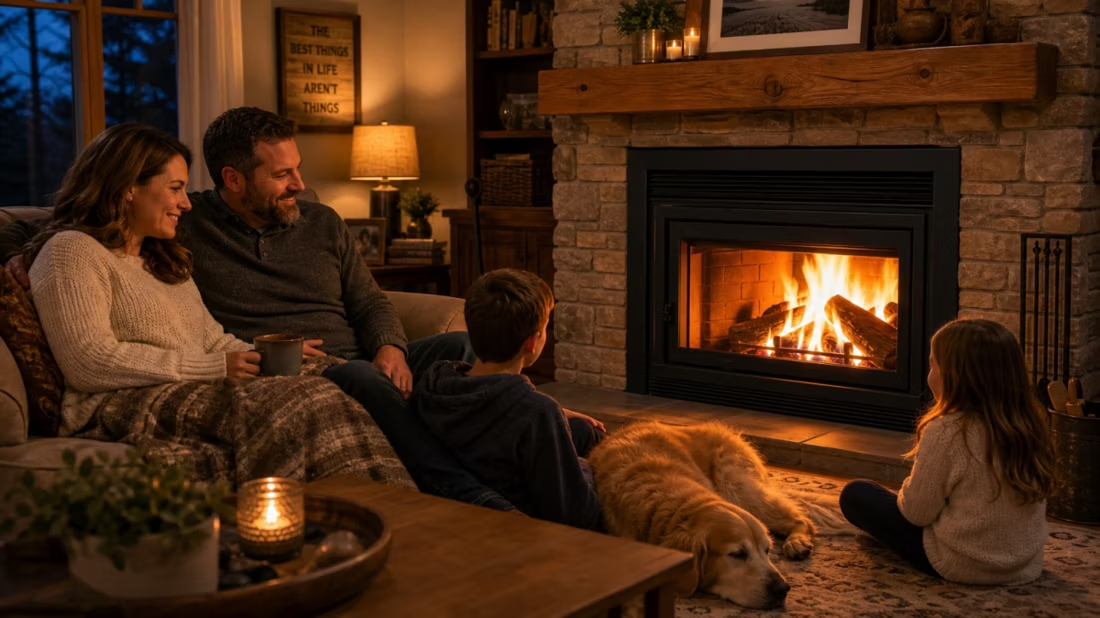
From Waynesboro to the timber roads along the Chickasawhay and Leaf Rivers, Wayne County homeowners use wood heat for backup warmth, cheaper bills, and the ambiance of a real fire—even when the coldest night barely dips below freezing. Find the right stove or insert, and connect with a trusted local dealer.
Every Project Starts From One of These Five Situations
Supplemental heat for short, chilly winters.
Wayne County sits in southeast Mississippi's pine belt, split by the Leaf and Chickasawhay Rivers, with Waynesboro as the county seat. Climate zone 3A means winters here are short and humid rather than brutal—the average winter low is 36°F and the county sees a winter heating season that's just a fraction as demanding as what a northern town like Duluth, MN sees in a single season. That changes the calculus on wood heat: it's rarely the only thing standing between a family and hypothermia, but it's still a genuinely practical choice for the handful of nights each winter that dip into the 20s, for keeping the power bill down, and for having heat on hand when an ice storm or thunderstorm knocks out electric service.
Wayne County's economy has deep roots in timber—pine dominates the working forests around Waynesboro, alongside oak and pecan that show up in fencerows, old homesteads, and land-clearing debris. That means firewood is often cheap or free if you know a logger, sawmill operator, or landowner clearing ground, and it means most local stove dealers are used to sizing units for supplemental heat and backup rather than round-the-clock primary heating. A properly sized stove or insert here does double duty: knocking the chill off a drafty farmhouse on a 30-degree morning, and keeping the living room warm when Singing River Electric crews are out working storm damage.
Three steps. No salesperson until you're ready.
Tell us about your project
Your zip code, your situation, and the fuel you're leaning toward—or let the answers point you to one.
See what's actually available
The brands dealers within 100 miles genuinely carry—real options, never a catalog mirage.
Get your dealer & Project Guide
A trusted local dealer, plus the free Project Guide & Parts List that names every component of the job.
Frequently Asked Questions
How much does a wood stove installation cost in Wayne County?
Most wood stove installations in Wayne County run in the $3,500 to $7,500 range, generally lower than what you'd see in colder northern markets because Class A chimney runs tend to be shorter and homes are less likely to need major structural work for clearances. A straightforward freestanding stove on an existing hearth pad sits at the lower end; adding a full Class A chimney chase through the roof, or installing into a home with no existing masonry, pushes toward the higher end. Get a firm number from a local dealer after they've seen your specific room and roofline.
What size wood stove do I need for a Wayne County home?
Because winter lows here average 36°F rather than sub-zero, most Wayne County homes do fine with a small to mid-size stove rated for 1,000 to 1,800 square feet, used to heat a den, living room, or open main floor rather than the whole house. Going smaller than you think you need is common advice here—an oversized stove in a mild climate tends to get run at a smolder to avoid overheating the room, which builds creosote faster and shortens the life of the unit. A local dealer can walk your space and match the stove to how you'll actually use it: daily supplemental heat versus occasional backup during outages.
Where can I find certified wood stove installers in Wayne County?
Look for installers with NFI (National Fireplace Institute) or CSIA (Chimney Safety Institute of America) credentials, which confirm training specific to wood-burning appliances rather than general contracting. Wayne County is rural enough that dealers based in Waynesboro often cover the whole county, including State Line and Buckatunna, sometimes with a small trip charge for the farther corners. Sticking with a dealer who installs what they sell keeps warranty coverage and code compliance in one hand instead of split between a retailer and a separate contractor.
Wood stove or wood insert—which fits my Wayne County home?
A wood stove is freestanding and can go almost anywhere with the right clearances and floor protection—a good option for homes without an existing fireplace. A wood insert slides into an existing masonry fireplace and uses the chimney that's already there, which is common in older Waynesboro homes and farmhouses built with a traditional hearth. If you've got an old open fireplace that pulls more heat up the flue than it puts into the room, an insert is usually the bigger upgrade in actual comfort per dollar spent.
Do I need a permit to install a wood stove in Wayne County?
Outside the city of Waynesboro, Wayne County does not enforce a countywide residential building code, so a wood stove installation typically just needs to follow the manufacturer's clearance specs and NFPA 211 venting standards—which any reputable local installer already does as a matter of course. Inside Waynesboro city limits, check with the city's building inspector before installation, since municipal permitting can differ from the unincorporated county. Either way, insurance carriers frequently ask for proof of a professional installation, so it's worth keeping the paperwork even where a formal permit isn't required.
What's the best wood stove for Wayne County's climate?
Given the mild winters here, most homeowners don't need a catalytic stove built for 20-hour burns at sub-zero temperatures—a solid non-catalytic mid-size stove from a brand like Pacific Energy or Lopi is usually plenty, and it's easier to run at a lower, steady output on the shoulder-season nights that make up most of Wayne County's burning season. If you're planning to lean on the stove hard during ice storms or extended power outages, ask your dealer about models with a larger firebox and a longer secondary burn, since you may be feeding it more consistently than a typical mild-winter user.
How often should my chimney be inspected in Wayne County?
An annual inspection before burning season starts—typically October or November here—is the standard recommendation from the CSIA, even in a mild climate like Wayne County's. Because local burning tends to be intermittent rather than constant, creosote buildup is usually slower than in colder-climate homes, but humidity in the Mississippi Pine Belt can accelerate moisture-related deterioration in masonry chimneys, so don't skip the yearly check just because you're not burning every day.
Where can I get firewood in Wayne County?
With Wayne County's timber economy, firewood is often easier to come by here than in non-timber regions—local sawmills, tree services, and land-clearing operations around Waynesboro frequently sell or give away oak, pine, and pecan cordwood. Oak and pecan burn hot and dense and are worth seasoning for six months to a year before burning; pine is more available but should be well-seasoned and used with a properly maintained chimney since it burns faster and can build more creosote if it's not fully dry. A handful of local sellers deliver by the cord, typically in the $150 to $250 range depending on species and how far outside Waynesboro you are.
Wood stove vs. pellet stove—which makes more sense in Wayne County?
Wood stoves work without electricity, which matters in Wayne County given how often Singing River Electric crews are out after summer storms and winter ice events—a wood stove keeps burning through an outage that would shut down a pellet stove's auger and blower. Pellet stoves, using brands like Lignetics, Hamer Pellet Fuel, or Greenway Renewable Energy, are more convenient day-to-day and burn cleaner with less ash, which appeals to homeowners who want low-maintenance supplemental heat rather than a backup power source. For most Wayne County households, the deciding factor is simple: if outage-proof heat matters to you, wood wins; if daily convenience matters more and you're not counting on it during a power outage, pellet is worth a look.
Why is my open fireplace making my house colder?
Open fireplaces suck—literally. As the fire burns, it consumes air your furnace already paid to heat and pulls it out through the chimney, so the house is actually colder after the fire goes out than before you lit it. An insert fixes this: it seals the chimney, puts fixed glass across the front, and turns that hole in your house into a real heat source.
Can a wood stove burn all night?
The right one can. If waking up to a warm house and live coals matters to you, say exactly that when you're shopping—firebox size and burn-rate control determine overnight performance far more than any number on a spec sheet. It's a much more useful question than asking about BTUs.
How much should I budget for a fireplace?
For an average home—covering the fireplace, the vent pipe, and basic installation—a budget between $3,900 and $5,500 gives you a lot of options across wood, gas, and pellet. By the time you add finish work, gas line, and electrical, the average complete installation lands between $5,000 and $12,000 all-in. In a remodel or new build, a good rule is to put about 2.5% of the total project cost toward the fireplace.
Does a fireplace add value to my home?
On average, a fireplace adds back to the home about the same amount you spent installing it. Add the monthly savings from heating the rooms you actually use instead of the whole house—often hundreds of dollars a year—and the value case is strong before you even count what a fire does for how your family uses the room.
Stove and Fireplace Dealers in Wayne County
Find your wood fireplace in Wayne County.
Tell us a bit about your home and how you plan to use it, and we'll match you with the right wood stove or insert for Wayne County's mild winters—plus a free Project Guide & Parts List and a trusted local dealer to install it.
Find Your Fireplace →