
Steady heat for the short cold spells in Wayne County.
Pellet heat sized for Wayne County's mild, humid winters—from Waynesboro out to the rural stretches of the county. I'll match you with a trusted local dealer who knows what's actually available and installable near you.
Every Project Starts From One of These Five Situations
Efficient heat that fits a short heating season.
Wayne County sits in climate zone 3A, with an average winter low around 36°F and roughly 2,194 heating degree days a year—a fraction of what a home in Fargo, ND racks up most winters, where HDD climbs past 9,000. That means most Wayne County homes aren't running a heat source around the clock from October through April. Instead, a pellet stove tends to earn its keep during the genuine cold snaps—the handful of weeks each winter when temperatures drop into the 20s and 30s overnight, plus the occasional hard freeze that catches the Gulf South off guard.
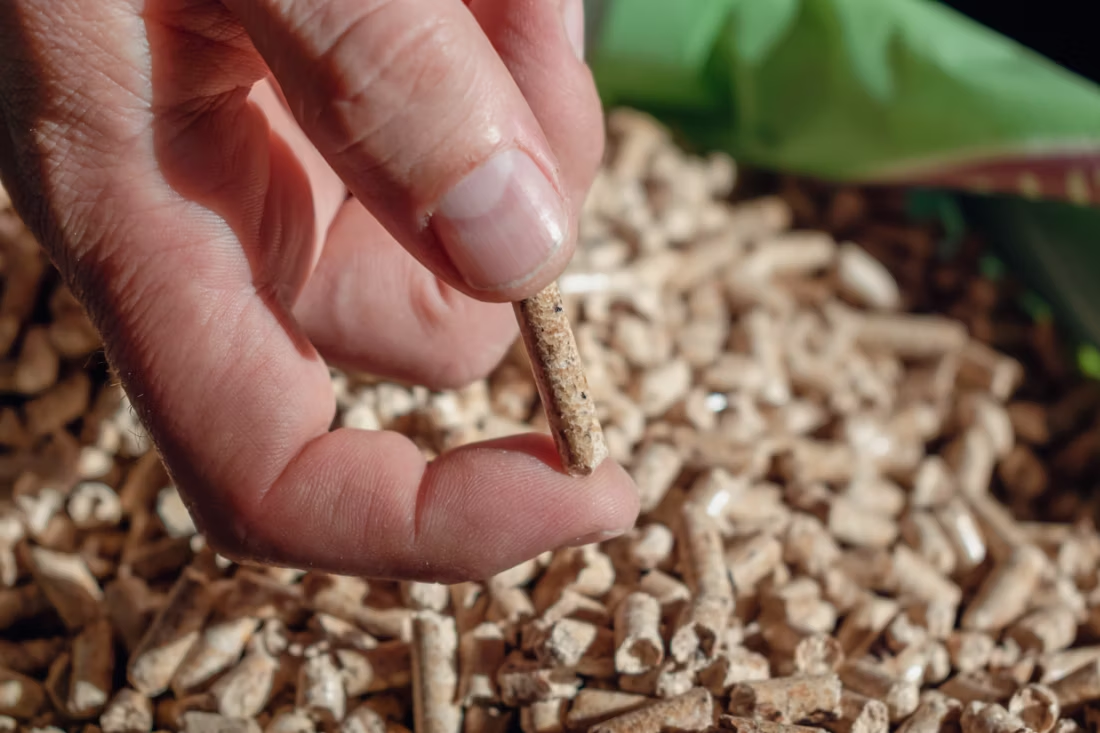
Because Wayne County has no listed air quality restrictions or non-attainment status, there's no burn-ban season to plan around, which simplifies things for pellet owners here compared to counties with winter inversion concerns. Regional pellet supply runs through brands like Lignetics, Hamer Pellet Fuel, and Greenway Renewable Energy, all of which are distributed through farm supply and hardware retailers across southeast Mississippi. The other local reality worth planning for: pellet stoves run on electricity for the auger and blower, and this part of Mississippi sees real hurricane-season and ice-storm outage risk—something worth discussing with your dealer if backup heat matters to you. High humidity also means pellets need to be stored in a sealed, dry space; bags left in a damp shed or garage will clump and jam a hopper fast.
Three steps. No salesperson until you're ready.
Tell us about your project
Your zip code, your situation, and the fuel you're leaning toward—or let the answers point you to one.
See what's actually available
The brands dealers within 100 miles genuinely carry—real options, never a catalog mirage.
Get your dealer & Project Guide
A trusted local dealer, plus the free Project Guide & Parts List that names every component of the job.
Frequently Asked Questions
How much does a pellet stove installation cost in Wayne County?
Cost depends on the stove size, whether you're venting through an existing chimney or running new sidewall venting, and whether you need electrical work for the hopper and blower. Rather than quote a number that doesn't hold up once a dealer sees your home, I'll get you matched with a trusted local installer who can give you a firm, in-home estimate—and as part of that match, you'll get a free Project Guide & Parts List showing the exact parts your project needs, including the vent kit, so you're not guessing at scope before the quote arrives.
What size pellet stove do I need for my home in Wayne County?
Because Wayne County's heating season is short and mild compared to colder states, most homes here don't need a large, whole-house pellet stove sized for round-the-clock burning. A smaller-to-midsize unit is often plenty for supplemental heat in a main living area during the coldest stretches, while larger stoves make more sense for older farmhouses, drafty construction, or homeowners who want the pellet stove to carry most of the heating load on the coldest nights. A local dealer will size the unit based on your square footage, insulation, and how you actually plan to use it—occasional backup versus daily heat.
How do I find a certified pellet stove installer near me in Wayne County?
Look for installers with NFI (National Fireplace Institute) pellet-specialist certification, which covers proper venting, clearance, and electrical setup for pellet appliances specifically—different skills than a wood stove or gas fireplace install. Given Wayne County's small population and rural footprint, dealers serving Waynesboro and the surrounding county often cover a wide service radius, so expect installers based in a neighboring town to be part of the normal service area rather than an exception. I match homeowners with dealers who are actually set up to service pellet equipment locally, not just sell it.
What's the difference between a pellet stove and a pellet insert?
A pellet stove is a freestanding unit that sits on its own hearth pad and vents out through a wall or existing chimney—it can go almost anywhere with the right clearances. A pellet insert is built to slide into an existing masonry fireplace opening, turning an old wood-burning fireplace into a sealed, thermostatically controlled heat source using the chimney you already have. For Wayne County homes with an existing fireplace that mostly sits unused outside the coldest weeks, an insert is often the more practical upgrade; homes without an existing fireplace typically go with a freestanding stove instead.
Do I need a permit to install a pellet stove in Wayne County?
Most new pellet stove installations require a building permit through Wayne County's building department, particularly when new venting or electrical circuits are involved. Most local installers handle the permit application as part of the install, so it's rarely something you have to manage yourself. Since Wayne County has no air quality non-attainment designation or winter burn restrictions on the books, there's no seasonal curtailment schedule to worry about once the stove is installed—unlike counties in wood-smoke-sensitive basins out West.
What's the best pellet stove for Wayne County's climate?
Given Wayne County's mild winters and average lows in the mid-30s, a mid-BTU pellet stove is usually enough to handle supplemental heating without constantly cycling on low. Look for a model with a wide burn-rate range so it can idle efficiently during a 45°F evening and still put out real heat during a rare hard freeze. Because pellets and hoppers don't tolerate Gulf South humidity well if stored improperly, ask your local dealer about hopper capacity and how often you'll realistically need to refill during a normal Wayne County cold spell rather than sizing for a worst-case Northern winter.
How often does a pellet stove need cleaning or service?
Pellet stoves need more frequent attention than gas but less than wood—plan on cleaning the burn pot and ash area every few days to weekly during active use, and a full professional service and venting inspection once a year, typically before the season's first cold snap arrives. Given how short and intermittent Wayne County's heating season is, an annual pre-season check is usually enough to catch any auger, igniter, or venting issues before you actually need the stove running.
Where can I buy pellet fuel in Wayne County?
Regional brands including Lignetics, Hamer Pellet Fuel, and Greenway Renewable Energy supply pellets sold through farm supply stores and hardware retailers across southeast Mississippi, typically in 40-pound bags. Because Wayne County's burn season is short, most homeowners don't need to stockpile a full winter's supply the way a colder-climate household would—buying a few bags at a time as cold weather rolls in is common here. Keep bags in a dry, sealed space; garage humidity in this part of the state will clump pellets and cause hopper feed problems if they're stored loose.
Pellet stove vs. wood stove—which makes more sense in Wayne County?
Wood is plentiful and cheap here—oak, pine, and pecan are all common locally and easy to source or self-cut—and a wood stove keeps working without electricity, which matters during the hurricane-season and ice-storm outages this part of Mississippi sees. Pellet stoves are more convenient day to day (load the hopper, set the thermostat, less ash and smoke) but they need reliable power for the auger and blower, so they're not a fallback heat source if the grid goes down. For a lot of Wayne County homes, pellet works well as the everyday convenient option, with a generator or a backup wood source in mind for storm season. A local dealer can walk through both with you based on how you actually plan to use it.
How often does a pellet stove need cleaning?
A clean pellet stove is a happy pellet stove. Plan on cleaning the burn pot about once a week when you're burning regularly—ash and clinkers gum up the air holes just like a pellet barbecue. Most pellet stove problems trace back to skipped cleaning that nobody explained up front. Some designs make it easy with a trapdoor burn pot: pull a lever and the gunk drops into the ash pan.
Why is my open fireplace making my house colder?
Open fireplaces suck—literally. As the fire burns, it consumes air your furnace already paid to heat and pulls it out through the chimney, so the house is actually colder after the fire goes out than before you lit it. An insert fixes this: it seals the chimney, puts fixed glass across the front, and turns that hole in your house into a real heat source.
Does a fireplace add value to my home?
On average, a fireplace adds back to the home about the same amount you spent installing it. Add the monthly savings from heating the rooms you actually use instead of the whole house—often hundreds of dollars a year—and the value case is strong before you even count what a fire does for how your family uses the room.
Can a fireplace actually lower my heating bill?
Yes—by creating a comfort zone. A furnace heats every square foot of the house just to warm the one room you're in; a gas fireplace on low burns roughly a sixth of the gas a typical furnace does. Set the furnace around 55–60 degrees as a baseline, then heat the rooms your family actually uses. Families who heat this way commonly save $20–$60 a month.
Stove and Fireplace Dealers in Wayne County
Pellet Brands Stocked Around Wayne County
Manufacturers will point you to the nearest stocking dealer.
Find your pellet stove in Wayne County.
Tell me a bit about your home and I'll match you with a trusted local dealer serving Wayne County, plus a free Project Guide & Parts List laying out the exact parts—including the vent kit—your pellet stove project needs.
Find Your Fireplace →