
Find your fireplace, anywhere in Wayne County.
Wood, gas, pellet, and electric fireplace resources for the whole county—from Waynesboro down along the Chickasawhay River to Buckatunna and State Line. Pick a fuel and get matched with a local dealer who actually installs it here.
Every Project Starts From One of These Five Situations
Mild winters, 2,194 heating degree days, and a hearth that's more about backup and ambiance than survival heat.
Wayne County sits in the piney woods of southeast Mississippi along the Chickasawhay River, in climate zone 3A where the average winter low hovers around 36°F. With just 2,194 heating degree days a year—roughly a third of what a place like Minneapolis logs in an average winter—most homes here run on a heat pump for day-to-day comfort, and a hearth is something homeowners add for the handful of genuinely cold nights, for the look of a fire in the living room, or as backup heat when an ice storm knocks power out along the rural stretches toward Buckatunna and State Line. Oak, pine, and pecan are the wood species most commonly burned locally—pecan especially, since orchard trimmings and storm-downed limbs are easy to come by in this part of the state.
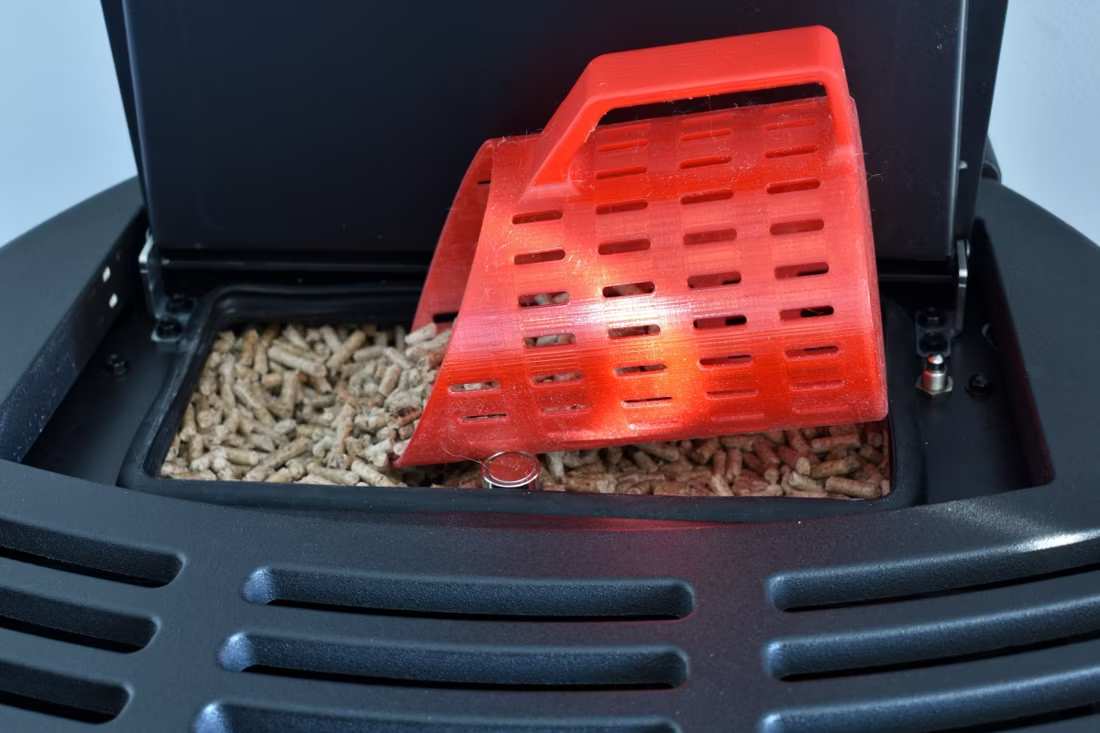
Because Wayne County has no air-quality non-attainment designation and no curtailment restrictions, wood-burning here is straightforward—there's no yellow-day system to plan around, and pellet stoves aren't competing with wood for a compliance advantage the way they do further west. That simplicity shows up across all four fuels: propane fills in where natural gas service doesn't reach past Waynesboro's city limits, pellet stoves from regional brands like Lignetics and Hamer Pellet Fuel are stocked by a handful of dealers, and electric units are a common add for a bedroom or den without any venting to plan around. This hub rolls up hearth retailers, service techs, and fuel suppliers across the county—pick your fuel below for local dealers, install costs, and recommendations specific to your town.
Four fuels. One honest answer for Wayne County.
Three steps. No salesperson until you're ready.
Tell us about your project
Your zip code, your situation, and the fuel you're leaning toward—or let the answers point you to one.
See what's actually available
The brands dealers within 100 miles genuinely carry—real options, never a catalog mirage.
Get your dealer & Project Guide
A trusted local dealer, plus the free Project Guide & Parts List that names every component of the job.
Frequently Asked Questions
Which fireplace fuel makes the most sense in a mild climate like Wayne County?
With average winter lows around 36°F and only 2,194 heating degree days a year, no fuel here needs to carry a home through a brutal winter—that changes the calculus. Wood stoves and fireplaces burning oak, pine, or pecan are popular for the handful of genuinely cold nights and for backup heat when an ice storm takes out power, which happens most winters somewhere in the county. Gas is the low-maintenance choice inside Waynesboro's natural gas service area; propane fills in everywhere else. Pellet stoves from regional suppliers like Lignetics and Hamer Pellet Fuel appeal to homeowners who want wood-like ambiance without splitting and stacking logs. Electric fireplaces are genuinely popular here too—with a heating season this short, a lot of homeowners are happy running one as their only supplemental heat source alongside a heat pump, rather than needing a wood or gas unit sized for real cold.
Do I need a permit to install a wood stove or gas fireplace in Wayne County?
Most new hearth installations go through the Wayne County Building Department if you're outside Waynesboro's city limits, or the City of Waynesboro's permitting office if you're inside them. A new wood stove or insert typically needs a building permit for the unit and venting; a gas fireplace or insert needs both a building permit and a licensed gas fitter to make the propane or natural gas connection. Electric fireplaces usually skip the permit process entirely unless you're adding a new circuit for a built-in unit. Because Wayne County has no air-quality curtailment program, there's no emissions-certification hoop to jump through beyond standard code compliance—most retailers we match homeowners with handle the paperwork as part of the install.
Does a wood or gas fireplace make sense mainly for backup heat during power outages?
For a lot of Wayne County homeowners, yes—that's a real driver of hearth purchases here. Ice storms are the main winter hazard in this part of Mississippi, and when lines go down along the rural roads toward Buckatunna or State Line, a wood stove or a gas fireplace with a standing pilot keeps a house livable without grid power, which an electric fireplace can't do. If backup heat is the priority, ask your local dealer about units that don't rely on an electric blower to function, since that's the detail that determines whether your fireplace still works when the power's out.
Can I find a retailer in Wayne County that carries more than one fuel type?
Yes—most hearth retailers serving this county carry two or more fuel types rather than specializing narrowly, which fits how homeowners here actually shop: someone deciding between a wood insert for backup heat and a gas fireplace for everyday convenience wants to see both in the same showroom. Multi-fuel dealers can also speak to whether your address falls inside Waynesboro's natural gas service area or whether you'll need propane, which changes the gas-fireplace math considerably. We match you with the retailer whose lineup and service area actually fits your project.
What does a fireplace installation typically cost in Wayne County?
Costs run a bit lower here than in colder parts of the country since venting and unit sizing don't need to handle extreme cold. Wood stove and insert installs generally run $3,500–$7,500. Gas fireplaces, inserts, and stoves typically land at $4,000–$9,000, with the higher end reflecting a new propane line or extending gas service. Pellet stove installs run roughly $4,000–$6,500. Electric fireplaces are the least expensive option—$200–$2,500 for the unit, plus $300–$900 in labor for anything beyond a simple plug-in placement. The county + fuel pages above break these numbers down by retailer.
How often does a fireplace or wood stove need service in a mild climate like this?
Even with a short heating season, annual service still matters. A chimney that burns oak or pecan a few dozen times a winter can build enough creosote to warrant a yearly sweep, and gas units need an annual inspection to check the pilot and gas lines before storm season, when you're most likely to actually need the fireplace working. Because the heating season here is short and unpredictable—a cold snap can show up in December and disappear by January—the best time to book service is late summer or early fall, before the first ice storm sends every homeowner in the county calling at once.
What is an in-home preview and do I need one?
It's a visit where a hearth professional measures your space, confirms the model you picked actually works in your home, and walks the specs—framing, gas line, venting, finish work—before anything is ordered. Some details you just can't know until you see the house. Never make a down payment without one; it's the single most-skipped step that burns buyers.
How much should I budget for a fireplace?
For an average home—covering the fireplace, the vent pipe, and basic installation—a budget between $3,900 and $5,500 gives you a lot of options across wood, gas, and pellet. By the time you add finish work, gas line, and electrical, the average complete installation lands between $5,000 and $12,000 all-in. In a remodel or new build, a good rule is to put about 2.5% of the total project cost toward the fireplace.
Wood, gas, pellet, or electric—how do I choose?
Match the fuel to your life, not the other way around. Wood: lowest fuel cost and total power-outage independence, but you're hauling and stacking. Gas: press a button, set a thermostat, no maintenance to speak of. Pellet: wood economics with automatic feeding, in exchange for weekly cleaning and a need for electricity. Electric: plugs in anywhere with honest supplemental heat. Nobody regrets the fuel that fits how they actually live.
Can I install a fireplace myself?
If you're putting a fire in your house on purpose, it's best to work with an expert. Unless you're genuinely experienced in framing, gas line, vent pipe, and the national code on clearances to combustibles, have a professional do it—and ideally the same company that sells you the fireplace, so warranty, service, and liability all live under one roof.
Stove and Fireplace Dealers in Wayne County
Listings include WhyFire partner dealers, dealers we have verified as authorized for the brands we recommend, and established local businesses that carry hearth products. Every listing shows which one it is. The ones marked Preferred run on WhyFire's software, so they can show you real pricing and book your appointment right here. No manufacturer pays for placement. How we verify dealers →
Blossman Gas And Appliance
Thompson Gas- Waynesboro
Local Lp Gas Co.
Get matched with a local Wayne County dealer.
Pick your fuel below and we'll put together a free Project Guide & Parts List—the right unit, the vent kit it needs, and the local dealer we recommend for your project.
Find Your Fireplace →