
Steady, efficient heat for Tallahatchie County's mild Delta winters.
With roughly 3,000 heating degree days and average winter lows near 32°F, Tallahatchie County doesn't need a furnace running around the clock—but a pellet stove or insert can take the edge off cold snaps and ice storms without the wood-splitting. Find the right unit and connect with a trusted local dealer.
Every Project Starts From One of These Five Situations
A supplemental heat source built for short, mild winters.
Tallahatchie County sits in Mississippi's Delta flatland, split between the two county seats of Charleston and Sumner, with a population of just over 6,100 spread across mostly rural farmland. Climate zone 3A means winters here are short and generally mild—the average low sits around 32°F and the county logs about 3,029 heating degree days a year, roughly half of what a place like Bozeman, Montana sees. That's not a climate that demands a wood-burning furnace running nonstop, but the Delta does get real cold snaps and occasional ice storms in December and January, and that's exactly the window where a pellet stove earns its keep.
For a lot of Tallahatchie County homes, a pellet stove or insert isn't the primary heat source—it's a way to knock down propane or electric bills during the coldest stretches and add a reliable secondary heat zone in a den or living room. Pellet units vent through a small-diameter pipe rather than a full masonry chimney, so installation is simpler than wood in most cases, and there's no cutting, splitting, or seasoning involved. Regional pellet brands like Lignetics, Hamer Pellet Fuel, and Greenway Renewable Energy are sold through hearth dealers and farm supply outlets across the north Mississippi Delta, so fuel isn't hard to find even in a county this size.
Three steps. No salesperson until you're ready.
Tell us about your project
Your zip code, your situation, and the fuel you're leaning toward—or let the answers point you to one.
See what's actually available
The brands dealers within 100 miles genuinely carry—real options, never a catalog mirage.
Get your dealer & Project Guide
A trusted local dealer, plus the free Project Guide & Parts List that names every component of the job.
Frequently Asked Questions
How much does a pellet stove installation cost in Tallahatchie County?
Most pellet stove and insert installations in this part of Mississippi run in the $3,000 to $6,500 range, depending on the unit and whether you're venting through an existing masonry fireplace or running new pipe through an exterior wall. Because pellet units don't require the full Class A chimney a wood stove needs, labor and materials tend to run lower than a comparable wood installation. Homes converting an old wood-burning fireplace to a pellet insert are usually on the lower end since the existing masonry does most of the venting work; new construction or a stand-alone stove in a room with no existing fireplace runs closer to the top of that range.
Does a pellet stove make sense in a climate this mild?
Given Tallahatchie County's roughly 3,029 heating degree days and average winter lows around freezing, a pellet stove isn't going to be anyone's sole heat source the way it might be in a place with a real winter. Where it earns its money is the two or three hard cold spells a typical Delta winter brings, plus the ice storms that occasionally knock out power to rural electric co-op lines for a day or two. For homes that lean on propane or electric heat pumps as their main system, a pellet stove in the main living area can meaningfully cut fuel costs during those stretches without asking anyone to become a full-time wood burner.
What size pellet stove do I need for a Delta-area home?
Most homes in Tallahatchie County are single-story and moderately insulated, and given the mild climate, a small to mid-size pellet stove (rated for 1,000 to 1,800 square feet) is usually enough to heat a main living area and take real pressure off a central system during cold snaps. Larger farmhouses or homes with open floor plans may want a mid-size unit closer to the 2,000-square-foot rating, but very few homes here need the largest pellet stoves on the market, which are built more for colder climates than the Mississippi Delta sees. A local dealer will size the unit based on your actual square footage and insulation rather than guessing from a chart.
What pellet brands are actually available locally?
Lignetics, Hamer Pellet Fuel, and Greenway Renewable Energy are the three brands most commonly stocked by hearth dealers and farm supply stores serving north Mississippi and the Delta. Bags typically run through the same retailers who sell the stoves themselves, along with some farm supply and hardware stores in nearby towns. Because Tallahatchie County itself is small and rural, most homeowners end up sourcing pellets from a dealer or supplier in a neighboring Delta town rather than in-county—worth confirming supply and delivery options before you commit to a specific stove model.
Do I need a permit to install a pellet stove in Tallahatchie County?
Yes—a building permit is typically required for a new pellet stove or insert installation through the county building department, and because pellet units run on household electricity to power the auger and blower, an electrical inspection may also apply depending on the wiring involved. Most established hearth dealers handle the permitting as part of the installation, so this usually isn't something you have to manage yourself. It's worth confirming with your installer whether you're inside Charleston or Sumner city limits or in unincorporated county territory, since that can determine which office issues the permit.
Will my pellet stove work if the power goes out?
No—pellet stoves require electricity to run the auger that feeds pellets into the burn pot and the blower that distributes heat, so they shut down without power. This is worth factoring in for Tallahatchie County, where much of the county is served by rural electric cooperatives such as North Delta Electric Power Association, and outages can stretch longer in rural areas after an ice storm than they would in town. Homeowners who want backup heat during outages often pair a pellet stove with a small generator, or choose a wood stove instead for the small number of homes where outage-proof heat is the top priority.
How much maintenance does a pellet stove actually need?
Less than a wood stove, which is part of the appeal. Plan on emptying the ash pan every few days during regular use, wiping down the glass, and vacuuming the hopper and burn pot roughly once a week. An annual professional cleaning—checking the auger motor, exhaust fan, and venting—is recommended before the start of each heating season. Given how mild Tallahatchie County winters run, many homeowners here only burn on the coldest days, which means less overall wear and a lighter maintenance schedule than a pellet stove would see in a colder climate.
Pellet stove vs. wood stove—which fits a Delta home better?
Wood is the traditional choice in this part of Mississippi—oak, pine, and pecan are all common locally, and a wood stove works without electricity, which matters if outages are a real concern on your line. But wood also means splitting, stacking, and seasoning, and given how few genuinely cold days Tallahatchie County sees in an average winter, that's a lot of ongoing work for occasional use. A pellet stove trades that off for the convenience of bagged fuel, a thermostat-controlled burn, and far less ash and creosote—at the cost of needing power to run. For most homes here using either as supplemental heat rather than a primary system, pellet's convenience usually wins out unless outage-proof backup heat is a specific priority.
Pellet vs. propane—which is cheaper to run in Tallahatchie County?
It depends on propane pricing in a given winter, which tends to swing more than pellet fuel costs. Many Delta-area homes already run on propane for central heat, and a pellet stove in the main living space lets you turn that system down or off during cold spells rather than replacing it outright. Pellet fuel pricing from regional suppliers like Lignetics and Hamer Pellet Fuel tends to be more stable year to year than propane, which can spike sharply during a hard winter across the broader region. For a county with mild, short winters like this one, the pellet stove's real value is usually cost avoidance during the handful of weeks propane use would otherwise spike—not full replacement of a home's primary system.
How often does a pellet stove need cleaning?
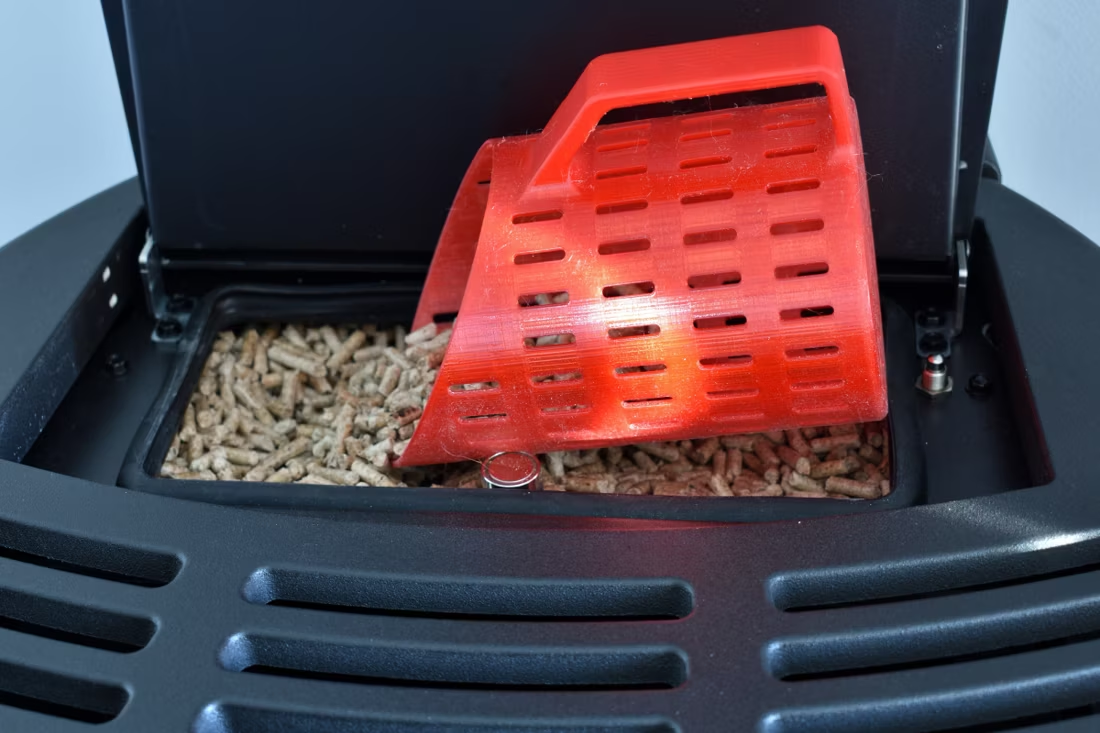
A clean pellet stove is a happy pellet stove. Plan on cleaning the burn pot about once a week when you're burning regularly—ash and clinkers gum up the air holes just like a pellet barbecue. Most pellet stove problems trace back to skipped cleaning that nobody explained up front. Some designs make it easy with a trapdoor burn pot: pull a lever and the gunk drops into the ash pan.
What's the difference between an insert and a zero-clearance fireplace?
An insert is a fireplace that slides into a pre-existing wood-burning fireplace—if you don't have one, there's nothing to insert it into. A zero-clearance fireplace is built into a framed wall, which makes it the answer for remodels and new construction. Simple test: existing masonry fireplace means insert; blank or framed wall means zero-clearance.
Can a fireplace actually lower my heating bill?
Yes—by creating a comfort zone. A furnace heats every square foot of the house just to warm the one room you're in; a gas fireplace on low burns roughly a sixth of the gas a typical furnace does. Set the furnace around 55–60 degrees as a baseline, then heat the rooms your family actually uses. Families who heat this way commonly save $20–$60 a month.
What is an in-home preview and do I need one?
It's a visit where a hearth professional measures your space, confirms the model you picked actually works in your home, and walks the specs—framing, gas line, venting, finish work—before anything is ordered. Some details you just can't know until you see the house. Never make a down payment without one; it's the single most-skipped step that burns buyers.
Stove and Fireplace Dealers in Tallahatchie County
Pellet Brands Stocked Around Tallahatchie County
Manufacturers will point you to the nearest stocking dealer.
Get matched with a pellet stove dealer in Tallahatchie County.
Tell us about your home and heating goals, and we'll match you with a trusted local dealer and send over a free Project Guide & Parts List—sized for your space, with the venting and parts you'll actually need.
Find Your Fireplace →