
Find the right fireplace for your Tallahatchie County home.
Wood, gas, pellet, and electric fireplace resources for Charleston, Sumner, Webb, Tutwiler, Glendora, Money, and every farm road in between. Find the right unit for a mild Delta winter and connect with a trusted local hearth retailer.
Every Project Starts From One of These Five Situations
Mild-winter heating across the Mississippi Delta.
Tallahatchie County sits in the flat farmland of the Mississippi Delta, where cotton, soybeans, and pecan orchards define the landscape more than elevation or terrain. Winters here are mild by national standards—average lows around 32°F and a light heating season overall, less than a third of the heating load a place like Fargo, ND deals with. Most homes need supplemental heat for a handful of cold snaps rather than a five-month heating season. Oak and pecan from cleared farmland and orchard trimmings are the backbone of local firewood supply, with pine common for kindling and quick-burning starter wood.
What you'll find on this hub: hearth retailers, service technicians, and fuel suppliers serving all of Tallahatchie County—from the dual county seats of Charleston and Sumner out to Webb, Tutwiler, Glendora, and Money. Because the county's population is small (just over 6,100 residents countywide), many of the businesses serving local homes are based in nearby Delta hub towns like Greenwood, Batesville, or Clarksdale and travel in for installs and service. Pick your fuel below to see local dealers, typical costs, and recommended units for a Delta home.
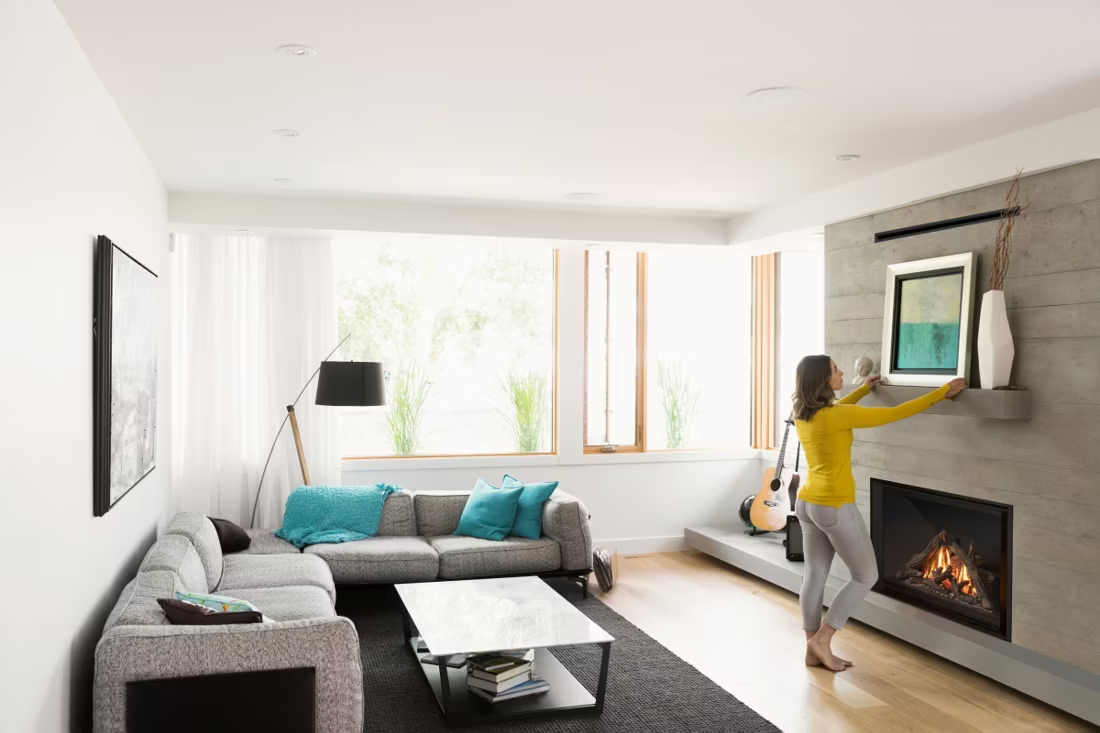
Four fuels. One honest answer for Tallahatchie County.
Wood
See what's available near Tallahatchie County.
Find your wood stove →Gas
24 models available near Tallahatchie County.
Find your gas fireplace →Pellet
See what's available near Tallahatchie County.
Find your pellet stove →Electric
See what's available near Tallahatchie County.
Find your electric fireplace →Three steps. No salesperson until you're ready.
Tell us about your project
Your zip code, your situation, and the fuel you're leaning toward—or let the answers point you to one.
See what's actually available
The brands dealers within 100 miles genuinely carry—real options, never a catalog mirage.
Get your dealer & Project Guide
A trusted local dealer, plus the free Project Guide & Parts List that names every component of the job.
Frequently Asked Questions
Which fuel works best in Tallahatchie County?
With winter lows averaging around 32°F and only a light heating season overall, Tallahatchie County doesn't demand the round-the-clock heat output that colder regions do—which opens up more real options. Wood remains popular and practical, especially with oak and pecan readily available from local farmland and orchard trimming; a mid-efficiency wood stove or insert handles the occasional hard freeze without trouble. Propane is the dominant "gas" choice in this rural stretch of the Delta since natural gas mains are limited outside the larger towns—propane fireplaces and inserts give instant heat with no wood-hauling. Pellet stoves are a solid middle ground, with Lignetics, Hamer Pellet Fuel, and Greenway Renewable Energy all distributed regionally. Electric fireplaces can realistically serve as primary heat in a well-insulated Delta home given how mild the climate is, or as supplemental ambiance in any home. Many households here run wood or propane for the coldest nights and electric for everyday use.
Do I need a permit to install a fireplace in Tallahatchie County?
In most cases, yes, for wood stoves, wood inserts, gas or propane fireplaces, gas inserts, and pellet stoves. Tallahatchie County's building permitting runs through the county building department, with county business handled out of the courthouses in both Charleston and Sumner—the county's two seats. Propane installations typically also require sign-off from the propane provider setting the tank and running the line. Electric fireplaces usually skip the permit process unless the installation involves a new dedicated circuit or built-in framing. Most local retailers and installers handle the paperwork as part of the job, so you generally don't have to navigate it solo.
Are there air quality restrictions on wood burning in Tallahatchie County?
No—Tallahatchie County has no designated air quality non-attainment status and no winter burn advisories tied to inversions or wildfire smoke, unlike some western counties. The Delta's flat, open terrain doesn't trap smoke the way mountain basins can. That said, an EPA-certified stove is still the smarter long-term choice for oak and pecan burning—cleaner combustion, less creosote buildup, and better fuel efficiency, even without a regulatory requirement pushing you toward one.
Can one local hearth retailer handle all four fuel types?
It depends on which retailer you reach, and few if any are physically located inside Tallahatchie County itself. Given the county's population of just over 6,100, most full-service hearth retailers covering Charleston, Sumner, Webb, and the rest of the county are based in nearby Delta hub towns like Greenwood, Batesville, or Clarksdale, and they typically specialize in two or three fuel types rather than all four—a wood-and-gas focused shop, for instance, or a propane dealer that also carries pellet units. If you want to compare fuels side by side, it's worth calling ahead to confirm a retailer stocks working displays of each type before making the drive.
How does service work in rural areas of Tallahatchie County?
Most chimney sweeps and gas or propane technicians serving Tallahatchie County are based outside it—in Greenwood, Batesville, or Clarksdale—and drive out to Charleston, Sumner, Webb, Tutwiler, Glendora, and the scattered farms between them. Given the distances involved on Delta back roads, expect a modest trip fee for service calls, and plan for a wider scheduling window than you'd get in a denser town. Booking annual chimney or propane-system service in late summer or early fall, before the first cold front comes through, is easier than trying to get an emergency slot in December.
What's the typical cost range for fireplace installation across all fuel types in Tallahatchie County?
Costs here tend to run at or below national averages, reflecting the area's lower cost of living. Wood stove or insert installation: roughly $3,500–$7,500 depending on chimney condition and hearth work. Gas or propane fireplace, insert, or stove: roughly $4,000–$9,000, with propane tank and line work adding to the lower end of that range if it's a new setup. Pellet stove or insert: roughly $3,500–$6,500 for a typical install. Electric fireplace: $200–$2,500 for the unit itself, plus $300–$900 in labor for anything beyond a simple plug-in placement. Ask any retailer you contact for a written estimate that separates unit cost from labor and venting.
Does a fireplace add value to my home?
On average, a fireplace adds back to the home about the same amount you spent installing it. Add the monthly savings from heating the rooms you actually use instead of the whole house—often hundreds of dollars a year—and the value case is strong before you even count what a fire does for how your family uses the room.
How much should I budget for a fireplace?
For an average home—covering the fireplace, the vent pipe, and basic installation—a budget between $3,900 and $5,500 gives you a lot of options across wood, gas, and pellet. By the time you add finish work, gas line, and electrical, the average complete installation lands between $5,000 and $12,000 all-in. In a remodel or new build, a good rule is to put about 2.5% of the total project cost toward the fireplace.
Can I install a fireplace myself?
If you're putting a fire in your house on purpose, it's best to work with an expert. Unless you're genuinely experienced in framing, gas line, vent pipe, and the national code on clearances to combustibles, have a professional do it—and ideally the same company that sells you the fireplace, so warranty, service, and liability all live under one roof.
I know I want a fireplace—where do I actually start?
Do two things today: snap a photo of the wall or fireplace you want to transform, and take a tape measure to the space—width, height, depth. Those two artifacts answer most of a hearth professional's first questions. Then settle fuel (wood, gas, pellet, or electric) and set a realistic budget: $3,900–$5,500 covers fireplace, vent, and basic install for most homes.
Stove and Fireplace Dealers in Tallahatchie County
Listings include WhyFire partner dealers, dealers we have verified as authorized for the brands we recommend, and established local businesses that carry hearth products. Every listing shows which one it is. The ones marked Preferred run on WhyFire's software, so they can show you real pricing and book your appointment right here. No manufacturer pays for placement. How we verify dealers →
Sayle Oil Company Inc.
Sayle Oil Company Inc.
Scott Petroleum
Sayle Oil Company- Water Valley
Find your fireplace in Tallahatchie County.
Pick your fuel below and I'll match you with a trusted local dealer serving your part of the county, plus a free Project Guide & Parts List built around your home and fuel choice.
Find Your Fireplace →