
Keep Your Family Warm and Safe—No Matter What
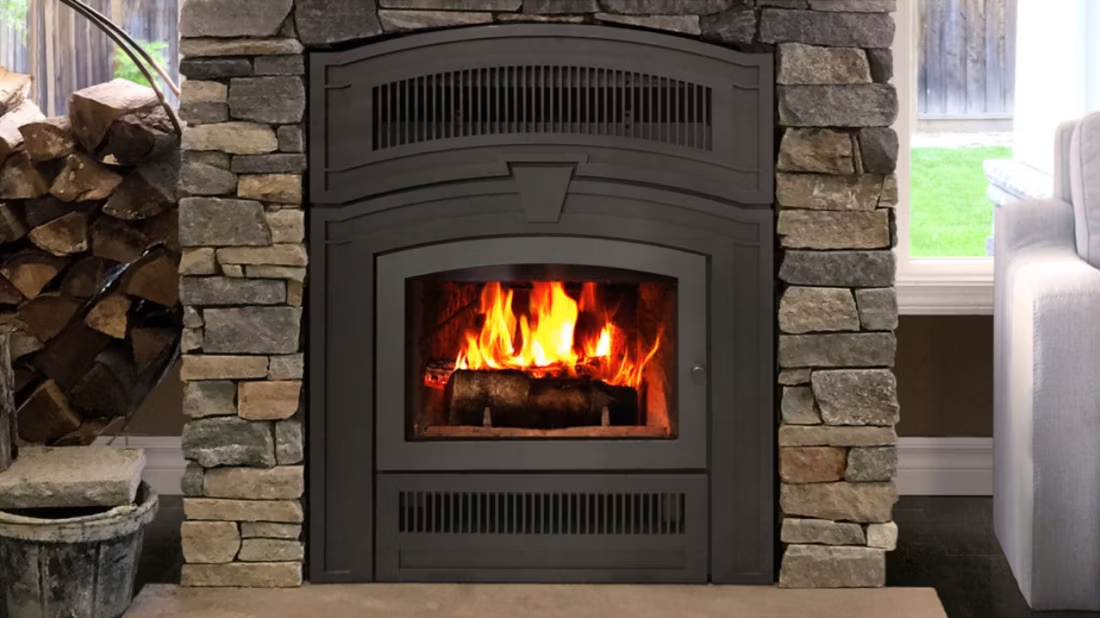
From Aberdeen to Amory, Hamilton to Smithville, wood heat still matters in Monroe County—as backup during ice storms, as a way to cut propane and electric bills, and as a source of real radiant warmth in older farmhouses along the Tombigbee. Find the right stove or insert, and connect with a trusted local dealer.
Every Project Starts From One of These Five Situations
Wood heat that fits Monroe County's timber-and-farm roots.
Monroe County sits in northeast Mississippi along the Tombigbee River, with a mix of hardwood bottomland, pine timberland, and working farmland stretching between Aberdeen, the county seat, and Amory, the county's largest city. Winters here are mild by national standards—an average low around 31°F and a fairly light overall heating load, a fraction of what a place like Duluth, MN or Fargo, ND sees in a single season. The heating season typically runs from late November through February, with the occasional hard freeze or ice storm rather than months of sustained cold.
That mild climate doesn't make wood heat irrelevant—it changes its role. Plenty of Monroe County homeowners run a wood stove or insert as supplemental heat to knock down propane and electric bills during the coldest stretches, and as backup heat when winter ice storms take down power lines, which happens with some regularity in this part of Mississippi. Local oak and pine burn reliably hot, and pecan—common here thanks to the county's orchards—is a dense, long-burning option many longtime residents already have access to. Unlike Western basin towns dealing with winter inversions, Monroe County has no air quality non-attainment concerns, so there's no curtailment schedule to work around when you want to burn.
Three steps. No salesperson until you're ready.
Tell us about your project
Your zip code, your situation, and the fuel you're leaning toward—or let the answers point you to one.
See what's actually available
The brands dealers within 100 miles genuinely carry—real options, never a catalog mirage.
Get your dealer & Project Guide
A trusted local dealer, plus the free Project Guide & Parts List that names every component of the job.
Frequently Asked Questions
How much does a wood stove installation cost in Monroe County?
A typical wood stove or insert installation in Monroe County runs roughly $3,000 to $7,000, depending on the unit, whether an existing masonry chimney can be reused, and whether a new hearth pad is needed for code clearance. Because Monroe County's climate is mild compared to northern wood-heat markets, venting runs are usually simpler and shorter—through-wall or through-existing-chimney installs tend to land toward the lower end. New construction or homes without any existing chimney, which require full Class A pipe run through the roof, sit closer to the top of that range. Get a firm number from a local installer after an in-home look at your specific setup.
What size wood stove do I need for my Monroe County home?
Because Monroe County's winters are mild—average lows around 31°F and a fairly light overall heating load—most homes here don't need the largest catalytic stoves built for sustained sub-zero cold. A small to mid-size stove (rated for 1,000 to 1,800 square feet) handles supplemental heating in most Aberdeen and Amory homes, especially when the goal is knocking down a propane or electric bill rather than replacing central heat entirely. Older farmhouses with less insulation, or homes further out toward Hamilton, Nettleton, or Smithville that rely more heavily on wood during cold snaps, may want to size up slightly. A local retailer can size your space correctly based on square footage, insulation, and how much of your heating load you want the stove to carry.
Where can I find certified wood stove installers near me?
Look for installers with NFI (National Fireplace Institute) or CSIA (Chimney Safety Institute of America) certification—both indicate specific training in wood-burning appliance clearances and venting, which matters more than general contracting experience. Certified hearth retailers serving Monroe County typically cover Aberdeen and Amory as home base, with a modest travel charge for installs out toward Hamilton, Nettleton, or Smithville. Avoid handyman-style installs for a wood-burning unit—improper clearances and venting are the leading cause of house fires tied to wood stoves, and a proper install protects both your safety and your homeowner's insurance.
What's the difference between a wood stove and a wood insert?
A wood stove is a freestanding unit installed on a hearth pad with its own chimney or Class A pipe run—it can go almost anywhere clearances allow, which makes it a good fit for newer homes or additions without an existing fireplace. A wood insert slides into an existing masonry fireplace opening, which is common in Monroe County's older homes around Aberdeen, and turns a drafty open hearth into a much more efficient heat source using the chimney you already have. If your home has an existing fireplace you rarely use because it lets more heat out than it puts in, an insert is usually the more cost-effective upgrade.
Do I need a permit to install a wood stove in Monroe County?
Yes—new wood stove and insert installations generally require a building permit, typically handled through the Monroe County building department, with most installers folding the permitting into the overall install so homeowners don't have to navigate it themselves. Because Monroe County has no air quality non-attainment status and no winter inversion issues, there's no curtailment schedule or burn-ban season to plan around—a real contrast to Western wood-heat regions where certain stove models can't legally operate on high-pollution days. Here, the permit process is about safe installation, not emissions restrictions.
What's the best wood stove for Monroe County's climate?
Given Monroe County's mild winters—a fairly light overall heating load and average lows around 31°F—a full 20-hour catalytic burner built for sustained deep-cold performance is usually more stove than most homes need. Mid-size non-catalytic stoves from brands like Pacific Energy, Drolet, or Vermont Castings tend to be a better fit for supplemental heating in Aberdeen or Amory homes, offering solid heat output without the overkill. That said, if you're near the Tombigbee bottomlands or in an older, leakier farmhouse and want backup heat that can carry a room through a multi-day ice storm power outage, sizing up slightly and choosing a stove with a longer burn time is worth discussing with a local dealer.
How often should my chimney be inspected and cleaned?
The CSIA recommends an annual inspection for any wood-burning appliance, and Monroe County's humid subtropical climate adds a wrinkle worth knowing: chimneys that sit unused for most of the year in this mild-winter region can accumulate moisture and creosote buildup between the occasional cold snaps when they're actually fired up. Plan on a sweep and inspection in early fall before the first real cold arrives, ideally through a local chimney sweep covering the Aberdeen or Amory area. Skipping this step is the leading cause of chimney fires, even in a climate where the stove only runs a few months a year.
Where can I get firewood in Monroe County?
Monroe County doesn't have significant public national forest land, so most firewood here comes from private land, farm woodlots, and local sellers rather than Forest Service cutting permits. Oak, pine, and pecan are the most common species sold and burned locally—pecan in particular is available thanks to the county's orchard operations, and it burns dense and long once seasoned. Prices vary by seller, but a stacked cord typically runs a couple hundred dollars delivered within Aberdeen or Amory, with a modest surcharge for rural delivery out toward Hamilton or Smithville. Ask any local hearth retailer for a referral—most keep a list of reliable seasonal firewood sellers.
Wood stove vs. pellet stove—which is right for me?
Wood stoves burn cordwood, work without electricity, and pair well with the oak, pine, and pecan already common around Monroe County—a real advantage when Mississippi ice storms take down power lines for days at a time. Pellet stoves burn compressed pellets from regional suppliers like Lignetics, Hamer Pellet Fuel (based right here in Monroe County), and Greenway Renewable Energy, and they're easier to operate day-to-day—load the hopper, set the thermostat, less ash to deal with. The tradeoff is that pellet stoves need electricity to run the auger and blower, so they can't serve as backup heat during an outage. For Monroe County homes where storm-related power loss is the main worry, wood tends to win; for homes prioritizing daily convenience with reliable power, pellet is a strong option.
Why won't my new wood stove get going like my old one?
New wood stoves are 70%+ efficient, so far less heat goes up the flue—which also means less draft to get a fire established. The rule: build a genuinely hot fire for about 45 minutes before you choke it down. Skip that and you get smoke in the room, creosote in the chimney, and a fire that never takes off. Most performance complaints trace straight back to this.
What's the difference between an insert and a zero-clearance fireplace?
An insert is a fireplace that slides into a pre-existing wood-burning fireplace—if you don't have one, there's nothing to insert it into. A zero-clearance fireplace is built into a framed wall, which makes it the answer for remodels and new construction. Simple test: existing masonry fireplace means insert; blank or framed wall means zero-clearance.
Does a fireplace add value to my home?
On average, a fireplace adds back to the home about the same amount you spent installing it. Add the monthly savings from heating the rooms you actually use instead of the whole house—often hundreds of dollars a year—and the value case is strong before you even count what a fire does for how your family uses the room.
How much should I budget for a fireplace?
For an average home—covering the fireplace, the vent pipe, and basic installation—a budget between $3,900 and $5,500 gives you a lot of options across wood, gas, and pellet. By the time you add finish work, gas line, and electrical, the average complete installation lands between $5,000 and $12,000 all-in. In a remodel or new build, a good rule is to put about 2.5% of the total project cost toward the fireplace.
Find your wood stove in Monroe County.
Tell us a bit about your home and we'll match you with the right wood stove or insert for Monroe County's climate, plus a free Project Guide & Parts List—the exact parts, including the vent kit, and your recommended local dealer.
Find Your Fireplace →