
Steady, thermostat-controlled heat for Monroe County homes.
From Aberdeen to Amory, pellet stoves give Monroe County households clean, consistent heat without the work of cutting and hauling cordwood. Find the right unit and connect with a trusted local dealer.
Every Project Starts From One of These Five Situations
Consistent heat without cutting or hauling wood.
Monroe County sits in Mississippi's Climate Zone 3A, along the Tombigbee River in the northeast corner of the state, with a county seat in Aberdeen and its largest population center in Amory. With an average winter low around 31°F and a moderate winter heating season, this isn't a brutal-cold climate—but it's cold enough, often enough, that homes in Hamilton, Nettleton, and the rural county outside city limits still need real, dependable heat through the winter months, and occasional hard freezes and ice events make that heat matter.
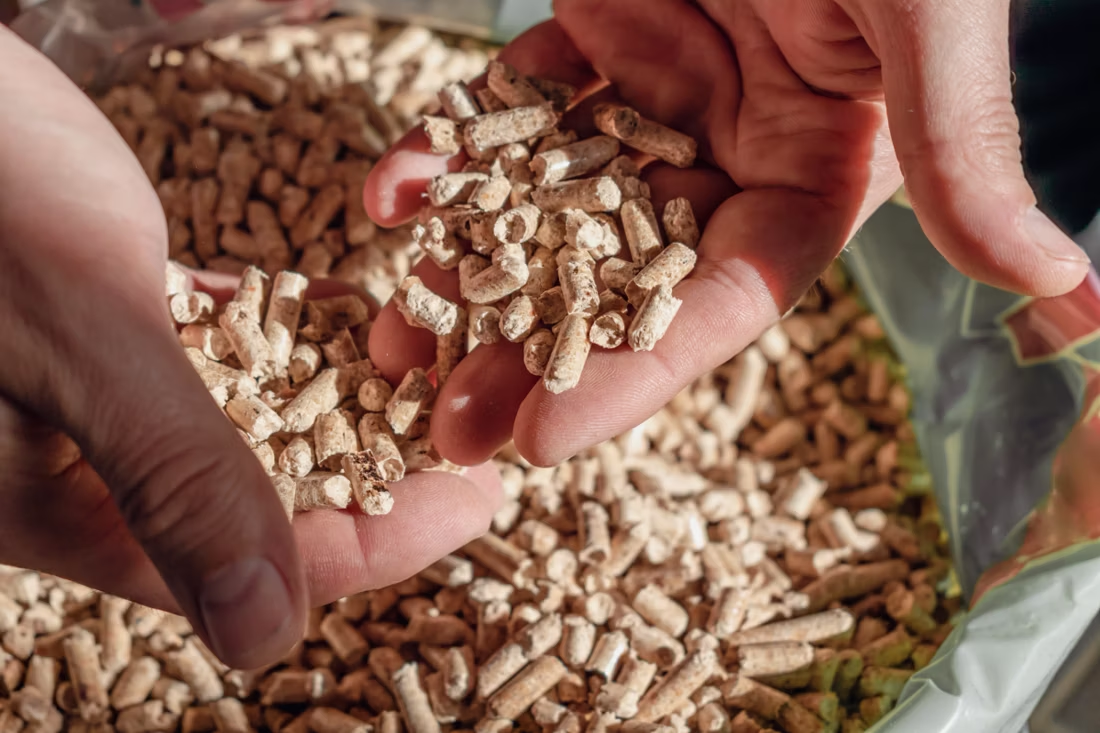
Monroe County's timber economy runs on oak, pine, and pecan, and that same wood supply chain feeds the region's pellet fuel producers—Lignetics, Hamer Pellet Fuel, and Greenway Renewable Energy all serve the area, which keeps pellet bags reasonably priced and easy to find locally rather than shipped in from out of state. With no air quality non-attainment issues or wood-burning curtailment periods in Monroe County, pellet appliances aren't solving a smoke problem here—they're solving a convenience problem: set a thermostat, load a hopper, and get even heat without splitting logs or sweeping a masonry chimney.
Three steps. No salesperson until you're ready.
Tell us about your project
Your zip code, your situation, and the fuel you're leaning toward—or let the answers point you to one.
See what's actually available
The brands dealers within 100 miles genuinely carry—real options, never a catalog mirage.
Get your dealer & Project Guide
A trusted local dealer, plus the free Project Guide & Parts List that names every component of the job.
Frequently Asked Questions
How much does a pellet stove installation cost in Monroe County?
Most pellet stove and insert installations in Monroe County run in the $3,000 to $6,000 range, and pellet venting is a big part of why it's on the lower end compared to wood or gas—pellet appliances vent through simple 3- or 4-inch PL pipe run through an exterior wall, which is far less involved than a full masonry chimney or Class A chimney pipe. A freestanding stove on a new hearth pad tends to run toward the lower end; a pellet insert going into an existing fireplace, where a local dealer needs to adapt the liner and venting path, can run toward the higher end. A local dealer will give you a firm number after seeing your home.
What size pellet stove do I need for my Monroe County home?
Given Monroe County's relatively mild winter—average lows around 31°F and a moderate winter heating season—most homes here don't need the largest hopper-capacity units sold nationally. A small-to-medium pellet stove rated for 1,000 to 1,800 square feet handles most single-story homes in Aberdeen, Amory, or Hamilton as either primary heat in a main living area or supplemental heat backing up central HVAC. Larger or more spread-out homes, or homes with an open floor plan, may do better with a bigger unit or a second zone. A local dealer will size to your square footage and layout during an in-home visit.
Where do I buy pellets in Monroe County, and how much do I need?
Pellet fuel is well-supplied regionally, with Lignetics, Hamer Pellet Fuel, and Greenway Renewable Energy all producing or distributing bags that reach Monroe County retailers—a real advantage of living in a timber-heavy part of Mississippi, since the raw material (oak, pine, and pecan mill waste) is local rather than trucked in from the Midwest or Northeast. Because the climate here is mild compared to much of the country, a typical Monroe County home burning a pellet stove as supplemental or zone heat might go through 1 to 2 tons per winter, versus 3 to 4 tons in a colder climate. Bags typically come in 40-pound units, sold individually or by the pallet (roughly a ton).
What's the difference between a pellet stove and a pellet insert?
A pellet stove is a freestanding unit that sits on a hearth pad and vents through a wall or existing chimney—it can go almost anywhere in the house with the right clearances. A pellet insert is built to slide into an existing masonry fireplace opening, using a liner run up the existing chimney (or a through-wall vent kit) to convert an old open fireplace into an efficient, thermostat-controlled heat source. For Monroe County homes with an existing wood-burning fireplace that mostly sits unused, an insert is often the simplest upgrade. Homes without an existing fireplace usually go with a freestanding stove instead.
Do I need a permit to install a pellet stove in Monroe County?
New pellet stove and insert installations typically require a building permit through the Monroe County Building Department, primarily to confirm hearth pad clearances and the through-wall venting termination location relative to windows, doors, and combustible siding. Most local dealers handle the permit paperwork as part of the installation, so it's rarely something homeowners have to manage themselves. Because Monroe County has no air quality non-attainment designation and no wood-burning curtailment periods, there are no operating restrictions once the unit is installed and inspected.
What's the best pellet stove for Monroe County's climate?
Because Monroe County's winters are moderate—nowhere near the sustained sub-zero stretches that push homeowners toward the biggest catalytic wood stoves further north—most households here are better served by a mid-size, non-catalytic pellet stove with a large hopper for convenience rather than maximum BTU output. Look for a model with a hopper that holds at least 40-60 pounds if you want to go a full day or more between reloads, and ask your local dealer about auto-ignition and thermostat control, which matter more here than raw heat output. Any dealer selling Lignetics-compatible or Hamer Pellet Fuel-compatible units in the area can match a stove to your square footage.
How much maintenance does a pellet stove need?
Pellet stoves need more frequent light maintenance than wood stoves but less heavy cleaning overall—expect to empty the ash pan every few days to weekly depending on use, and clean the burn pot and glass regularly to keep combustion efficient. Plan on one professional service visit per year to clean the exhaust venting, check the auger motor, and inspect gaskets. One honest limitation worth knowing: pellet stoves run on electricity to power the auger, igniter, and combustion blower, so they shut down during a power outage unless paired with a battery backup—something to weigh if you're in a part of Monroe County prone to losing power during winter ice events.
Pellet vs. wood—which is right for my Monroe County home?
Wood is abundant locally—oak, pine, and pecan are common throughout Monroe County—and a wood stove or insert keeps working during a power outage, which matters during the occasional winter ice storm that knocks out electric service in this part of the state. Pellet stoves trade that off-grid resilience for real convenience: no splitting or stacking cordwood, a thermostat that holds a steady temperature, and a cleaner burn with far less ash. For homes where nobody wants to handle firewood, or where a spouse or older resident needs to run the stove without physical wood handling, pellet is usually the better fit. For rural properties that already have wood on hand and want backup heat during outages, wood remains the more resilient choice.
Are there any burn restrictions on pellet stoves in Monroe County?
No—Monroe County has no air quality non-attainment designation and no winter burn curtailment periods, unlike parts of the country dealing with wood smoke inversions. Pellet stoves burn cleanly regardless, producing far less particulate matter than an open wood fireplace, so there's no local regulatory reason to choose pellet over wood here. The choice comes down to convenience, ash cleanup, and whether you want thermostat control—not air quality compliance.
What's the difference between an insert and a zero-clearance fireplace?
An insert is a fireplace that slides into a pre-existing wood-burning fireplace—if you don't have one, there's nothing to insert it into. A zero-clearance fireplace is built into a framed wall, which makes it the answer for remodels and new construction. Simple test: existing masonry fireplace means insert; blank or framed wall means zero-clearance.
How often does a pellet stove need cleaning?
A clean pellet stove is a happy pellet stove. Plan on cleaning the burn pot about once a week when you're burning regularly—ash and clinkers gum up the air holes just like a pellet barbecue. Most pellet stove problems trace back to skipped cleaning that nobody explained up front. Some designs make it easy with a trapdoor burn pot: pull a lever and the gunk drops into the ash pan.
How much should I budget for a fireplace?
For an average home—covering the fireplace, the vent pipe, and basic installation—a budget between $3,900 and $5,500 gives you a lot of options across wood, gas, and pellet. By the time you add finish work, gas line, and electrical, the average complete installation lands between $5,000 and $12,000 all-in. In a remodel or new build, a good rule is to put about 2.5% of the total project cost toward the fireplace.
Can a fireplace actually lower my heating bill?
Yes—by creating a comfort zone. A furnace heats every square foot of the house just to warm the one room you're in; a gas fireplace on low burns roughly a sixth of the gas a typical furnace does. Set the furnace around 55–60 degrees as a baseline, then heat the rooms your family actually uses. Families who heat this way commonly save $20–$60 a month.
Pellet Brands Stocked Around Monroe County
Manufacturers will point you to the nearest stocking dealer.
Find your pellet stove in Monroe County.
Tell us a bit about your home and we'll match you with the right pellet stove or insert, plus a free Project Guide & Parts List—the exact venting kit and parts you'll need, and a recommended local dealer to install it.
Find Your Fireplace →