
Find your electric fireplace in Monroe County.
Zone heat and everyday ambiance for Monroe County homes—from Amory to Aberdeen to Hamilton—without a flue, a gas line, or a woodpile to manage. Find the right unit and connect with a trusted local dealer.
Every Project Starts From One of These Five Situations
Mild winters, easy heat.
Monroe County sits in northeast Mississippi along the Tombigbee River, with Aberdeen as the county seat and Amory as the largest town, plus Hamilton, Smithville, and the edges of Nettleton rounding out the roughly 15,855 residents spread across the county. Winters here are genuinely mild—average lows hover around 31°F and the county has a mild, short heating season overall, a fraction of what a place like Duluth, Minnesota racks up in a single winter. That climate profile (Zone 3A, mixed-humid) means most Monroe County homes don't need a whole-house wood or gas heating overhaul; they need targeted, reliable warmth for the living room or den on the handful of genuinely cold nights each year.
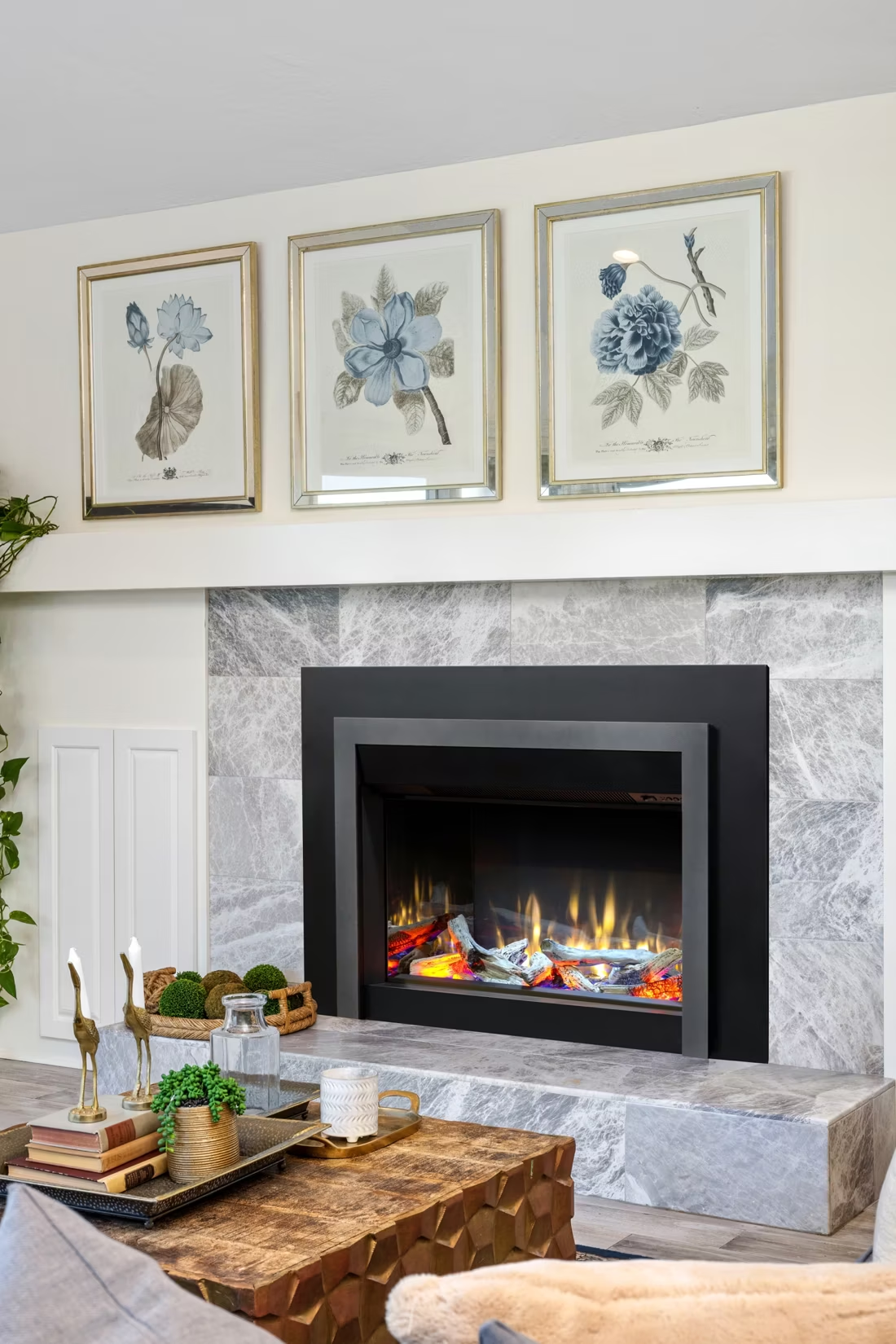
That's exactly what electric fireplaces are built for. There's no chimney to maintain, no gas line to run, and no wood to split from the oak, pine, or pecan that grows throughout the county and still fuels plenty of traditional fireplaces here. An electric insert or built-in plugs into a standard outlet (or a dedicated circuit for larger units) and delivers instant, adjustable heat with zero emissions and zero air quality concerns—which matters in a county that has none of the wintertime inversion or burn-restriction issues that complicate wood heat elsewhere. Monroe County Electric Power Association serves most of the county, and their standard residential service handles a typical electric fireplace load without any special upgrade in most homes.
Three steps. No salesperson until you're ready.
Tell us about your project
Your zip code, your situation, and the fuel you're leaning toward—or let the answers point you to one.
See what's actually available
The brands dealers within 100 miles genuinely carry—real options, never a catalog mirage.
Get your dealer & Project Guide
A trusted local dealer, plus the free Project Guide & Parts List that names every component of the job.
Frequently Asked Questions
How much does an electric fireplace installation cost in Monroe County?
Costs vary widely by unit type. A plug-in freestanding or mantel-style electric fireplace runs $400 to $1,500 installed, since it typically just needs a standard 120V outlet and no electrical work. A built-in wall unit or an electric insert set into an existing masonry firebox runs $1,000 to $2,500 once you factor in a dedicated circuit, an electrician's time, and any trim or surround work. Converting an old wood-burning fireplace to an electric insert is usually on the lower-to-middle end of that range, since the existing opening does most of the work for you. Local dealers in Amory and Aberdeen can give you a firm number after seeing your fireplace opening or wall space.
Does an electric fireplace need special wiring?
Smaller electric fireplaces and inserts (typically under 1,500 watts) run on a standard 120V, 15-amp household outlet—no special wiring needed. Larger built-in units, especially wide linear models or units rated for their full 1,500-watt heater output plus lighting effects, often call for a dedicated 15- or 20-amp circuit to avoid tripping breakers alongside other household loads. If you're not sure what your home's panel can handle, Monroe County Electric Power Association or a licensed local electrician can check your service capacity before you commit to a larger unit.
Will an electric fireplace actually heat my home in Monroe County?
It will comfortably heat a room, not a whole house—and in Monroe County's climate, that's usually all you need. With winter lows averaging around 31°F and only a mild, short heating season overall, most homes here rely on central HVAC for baseline heating and use a fireplace for supplemental warmth on the coldest nights or for ambiance the rest of the winter. A properly sized electric unit (most top out around 5,000-9,000 BTU) will comfortably take the edge off a living room or den on a 20-degree morning without straining to replace your furnace—which it isn't designed to do.
Do I need a permit to install an electric fireplace in Monroe County?
For a plug-in unit that uses an existing outlet, no permit is required. If you're having an electrician install a new dedicated circuit or hardwiring a built-in unit, that electrical work typically needs a permit if you're inside the city limits of Amory or Aberdeen, where local building departments oversee electrical permitting. Much of unincorporated Monroe County doesn't enforce a residential building code the way incorporated towns do, but it's still worth having a licensed electrician pull whatever permit applies rather than skipping the step—it protects you on insurance and resale.
Electric vs. wood vs. gas fireplace—which is right for my Monroe County home?
Wood remains popular in Monroe County, where oak, pine, and pecan are all locally available and plenty of homes still burn a traditional fireplace or stove, especially in older houses in Hamilton and the more rural parts of the county. Gas offers instant heat with more BTU output than electric, but requires either a natural gas line or a propane tank and more involved installation. Electric is the simplest and least expensive to install, produces zero emissions and needs no venting or fuel storage, and is often the best fit for a rental, a room without an existing chimney, or a homeowner who wants ambiance and modest supplemental warmth without any of the upkeep wood or gas require.
What type of electric fireplace works best for Monroe County homes?
For homes with an existing but unused masonry fireplace—common in older houses around Aberdeen and Amory—an electric insert that slides into the firebox is usually the best fit, since it uses the opening you already have and needs no venting. For newer construction or rooms without a fireplace, a built-in wall unit or a linear electric fireplace set into cabinetry gives a similar look with more design flexibility. Freestanding or mantel-style units are the right call for renters or anyone who wants heat and ambiance without any wall or electrical modification at all.
Can I replace my old wood-burning fireplace with an electric insert?
Yes, and it's a common project in Monroe County's older housing stock. An electric insert slides directly into an existing masonry firebox—no chimney liner, no venting, and no cutting permits for firewood needed. If the fireplace has been sitting unused, or the chimney needs expensive repair work to burn wood safely again, swapping in an electric insert is often far cheaper than restoring the chimney, and it eliminates any concern about a fireplace that's seen decades of use with oak or pine cordwood but hasn't been inspected recently.
How much does it cost to run an electric fireplace in Monroe County?
Most electric fireplaces draw around 1,500 watts on their heater setting, which works out to roughly 15-20 cents per hour of heated operation at typical Monroe County Electric Power Association residential rates—a few dollars for an evening's use. Running the flame effect alone without the heater draws only a few watts, so you can enjoy the visual year-round for essentially nothing. That operating cost is one reason electric fireplaces are popular as a supplemental heat source here rather than a primary one—they're cheap to run for a few hours at a time, but not intended to carry the full heating load of a home.
Electric vs. pellet stove—which makes more sense here?
Pellet stoves are available in the region through brands like Lignetics, Hamer Pellet Fuel, and Greenway Renewable Energy, and they put out real, whole-room heat by burning compressed wood pellets loaded into a hopper. But they need venting, regular hopper refills, ash cleanup, and electricity to run the auger and blower. Electric fireplaces skip all of that—no fuel to buy or store, no venting, and no ash—at the cost of lower maximum heat output. In Monroe County's mild climate, where most homes don't need aggressive supplemental heat, electric is usually the simpler, lower-maintenance choice unless you specifically want pellet's higher BTU output for a larger or draftier space.
Can I put a TV above my fireplace?
Yes—with an asterisk. Fireplaces are hot and TVs don't like heat. Either put a mantel between them to deflect rising warmth, or choose a fireplace with heat-management technology that creates a cool zone on the wall above—the wall stays around 125 degrees, barely warm, while the room still gets full heat. If you like clean lines and don't want a mantel, heat management is the answer.
Do electric fireplaces actually produce heat?
Yes—most put out around 4,800–5,000 BTUs from a standard outlet, which comfortably warms a bedroom, office, or den as a comfort-zone heater. What they won't do is carry a whole house the way wood, gas, or pellet can. Think of electric as ambiance-first with honest supplemental heat: flames on with no heat in July, flames plus warmth in January.
What is an in-home preview and do I need one?
It's a visit where a hearth professional measures your space, confirms the model you picked actually works in your home, and walks the specs—framing, gas line, venting, finish work—before anything is ordered. Some details you just can't know until you see the house. Never make a down payment without one; it's the single most-skipped step that burns buyers.
How much should I budget for a fireplace?
For an average home—covering the fireplace, the vent pipe, and basic installation—a budget between $3,900 and $5,500 gives you a lot of options across wood, gas, and pellet. By the time you add finish work, gas line, and electrical, the average complete installation lands between $5,000 and $12,000 all-in. In a remodel or new build, a good rule is to put about 2.5% of the total project cost toward the fireplace.
Find your electric fireplace in Monroe County.
Tell us about your home and we'll match you with a trusted local dealer and send over a free Project Guide & Parts List—the exact plan for your electric fireplace project in Monroe County, including the unit and any electrical work you'll need.
Find Your Fireplace →