
Keep Your Family Warm and Safe—No Matter What
Wood heat isn't the norm on the Mississippi coast—but for hurricane-season backup, hunting camps outside Vancleave, or a fireplace you actually want to sit in front of on a January night, it still has a place. Find the right unit and connect with a trusted local dealer.
Every Project Starts From One of These Five Situations
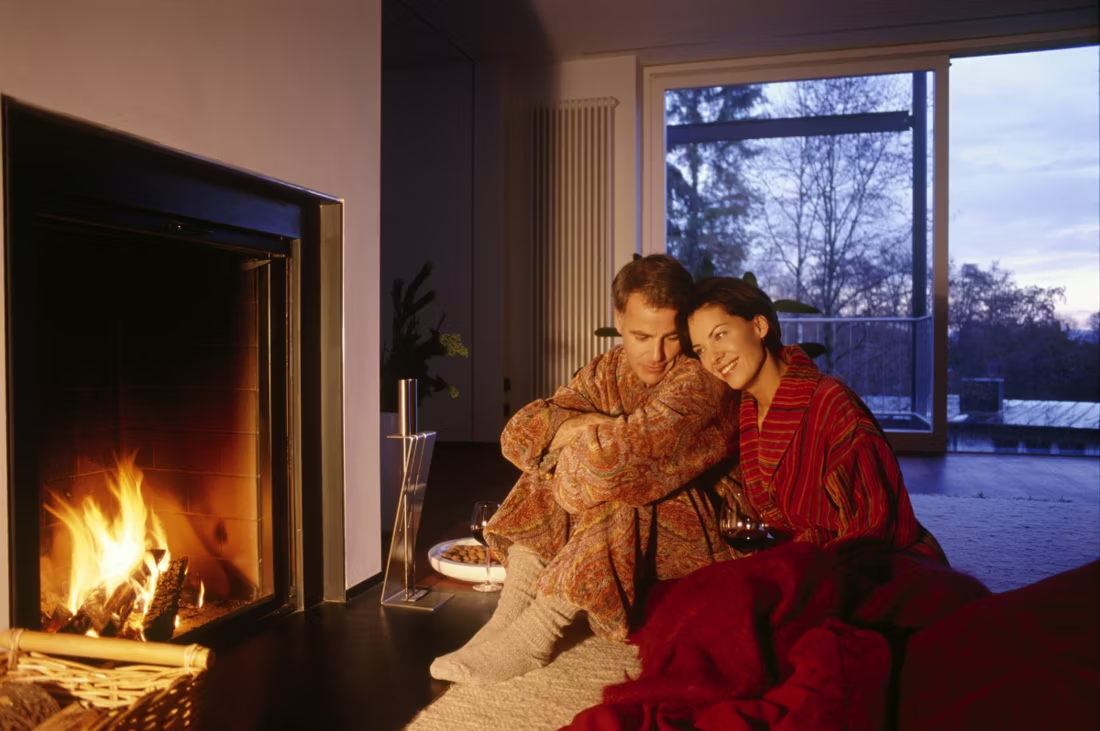
Here, a wood fire is for ambiance—not necessity.
Jackson County sits in climate zone 2A along the Mississippi Gulf Coast, covering Pascagoula, Gautier, Ocean Springs, Moss Point, and Vancleave. Winters here average a low of just 38°F, and the county logs only about 1,976 heating degree days a year—a fraction of what a place like Duluth, MN or Burlington, VT racks up in a single season. Air conditioning, not heating, dominates the energy conversation here. As a result, wood stoves and wood-burning fireplaces as a primary or even meaningful supplemental heat source are genuinely uncommon, and we won't pretend otherwise.
That said, a fireplace still has real appeal along the coast—for the handful of nights each winter when temperatures actually dip into the 30s, for the ambiance of a real fire on a screened porch or living room, and notably, for backup heat and cooking capability when hurricanes knock out power for days at a time. Oak and pecan are plentiful locally and burn dense and long; pine is common too but burns faster and sootier, so most local burners mix it with hardwood. With no air quality non-attainment issues or winter inversion concerns in Jackson County, there's no burn-ban season to plan around—when you do want a fire, there's nothing stopping you.
Three steps. No salesperson until you're ready.
Tell us about your project
Your zip code, your situation, and the fuel you're leaning toward—or let the answers point you to one.
See what's actually available
The brands dealers within 100 miles genuinely carry—real options, never a catalog mirage.
Get your dealer & Project Guide
A trusted local dealer, plus the free Project Guide & Parts List that names every component of the job.
Frequently Asked Questions
Do people actually install wood stoves in Jackson County?
Not often, and it's worth being upfront about that. With winter lows averaging 38°F and only around 1,976 heating degree days a year, wood isn't a practical primary heat source for most Jackson County homes—gas and electric fireplaces cover that need far more efficiently here. The homeowners who do install a wood stove or wood-burning fireplace are usually after one of three things: ambiance for a living room or den, a backup heat and cooking source for hurricane-season power outages, or a rural property near Vancleave or inland from the coast where a real fire fits the setting.
How much does a wood-burning fireplace or stove cost to install in Jackson County?
Expect a range of roughly $3,500 to $7,500 for a freestanding wood stove or insert installation, depending on the unit, whether a new Class A chimney has to be run through the roof, and hearth pad requirements. Because wood installs are less common here than in colder states, fewer local dealers stock wood units on the floor—plan on most installs being special-ordered, which can add a few weeks to the timeline compared to a gas or electric project.
Is a wood fireplace actually worth it in a mild Gulf Coast climate?
For heating cost savings, no—with only about 1,976 heating degree days a year, you won't burn enough wood to meaningfully offset an electric or gas bill the way a homeowner in a place like Fargo, ND would. Where it earns its keep in Jackson County is ambiance and resilience: a real fire on the handful of genuinely cold nights, and a heat and cooking source that doesn't depend on the grid during hurricane season, when Gulf Coast power outages can stretch for a week or more.
What firewood species are available locally, and which burn best?
Oak and pecan are the two hardwoods most readily available in Jackson County, and both are excellent firewood choices—dense, slow-burning, and long-lasting once seasoned six months to a year. Pine is also common locally but burns hot and fast with more resin, which builds creosote faster in a chimney; most local burners use it as kindling or mix it sparingly with oak or pecan rather than burning it exclusively. After tropical storms and hurricanes, downed oak and pecan limbs are a common (and free) source of firewood for residents willing to season it properly before burning.
Do I need a permit to install a wood stove in Jackson County?
Yes—a new wood-burning appliance typically requires a building permit, whether you're inside Pascagoula, Gautier, Ocean Springs, or Moss Point city limits (handled by the city building department) or in unincorporated Jackson County (handled by the county). The stove or insert itself should meet current EPA emissions standards. Most local installers who handle wood units will pull the permit as part of the job, since wood installs are less routine here than gas or electric conversions.
Does a wood stove make sense as hurricane backup heat and cooking?
It's one of the more compelling reasons to install one on the Gulf Coast. A wood stove or fireplace insert works with zero electricity, which matters when Jackson County loses power for days after a tropical storm or hurricane—it can heat a room and, in a pinch, warm food on top of the stove. If backup capability is the main driver, prioritize a simple freestanding stove over a fireplace with electronic blowers, and make sure you have a dry, covered wood supply staged before storm season.
Are there any burn restrictions or air quality rules in Jackson County?
No—Jackson County has no listed air quality non-attainment issues, winter inversion problems, or wildfire smoke concerns, unlike inland Western counties that see seasonal burn curtailment. That means there's no burn-ban season to navigate here; once your stove or fireplace is installed and permitted, you can use it as you like.
Wood vs. gas vs. electric—which fireplace fits a Jackson County home?
For most Jackson County homes, gas or electric is the more practical daily-use choice—instant on/off, no ash or wood handling, and well-suited to a climate where heat is needed only occasionally. Wood makes sense as a secondary choice: for the ambiance of a real fire, or specifically as hurricane-season backup heat that doesn't rely on the grid. Some homeowners here end up installing a gas fireplace for everyday use and keeping a wood stove or fireplace at a second property, hunting camp, or rural lot for exactly that reason.
Where can I get firewood in Jackson County?
Local tree services and landscaping companies around Pascagoula, Gautier, and Moss Point occasionally sell or give away seasoned oak and pecan from storm cleanup and routine tree removal—often the cheapest source if you have a truck and storage space. A handful of regional firewood suppliers also deliver seasoned hardwood by the truckload or partial cord; since wood heat demand is low here, availability and pricing can vary more than in a colder market, so it's worth calling ahead before storm season when demand spikes.
Why is a fireplace insert so efficient?
An insert does two things: it seals the chimney completely, so you stop losing air you already paid to heat, and it radiates warmth into the room through the firebox and glass. Most add a heat-exchange fan that pulls cool room air underneath, wraps it around the hot firebox, and pushes it back out warm. Your home is more efficient before you've even lit the first fire.
Why won't my new wood stove get going like my old one?
New wood stoves are 70%+ efficient, so far less heat goes up the flue—which also means less draft to get a fire established. The rule: build a genuinely hot fire for about 45 minutes before you choke it down. Skip that and you get smoke in the room, creosote in the chimney, and a fire that never takes off. Most performance complaints trace straight back to this.
Can I install a fireplace myself?
If you're putting a fire in your house on purpose, it's best to work with an expert. Unless you're genuinely experienced in framing, gas line, vent pipe, and the national code on clearances to combustibles, have a professional do it—and ideally the same company that sells you the fireplace, so warranty, service, and liability all live under one roof.
Can a fireplace actually lower my heating bill?
Yes—by creating a comfort zone. A furnace heats every square foot of the house just to warm the one room you're in; a gas fireplace on low burns roughly a sixth of the gas a typical furnace does. Set the furnace around 55–60 degrees as a baseline, then heat the rooms your family actually uses. Families who heat this way commonly save $20–$60 a month.
Stove and Fireplace Dealers in Jackson County
Find your wood fireplace in Jackson County.
Tell us a bit about your home and how you plan to use it—ambiance, hurricane backup, or both—and we'll match you with a trusted local dealer and send over a free Project Guide & Parts List built for your project.
Find Your Fireplace →