
Warmth on demand, even in the mild Mississippi winters.
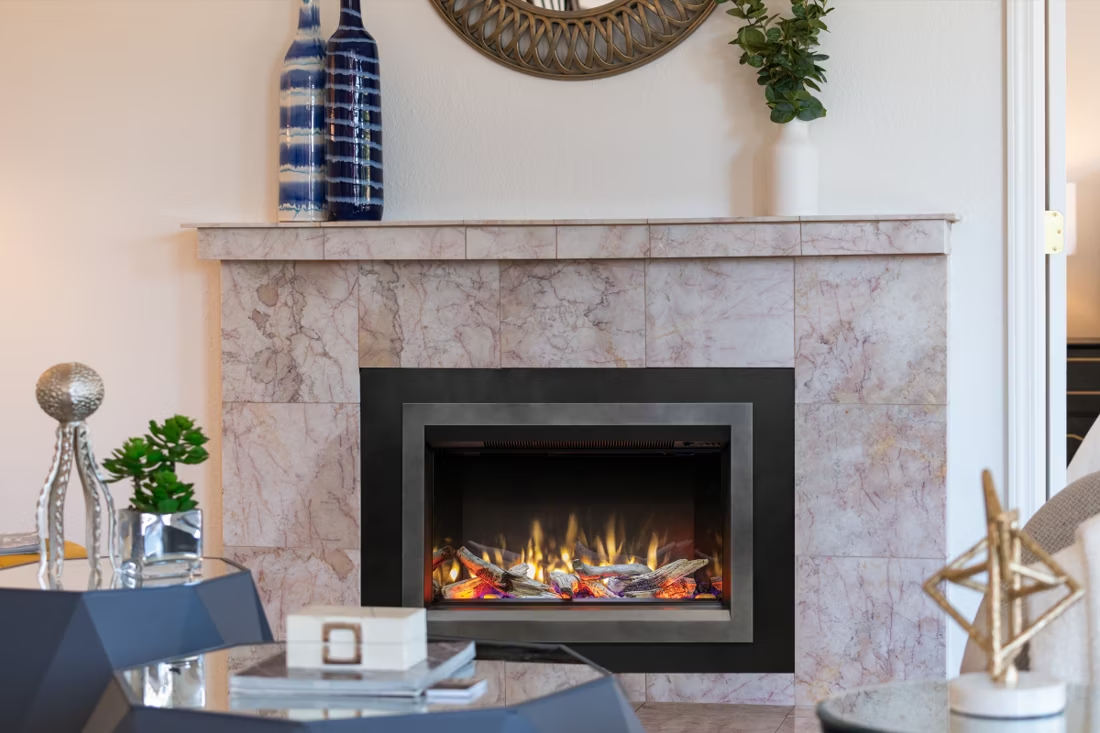
Jackson County winters rarely demand much heat—but an electric fireplace gives Gulf Coast homes real ambiance and instant supplemental warmth without a chimney, a gas line, or combustion byproducts. Find the right unit and connect with a trusted local dealer.
Every Project Starts From One of These Five Situations
Ambiance first, heat second—and that's fine.
Jackson County sits on the Mississippi Gulf Coast—Pascagoula, Gautier, Ocean Springs, Moss Point, and the unincorporated stretches around Vancleave and St. Martin—in climate zone 2A, where winters are short and mild, with the average winter low hovering near 38°F. That's a fraction of what a place like Duluth, MN sees in a single hard winter week. Homes here are built for cooling and hurricane resistance, not for holding a fire through months of subzero nights, which is exactly why electric fireplaces have found such a comfortable niche: no chimney penetrating a hurricane-rated roof, no combustion air to worry about, no venting to seal against wind-driven rain.
Most electric fireplace installs in Jackson County are about atmosphere and supplemental comfort on the occasional 30-degree night, not whole-home heat. Because there's no gas line and no flue, they drop into existing mantels, new-construction media walls, or exterior-wall builds with far less disruption than a wood or gas retrofit. Mississippi Power serves customers in the incorporated cities—Pascagoula, Gautier, Ocean Springs—while Singing River Electric Power Association, a member-owned cooperative, covers much of the unincorporated county. Either way, a standard 120V outlet handles most freestanding and insert units, and a dedicated 240V circuit covers larger built-ins—work a licensed local electrician handles as a routine part of installation.
Three steps. No salesperson until you're ready.
Tell us about your project
Your zip code, your situation, and the fuel you're leaning toward—or let the answers point you to one.
See what's actually available
The brands dealers within 100 miles genuinely carry—real options, never a catalog mirage.
Get your dealer & Project Guide
A trusted local dealer, plus the free Project Guide & Parts List that names every component of the job.
Frequently Asked Questions
How much does an electric fireplace installation cost in Jackson County?
A plug-in electric insert or freestanding stove typically runs $300 to $1,200 installed, since it just needs a standard 120V outlet and a compatible mantel or surround. A built-in wall unit or linear electric fireplace with a custom surround, framing, and a dedicated 240V circuit usually runs $1,500 to $4,000, depending on size and finish work. Because there's no venting or gas line to run, electric installs in Jackson County are consistently the fastest and least invasive of any fireplace type—most are done in a single day.
Do I need a permit to install an electric fireplace in Jackson County?
Usually not, since there's no combustion or venting involved. The exception is electrical work—if you're adding a new dedicated circuit or breaker for a larger built-in unit, that typically requires an electrical permit. Pascagoula, Gautier, Ocean Springs, and Moss Point each issue permits through their own city building departments, while homes in unincorporated Jackson County (Vancleave, St. Martin, and surrounding areas) go through the Jackson County Building Department. A licensed local electrician handling the circuit work will usually pull whatever permit applies.
What size electric fireplace do I need for my Jackson County home?
Since Jackson County's mild winters mean electric fireplaces are almost always supplemental rather than primary heat, sizing is more about the room and the look than raw BTU output. Most residential electric units put out around 4,600 to 5,000 BTUs—enough to noticeably warm a single living room or bedroom on a cool coastal evening, but not intended to heat an entire home the way a furnace or heat pump does. For open-concept living areas common in newer Gulf Coast construction, a wider linear unit gives better visual impact and heat distribution than a single small insert.
Does it matter whether I'm served by Mississippi Power or Singing River Electric?
Not for installation—both utilities deliver standard residential voltage and either handles a 120V plug-in unit or a 240V dedicated circuit without special accommodation. Mississippi Power, a Southern Company subsidiary, serves Pascagoula, Gautier, and Ocean Springs; Singing River Electric Power Association, a member-owned cooperative, serves much of unincorporated Jackson County. The practical difference shows up more in your monthly bill and any efficiency programs each offers than in what your electrician needs to do at the panel.
Will my electric fireplace work during a power outage?
No—and this matters more in Jackson County than it would inland, since hurricane season (June through November) is exactly when Gulf Coast homes are most likely to lose power. An electric fireplace has no battery backup or standalone ignition system; if the grid goes down, it goes dark along with everything else. Homes with a whole-home generator or battery backup system can keep an electric fireplace running through an outage, but it shouldn't be relied on as your sole heat source during storm season. A properly vented gas unit is the more resilient backup-heat option if that's a priority.
Do I need a special electric fireplace for a humid Gulf Coast climate?
Homes near the water in Pascagoula, Gautier, and along the Ocean Springs shoreline deal with more sustained humidity and salt air than inland Mississippi, which can shorten the life of cheap electronics over time. Look for units with sealed control boards and powder-coated or stainless hardware rather than the lowest-cost import models—brands like Dimplex and Napoleon build electric inserts widely carried by hearth dealers that hold up well in coastal humidity. A local dealer can also advise on placement away from exterior walls prone to condensation.
What's the difference between an electric fireplace, insert, and wall-mount unit?
A freestanding electric fireplace or stove sits on the floor and plugs in—the simplest option, ideal for renters or rooms without an existing fireplace. An electric insert is built to slide into an existing masonry or wood fireplace opening, giving an old hearth new life without any venting changes. A wall-mount or linear electric fireplace installs flush into a wall or media console, popular in newer open-concept Jackson County homes for its modern, low-profile look. All three run on the same basic electrical principle—only the installation and framing work differ.
Should I get electric, gas, or wood for my Jackson County home?
Wood-burning stoves and fireplaces are uncommon in Jackson County—with a short, mild winter season and winter lows averaging 38°F, there's rarely enough sustained cold to justify cordwood storage, a chimney, and daily tending, though a small number of rural properties still keep one for backup heat or tradition. Gas is a solid option where natural gas or propane service is available and homeowners want real heat output with instant on-off control. Electric wins on simplicity and cost for anyone prioritizing ambiance, easy retrofit, and zero venting—which covers most of the demand in this climate.
Are there rebates for installing an electric fireplace in Jackson County?
Generally no—utility efficiency rebate programs from Mississippi Power and Singing River Electric Power Association are typically aimed at heat pumps, insulation, and whole-home HVAC upgrades rather than supplemental electric fireplaces, since these units don't materially change a home's overall energy profile. It's worth asking your utility directly before you buy, since program offerings shift year to year, but budget for the installation cost without counting on an incentive.
Can I put a TV above my fireplace?
Yes—with an asterisk. Fireplaces are hot and TVs don't like heat. Either put a mantel between them to deflect rising warmth, or choose a fireplace with heat-management technology that creates a cool zone on the wall above—the wall stays around 125 degrees, barely warm, while the room still gets full heat. If you like clean lines and don't want a mantel, heat management is the answer.
Does an electric fireplace need a vent or chimney?
No—that's its superpower. An electric fireplace needs a wall and an outlet, period. No vent pipe, no gas line, no clearances to design around, which is why it works in bedrooms, offices, apartments, and walls where venting a gas or wood unit would be impractical or impossible. Installation is typically the simplest and least expensive of any fireplace type.
Can I install a fireplace myself?
If you're putting a fire in your house on purpose, it's best to work with an expert. Unless you're genuinely experienced in framing, gas line, vent pipe, and the national code on clearances to combustibles, have a professional do it—and ideally the same company that sells you the fireplace, so warranty, service, and liability all live under one roof.
How much should I budget for a fireplace?
For an average home—covering the fireplace, the vent pipe, and basic installation—a budget between $3,900 and $5,500 gives you a lot of options across wood, gas, and pellet. By the time you add finish work, gas line, and electrical, the average complete installation lands between $5,000 and $12,000 all-in. In a remodel or new build, a good rule is to put about 2.5% of the total project cost toward the fireplace.
Stove and Fireplace Dealers in Jackson County
Find your electric fireplace in Jackson County.
Tell us a bit about your home and we'll match you with the right electric fireplace, insert, or wall-mount unit—and connect you with a trusted local dealer who'll hand you a free Project Guide & Parts List.
Find Your Fireplace →