
Warm nights, storm-ready heat for Jackson County homes.
From Pascagoula and Ocean Springs to Gautier, Moss Point, and Vancleave, gas fireplaces bring instant comfort on the coast's rare cold nights—and reliable backup heat when hurricane season knocks out the grid. Find the right unit and connect with a trusted local dealer.
Every Project Starts From One of These Five Situations
Comfort on demand, ready when the power isn't.
Jackson County sits on the Mississippi Gulf Coast, home to Pascagoula, Ocean Springs, Gautier, Moss Point, and the more rural stretches around Vancleave and Big Point. With a Climate Zone 2A designation, an average winter low of just 38°F, and one of the shortest, mildest heating seasons in the country, this is one of the mildest heating climates in the country—closer in heating need to Houston than to anywhere that gets real winter. Wood stoves are essentially absent here; even with oak, pine, and pecan readily available from local timber, there simply aren't enough cold days to justify the chimney work, and you won't find them stocked at local hearth shops. Gas is a different story. A gas fireplace or insert gives Jackson County homeowners instant, controllable heat for the handful of nights each winter that actually dip toward freezing, along with the ambiance factor that keeps living rooms in Ocean Springs and Gautier looking finished year-round.
Gas service in the incorporated coastal cities generally runs through the regional natural gas utility, while homes in unincorporated areas—Vancleave, Big Point, the rural county roads north of I-10—typically rely on propane from local suppliers. Either fuel works in the same fireplace with the right setup. There's also a hurricane-season argument for gas that doesn't apply in most of the country: Jackson County sits in an active tropical storm corridor, and a direct-vent gas fireplace with battery-backup or self-powered ignition keeps producing heat long after the grid goes down. Building permits for new installations and gas line work go through the Jackson County Building Department, or the applicable city permit office in Pascagoula, Ocean Springs, Gautier, or Moss Point for homes inside those city limits.
Three steps. No salesperson until you're ready.
Tell us about your project
Your zip code, your situation, and the fuel you're leaning toward—or let the answers point you to one.
See what's actually available
The brands dealers within 100 miles genuinely carry—real options, never a catalog mirage.
Get your dealer & Project Guide
A trusted local dealer, plus the free Project Guide & Parts List that names every component of the job.
Frequently Asked Questions
How much does a gas fireplace installation cost in Jackson County?
Most gas fireplace and insert installations in Jackson County run in the $3,500 to $9,000 range, with the spread driven mostly by venting and gas supply. A direct-vent insert going into an existing masonry fireplace with a gas line already run to the room sits at the low end. New construction or a fireplace added to a room that doesn't currently have gas service—common in the older, non-gas homes around Ocean Springs and Moss Point—costs more once you add gas line trenching or a propane tank set for homes outside the utility footprint. Coastal homes built on piers or with crawl space foundations sometimes add labor for running gas lines under the house. A local dealer will give you a firm number after seeing the space.
Do I really need a gas fireplace in a climate this mild?
It's a fair question—Jackson County has one of the shortest, mildest heating seasons in the country and a winter low around 38°F, which means most homes get by fine on a heat pump alone. Gas fireplaces here are less about heating the whole house and more about two things: a handful of genuine cold snaps each winter when temperatures drop into the 20s along the coast, and hurricane-season reliability, since a direct-vent gas unit keeps running heat without grid power. Add in the fact that a lot of homeowners simply want the look and feel of a fire in the living room, and gas remains a standard, popular install here even though it's not solving a serious heating-load problem the way it would in a place like Duluth or Fargo.
Is natural gas available in Jackson County, or do I need propane?
It depends on where you live. Homes inside Pascagoula, Ocean Springs, Gautier, and Moss Point city limits generally have natural gas service available through the regional utility, so if your home already has a gas water heater or range, adding a fireplace is usually a simple tap into the existing line. Outside those cities—Vancleave, Big Point, and the more rural stretches of the county—propane from a local supplier is the standard fuel, delivered to a tank on the property. Almost every gas fireplace model on the market can be configured for either fuel; your installer sets the orifice and regulator to match.
Will my gas fireplace still work if a hurricane knocks out power?
For most models, yes. Gas fireplaces with intermittent pilot ignition (IPI) run on batteries as a backup when line power drops, so the unit lights and operates normally through an outage—a real advantage in a county that sits directly in the Gulf hurricane corridor. Valor's lineup goes a step further: the pilot's own thermocouple generates the electricity needed to run the fireplace, so there's no battery to remember or replace before storm season. If backup heat and light during extended outages is a priority for your Jackson County home, ask your local dealer specifically about the ignition system before you buy.
Should I choose a vented or vent-free gas fireplace in this climate?
Direct-vent units are the better fit for most Jackson County homes. Vent-free (ventless) fireplaces burn without exterior venting and release some moisture and combustion byproducts into the room—not ideal in a Gulf Coast climate where indoor humidity is already a year-round battle against mold and mildew. Direct-vent units draw combustion air from outside and exhaust everything back outside through a sealed pipe, which keeps your indoor air quality and humidity levels unaffected. Mississippi allows vent-free units with proper room sizing and oxygen-depletion sensors, but most local dealers steer coastal homeowners toward direct-vent for this reason.
Do I need a permit to install a gas fireplace in Jackson County?
Yes. New gas fireplace installations require both a building permit and a gas line permit, with the gas work performed by a licensed gas-fitter. Homes inside Pascagoula, Ocean Springs, Gautier, or Moss Point go through that city's permit office; homes in unincorporated Jackson County go through the Jackson County Building Department. Most hearth dealers pull these permits as part of the installation, so you're generally not coordinating it yourself—worth confirming when you get a quote.
What's the difference between a gas fireplace, insert, and stove?
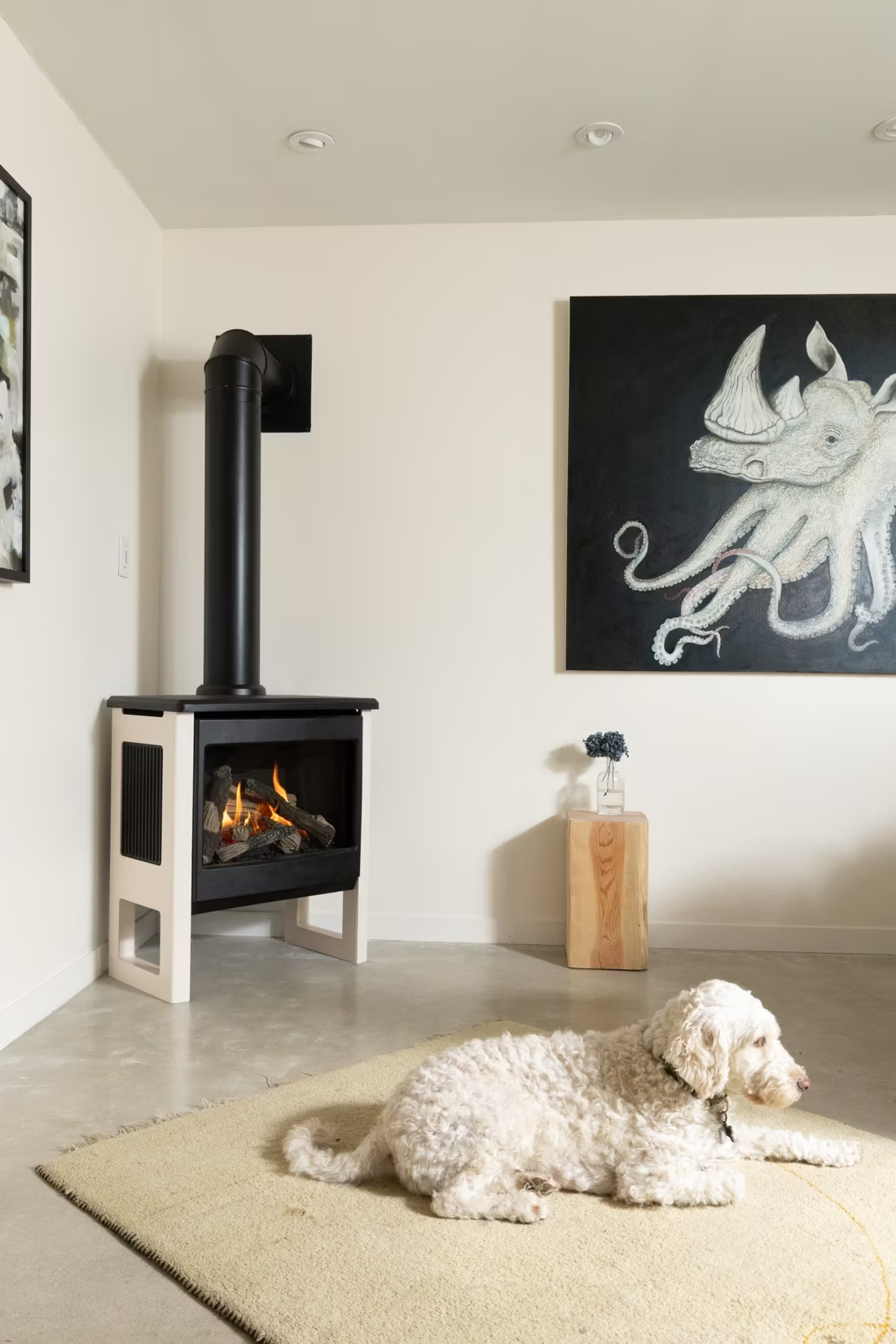
A gas fireplace is a built-in unit installed during new construction or a remodel—common in the newer subdivisions around Gautier and the Vancleave area. A gas insert drops into an existing masonry fireplace and uses the chimney as its vent path, which is the more common project in Ocean Springs' older historic homes that already have a wood-burning firebox nobody uses. A gas stove is a freestanding unit that sits on the floor like a wood stove but runs on gas—less common here given how few homes in Jackson County were ever built around wood heat to begin with.
How often should a gas fireplace be serviced in Jackson County?
Plan on an annual inspection, same as anywhere, but coastal salt air adds a wrinkle: venting components and burner assemblies can corrode faster near the water in Pascagoula, Ocean Springs, and Gautier than they would inland. A technician should check the burner, pilot assembly, gas connections, and venting each year, and it's worth mentioning your proximity to the coast so they inspect vent terminations for salt corrosion specifically. Most local service providers charge $150-$250 for a standard annual inspection.
Why don't more Jackson County homes have wood stoves?
The climate doesn't call for it. With one of the shortest, mildest heating seasons in the country and winter lows averaging 38°F, there just aren't enough genuinely cold days to justify a chimney and cordwood—even though oak, pine, and pecan are all common locally and plenty of homeowners burn wood outdoors for smoking and grilling. Wood heat is essentially a non-factor in the local hearth market, which is why gas dominates what local dealers actually stock and install. If you want the ambiance of a real fire without committing to a wood-burning setup nobody in the county is really built to support, a gas fireplace is the practical answer.
Why is my open fireplace making my house colder?
Open fireplaces suck—literally. As the fire burns, it consumes air your furnace already paid to heat and pulls it out through the chimney, so the house is actually colder after the fire goes out than before you lit it. An insert fixes this: it seals the chimney, puts fixed glass across the front, and turns that hole in your house into a real heat source.
Can I put a TV above my fireplace?
Yes—with an asterisk. Fireplaces are hot and TVs don't like heat. Either put a mantel between them to deflect rising warmth, or choose a fireplace with heat-management technology that creates a cool zone on the wall above—the wall stays around 125 degrees, barely warm, while the room still gets full heat. If you like clean lines and don't want a mantel, heat management is the answer.
Does a fireplace add value to my home?
On average, a fireplace adds back to the home about the same amount you spent installing it. Add the monthly savings from heating the rooms you actually use instead of the whole house—often hundreds of dollars a year—and the value case is strong before you even count what a fire does for how your family uses the room.
Can I install a fireplace myself?
If you're putting a fire in your house on purpose, it's best to work with an expert. Unless you're genuinely experienced in framing, gas line, vent pipe, and the national code on clearances to combustibles, have a professional do it—and ideally the same company that sells you the fireplace, so warranty, service, and liability all live under one roof.
Stove and Fireplace Dealers in Jackson County
Find your gas fireplace in Jackson County.
Tell us about your home and we'll match you with the right gas fireplace or insert—plus a free Project Guide & Parts List with the exact parts, vent kit, and a trusted local dealer recommendation for your Jackson County installation.
Find Your Fireplace →