
Find your pellet stove in Greene County.
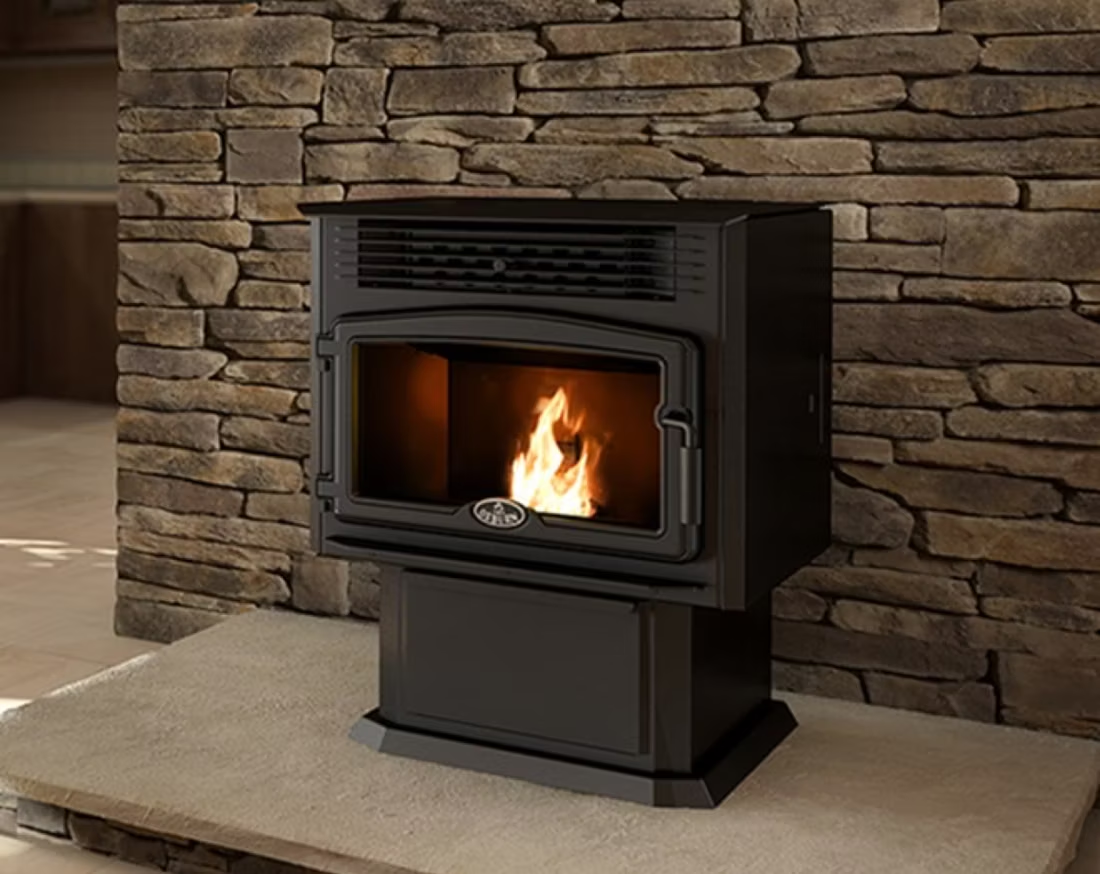
Mild Piney Woods winters mean most Greene County homes want supplemental warmth, not a furnace replacement—a pellet stove delivers thermostat-controlled heat without the wood-splitting. We'll match you with a trusted local dealer who can size and install it right.
Every Project Starts From One of These Five Situations
Clean, convenient heat for mild Piney Woods winters.
Greene County sits in the Piney Woods of southeast Mississippi along the Alabama line, with Leakesville as the county seat and McLain and State Line rounding out the rest of the county's roughly 5,800 residents. Winters here are mild by any national standard—average lows hover around 36°F and the county has a light overall winter heating load, a fraction of what a place like Duluth, Minnesota racks up in a single winter. That mild profile doesn't eliminate the need for heat, though; it changes its shape. Most Greene County homes need supplemental warmth on the handful of genuinely cold nights each winter, not a furnace running around the clock, and a thermostat-controlled pellet stove is built for exactly that kind of intermittent use.
There are no listed air quality restrictions in Greene County, so there's no burn-ban season to plan around the way there is in parts of the country dealing with winter inversion problems. What does matter here is fuel sourcing and power reliability. Southern yellow pine is abundant across the Piney Woods, and it shows up in the bag—Hamer Pellet Fuel is milled right here in Mississippi, and Lignetics and Greenway Renewable Energy both distribute widely through the region. The one honest tradeoff: pellet stoves need household electricity to run the auger and combustion blower, and Greene County sees its share of storm-related outages during hurricane season. Homeowners who want pellet convenience typically pair the stove with a small battery backup or generator, or keep a wood option in reserve for the rare multi-day outage.
Three steps. No salesperson until you're ready.
Tell us about your project
Your zip code, your situation, and the fuel you're leaning toward—or let the answers point you to one.
See what's actually available
The brands dealers within 100 miles genuinely carry—real options, never a catalog mirage.
Get your dealer & Project Guide
A trusted local dealer, plus the free Project Guide & Parts List that names every component of the job.
Frequently Asked Questions
How much does a pellet stove installation cost in Greene County?
Installed cost for a freestanding pellet stove is driven mostly by venting—a straight through-the-wall vent kit is the least expensive path, while running pipe up through a roof or converting an existing masonry fireplace with a pellet insert and liner costs more. Because Greene County's mild winters mean most homeowners are buying supplemental heat rather than replacing a whole-house furnace, sizing and venting stay simple for most installs compared to colder-climate jobs. A local dealer will walk your home and give you a firm number before you commit to anything.
What size pellet stove do I need for a Greene County home?
With such a light overall winter heating load, most Greene County homes don't need a large-capacity pellet stove sized to run continuously—they need a small-to-medium unit that can heat a main living area on the coldest snaps and sit on low or idle the rest of the season. Older farmhouses around Leakesville and McLain with less insulation may want to size up slightly; newer, tighter-built homes can usually get away with a smaller hopper and lower BTU output. A local dealer can walk the room and confirm sizing before you buy.
Should I get a pellet stove or a wood stove in Greene County?
Both are common choices locally, and the wood available in the county—oak, pine, and pecan off private timberland—makes self-cut firewood a realistic option for wood burners. Wood stoves work without electricity, which matters during hurricane-season power outages, and burn fuel that's often free or cheap locally. Pellet stoves are cleaner, easier to load and light, and produce far less ash and mess, but they need household power to run the auger and blower. For a primary living space where convenience matters most, pellet usually wins; for backup heat during a multi-day outage, wood still has the edge.
Will my pellet stove work if the power goes out?
Not on its own. Pellet stoves rely on an electric auger to feed fuel and a blower to move combustion air and heat, so a standard unit goes dark the moment the power does. This is worth planning for in Greene County, where hurricane season brings the occasional multi-day outage. Homeowners who want pellet heat but also want outage coverage typically add a small battery backup or a portable/standby generator sized for the stove's modest power draw, or keep a wood stove or insert elsewhere in the house as a true off-grid backup.
Where does pellet fuel for Greene County homes come from?
Southern yellow pine is the dominant feedstock for pellets sold in this part of Mississippi, and Hamer Pellet Fuel—milled in-state—is a common regional option. Lignetics, one of the largest pellet producers in the country, and Greenway Renewable Energy both distribute through dealers serving southeast Mississippi as well. Pellet quality varies by ash content and mill consistency, so it's worth asking your local dealer which brands they stock and recommend for your specific stove model rather than buying whatever bag is cheapest that week.
Do I need a permit to install a pellet stove in Greene County?
Most pellet stove and insert installations require a building permit, whether that's through the Greene County Building Department for homes outside city limits or the local municipal office if you're inside Leakesville or McLain. Requirements typically cover clearances, hearth pad specifications, and venting termination points. Most hearth dealers who sell and install pellet equipment in the county handle the permit paperwork as part of the job, so you generally don't have to navigate it yourself.
How much maintenance does a pellet stove need?
Pellet stoves need more frequent light maintenance than wood stoves, but nothing as involved as a chimney sweep. Plan on emptying the ash pan every few days during regular use, wiping the glass and cleaning the burn pot weekly, and vacuuming the hopper and auger area periodically. A full professional cleaning and inspection of the venting once a year—typically before the start of the cool season—keeps the blower and exhaust path clear. Given Greene County's short, mild heating season, most homeowners here get away with lighter overall maintenance than someone running a stove daily for six months up north.
What's the best pellet stove for Greene County's mild winters?
Since most Greene County homes are using a pellet stove for supplemental heat rather than round-the-clock winter heating, features that matter most are ease of use and low-end turndown—a stove that can idle efficiently on a 50-degree night rather than one built to blast at maximum output for months at a time up north. Look for a model with a wide thermostat range and auto-ignition, since it'll likely be started and stopped repeatedly through the season rather than run continuously. A local dealer can match hopper size and BTU output to your specific room rather than over-sizing for a climate that doesn't demand it.
Pellet stove vs. electric fireplace—which is right for my Greene County home?
An electric fireplace requires no venting, no fuel storage, and no permit in most cases—it plugs in and provides ambiance plus modest zone heat, which can be enough for Mississippi's short cold spells in a secondary room. A pellet stove requires venting and a fuel supply but delivers real, sustained heat output that can actually cover a living area during the county's colder nights and ice events. For a room where you mainly want the look of a fire and light supplemental warmth, electric is the simpler and cheaper choice. For a space where you want a genuine heat source on the handful of truly cold nights each winter, pellet is the better fit.
Why is my open fireplace making my house colder?
Open fireplaces suck—literally. As the fire burns, it consumes air your furnace already paid to heat and pulls it out through the chimney, so the house is actually colder after the fire goes out than before you lit it. An insert fixes this: it seals the chimney, puts fixed glass across the front, and turns that hole in your house into a real heat source.
Why is a fireplace insert so efficient?
An insert does two things: it seals the chimney completely, so you stop losing air you already paid to heat, and it radiates warmth into the room through the firebox and glass. Most add a heat-exchange fan that pulls cool room air underneath, wraps it around the hot firebox, and pushes it back out warm. Your home is more efficient before you've even lit the first fire.
Does a fireplace add value to my home?
On average, a fireplace adds back to the home about the same amount you spent installing it. Add the monthly savings from heating the rooms you actually use instead of the whole house—often hundreds of dollars a year—and the value case is strong before you even count what a fire does for how your family uses the room.
Can I install a fireplace myself?
If you're putting a fire in your house on purpose, it's best to work with an expert. Unless you're genuinely experienced in framing, gas line, vent pipe, and the national code on clearances to combustibles, have a professional do it—and ideally the same company that sells you the fireplace, so warranty, service, and liability all live under one roof.
Pellet Brands Stocked Around Greene County
Manufacturers will point you to the nearest stocking dealer.
Get matched with a Greene County pellet dealer.
Tell us about your home and heating goals, and we'll match you with a trusted local dealer plus a free Project Guide & Parts List—the exact parts, vent kit, and recommended installer for your Greene County pellet stove or insert.
Find Your Fireplace →