
Simple, plug-in heat for Greene County's mild winters.
With winter lows averaging 36°F and no gas lines running through most of rural Greene County, electric is often the fastest, least invasive way to add real ambiance and supplemental warmth to a home near Leakesville, State Line, or out along Highway 63.
Every Project Starts From One of These Five Situations
A mild climate that doesn't demand much—and a fuel that matches it.
Greene County sits in climate zone 3A, with a mild, short winter heating season and winter lows that rarely drop far below the mid-30s. That's a fraction of the heating load a place like Duluth, MN or Burlington, VT deals with every winter, and it changes the math on hearth appliances. Most homes here don't need a stove or furnace-grade fireplace running for months at a time—they need something that takes the chill off a room on the handful of genuinely cold nights and looks good the rest of the year. An electric fireplace or insert does that without a chimney, a gas line, or a cutting permit.
Natural gas infrastructure is limited across rural Greene County, and most homes run on electric service through Singing River Electric Power Association or use propane for larger heating needs. That makes electric fireplaces a practical fit—no fuel storage, no venting through the roof, and installation that's often as simple as a dedicated circuit and an existing wall opening. It's also a strong option for the manufactured and modular homes common throughout the county, where retrofitting a vented wood or gas unit can be difficult, but a plug-in or hardwired electric insert drops in with minimal structural work.
Three steps. No salesperson until you're ready.
Tell us about your project
Your zip code, your situation, and the fuel you're leaning toward—or let the answers point you to one.
See what's actually available
The brands dealers within 100 miles genuinely carry—real options, never a catalog mirage.
Get your dealer & Project Guide
A trusted local dealer, plus the free Project Guide & Parts List that names every component of the job.
Frequently Asked Questions
How much does an electric fireplace installation cost in Greene County?
Electric fireplaces are the least expensive hearth category to install. A plug-in insert or mantel-mounted unit that uses an existing outlet can run as little as $300 to $800 installed. A built-in electric fireplace that requires a dedicated 120V or 240V circuit—common when a local electrician needs to run new wiring in an older Greene County home—typically lands between $1,200 and $3,000 depending on wall access and whether cabinetry or a mantel surround is built around it. There's no chimney, flue liner, or venting work to add to the bill, which is a big part of why electric costs so much less than wood or gas installs.
Do I need a permit to install an electric fireplace in Greene County?
In most cases, a plug-in electric fireplace that uses an existing outlet doesn't require a permit. If your installer needs to run a new dedicated circuit—which is common for larger built-in units—that electrical work typically does require a permit through the Greene County Building Department, and it should be pulled by a licensed electrician regardless of whether an inspector ever checks. Skipping the permit on new wiring isn't worth the risk to your homeowner's insurance if something ever goes wrong.
What size electric fireplace do I need for my home?
Because Greene County's heating load is light—a mild winter heating season compared to most of the country—sizing here is usually driven by the room and the look you want rather than raw BTU output. A 1,500-watt insert (roughly 5,000 BTU) will noticeably warm a single living room or bedroom. Most electric units top out around 5,000-5,200 watts, which is plenty for supplemental heat in an open living/dining area in a typical Greene County home. You're rarely heating an entire house with an electric fireplace here—it's a room-by-room comfort layer, not a furnace replacement.
Will my electric fireplace work if the power goes out?
No—and this matters more in Greene County than in a lot of places, since the county sits inland from the Gulf Coast and can lose power for hours or days when tropical systems move through in late summer and fall. An electric fireplace is entirely dependent on grid power (or a generator sized to run it), so it won't provide backup heat during an outage the way a wood stove or a battery-ignition gas unit can. If you want a true storm-outage heat source, a lot of local homeowners pair an electric fireplace for everyday ambiance with a wood stove, propane heater, or generator plan for hurricane season.
What's the difference between an electric fireplace, insert, and mantel package?
A built-in electric fireplace is installed into a framed wall opening, similar to how a gas fireplace would be set—it's the cleanest, most permanent-looking option. An electric insert is sized to slide into an existing masonry fireplace opening, which is useful if you have an old wood-burning fireplace in a Greene County farmhouse that you'd rather not maintain or vent anymore. A mantel package is a freestanding or wall-mounted unit that comes with its own surround—no wall opening or existing fireplace needed, which makes it the fastest option for a home without one already. All three plug in or hardwire the same way; the difference is really about what opening (if any) you're working with.
Can an electric fireplace replace my old wood-burning fireplace?
Yes, and it's a common project for older homes in and around Leakesville with a masonry fireplace that's gone unused for years. An electric insert slides into the existing firebox opening—no chimney sweep, no liner, no cutting permits for firewood. You keep the look of the original fireplace (or update the surround) and gain flame effect and supplemental heat without any of the maintenance that comes with burning oak, pine, or pecan cordwood. It's a popular downgrade-in-effort, upgrade-in-convenience move for homeowners who liked the idea of a fireplace more than the upkeep.
How much does it cost to run an electric fireplace?
Most electric fireplaces run on a 1,500-watt heater setting when the heat function is on, which costs roughly 15 to 25 cents an hour depending on your Singing River Electric Power Association rate—a few dollars for an evening of use. Given how mild Greene County winters are, most owners run the flame effect year-round for ambiance and only switch on the heater function on the coldest nights, keeping total operating cost well below what a wood stove or propane heater would use over the same season.
How long does an electric fireplace last, and what maintenance does it need?
A quality electric fireplace typically lasts 10 to 15 years with minimal upkeep—there's no chimney to sweep, no gas line to inspect, and no ash to clean. The main wear items are the heating element and the LED flame lights, both of which are usually replaceable rather than requiring a whole new unit. Greene County's humidity is worth a mention here: units installed on an exterior wall or in a less climate-controlled space (a converted porch, a detached shop) should be checked periodically for moisture intrusion around the housing, same as any electronics in a humid Gulf South climate.
Electric vs. propane—which makes more sense for my Greene County home?
Propane offers real, sustained heat output and—with the right ignition system—can keep running during a power outage, which matters during hurricane season. It requires a tank, a gas-fitter for the line work, and ongoing fuel costs. Electric offers near-zero installation complexity, low operating cost, and a realistic flame appearance, but it's entirely dependent on grid power and produces less raw heat per hour than propane. For a lot of Greene County homes, electric covers the day-to-day ambiance and light supplemental warmth, while propane or wood stays in reserve as the serious cold-weather or outage backup. A local dealer can walk through both given your specific home and how you actually plan to use it.
Can I put a TV above my fireplace?
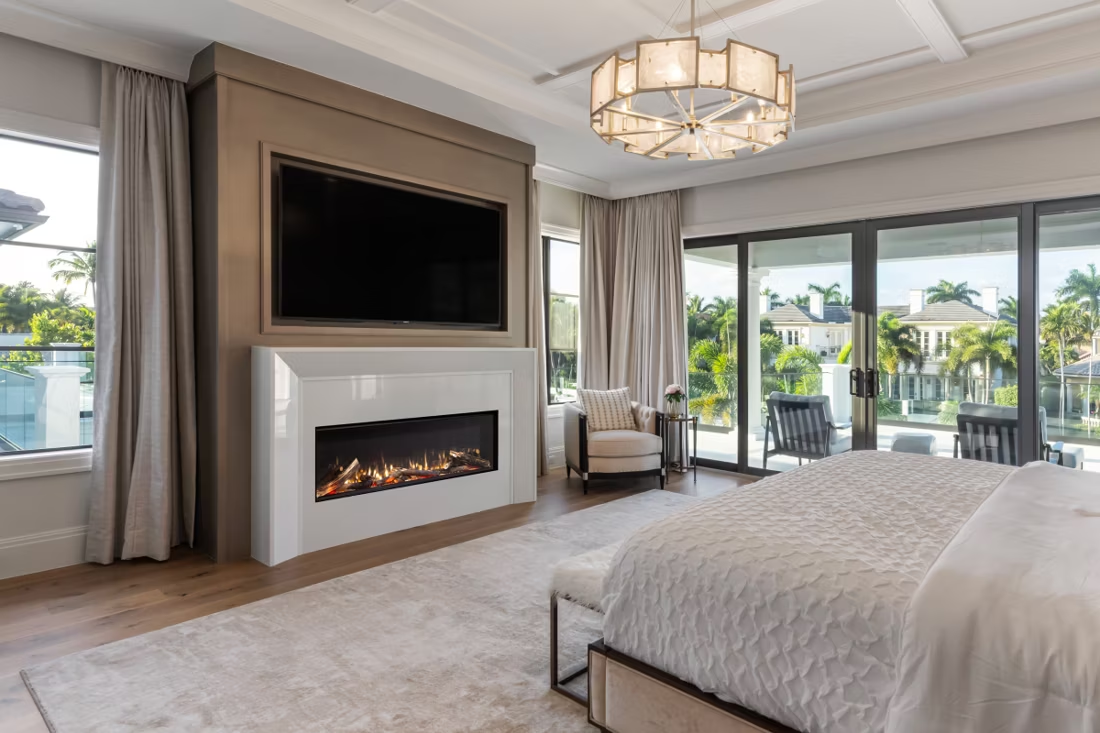
Yes—with an asterisk. Fireplaces are hot and TVs don't like heat. Either put a mantel between them to deflect rising warmth, or choose a fireplace with heat-management technology that creates a cool zone on the wall above—the wall stays around 125 degrees, barely warm, while the room still gets full heat. If you like clean lines and don't want a mantel, heat management is the answer.
Do electric fireplaces actually produce heat?
Yes—most put out around 4,800–5,000 BTUs from a standard outlet, which comfortably warms a bedroom, office, or den as a comfort-zone heater. What they won't do is carry a whole house the way wood, gas, or pellet can. Think of electric as ambiance-first with honest supplemental heat: flames on with no heat in July, flames plus warmth in January.
What is an in-home preview and do I need one?
It's a visit where a hearth professional measures your space, confirms the model you picked actually works in your home, and walks the specs—framing, gas line, venting, finish work—before anything is ordered. Some details you just can't know until you see the house. Never make a down payment without one; it's the single most-skipped step that burns buyers.
Does a fireplace add value to my home?
On average, a fireplace adds back to the home about the same amount you spent installing it. Add the monthly savings from heating the rooms you actually use instead of the whole house—often hundreds of dollars a year—and the value case is strong before you even count what a fire does for how your family uses the room.
Find your electric fireplace in Greene County.
Tell us about your home and we'll put together a free Project Guide & Parts List—the right electric fireplace or insert for your space, matched with a trusted local dealer near Leakesville.
Find Your Fireplace →