
Find the right hearth for your Greene County home.
Wood, gas, pellet, and electric fireplace resources for Leakesville, State Line, and the rural communities across Greene County. Find the right unit and connect with a trusted local dealer.
Every Project Starts From One of These Five Situations
Mild winters, real heat needs in Greene County, Mississippi.
Greene County sits in the piney woods of southeast Mississippi, along the Chickasawhay River, with a short, mild winter heating season—a fraction of what a place like Duluth, Minnesota logs in a single hard winter. Average winter lows hover around 36°F, and most homes here are heating for supplemental comfort during a handful of cold snaps rather than fighting subzero stretches. That said, the county's mix of oak, pine, and pecan woodlots means firewood is cheap and abundant for anyone who wants a real wood fire, and cold fronts off the Gulf can still push temperatures low enough overnight to make a working fireplace matter.
What you'll find on this hub: hearth retailers, service technicians, and fuel suppliers covering Leakesville, State Line, and the unincorporated communities spread across the county's timberland. Pick your fuel below to get into specifics—local dealers, installation costs, recommended units, and resources matched to your project. Whether you're heating a farmhouse near the Chickasawhay or a cabin back in the pines, this is the starting point.
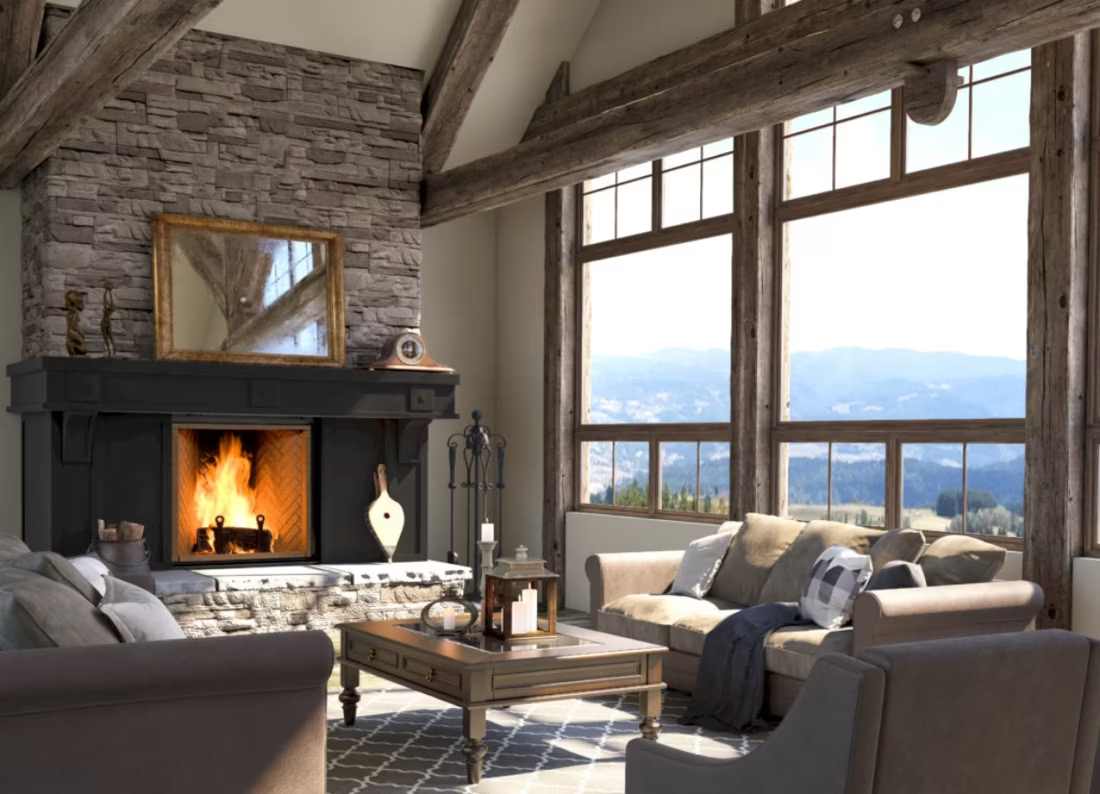
Four fuels. One honest answer for Greene County.
Three steps. No salesperson until you're ready.
Tell us about your project
Your zip code, your situation, and the fuel you're leaning toward—or let the answers point you to one.
See what's actually available
The brands dealers within 100 miles genuinely carry—real options, never a catalog mirage.
Get your dealer & Project Guide
A trusted local dealer, plus the free Project Guide & Parts List that names every component of the job.
Frequently Asked Questions
Which fuel works best in Greene County?
It depends on how you use your fireplace. Wood is a natural fit here—oak, pine, and pecan are all locally abundant, and a lot of Greene County homes already have a woodlot or a neighbor selling cut firewood by the truckload. Gas is the low-maintenance choice for homeowners who want instant heat and a clean look without dealing with ash or a chimney, especially with propane service common in the rural parts of the county. Pellet stoves are a solid middle ground—steady, controllable heat without splitting wood, and regional supply from brands like Lignetics and Hamer Pellet Fuel keeps fuel accessible. Electric fireplaces work well as supplemental or ambiance units in bedrooms and living rooms, though with such a short, mild winter heating season, most Greene County homes don't need electric as a primary heat source. Many households end up mixing fuels—a wood or gas unit for real heat, electric for secondary rooms.
Do I need a permit to install a fireplace in Greene County?
In most cases, yes, for wood stoves, wood inserts, gas fireplaces, gas inserts, gas stoves, and pellet stoves. Gas installations also require a separate gas line permit and licensed gas-fitter for the connection work. Electric fireplaces generally don't require a permit unless you're doing a built-in installation with new wiring or a dedicated circuit. Because Greene County has no local building code enforcement of its own for most unincorporated areas, permitting practices can vary by project and by whether the home is inside Leakesville's city limits or out in the county. A local hearth retailer or licensed installer can tell you exactly what applies to your address, and most handle the paperwork as part of the installation.
Are there air quality restrictions on wood burning in Greene County?
No. Greene County has no air quality non-attainment designations, no winter inversion issues, and no burn-ban history tied to wildfire smoke or population density—this is rural southeast Mississippi timber country, not a basin or urban airshed. That means wood stove owners here aren't dealing with curtailment days or advisory notices the way homeowners in parts of the West are. New wood-burning appliances still need to meet current EPA emissions standards, which is standard nationwide, but there's no local burn-restriction program layered on top of that in Greene County.
Can one local hearth retailer handle all four fuel types?
In a county with under 6,000 residents, most hearth retailers serving Greene County carry two or three fuel types rather than a full four-fuel lineup—wood and gas are the most commonly stocked combination, with pellet stoves often available as a special order or through a supplier relationship rather than a full showroom display. Electric fireplaces are frequently carried by furniture and appliance stores as much as by dedicated hearth dealers. If you want to compare multiple fuels side by side, it's worth calling ahead to confirm what a given retailer has on the floor versus what they can order in, since Greene County's small population means showroom inventory tends to be leaner than in a larger metro county.
How does service work in rural areas of Greene County?
Service technicians covering Greene County typically operate out of Leakesville or drive in from larger service areas in southeast Mississippi, covering State Line and the county's rural routes along the way. Given the distances involved in a mostly-rural county, expect to schedule service a bit further ahead than you would in a dense suburb, and don't be surprised by a modest trip charge for calls out to more remote parts of the county. Fall is the best time to book annual chimney sweeps or gas inspections, before the first real cold front rolls through and everyone else starts calling at once.
What's the typical cost range for fireplace installation across all fuel types in Greene County?
Costs vary by fuel and by how much existing infrastructure you have. Wood stove or insert installation: roughly $3,500–$7,500 for a typical install, more if a new chimney or full liner is needed. Gas fireplace, insert, or stove: roughly $3,500–$9,000 depending on whether propane line work is required or existing gas service is already in place. Pellet stove or insert: roughly $3,500–$6,500 for a standard install. Electric fireplace: $200–$2,500 for the unit itself, plus $300–$1,000 in labor for anything beyond a simple plug-and-play unit. For details tied to local retailer pricing, see the county + fuel pages above.
Can a fireplace actually lower my heating bill?
Yes—by creating a comfort zone. A furnace heats every square foot of the house just to warm the one room you're in; a gas fireplace on low burns roughly a sixth of the gas a typical furnace does. Set the furnace around 55–60 degrees as a baseline, then heat the rooms your family actually uses. Families who heat this way commonly save $20–$60 a month.
Wood, gas, pellet, or electric—how do I choose?
Match the fuel to your life, not the other way around. Wood: lowest fuel cost and total power-outage independence, but you're hauling and stacking. Gas: press a button, set a thermostat, no maintenance to speak of. Pellet: wood economics with automatic feeding, in exchange for weekly cleaning and a need for electricity. Electric: plugs in anywhere with honest supplemental heat. Nobody regrets the fuel that fits how they actually live.
Can I install a fireplace myself?
If you're putting a fire in your house on purpose, it's best to work with an expert. Unless you're genuinely experienced in framing, gas line, vent pipe, and the national code on clearances to combustibles, have a professional do it—and ideally the same company that sells you the fireplace, so warranty, service, and liability all live under one roof.
How much should I budget for a fireplace?
For an average home—covering the fireplace, the vent pipe, and basic installation—a budget between $3,900 and $5,500 gives you a lot of options across wood, gas, and pellet. By the time you add finish work, gas line, and electrical, the average complete installation lands between $5,000 and $12,000 all-in. In a remodel or new build, a good rule is to put about 2.5% of the total project cost toward the fireplace.
Stove and Fireplace Dealers in Greene County
Listings include WhyFire partner dealers, dealers we have verified as authorized for the brands we recommend, and established local businesses that carry hearth products. Every listing shows which one it is. The ones marked Preferred run on WhyFire's software, so they can show you real pricing and book your appointment right here. No manufacturer pays for placement. How we verify dealers →
Blossman Gas
Andrews Ace Hardware
Local Lp Gas Co.
Thompson Gas- Chatom
Thompson Gas- Waynesboro
Sullivan Insullation Company
Blossman Gas And Appliance
Blossman Gas - Mobile
Get matched with a Greene County hearth dealer.
Pick your fuel below and I'll match you with a trusted local dealer and send you a free Project Guide & Parts List—the exact parts, including the vent kit, and the dealer I'd recommend for your Greene County project.
Find Your Fireplace →