
Set It, Forget It, Stay Warm Through a Red River Valley Winter.
With 8,812 heating degree days and winters that average near zero, Wilkin County homes need heat that doesn't quit. Find the right pellet stove or insert and get matched with a trusted local dealer.
Every Project Starts From One of These Five Situations
Consistent, automated heat for one of the coldest counties in Minnesota.
Wilkin County sits in the flat, wide-open Red River Valley of far western Minnesota, with Breckenridge as the county seat directly across the river from Wahpeton, North Dakota, and Fargo-Moorhead just up the valley. This is Climate Zone 7—one of the harshest heating zones in the Lower 48, with 8,812 heating degree days and an average winter low of -1°F. On the open plains around Rothsay, Campbell, and Foxhome, there's little tree cover to break the wind, so ground-level cold is often compounded by wind chill that pushes well below what the thermometer alone suggests. With a population under 4,500 spread across mostly agricultural land, heating season here runs a solid seven months.
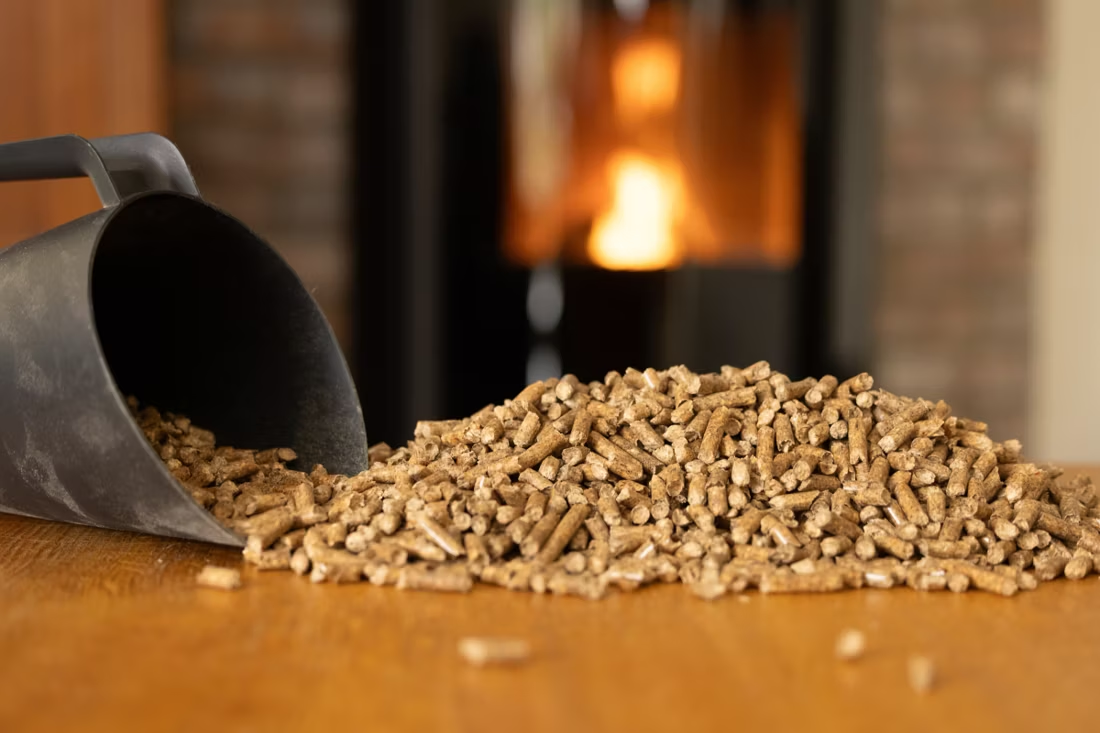
Pellet stoves have earned a real foothold in Wilkin County because they solve a problem cordwood doesn't: consistent, thermostatically controlled heat without splitting and stacking wood on the coldest days of the year. Regional suppliers including Indeck Energy Services, Lignetics, and Somerset Pellet Fuel keep hardwood pellets—often milled from the same oak, maple, birch, and aspen that grow in this part of the valley—reasonably available for delivery or pickup. Most rural Wilkin County homes still rely on propane as their primary heat source, so a pellet stove typically serves as zone heat for a living room or finished basement, or as backup for the handful of days when LP delivery gets delayed by a blizzard closing county roads.
Three steps. No salesperson until you're ready.
Tell us about your project
Your zip code, your situation, and the fuel you're leaning toward—or let the answers point you to one.
See what's actually available
The brands dealers within 100 miles genuinely carry—real options, never a catalog mirage.
Get your dealer & Project Guide
A trusted local dealer, plus the free Project Guide & Parts List that names every component of the job.
Frequently Asked Questions
How much does a pellet stove installation cost in Wilkin County?
A freestanding pellet stove installation typically runs $3,000 to $6,000 in this area, depending on the model, whether you need a new hearth pad, and how far the vent run needs to travel through an exterior wall. A pellet insert into an existing masonry fireplace usually lands a bit higher, in the $3,500 to $7,000 range, since it involves fitting the unit and liner to your existing opening. Rural properties around Rothsay, Foxhome, or Doran may see a modest travel charge added to the quote simply because of the distances involved—a local dealer will give you a firm number after seeing your home.
What size pellet stove do I need for a Wilkin County home?
Climate Zone 7 sizing runs larger than most manufacturer charts assume, because those charts are usually built around milder zones. For a farmhouse or ranch-style home in the 1,500 to 2,200 square foot range that's common in Wilkin County, most dealers will recommend a stove rated toward the top of its stated square-footage capacity rather than the middle, since the open-plains wind exposure around towns like Campbell and Kent adds real heat loss beyond what still-air BTU ratings capture. Hopper capacity also matters more here than in milder climates—a 60 to 80 pound hopper that lasts 24+ hours on a low burn setting means fewer 2 a.m. refills during a cold snap.
Will my pellet stove work if the power goes out?
Not on its own—this is worth being direct about. Pellet stoves depend on an electric auger to feed fuel and a blower to distribute heat, so a power outage stops the stove even if the hopper is full. On the open Red River Valley plains, ice storms and blizzards do knock out power in Wilkin County, sometimes for a day or more in rural stretches. If backup heat during outages matters to you, either pair the pellet stove with a small battery backup or generator sized for the stove's low electrical draw, or keep a wood-burning option as the true off-grid fallback. Local dealers can spec the exact wattage your stove pulls so you size a generator correctly.
Where do pellets come from and what do they cost in Wilkin County?
Regional suppliers including Indeck Energy Services, Lignetics, and Somerset Pellet Fuel distribute hardwood pellets throughout this part of Minnesota and eastern North Dakota, and most farm supply stores and hearth dealers near Breckenridge and Fargo-Moorhead carry bagged pellets by the ton. Pricing fluctuates with wood pellet demand nationally, so ask your local dealer for current per-ton pricing before committing—a heavy pellet-burning household typically works through 2 to 3 tons over a full Wilkin County heating season, so it's worth asking about bulk or pre-season pricing.
Pellet stove or wood stove—which makes more sense here?
Wilkin County has decent local hardwood available—oak, maple, birch, and aspen all grow in the shelterbelts and river bottoms along the Bois de Sioux and Otter Tail Rivers—so cordwood isn't hard to come by if you're willing to process it. A wood stove burns without electricity, which matters given how weather-dependent the power grid can be out here. A pellet stove trades that off-grid resilience for real convenience: no splitting, no stacking, thermostatic control, and a burn that doesn't need constant tending through the night. For farm families already stretched thin during harvest and calving season, that convenience is often the deciding factor. For anyone wanting a true storm-proof backup heat source, wood still has the edge.
Do I need a permit to install a pellet stove in Wilkin County?
Most pellet stove and insert installations require a building permit through your local jurisdiction, and since Wilkin County has no air quality nonattainment designation or wood-burning curtailment program, the process here is more straightforward than in many parts of the country—there's no seasonal burning restriction to work around. A licensed installer will typically pull the permit as part of the job and make sure the vent termination meets clearance requirements for exterior walls, which matters on windward sides of a home given how consistently the wind blows across this part of the valley.
How often does a pellet stove need to be cleaned and serviced?
Pellet stoves need more frequent attention than people expect: the ash pan should be emptied every few days to weekly depending on burn rate, the burn pot scraped clean on a similar schedule, and a full professional service—checking the auger motor, exhaust blower, and venting—is recommended once a year, usually before the heating season starts in early fall. For a stove running most of the day from October through April, as is typical in Wilkin County, staying ahead of ash buildup keeps efficiency up and prevents the auger jams that show up mid-winter when you least want a service call.
What's the best pellet stove for a climate like Wilkin County's?
Look for units with a higher BTU output rating and a larger hopper—60 pounds or more—so overnight burns aren't interrupted on the coldest nights, when temperatures on the open plains around Breckenridge and Rothsay can sit well below zero for stretches. Models with a thermostatic feed control help maintain steady heat rather than cycling hard, which matters when the goal is even warmth through a long, cold night rather than short bursts. A local dealer familiar with Climate Zone 7 sizing will steer you toward the right output level for your square footage and insulation rather than a stove sized for a milder region.
Does a pellet stove make sense if my home already runs on propane?
Often, yes—as a supplement rather than a replacement. Most rural Wilkin County homes rely on propane furnaces for whole-house heat, and a pellet stove in the main living area lets you turn the furnace down and heat the room you're actually using, which can meaningfully cut propane consumption over a seven-month heating season. It also gives you a second heat source if LP delivery is delayed by a road closure during a valley blizzard. For homes without propane infrastructure at all, a pellet stove can serve as primary heat for a smaller footprint, though most dealers will walk through your square footage and insulation before recommending that route.
Why is my open fireplace making my house colder?
Open fireplaces suck—literally. As the fire burns, it consumes air your furnace already paid to heat and pulls it out through the chimney, so the house is actually colder after the fire goes out than before you lit it. An insert fixes this: it seals the chimney, puts fixed glass across the front, and turns that hole in your house into a real heat source.
Why is a fireplace insert so efficient?
An insert does two things: it seals the chimney completely, so you stop losing air you already paid to heat, and it radiates warmth into the room through the firebox and glass. Most add a heat-exchange fan that pulls cool room air underneath, wraps it around the hot firebox, and pushes it back out warm. Your home is more efficient before you've even lit the first fire.
Can I install a fireplace myself?
If you're putting a fire in your house on purpose, it's best to work with an expert. Unless you're genuinely experienced in framing, gas line, vent pipe, and the national code on clearances to combustibles, have a professional do it—and ideally the same company that sells you the fireplace, so warranty, service, and liability all live under one roof.
How much should I budget for a fireplace?
For an average home—covering the fireplace, the vent pipe, and basic installation—a budget between $3,900 and $5,500 gives you a lot of options across wood, gas, and pellet. By the time you add finish work, gas line, and electrical, the average complete installation lands between $5,000 and $12,000 all-in. In a remodel or new build, a good rule is to put about 2.5% of the total project cost toward the fireplace.
Pellet Brands Stocked Around Wilkin County
Manufacturers will point you to the nearest stocking dealer.
Find your pellet stove in Wilkin County.
Tell us about your home and heating goals, and we'll match you with a trusted local dealer and send over a free Project Guide & Parts List—the exact equipment, vent kit, and installer recommendation for your Wilkin County home.
Find Your Fireplace →