
Find heating built for Wilkin County winters.
Wood, gas, pellet, and electric fireplace resources for every farm, lake cabin, and town in Wilkin County—from Breckenridge to Rothsay. Connect with a local hearth retailer who can match your home to the right heat source before the cold sets in.
Every Project Starts From One of These Five Situations
Red River Valley cold, and the heat it takes to beat it.
Wilkin County sits in the flat farmland of Minnesota's Red River Valley, directly across the river from Wahpeton, North Dakota. With a winter heating load among the heaviest in the state and an average winter low near -1°F, this is Climate Zone 7—one step below the extreme cold of interior Alaska, and colder on paper than Fargo just a few miles west. Wind off the open prairie makes the cold feel worse than the thermometer suggests, which is part of why so many farmhouses and lake places around Rothsay and Foxhome still lean on wood heat as backup when the power lines ice or a propane truck can't get down a drifted township road.
This hub covers hearth retailers, service technicians, and fuel suppliers for every community in the county—county seat Breckenridge, plus Rothsay, Foxhome, Campbell, Nashua, Kent, Doran, Wolverton, and the townships between them. With a population under 4,500 spread across roughly 750 square miles, most homeowners here already drive 20-30 minutes for a hardware store; the retailers and technicians listed below are used to that kind of service radius. Pick a fuel below to see local dealers, typical installed costs, and unit recommendations suited to a place where winter runs from October into April.
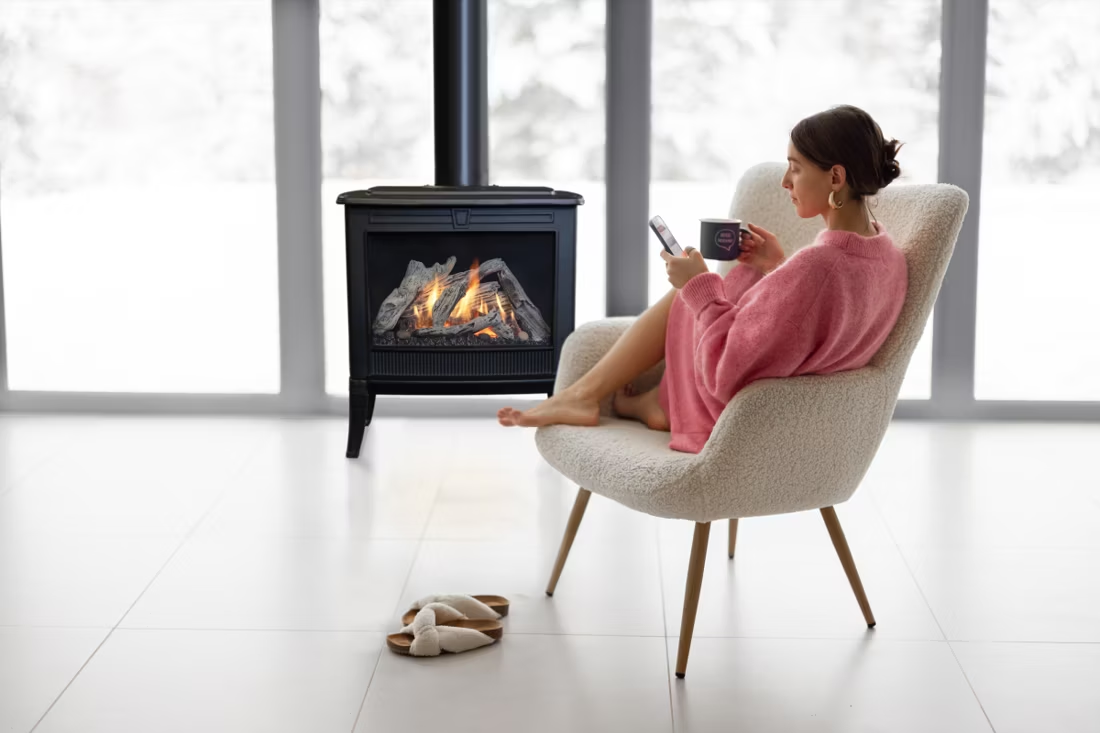
Four fuels. One honest answer for Wilkin County.
Three steps. No salesperson until you're ready.
Tell us about your project
Your zip code, your situation, and the fuel you're leaning toward—or let the answers point you to one.
See what's actually available
The brands dealers within 100 miles genuinely carry—real options, never a catalog mirage.
Get your dealer & Project Guide
A trusted local dealer, plus the free Project Guide & Parts List that names every component of the job.
Frequently Asked Questions
Which fuel works best in Wilkin County?
With one of the heaviest winter heating loads in the state and winters that routinely dip below zero, most Wilkin County homes need a heating strategy, not just a fireplace. Wood remains a strong choice for farmhouses with access to oak and maple woodlots—a catalytic or non-cat wood stove loaded with dense hardwood can hold overnight coals through a -20°F night, and it works when an ice storm takes out the power lines, which happens most winters somewhere in the county. Propane is the common gas choice since natural gas mains don't reach most of rural Wilkin County outside Breckenridge—propane fireplaces and inserts give push-button heat without wood-hauling. Pellet stoves are a practical middle ground, especially with regional suppliers like Lignetics and Somerset Pellet Fuel keeping bags available locally, though they still need grid power to run the auger and blower. Electric fireplaces are supplemental almost everywhere here—good for a bedroom or a lake cabin used mostly in summer, but not enough on their own against a Red River Valley winter. Most homes end up pairing a wood or pellet primary heater with propane or electric for secondary rooms.
Do I need a permit to install a fireplace in Wilkin County?
Generally, yes, for anything beyond a plug-in electric unit. New wood stoves, wood inserts, gas fireplaces, gas inserts, gas stoves, and pellet stoves typically require a building permit through the Wilkin County building permit office if you're in an unincorporated township, or through the city if you're inside Breckenridge or another incorporated town. Propane installations also need a licensed gas-fitter for the tank connection and line work, separate from the appliance permit. Built-in electric fireplaces that require new wiring may need an electrical permit; a simple plug-in freestanding unit usually doesn't. Most local retailers handle the permitting paperwork as part of installation, which is worth confirming when you're comparing quotes.
Does Wilkin County have restrictions on wood burning?
No—unlike parts of the West with inversion-driven air quality alerts, Wilkin County has no reported air quality restrictions on wood burning. The county's open, low-density farmland—population under 4,500 spread across roughly 750 square miles—means smoke doesn't concentrate the way it can in a river-basin city. That said, a well-seasoned load of oak or maple burns cleaner and hotter than green wood or softer species like aspen, so seasoning firewood for at least six months to a year still matters, both for chimney safety and for getting real heat out of a cold night.
Can one local hearth retailer handle all four fuel types in a county this small?
Given Wilkin County's population, it's common for one or two retailers—often based in Breckenridge or across the river in Fargo-Moorhead—to carry wood, gas, pellet, and electric under one roof, since the customer base isn't large enough to support fuel-specialist showrooms the way a bigger metro area can. That's actually convenient if you're not sure which fuel fits your farmhouse or lake place: a multi-fuel dealer can walk you through wood versus pellet versus propane trade-offs in one visit rather than sending you to three separate stores.
How does service work for rural Wilkin County properties?
Most technicians serving the county are based in Breckenridge or the Fargo-Moorhead area and drive out to farms and lake properties around Rothsay, Foxhome, Campbell, and the townships in between. Expect a modest trip fee for calls outside town limits, and expect scheduling to tighten up fast once temperatures drop—booking wood stove chimney sweeps or pellet stove service in September or early October, before the first hard freeze, is far easier than trying to get someone out in January. If you're on a gravel township road, mention that when you book; some techs plan routes around road conditions during the snowiest stretch of winter.
What's the typical cost range for fireplace installation across all fuel types in Wilkin County?
Wood stove or insert installation: roughly $4,000-$8,500, more for full masonry chimney work in older farmhouses. Propane fireplace, insert, or stove: roughly $4,000-$10,000, with tank setup and gas line work driving the higher end for homes without existing propane service. Pellet stove or insert: roughly $4,000-$7,000 installed. Electric fireplace: $200-$3,000 for the unit itself, plus $300-$1,000 in labor for anything beyond a simple plug-in. Rural travel time can add modestly to labor costs compared to in-town installs—worth asking about upfront when you get quotes.
Wood, gas, pellet, or electric—how do I choose?
Match the fuel to your life, not the other way around. Wood: lowest fuel cost and total power-outage independence, but you're hauling and stacking. Gas: press a button, set a thermostat, no maintenance to speak of. Pellet: wood economics with automatic feeding, in exchange for weekly cleaning and a need for electricity. Electric: plugs in anywhere with honest supplemental heat. Nobody regrets the fuel that fits how they actually live.
Does a fireplace add value to my home?
On average, a fireplace adds back to the home about the same amount you spent installing it. Add the monthly savings from heating the rooms you actually use instead of the whole house—often hundreds of dollars a year—and the value case is strong before you even count what a fire does for how your family uses the room.
What is an in-home preview and do I need one?
It's a visit where a hearth professional measures your space, confirms the model you picked actually works in your home, and walks the specs—framing, gas line, venting, finish work—before anything is ordered. Some details you just can't know until you see the house. Never make a down payment without one; it's the single most-skipped step that burns buyers.
How much should I budget for a fireplace?
For an average home—covering the fireplace, the vent pipe, and basic installation—a budget between $3,900 and $5,500 gives you a lot of options across wood, gas, and pellet. By the time you add finish work, gas line, and electrical, the average complete installation lands between $5,000 and $12,000 all-in. In a remodel or new build, a good rule is to put about 2.5% of the total project cost toward the fireplace.
Stove and Fireplace Dealers in Wilkin County
Listings include WhyFire partner dealers, dealers we have verified as authorized for the brands we recommend, and established local businesses that carry hearth products. Every listing shows which one it is. The ones marked Preferred run on WhyFire's software, so they can show you real pricing and book your appointment right here. No manufacturer pays for placement. How we verify dealers →
Hebron Brick Supply
Structural Materials
Center Of Design Inc
Rivers Edge Cabinetry
Ellingsons/The Fireplace Store- Perham
Find your fireplace project in Wilkin County.
Tell us about your home and we'll match you with a trusted local dealer and send you a free Project Guide & Parts List—the exact parts, vent kit included, and the recommended local dealer to get it installed before winter sets in.
Find Your Fireplace →