
Instant heat for the coldest stretch of the Red River Valley.
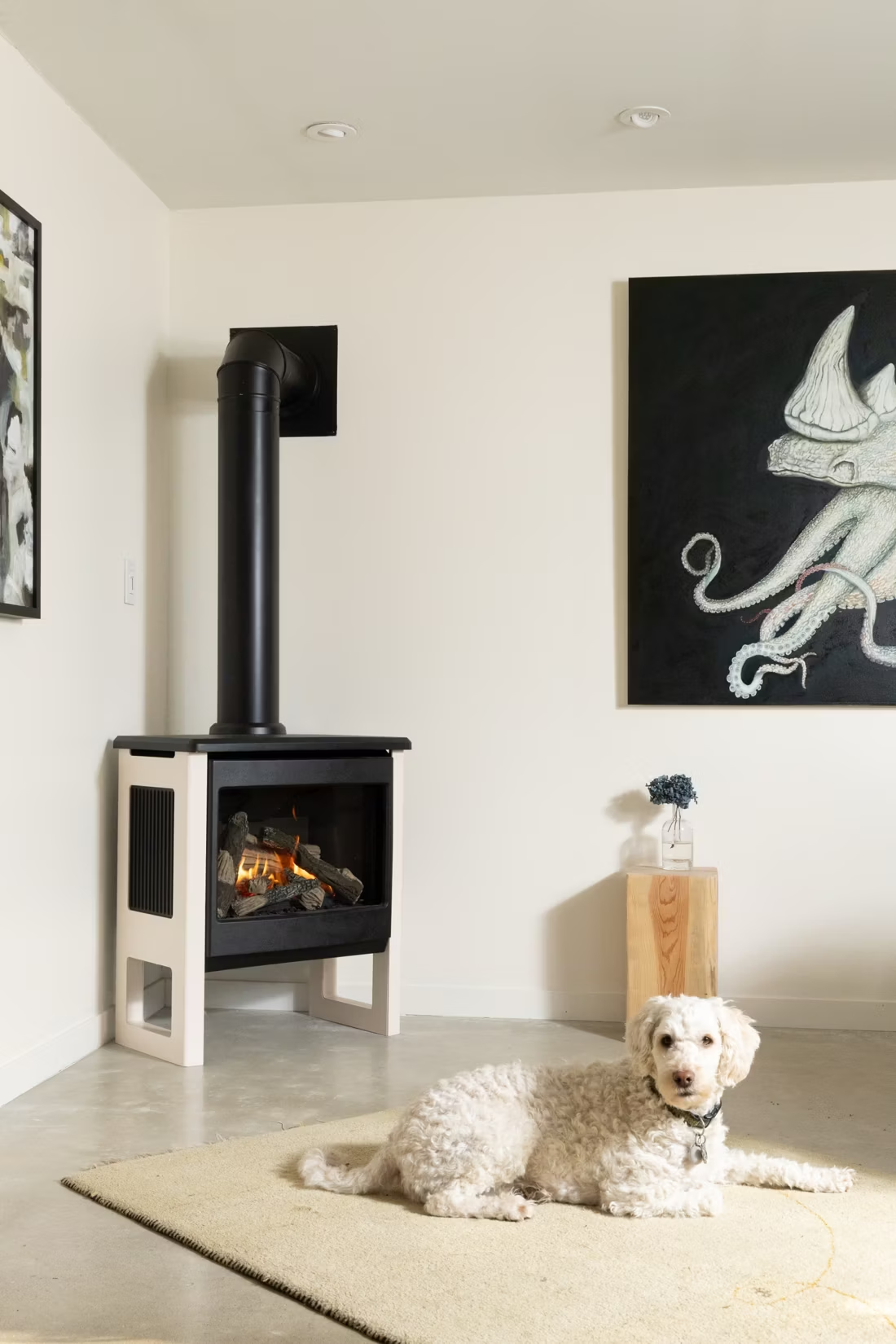
Wilkin County's winters average -1°F with more than 8,800 heating degree days a year—a climate on par with International Falls. A properly vented gas fireplace or insert delivers heat the moment you flip a switch, no matter how hard the wind is blowing across the fields between Breckenridge and Rothsay. We'll match you with a trusted local dealer who can size and install the right unit.
Every Project Starts From One of These Five Situations
Heat that starts the instant you need it.
Wilkin County sits in the flat, wind-exposed Red River Valley along the North Dakota border, anchored by Breckenridge and the small farm towns of Rothsay, Foxhome, Campbell, and Nashua. At Climate Zone 7 with 8,812 heating degree days and average lows near -1°F, this is genuinely severe-cold country—closer in exposure to International Falls than to the Twin Cities three hours east. Open farmland means wind chill routinely pushes actual temperatures 20 to 30 degrees colder than the thermometer reading, and a furnace alone often isn't enough to keep a farmhouse's living room comfortable on the worst January nights.
Natural gas service through Great Plains Natural Gas reaches Breckenridge and the immediate area, while most of the county's farmsteads and outlying towns rely on propane delivered by local co-ops. Either fuel works well in a modern direct-vent fireplace or insert, and the appeal in Wilkin County isn't ambiance—it's dependable, zone heat that kicks on instantly during a blizzard, backs up a furnace during a power blink, and doesn't ask anyone to haul wood across an icy farmyard at 6 a.m.
Three steps. No salesperson until you're ready.
Tell us about your project
Your zip code, your situation, and the fuel you're leaning toward—or let the answers point you to one.
See what's actually available
The brands dealers within 100 miles genuinely carry—real options, never a catalog mirage.
Get your dealer & Project Guide
A trusted local dealer, plus the free Project Guide & Parts List that names every component of the job.
Frequently Asked Questions
How much does a gas fireplace installation cost in Wilkin County?
Most gas fireplace and insert installations in Wilkin County run $4,500 to $10,500, depending on the unit, whether you're on natural gas through Great Plains Natural Gas or running off a propane tank, and how much venting or gas line work is involved. Installing an insert into an existing masonry fireplace in Breckenridge, where gas service already runs to the house, tends toward the lower end. New installations on farmsteads outside town—where a propane tank, buried gas line, and a technician's drive time from Fergus Falls or Moorhead are all part of the job—usually land toward the higher end. Ask any installer whether their quote already accounts for the trip out to your property; in a county this rural, that's a real line item.
Do I need natural gas, or can I run a fireplace on propane?
Either works, and in Wilkin County most homeowners end up on propane by default. Great Plains Natural Gas serves Breckenridge and a limited area around it, but outside town—Rothsay, Foxhome, Campbell, Nashua, and the farmland between—there's no natural gas main, so propane is the standard fuel. Local co-ops like Farmers Union Oil deliver propane throughout the county and can size a tank for a fireplace alongside your existing furnace and grain-drying propane use. Nearly every gas fireplace model on the market can be configured for propane at installation, so fuel availability shouldn't limit which unit you choose.
Do I need a permit to install a gas fireplace in Wilkin County?
Yes. New gas fireplace and insert installations require a building permit through the Wilkin County Planning & Zoning Office for homes outside city limits, or through the city of Breckenridge if you're within town. Gas line work—whether it's tapping into an existing natural gas line or running new propane piping—needs a licensed gas-fitter, and most hearth dealers coordinate that permit and inspection as part of the installation rather than leaving it to the homeowner.
Will a gas fireplace still work if the power goes out?
Most will, which matters in a county where winter storms and rural power lines don't always mix well. Units with intermittent pilot ignition (IPI) run on a small battery backup that kicks in automatically if the power drops, so the fireplace still lights on demand. Valor fireplaces go a step further—their pilot assembly generates its own electricity through the thermocouple, so there's no battery to remember or replace. For a farmhouse a mile down a gravel road from the nearest lineman, that kind of self-sufficient ignition is worth asking about specifically.
Gas vs. wood—which makes more sense for a Wilkin County home?
Wood is still common on farmsteads with access to oak, maple, birch, or aspen from windbreaks and shelterbelts, and it keeps a house warm even when both the power and the propane truck can't get down the road. But wood means daily tending, and at -1°F average lows most families want a heat source they can turn on without thinking about it. Gas fireplaces deliver that instant, hands-off warmth and work well as a supplemental zone heater for a living room or basement rec room while a wood stove or furnace handles the rest of the house. Many Wilkin County homes end up with both—gas for daily convenience, wood as the backup when a January storm knocks out the grid.
What's the difference between a gas insert, fireplace, and stove?
A gas insert slides into an existing masonry fireplace and uses the chimney as its vent path—a common retrofit for older Breckenridge homes with a brick fireplace that's never thrown much heat. A gas fireplace is a full built-in unit for new construction or a remodel where there's no existing fireplace to work with. A gas stove is freestanding, sits on its own hearth pad, and can go almost anywhere with the right clearances—a practical option for a detached shop or a farmhouse addition that doesn't connect easily to existing venting.
How often does a gas fireplace need to be serviced?
Plan on an annual inspection, ideally in late summer before the first cold snap arrives. A technician checks the burner, pilot assembly, venting, and gas connections, and cleans the glass and interior—usually a $150 to $250 visit. Given how few installers and service techs cover a county this sparsely populated, it's worth scheduling early; appointment windows tighten up fast once temperatures start dropping in October.
Should I choose a vented or vent-free gas fireplace?
For Wilkin County, a direct-vent unit is the clear recommendation. Vented fireplaces draw combustion air from outside and exhaust it back outside through a sealed pipe, which matters in a tightly built, well-insulated farmhouse where indoor air exchange is already limited by design in a climate this cold. Vent-free units burn directly into the room and are legal in Minnesota within strict sizing and ventilation rules, but most local dealers steer homeowners toward direct-vent models for both air-quality and performance reasons—they simply put out more usable heat in sub-zero conditions.
What size gas fireplace do I need for a Wilkin County home?
Because Wilkin County averages 8,812 heating degree days and regularly sees wind chills far below the air temperature, most dealers size fireplaces here a step larger than they would for the same square footage in southern Minnesota. A mid-size direct-vent fireplace (25,000-35,000 BTU) comfortably heats an open living/kitchen area in a typical Breckenridge home, while a larger open farmhouse floor plan, or a room with exterior walls exposed to the prevailing northwest wind, often calls for a higher-output unit in the 35,000-40,000 BTU range. An in-home consultation with a local dealer accounts for your home's insulation, window exposure, and layout rather than square footage alone.
Can I put a TV above my fireplace?
Yes—with an asterisk. Fireplaces are hot and TVs don't like heat. Either put a mantel between them to deflect rising warmth, or choose a fireplace with heat-management technology that creates a cool zone on the wall above—the wall stays around 125 degrees, barely warm, while the room still gets full heat. If you like clean lines and don't want a mantel, heat management is the answer.
Is my gas fireplace wasting gas?
If it was installed more than 15 years ago, probably. Older gas fireplaces keep a standing pilot light burning all the time, and that little flame can cost a couple hundred dollars a year. Newer models use pilot-on-demand ignition—the pilot lights only when you use the fireplace and goes out when you turn it off.
What is an in-home preview and do I need one?
It's a visit where a hearth professional measures your space, confirms the model you picked actually works in your home, and walks the specs—framing, gas line, venting, finish work—before anything is ordered. Some details you just can't know until you see the house. Never make a down payment without one; it's the single most-skipped step that burns buyers.
Can a fireplace actually lower my heating bill?
Yes—by creating a comfort zone. A furnace heats every square foot of the house just to warm the one room you're in; a gas fireplace on low burns roughly a sixth of the gas a typical furnace does. Set the furnace around 55–60 degrees as a baseline, then heat the rooms your family actually uses. Families who heat this way commonly save $20–$60 a month.
Find your gas fireplace in Wilkin County.
Tell us about your home and we'll match you with a trusted local dealer and send over a free Project Guide & Parts List—the exact parts, vent kit, and recommended installer for your Wilkin County gas project.
Find Your Fireplace →