
Steady heat for Pennington County's long, hard winters.
With a heating season stretching nearly nine months and winter lows that average -3°F, Pennington County asks a lot of a home heating system. Pellet stoves deliver thermostat-controlled, hopper-fed heat without the daily wood-splitting—find the right unit and a trusted local dealer to install it.
Every Project Starts From One of These Five Situations
Automated heat for one of Minnesota's toughest climates.
Pennington County sits in the flat farmland of the Red River Valley around Thief River Falls, and its IECC climate zone 7 rating puts it among the coldest counties in the Lower 48—closer in heating demand to Fargo, sixty miles west, than to most of the Twin Cities metro. With a long, brutal heating season lasting nearly nine months and winter lows that average -3°F, furnaces and wood stoves here run for months at a stretch, and homeowners often want a heat source that keeps producing consistent BTUs without constant attention overnight.
That's the appeal of a pellet stove in a county like this. Bagged pellets milled from birch, aspen, oak, and maple—the same hardwoods that fill Pennington County's woodlots—are sold locally under brands like Indeck Energy Services, Lignetics, and Somerset Pellet Fuel, and a full hopper can run a stove unattended for 24 hours or more on the auto-feed setting. For rural properties and older homeowners in particular, that hands-off operation matters more here than in milder climates, where a stove might only run a few weeks a year instead of six months straight.
Three steps. No salesperson until you're ready.
Tell us about your project
Your zip code, your situation, and the fuel you're leaning toward—or let the answers point you to one.
See what's actually available
The brands dealers within 100 miles genuinely carry—real options, never a catalog mirage.
Get your dealer & Project Guide
A trusted local dealer, plus the free Project Guide & Parts List that names every component of the job.
Frequently Asked Questions
How much does a pellet stove installation cost in Pennington County?
Most pellet stove installations run in the neighborhood of $3,000 to $6,500 in Pennington County, depending on the stove size, whether you need a new vent run through an exterior wall, and any hearth pad work required for clearance. Pellet stoves vent through a simple 3-inch or 4-inch PL pipe rather than a full masonry chimney, which keeps installation costs lower than wood stove or gas fireplace projects in most cases. A local dealer will give you a firm number after seeing your home, but expect the venting path and any electrical work for the auger and blower to be the main cost drivers.
What size pellet stove do I need for a Pennington County home?
With winter lows averaging -3°F and a heating season nearly as long and severe as Fargo just across the state line, Pennington County homes generally need a mid-to-large pellet stove rated for continuous heavy use rather than a light-duty model built for milder climates. A stove sized for 1,200 to 2,000 square feet is a common fit for a well-insulated farmhouse or ranch in the county, but older homes with less insulation or higher ceilings should size up. A local dealer can walk your home and factor in insulation, ceiling height, and how much of the heating load you want the stove to carry versus your furnace.
Where can I find a certified pellet stove dealer near me?
Look for a dealer who is a certified retailer for the brands they sell and who handles the full installation—venting, electrical hookup for the auger and blower, and any hearth clearance work—rather than just dropping off a box. In a county the size of Pennington, with Thief River Falls as the population center, most dealers cover the full county and outlying townships, sometimes with a small travel charge for rural delivery and install. Ask specifically whether they stock or can order pellets from regional mills like Indeck Energy Services or Lignetics, since a dealer with an ongoing pellet supply relationship is usually a better long-term partner than one who only sells the stove.
What's the difference between a pellet stove and a pellet insert?
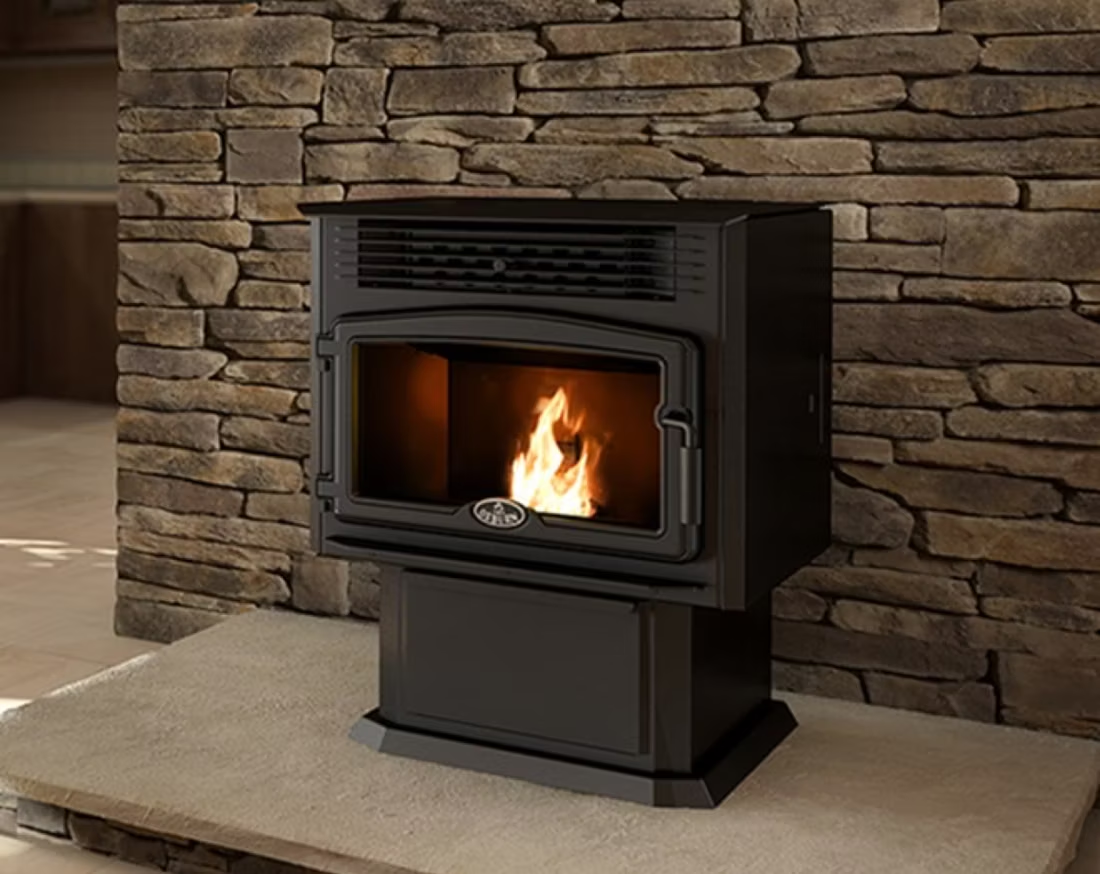
A pellet stove is a freestanding unit that sits on a hearth pad and vents through a wall or existing chimney—it can go almost anywhere in a home with the right clearances. A pellet insert is built to slide into an existing masonry fireplace opening, turning an old wood-burning fireplace into a hopper-fed, thermostat-controlled heat source. For Pennington County homes with an existing masonry fireplace that's rarely used because tending a wood fire isn't practical during a six-month heating season, an insert is often the more useful upgrade. Homes without an existing fireplace opening are better suited to a freestanding stove.
Do I need a permit to install a pellet stove in Pennington County?
Most pellet stove installations require a building permit, whether you're inside Thief River Falls city limits or in unincorporated Pennington County—check with the relevant building department before work starts, since requirements can differ between city and county jurisdiction. The permit process typically confirms proper venting clearances and any electrical work for the auger motor and combustion blower. Most established local dealers handle the permit application as part of the installation, so you generally won't need to navigate it yourself.
What's the best pellet stove for Pennington County's climate?
Because pellet stoves rely on electricity to run the auger, igniter, and combustion blower, the single biggest consideration in a climate like Pennington County's—where winter storms and occasional extended power outages are a real possibility at -3°F average lows—is backup power. Look for a stove with a low standby draw and pair it with a small battery backup or generator setup so it can keep running through an outage. On the stove itself, models with larger hopper capacity (40-60 lbs) reduce how often you're refilling during the long heating season, and a thermostat-controlled auto-ignition model saves you from manually restarting the stove in a county where the furnace essentially runs from October through April.
Pellet vs. wood stove—which is right for my home?
Wood stoves burn oak, maple, birch, or aspen—all common species around Pennington County woodlots—and keep working with no electricity, which matters during winter power outages. Pellet stoves are far more convenient day to day: load the hopper, set the thermostat, and the stove self-regulates its burn rate and shuts down the auger and blower when it's not needed, with far less ash and no splitting or stacking. The tradeoff is that a pellet stove needs continuous electricity, so it can't serve as backup heat during an outage unless you have a battery or generator setup. In a county where farmers and rural homeowners often already have generator backup for well pumps and other equipment, that tradeoff is manageable—for others, a wood stove or a wood-and-pellet combination remains the more storm-resilient choice.
Where can I buy pellet fuel in Pennington County?
Bagged pellets from regional mills like Indeck Energy Services, Lignetics, and Somerset Pellet Fuel are sold through farm supply stores and hearth dealers throughout the area, and most stove dealers can set up seasonal delivery or bulk-ton purchases. Pricing for regionally milled hardwood pellets in Minnesota typically runs somewhere in the $230 to $300 per ton range, though it moves with fuel costs and demand—buying early in the fall before the coldest stretch of the season is usually the way to lock in better pricing and guarantee supply.
How often does a pellet stove need to be cleaned and serviced?
Pellet stoves need more frequent attention than a once-a-year wood stove sweep, precisely because they run near-continuously through a Pennington County winter. Plan on emptying the ash pan every few days to weekly depending on use, cleaning the burn pot every one to two weeks, and having a full professional service—including the auger, blower, and venting—once a year, usually before the heating season starts in earnest. Homes running the stove as a primary heat source for six months straight should keep a slightly closer eye on it than a home using it just for supplemental warmth.
How often does a pellet stove need cleaning?
A clean pellet stove is a happy pellet stove. Plan on cleaning the burn pot about once a week when you're burning regularly—ash and clinkers gum up the air holes just like a pellet barbecue. Most pellet stove problems trace back to skipped cleaning that nobody explained up front. Some designs make it easy with a trapdoor burn pot: pull a lever and the gunk drops into the ash pan.
What's the difference between an insert and a zero-clearance fireplace?
An insert is a fireplace that slides into a pre-existing wood-burning fireplace—if you don't have one, there's nothing to insert it into. A zero-clearance fireplace is built into a framed wall, which makes it the answer for remodels and new construction. Simple test: existing masonry fireplace means insert; blank or framed wall means zero-clearance.
How much should I budget for a fireplace?
For an average home—covering the fireplace, the vent pipe, and basic installation—a budget between $3,900 and $5,500 gives you a lot of options across wood, gas, and pellet. By the time you add finish work, gas line, and electrical, the average complete installation lands between $5,000 and $12,000 all-in. In a remodel or new build, a good rule is to put about 2.5% of the total project cost toward the fireplace.
Can I install a fireplace myself?
If you're putting a fire in your house on purpose, it's best to work with an expert. Unless you're genuinely experienced in framing, gas line, vent pipe, and the national code on clearances to combustibles, have a professional do it—and ideally the same company that sells you the fireplace, so warranty, service, and liability all live under one roof.
Pellet Brands Stocked Around Pennington County
Manufacturers will point you to the nearest stocking dealer.
Find your pellet stove in Pennington County.
Tell us about your home and heating goals, and we'll match you with a trusted local dealer and send over your free Project Guide & Parts List—a plan for your pellet project in Pennington County with the exact parts, including the vent kit, and your recommended local installer.
Find Your Fireplace →