
Instant warmth for a county where winter digs in early.
Pennington County racks up 9,473 heating degree days a year, with winter lows averaging -3°F—cold on par with International Falls. Electric fireplaces here work best as zone heat and ambiance in a specific room, not as the furnace replacement. I'll match you with a trusted local dealer who'll tell you straight whether a plug-in unit or a hardwired built-in is the right call for your space.
Every Project Starts From One of These Five Situations
A supplemental heat and ambiance play in one of Minnesota's coldest counties.
Pennington County sits in the Red River Valley of northwestern Minnesota, anchored by Thief River Falls—home to Digi-Key Electronics and the Red Lake River—with a county population of just over 9,200. This is Climate Zone 7 country: 9,473 heating degree days a year and winter lows that average -3°F, a cold profile in the same league as International Falls. Most homes here lean on wood (oak, maple, birch, and aspen are all common locally), propane, or fuel oil for primary heat, because the raw BTU demand of a Pennington County winter makes electric resistance heat an expensive way to warm an entire house.
That's exactly why electric fireplaces earn their place here as a supplemental and ambiance appliance rather than a primary heat source. A plug-in or hardwired unit adds real, immediate warmth to a finished basement, a home addition, or a bedroom far from the furnace—without a chimney, without venting, and without the creosote or ash of a wood stove. Because local electric rates through providers like Thief River Falls Municipal Utilities and Otter Tail Power make running resistance heat around the clock costly, most homeowners we match use electric units to take the edge off a single room while the furnace, propane stove, or wood stove carries the rest of the house.
Three steps. No salesperson until you're ready.
Tell us about your project
Your zip code, your situation, and the fuel you're leaning toward—or let the answers point you to one.
See what's actually available
The brands dealers within 100 miles genuinely carry—real options, never a catalog mirage.
Get your dealer & Project Guide
A trusted local dealer, plus the free Project Guide & Parts List that names every component of the job.
Frequently Asked Questions
How much does an electric fireplace installation cost in Pennington County?
A plug-in electric insert or freestanding unit typically runs $200 to $800 installed, since it uses a standard household outlet and needs no venting or gas line. A built-in wall unit or mantel-style fireplace that requires a dedicated 240-volt circuit and an electrician's visit generally lands between $1,200 and $3,500 depending on the wall opening and finish work. Rural properties outside Thief River Falls, Goodridge, or St. Hilaire may see a modest travel charge if the installer is coming from a larger service area.
Can an electric fireplace heat my whole home in Pennington County?
Realistically, no—not in a climate with 9,473 heating degree days and winter lows averaging -3°F. Electric resistance heat is expensive to run continuously at that scale, and most units are rated to comfortably heat a single room of 400 to 1,000 square feet, not a whole house. Homes throughout the county typically pair an electric fireplace with a propane furnace, fuel oil system, or wood stove for primary heat, using the electric unit to add supplemental warmth and ambiance to whichever room gets used most.
Do I need a permit to install an electric fireplace in Pennington County?
A simple plug-in electric fireplace that runs off an existing outlet generally doesn't require a permit. If you're installing a built-in unit that needs a new dedicated circuit, an electrical permit is typically required, and the work should go through a licensed electrician. Check with Pennington County's zoning and building office, or your city if you're inside Thief River Falls limits, before work starts—a local dealer who handles installs regularly will usually know the process and can coordinate it as part of the job.
What size electric fireplace do I need for my Pennington County home?
Sizing comes down to the room, not the county's overall climate, since electric units are meant for zone heating rather than whole-home coverage. A 1,500-watt unit comfortably heats a room in the 300 to 400 square foot range with typical insulation; larger open basements or additions may need a higher-wattage built-in or two smaller units placed strategically. Older farmhouses around the county with less insulation and higher ceilings will lose heat faster than newer construction, so a local dealer sizing the unit in person will get you closer than a generic wattage chart.
Electric vs. wood or pellet—which makes more sense for my home?
It depends on what you're solving for. Wood—oak, maple, birch, and aspen are all commonly burned locally—works with no electricity at all, which matters during a rural power outage, and it can serve as genuine primary heat through a Pennington County winter. Pellet stoves from brands like Indeck Energy Services, Lignetics, or Somerset Pellet Fuel burn cleaner and are easier to load than cordwood, but they need power to run the auger and blower, same limitation as an electric fireplace. If your priority is zero-maintenance supplemental warmth and ambiance in a specific room, electric is the simplest option; if you need heat that survives an outage, wood is the more dependable backup.
Will my electric fireplace still work during a winter power outage?
No—an electric fireplace is entirely dependent on grid power, and rural stretches of Pennington County can see outages during ice storms or high-wind events that knock down lines across the open Red River Valley. If you're relying on an electric unit for meaningful supplemental heat, it's worth having a wood stove, propane heater, or generator as backup for the times the power actually goes out, rather than treating the electric fireplace as your fallback plan.
How much maintenance does an electric fireplace actually need?
Very little, which is a big part of the appeal here. There's no chimney to sweep, no ash to haul, and no venting to inspect. Maintenance is mostly dusting the unit, occasionally replacing the LED bulbs that create the flame effect, and checking that the heating element and fan are free of dust buildup once a year. That's a real contrast to the annual chimney inspection recommended for wood-burning setups common elsewhere in the county.
Where do electric fireplaces make the most sense in Pennington County homes?
They're a strong fit for finished basements without an existing chimney, additions built after the original heating system was sized, apartments and townhomes in Thief River Falls where venting isn't an option, and bedrooms or offices where you want instant, controllable warmth without running the whole-house furnace harder. They're less suited as the sole heat source for a farmhouse or a home relying on wood or propane as its primary system against a 9,473-HDD winter.
Are there rebates or efficiency incentives for electric fireplaces locally?
Electric fireplaces don't usually qualify for the kind of efficiency rebates offered on heat pumps or high-efficiency furnaces, since they're built for supplemental use rather than whole-home heating. That said, it's worth checking directly with Thief River Falls Municipal Utilities or Otter Tail Power Company, since utility efficiency programs and off-peak rate options change from year to year and can affect the real cost of running a unit through a long Pennington County winter.
Can I put a TV above my fireplace?
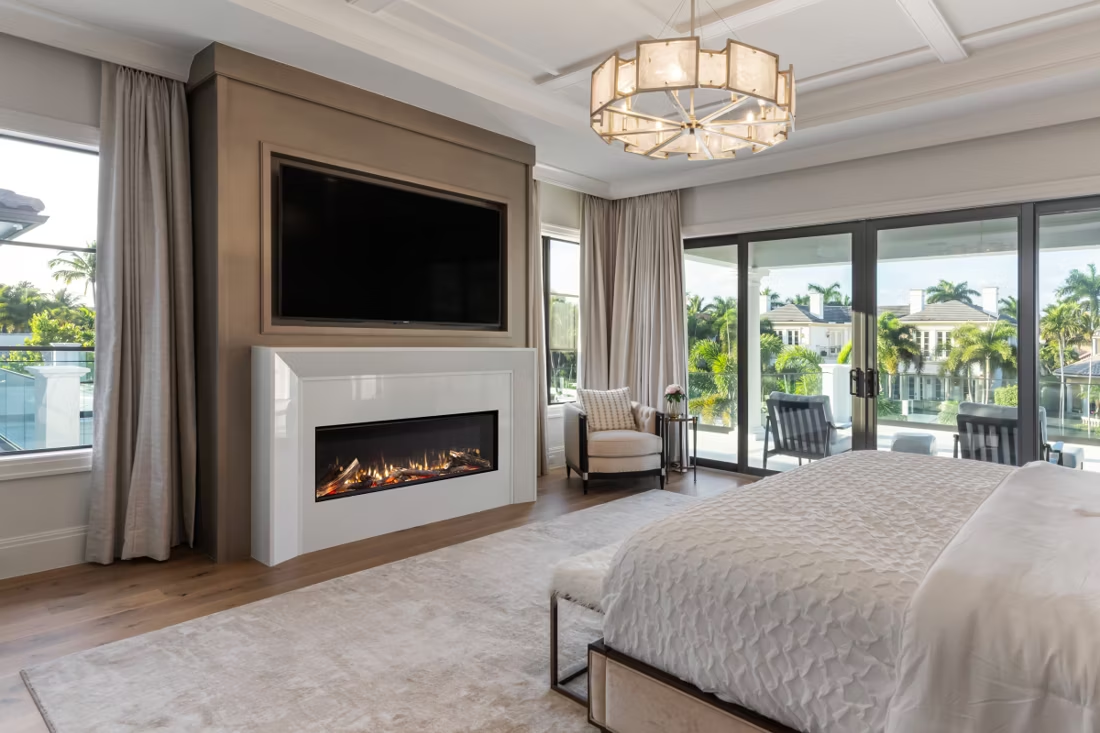
Yes—with an asterisk. Fireplaces are hot and TVs don't like heat. Either put a mantel between them to deflect rising warmth, or choose a fireplace with heat-management technology that creates a cool zone on the wall above—the wall stays around 125 degrees, barely warm, while the room still gets full heat. If you like clean lines and don't want a mantel, heat management is the answer.
Does an electric fireplace need a vent or chimney?
No—that's its superpower. An electric fireplace needs a wall and an outlet, period. No vent pipe, no gas line, no clearances to design around, which is why it works in bedrooms, offices, apartments, and walls where venting a gas or wood unit would be impractical or impossible. Installation is typically the simplest and least expensive of any fireplace type.
Can I install a fireplace myself?
If you're putting a fire in your house on purpose, it's best to work with an expert. Unless you're genuinely experienced in framing, gas line, vent pipe, and the national code on clearances to combustibles, have a professional do it—and ideally the same company that sells you the fireplace, so warranty, service, and liability all live under one roof.
How much should I budget for a fireplace?
For an average home—covering the fireplace, the vent pipe, and basic installation—a budget between $3,900 and $5,500 gives you a lot of options across wood, gas, and pellet. By the time you add finish work, gas line, and electrical, the average complete installation lands between $5,000 and $12,000 all-in. In a remodel or new build, a good rule is to put about 2.5% of the total project cost toward the fireplace.
Get your free Project Guide & Parts List for an electric fireplace in Pennington County.
Tell me about your room, your circuit situation, and how you plan to use the fireplace, and I'll match you with a trusted local dealer and send a free Project Guide & Parts List—the right unit, the electrical requirements, and a recommended installer for your project, no big-box guesswork.
Find Your Fireplace →