
Warm, instant heat when Pennington County drops below zero.
Zone 7 winters here run cold and long—Pennington County racks up a heating season on par with International Falls. Find the right gas fireplace, insert, or stove and get matched with a trusted local dealer who can actually install it.
Every Project Starts From One of These Five Situations
Heat that keeps up with a Zone 7 winter.
Pennington County sits on the flat, wind-exposed floor of the old Glacial Lake Agassiz basin in northwestern Minnesota, with Thief River Falls as the county seat and largest town. Winters here are genuinely severe—average lows around -3°F, stretches of 20-below overnight, and a long, brutal heating season that puts the county in the same company as International Falls and Fargo rather than the milder parts of the Upper Midwest. Wood heat from local oak, maple, birch, and aspen has deep roots in the county, but a growing share of homeowners want a heat source that fires instantly on the coldest mornings without splitting or hauling anything.
Inside Thief River Falls, natural gas service is available through Thief River Falls Municipal Utilities, making a direct-vent gas fireplace or insert a straightforward add if your home is already on the line. Outside city limits—in Goodridge and the rural townships that make up most of the county—propane from regional suppliers is the standard fuel. Either way, a properly sized and vented gas unit gives you zone heat that comes on the instant you flip a switch, which matters when a blizzard knocks out power on the county's exposed prairie roads and a fireplace with battery-backed ignition becomes real backup heat.
Three steps. No salesperson until you're ready.
Tell us about your project
Your zip code, your situation, and the fuel you're leaning toward—or let the answers point you to one.
See what's actually available
The brands dealers within 100 miles genuinely carry—real options, never a catalog mirage.
Get your dealer & Project Guide
A trusted local dealer, plus the free Project Guide & Parts List that names every component of the job.
Frequently Asked Questions
How much does a gas fireplace installation cost in Pennington County?
Most gas fireplace and insert installations in Pennington County run in the $4,000 to $9,500 range, depending on whether you're installing into an existing masonry chimney, running new gas line, or building out a wall unit in new construction. Homes in Thief River Falls already tied into the municipal gas line tend to land on the lower end. Rural properties running on propane often add $1,000 to $2,500 if a new tank and regulator setup is needed. Given how much venting matters in a Zone 7 climate—proper clearances and sealed direct-vent runs to handle sustained subzero stretches—a local installer's in-home estimate is worth getting before you budget a number.
Can I convert my existing wood fireplace to gas?
Yes, and it's a common project for older Pennington County homes with a masonry fireplace that no one wants to keep loading with oak or birch on a -3°F morning. A gas insert typically drops into the existing firebox, using a stainless liner run through your current chimney, and runs $4,000 to $8,000 depending on the insert and whether you're on natural gas in town or propane in the county's rural areas. The conversion keeps the look of the original fireplace while giving you a unit that actually holds its heat output through a long cold snap instead of losing most of it up an open flue.
Do I need natural gas, or can I run a fireplace on propane?
Both work fine, and which one applies to you mostly comes down to address. Inside Thief River Falls, Thief River Falls Municipal Utilities runs natural gas service, so if your water heater or furnace already runs on it, adding a fireplace is a simple tie-in. Once you're outside the city—which describes most of Pennington County's rural townships and Goodridge—propane from a regional supplier is the standard setup, either from an existing tank or a new one installed alongside the fireplace. Nearly every gas fireplace on the market can be configured for either fuel; your installer just sets the correct orifice and regulator for what you've got.
Will my gas fireplace work during a power outage?
Most will, which matters in a county where prairie wind and heavy snow can take down power lines for hours at a time in the dead of winter. Units with IPI (intermittent pilot ignition) run on a small battery backup that kicks in the instant the power drops, so the fireplace lights on demand exactly as it normally would. Valor fireplaces skip the battery question entirely—their pilot generates its own electricity through the thermocouple, so there's nothing to keep charged. For a Pennington County home where a winter storm outage could mean the furnace is down too, a gas fireplace with reliable battery or self-powered ignition is genuine backup heat, not just ambiance.
What's the difference between a gas fireplace, gas insert, and gas stove?
A gas fireplace is a fully built-in unit framed into a wall, typically used in new construction or a remodel. A gas insert is built to slide into an existing masonry fireplace opening, converting an old wood-burning hearth into a sealed, high-efficiency gas unit that vents through the existing chimney. A gas stove is a freestanding cabinet-style unit that sits on the floor like a wood stove but burns gas or propane. For the many older farmhouses and in-town homes across Pennington County with an existing masonry fireplace that no longer gets used, an insert is usually the most direct upgrade.
Do I need a permit to install a gas fireplace in Pennington County?
Yes—a building permit is required for new gas fireplace installations through the Pennington County Planning & Zoning office for rural properties, or through the city for homes inside Thief River Falls. Gas line work also requires a licensed gas-fitter, and propane installations require sign-off from your supplier on tank placement and clearances. Most hearth dealers handle the permitting and inspection scheduling as part of the installation, which is one of the practical reasons to go through a certified local dealer rather than piecing the job together yourself.
What's the difference between vented and vent-free gas fireplaces?
Vented (direct-vent) fireplaces pull combustion air from outside and exhaust it back outside through a sealed pipe—they're the cleanest, safest, and most universally code-approved option. Vent-free units burn without any outside venting, releasing combustion byproducts, including water vapor, directly into the room. In a Zone 7 climate like Pennington County's, homes are built tight to hold heat through a long, brutal winter, which means that extra moisture and combustion air from a vent-free unit has nowhere to go—it can show up as condensation on cold windows or worse indoor air quality over a long heating season. Direct-vent units are the standard recommendation here for that reason, and most local dealers will steer you toward them by default.
How often should my gas fireplace be serviced?
An annual inspection before the start of the heating season is the standard recommendation for any gas fireplace or insert. A technician checks the burner, pilot assembly, gas connections, and venting, and cleans the glass and firebox—a much smaller job than a wood chimney sweep, but important given how hard these units run through a Pennington County winter. Expect to pay somewhere in the $150 to $250 range for a standard annual service call from a local gas appliance technician.
Gas vs. wood—which is right for my home?
Wood, especially from the oak, maple, birch, and aspen that grow throughout this part of Minnesota, still makes sense as a primary or backup heat source for homes that want to run entirely off-grid during an outage and don't mind the work of splitting and stacking. Gas gives you instant, consistent zone heat without any wood handling, and with the right ignition system it still functions during a power outage—a meaningful advantage on the exposed prairie roads around Thief River Falls and Goodridge where storm-related outages happen. Plenty of homes here run both: gas in the main living space for daily convenience, wood as the fallback for extended outages.
Why is a fireplace insert so efficient?
An insert does two things: it seals the chimney completely, so you stop losing air you already paid to heat, and it radiates warmth into the room through the firebox and glass. Most add a heat-exchange fan that pulls cool room air underneath, wraps it around the hot firebox, and pushes it back out warm. Your home is more efficient before you've even lit the first fire.
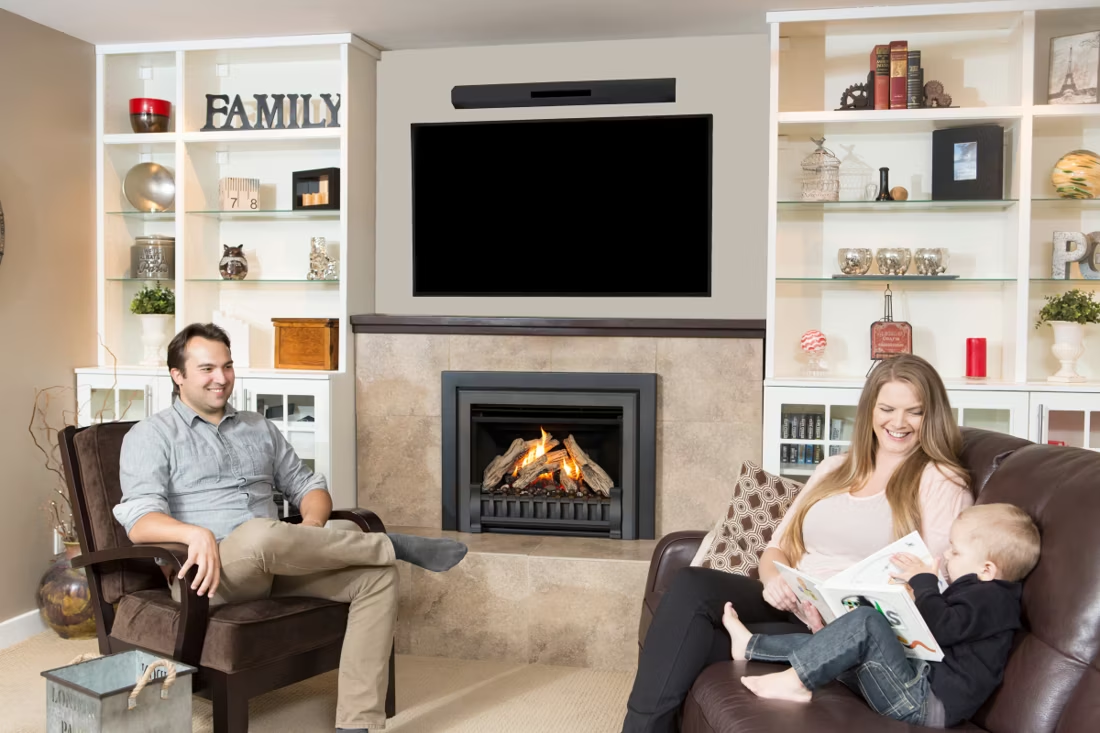
Can I put a TV above my fireplace?
Yes—with an asterisk. Fireplaces are hot and TVs don't like heat. Either put a mantel between them to deflect rising warmth, or choose a fireplace with heat-management technology that creates a cool zone on the wall above—the wall stays around 125 degrees, barely warm, while the room still gets full heat. If you like clean lines and don't want a mantel, heat management is the answer.
How much should I budget for a fireplace?
For an average home—covering the fireplace, the vent pipe, and basic installation—a budget between $3,900 and $5,500 gives you a lot of options across wood, gas, and pellet. By the time you add finish work, gas line, and electrical, the average complete installation lands between $5,000 and $12,000 all-in. In a remodel or new build, a good rule is to put about 2.5% of the total project cost toward the fireplace.
Does a fireplace add value to my home?
On average, a fireplace adds back to the home about the same amount you spent installing it. Add the monthly savings from heating the rooms you actually use instead of the whole house—often hundreds of dollars a year—and the value case is strong before you even count what a fire does for how your family uses the room.
Find your gas fireplace in Pennington County.
Tell us a bit about your home and we'll put together a free Project Guide & Parts List—the exact parts, including the vent kit, for your gas fireplace project—and match you with a trusted local dealer in Pennington County.
Find Your Fireplace →