
Steady, Efficient Heat for Murray County's Long Winters.
With a winter heating load closer to Fargo, North Dakota than to the Twin Cities and winter lows averaging 4°F across the open prairie of southwest Minnesota, Murray County homes need heat that doesn't quit. Find the right pellet stove or insert and get matched with a trusted local dealer.
Every Project Starts From One of These Five Situations
Consistent warmth without the wood-splitting work.
Murray County sits on the open farmland of southwest Minnesota, spread across Slayton, Fulda, Chandler, Avoca, Lake Wilson, and Currie, with a population of just over 5,200 across the whole county. With a winter heating load closer to Fargo, North Dakota than to the Twin Cities, the county sees serious cold—and with almost no tree cover to break the wind on the open prairie, the effective cold at a farmstead can feel harsher than the thermometer suggests. Winter lows average around 4°F, and stretches of sustained sub-zero cold aren't unusual from December through February.
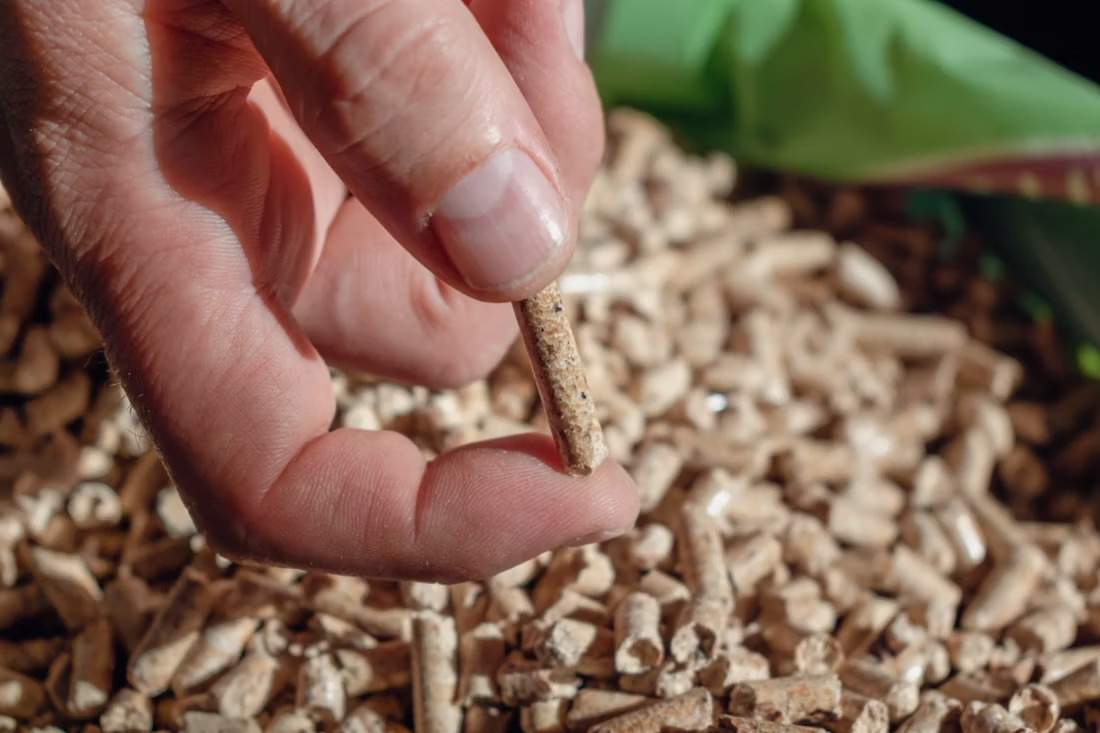
For farm families and rural homeowners already managing chores, livestock, and equipment through the winter, a pellet stove trades the daily work of splitting and stacking cordwood for a hopper that feeds itself and a thermostat that holds a set temperature automatically. Local supply isn't a concern here—Indeck Energy Services, Lignetics, and Somerset Pellet Fuel all serve the upper Midwest, and pellets are typically available through farm co-ops and rural hardware and feed stores rather than a single specialty retailer. Murray County has no air quality nonattainment designation and no winter burn restrictions, so there's no regulatory hurdle standing between you and a pellet appliance sized for the whole heating season.
Three steps. No salesperson until you're ready.
Tell us about your project
Your zip code, your situation, and the fuel you're leaning toward—or let the answers point you to one.
See what's actually available
The brands dealers within 100 miles genuinely carry—real options, never a catalog mirage.
Get your dealer & Project Guide
A trusted local dealer, plus the free Project Guide & Parts List that names every component of the job.
Frequently Asked Questions
How much does a pellet stove installation cost in Murray County?
Pellet stove installations typically run $3,000 to $6,500 depending on the unit, whether you're venting through an exterior wall or an existing chimney, and whether electrical work is needed for the hopper motor and blower. Because pellet stoves vent horizontally through a small-diameter pipe rather than requiring a full Class A chimney, installs are often less expensive than wood stove conversions—a real advantage for older farmhouses and pole-frame homes across the county that don't have existing masonry chimneys. Rural travel distance to Slayton or Fulda from outlying townships can add a modest trip charge, so ask about that upfront.
What size pellet stove do I need for a Murray County home?
With a winter heating load closer to Fargo, North Dakota than to the Twin Cities and winter lows averaging 4°F, sizing on the higher end of any stove's stated range is usually the right call here—this is not a mild-climate market. A mid-size pellet stove (rated for 1,200-2,000 sq ft) covers most farmhouse living areas, but older, less-insulated homes on exposed sites with little windbreak often need to size up even further to keep pace through a January cold snap. A local dealer will factor in your home's insulation, ceiling height, and exposure before recommending a specific unit—sizing by square footage alone tends to undersell what an open-prairie home actually needs.
Where can I find a certified pellet stove installer near me in Murray County?
Given the county's population of around 5,245 spread across small towns, most homeowners work with a dealer based in or near Slayton, or with an installer who covers Murray County as part of a wider southwest Minnesota service area out of Marshall or Worthington. Look for NFI-certified installers—pellet-specific training matters because venting clearances, pellet vent pipe sizing, and electrical hookups differ from wood stove installs. Buying and installing through the same dealer also keeps your warranty intact if something needs service two winters from now.
What's the difference between a pellet stove and a pellet insert?
A pellet stove is a freestanding unit that sits on its own hearth pad and vents through a wall or existing chimney—it can go almost anywhere in a home, including farmhouses without a fireplace. A pellet insert is built to slide into an existing masonry fireplace opening, turning a rarely-used wood fireplace into an automated, thermostat-controlled heat source. Many older homes in Murray County's towns have a masonry fireplace that sees little use in winter; converting it to a pellet insert is often the more cost-effective path than adding a freestanding stove elsewhere in the house.
Do I need a permit to install a pellet stove in Murray County?
Yes—a building permit is generally required for a new pellet stove installation, whether that's through the county for unincorporated township land or through the local city office for homes inside Slayton, Fulda, or one of the other incorporated towns. Most established pellet stove dealers handle the permit application and inspection as part of the installation, so you typically don't have to navigate it yourself. Since Murray County has no wood-burning air quality restrictions, the permit process here is mainly about verifying proper venting and clearances, not emissions compliance.
What's the best pellet stove for Murray County's climate?
For a heating load this severe—closer to Fargo, North Dakota than to the Twin Cities—look for a pellet stove with a higher BTU output rating and a large hopper capacity—a bigger hopper means fewer refills during multi-day cold stretches when you're also busy with farm chores. Brands like Harman and Lopi build higher-output units that hold up well in sustained sub-zero use, and Harman in particular is known for larger hopper sizes that suit rural households running the stove as a primary or near-primary heat source. A local dealer can match hopper size and BTU output to your square footage and how hands-off you want the day-to-day operation to be.
How often does a pellet stove need cleaning and maintenance?
Pellet stoves need more frequent attention than wood stoves but far less than you'd expect—ash removal every few days during heavy winter use, a burn pot cleaning weekly, and a full professional cleaning and inspection once a year, ideally before the heating season starts in fall. Running the stove as a primary heat source through a long Murray County winter means more total burn hours, so heavier users should keep to that annual service schedule strictly rather than stretching it to every other year.
Where can I buy pellets locally in Murray County?
Regional brands including Indeck Energy Services, Lignetics, and Somerset Pellet Fuel supply pellets throughout the upper Midwest, and in a county this size they're typically stocked seasonally through farm co-ops, rural hardware stores, and feed dealers rather than a dedicated pellet retailer. Buying a season's supply early—before the fall rush—is worth doing in a rural area where a supply run means real drive time. A 40-lb bag runs roughly one to two days of heat depending on your stove's output and how cold it gets, so plan storage for several tons if you're running pellet as your main heat source.
Pellet stove vs. wood stove—which is right for a Murray County home?
Wood stoves burn cordwood—oak, maple, birch, and aspen are all common locally—and keep working with zero electricity, which matters when a prairie ice storm or high-wind event knocks out power for days. Pellet stoves need electricity to run the auger and blower, so without a backup power source they go dark exactly when you might need heat most. In exchange, pellet stoves offer thermostat-controlled, hands-off heat and skip the splitting, stacking, and hauling that cordwood requires—a real advantage for a farm household already stretched thin in winter. Many rural homeowners here keep a wood stove or fireplace as backup and use pellet as the day-to-day primary heat source, covering both convenience and outage resilience.
Why is my open fireplace making my house colder?
Open fireplaces suck—literally. As the fire burns, it consumes air your furnace already paid to heat and pulls it out through the chimney, so the house is actually colder after the fire goes out than before you lit it. An insert fixes this: it seals the chimney, puts fixed glass across the front, and turns that hole in your house into a real heat source.
How often does a pellet stove need cleaning?
A clean pellet stove is a happy pellet stove. Plan on cleaning the burn pot about once a week when you're burning regularly—ash and clinkers gum up the air holes just like a pellet barbecue. Most pellet stove problems trace back to skipped cleaning that nobody explained up front. Some designs make it easy with a trapdoor burn pot: pull a lever and the gunk drops into the ash pan.
How much should I budget for a fireplace?
For an average home—covering the fireplace, the vent pipe, and basic installation—a budget between $3,900 and $5,500 gives you a lot of options across wood, gas, and pellet. By the time you add finish work, gas line, and electrical, the average complete installation lands between $5,000 and $12,000 all-in. In a remodel or new build, a good rule is to put about 2.5% of the total project cost toward the fireplace.
Does a fireplace add value to my home?
On average, a fireplace adds back to the home about the same amount you spent installing it. Add the monthly savings from heating the rooms you actually use instead of the whole house—often hundreds of dollars a year—and the value case is strong before you even count what a fire does for how your family uses the room.
Pellet Brands Stocked Around Murray County
Manufacturers will point you to the nearest stocking dealer.
Find your pellet stove in Murray County.
Tell us about your home and heating needs, and we'll match you with a trusted local dealer and send over a free Project Guide & Parts List—sized for Murray County's long winters, with the vent kit and parts list included.
Find Your Fireplace →