
Find the right electric fireplace for a Murray County winter.
With winters as long and cold as Fargo, ND and lows averaging 4°F, Murray County homes lean on efficient zone heat. See what a local dealer can actually install in Slayton, Fulda, or out on the prairie between them.
Every Project Starts From One of These Five Situations
Supplemental heat that works alongside the furnace, not instead of it.
Murray County sits in climate zone 6A on the open southwest Minnesota prairie, where wind exposure pushes the effective cold well past the 4°F average winter low and the winter heating season runs long and harsh—comparable to Fargo, ND. That kind of heating load means most homes here run propane or fuel oil furnaces as primary heat, with wood stoves burning local oak, maple, birch, and aspen as backup. Electric fireplaces fit into that mix as a targeted, no-flame heat source for a den, finished basement, or bedroom that the main furnace doesn't reach efficiently.
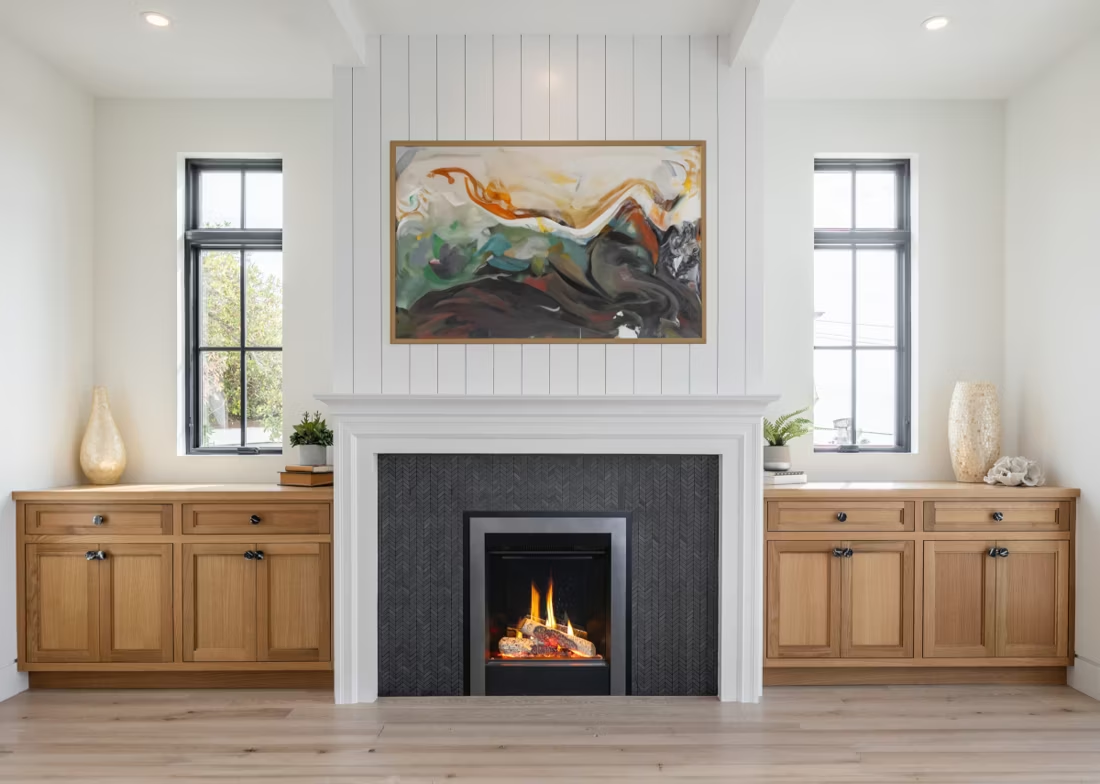
An electric fireplace or insert plugs into a standard outlet, needs no chimney, no gas line, and no venting whatsoever—which matters in a county where a lot of the older farmhouse and Slayton-area housing stock wasn't built with masonry hearths. Installation is closer to a home improvement project than a construction project: a qualified local dealer handles the surround, mantel, or built-in framing, and most units are running the same afternoon. It's not going to replace a furnace against a long, Fargo-level winter, but it adds real, controllable warmth exactly where you want it without touching your existing heating system.
Three steps. No salesperson until you're ready.
Tell us about your project
Your zip code, your situation, and the fuel you're leaning toward—or let the answers point you to one.
See what's actually available
The brands dealers within 100 miles genuinely carry—real options, never a catalog mirage.
Get your dealer & Project Guide
A trusted local dealer, plus the free Project Guide & Parts List that names every component of the job.
Frequently Asked Questions
How much does an electric fireplace installation cost in Murray County?
Most electric fireplace and insert installations in Murray County run $400 to $1,200. A plug-in unit dropped into an existing opening or a wall-mount model sits at the low end. Costs move up when a local dealer builds out a mantel surround, frames a new wall niche, or wires a dedicated 20-amp circuit for a larger insert—common in older Slayton and Fulda homes where the electrical panel needs an added circuit rather than a simple outlet swap. Because there's no venting or gas line involved, electric installs are consistently the least expensive fireplace project in the county.
Will an electric fireplace actually heat a room in a Murray County winter?
A quality electric insert or built-in unit will meaningfully heat a single room—most models put out roughly 4,600 to 5,200 BTU, enough for a bedroom, den, or finished basement space in the 300-400 square foot range. What it won't do is offset a whole-house heating load in a county with winters as long and cold as Fargo, ND; that job still belongs to your furnace. Homeowners here typically use electric fireplaces as zone heat: closing off a room and letting the fireplace carry it, which can meaningfully cut propane or fuel oil use during shoulder-season cold snaps in October and April when running the furnace feels like overkill.
Do I need a permit to install an electric fireplace in Murray County?
Typically no, for a plug-in or wall-mount unit using an existing outlet—there's no venting, gas line, or structural chimney work involved, so it falls outside most building permit requirements. If you're having a dedicated circuit run for a larger built-in insert, that electrical work should be done by a licensed electrician, and any new framing for a mantel surround or wall niche may fall under Murray County's building permit rules depending on scope. A local dealer handling the install can tell you within a few minutes of looking at your space whether your project needs a permit.
What's the difference between an electric insert and an electric fireplace?
An electric insert is sized to slot into an existing fireplace opening—including an old, unused masonry firebox that a Murray County farmhouse might have from decades back—and it uses that opening's existing framing. An electric fireplace (or built-in unit) is designed to be framed into a wall from scratch, with no prior fireplace required. For homes with an existing but unused wood-burning fireplace that owners no longer want to deal with for wood handling or ash cleanup, an insert is usually the simpler, cheaper path. For new construction or a room that never had a fireplace, a built-in unit gives more placement flexibility.
Can an electric fireplace run during a power outage?
No—and this is worth being direct about in a county exposed to prairie wind and ice storms that can knock out rural electric co-op service for hours or longer. Unlike a wood stove, an electric fireplace is entirely dependent on grid power; there's no battery backup option that provides real heat output. If backup heat during outages matters to your household, that's an argument for keeping a wood stove or having a generator plan, with the electric fireplace serving its intended role as everyday convenient zone heat rather than emergency heat.
How much does it cost to run an electric fireplace compared to my furnace?
A typical electric fireplace draws around 1,500 watts on the heat setting, which costs roughly 15-20 cents per hour depending on your electric co-op's rate—most Murray County households are served by rural electric cooperatives with rates in that general range. Run several hours a night in one room, that's meaningfully cheaper than heating the same space by running a whole-house propane or fuel-oil furnace, which is exactly why zone heating with an electric unit makes financial sense here for supplemental use, even though it can't replace the furnace's total output.
Are electric fireplaces safe for older Murray County farmhouses with limited electrical capacity?
Generally yes, but it's worth checking your panel before buying a larger unit. Many electric fireplace inserts draw close to 1,500 watts, which most 15-amp circuits can handle for a small plug-in unit, but a dedicated circuit is often recommended for a permanent built-in installation, especially in older farmhouses around the county that may still have older panel capacity or knob-and-tube wiring in parts of the house. A local dealer or licensed electrician can evaluate your panel in a single visit and tell you whether an upgrade is needed before installation.
Electric vs. pellet stove—which makes more sense for a Murray County home?
A pellet stove burning bags from regional suppliers like Lignetics or Somerset Pellet Fuel puts out real, substantial heat—often enough to serve as a primary or near-primary heat source for a well-insulated home, but it requires electricity to run the auger and blower, a dedicated vent, and regular hopper loading and ash cleanup. An electric fireplace requires none of that upkeep, installs in an afternoon, and produces attractive ambiance with modest supplemental heat, but its output is far lower. For Murray County homeowners wanting genuine heating capacity to offset propane costs, pellet is the stronger choice; for a simple, low-maintenance heat source for one room, electric wins on convenience.
Where can I see electric fireplace options in person near Murray County?
There isn't a large hearth showroom footprint in a county of Murray's size (just over 5,200 residents), so most homeowners either work with a dealer based in a nearby regional hub or have a local dealer bring samples and specs to an in-home consultation. That's actually the more useful path for electric fireplace shopping anyway—seeing a unit's size and heat output specced against your actual wall and room, rather than comparing units in a generic showroom setting.
Can I put a TV above my fireplace?
Yes—with an asterisk. Fireplaces are hot and TVs don't like heat. Either put a mantel between them to deflect rising warmth, or choose a fireplace with heat-management technology that creates a cool zone on the wall above—the wall stays around 125 degrees, barely warm, while the room still gets full heat. If you like clean lines and don't want a mantel, heat management is the answer.
Does an electric fireplace need a vent or chimney?
No—that's its superpower. An electric fireplace needs a wall and an outlet, period. No vent pipe, no gas line, no clearances to design around, which is why it works in bedrooms, offices, apartments, and walls where venting a gas or wood unit would be impractical or impossible. Installation is typically the simplest and least expensive of any fireplace type.
Does a fireplace add value to my home?
On average, a fireplace adds back to the home about the same amount you spent installing it. Add the monthly savings from heating the rooms you actually use instead of the whole house—often hundreds of dollars a year—and the value case is strong before you even count what a fire does for how your family uses the room.
Can I install a fireplace myself?
If you're putting a fire in your house on purpose, it's best to work with an expert. Unless you're genuinely experienced in framing, gas line, vent pipe, and the national code on clearances to combustibles, have a professional do it—and ideally the same company that sells you the fireplace, so warranty, service, and liability all live under one roof.
Get matched with a Murray County electric fireplace dealer.
Tell us about your space and we'll put together a free Project Guide & Parts List for your electric fireplace project—sized right, with the exact parts you need and a trusted local dealer to install it.
Find Your Fireplace →