
Find the Right Fireplace for a Murray County Winter.
Wood, gas, pellet, and electric fireplace resources for every town and farmstead in Murray County—from Slayton to Fulda to Lake Wilson. Get matched with a trusted local retailer and a free Project Guide & Parts List for your project.
Every Project Starts From One of These Five Situations
Cold, wide-open winters across Murray County's prairie farmland.
Murray County sits along the Buffalo Ridge, the region's namesake highland known for near-constant wind, which pushes effective heating demand well past what the raw numbers suggest. With a long, tough heating season and a winter low average of just 4°F, Murray County runs colder than most of the Upper Midwest—in the same range as Fargo, North Dakota. That's a climate zone 6A heating season stretching from October into April, where wind chill off open cropland matters as much as the thermometer. Firewood here comes from local windbreaks and woodlots along the Des Moines River and around Lake Shetek—mostly oak and maple for long, dense burns, with birch and aspen for quick-catching kindling and shoulder-season fires. With a county population under 6,000 spread across small towns and farmsteads, wood and pellet heat remain practical, cost-effective choices alongside propane and electric options in homes without piped natural gas.
What you'll find on this hub: hearth retailers, service technicians, and fuel suppliers covering every community in the county—Slayton (the county seat), Fulda, Avoca, Chandler, Currie, Hadley, Iona, and Lake Wilson. Pick your fuel below to see local dealers, typical installation costs, and the units suited to a Murray County winter. Whether you're heating a farmhouse on the Buffalo Ridge or a lake cabin near Shetek State Park, this is the starting point.
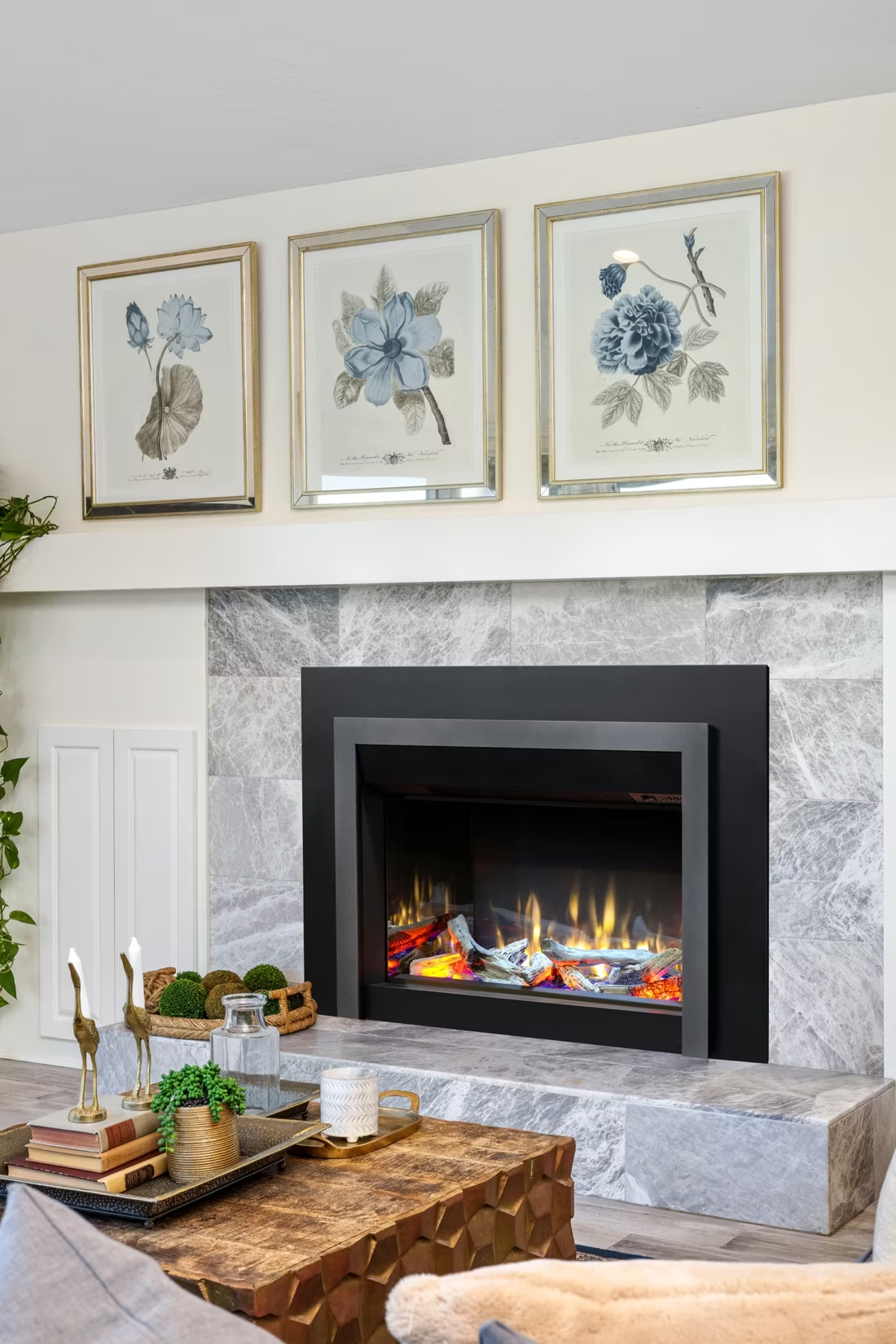
Four fuels. One honest answer for Murray County.
Three steps. No salesperson until you're ready.
Tell us about your project
Your zip code, your situation, and the fuel you're leaning toward—or let the answers point you to one.
See what's actually available
The brands dealers within 100 miles genuinely carry—real options, never a catalog mirage.
Get your dealer & Project Guide
A trusted local dealer, plus the free Project Guide & Parts List that names every component of the job.
Frequently Asked Questions
Which fuel works best in Murray County?
It depends on the home and how it's set up already. Wood is a strong fit for Murray County's rural properties—oak and maple from local windbreaks and farm woodlots burn long and hot, which matters when wind off open cropland drives the effective cold well past the county's 4°F average low. Gas works well where propane delivery is already set up, which is common in a county without extensive piped natural gas—instant heat with no wood-splitting labor. Pellet is a solid middle ground, especially with regional supply from Indeck Energy Services, Lignetics, and Somerset Pellet Fuel keeping fuel reasonably close and affordable. Electric is best treated as supplemental heat for bedrooms or a den—with such a long, demanding heating season, it's not going to carry a Murray County farmhouse through January on its own. Most homes here end up running two fuels: wood or pellet for primary heat, gas or electric for backup and convenience rooms.
Do I need a permit to install a fireplace in Murray County?
Generally yes. New wood stoves, wood inserts, gas appliances, and pellet stoves typically require a building permit, and gas installations need a separate permit for the gas line itself. In unincorporated Murray County, that permitting runs through the county's planning and zoning office; inside city limits—Slayton, Fulda, or the smaller incorporated towns—the city handles it directly. Wood-burning appliances installed today need to meet current EPA emissions standards regardless of jurisdiction. Most local hearth retailers pull the permit as part of the installation quote, so it's rarely something a homeowner has to navigate solo.
Are there air quality restrictions on wood burning in Murray County?
No—Murray County doesn't have the winter inversion or non-attainment issues you see in basin or mountain-valley counties out West. The open, windy prairie geography here actually works against smoke buildup rather than trapping it. That said, an EPA-certified stove still burns more efficiently, uses less wood per BTU, and puts out less smoke into a neighbor's yard on a still morning—worth choosing even without a regulatory mandate pushing you there.
Can one local hearth retailer handle all four fuel types?
It varies. Full-line hearth dealers based in the larger regional trade towns around Murray County—Marshall, Worthington, Pipestone—more commonly stock wood, gas, pellet, and electric side by side, since they're serving a wider customer base across several counties. Smaller Main Street shops closer to Slayton or Fulda may lean toward one or two fuels, often wood and gas, with pellet or electric as a smaller part of the showroom. If you're still deciding between fuels, a multi-fuel dealer is worth the extra drive so you can see working displays side by side.
How does service work in rural areas of Murray County?
Most technicians who work Murray County are based outside it—in Marshall or Worthington—and drive out to cover Slayton, Fulda, and the farmsteads in between. Expect a modest trip fee for calls out to the more remote parts of the county, and expect scheduling to tighten up fast once cold weather sets in; with such a long, demanding heating season that starts early, pre-season chimney sweeps and gas inspections in September and October are far easier to book than an emergency call in January when gravel roads are drifted in. If you're on a farmstead well off a paved route, it's worth asking a technician about winter access before you need them mid-storm.
What's the typical cost range for fireplace installation across all fuel types in Murray County?
Ranges track with the rest of rural Minnesota. Wood stove or insert: roughly $4,000–$8,500 for a typical install, more if new chimney or hearth work is needed. Gas fireplace, insert, or stove: about $4,000–$10,000, with cost driven mostly by whether a propane line already reaches the install location. Pellet stove or insert: around $4,000–$7,000 for a standard install. Electric fireplace: $200–$3,000 for the unit itself, plus $400–$1,200 in labor for anything beyond a simple plug-in placement. The county + fuel pages above break these down further with detail tied to local retailer pricing.
What is an in-home preview and do I need one?
It's a visit where a hearth professional measures your space, confirms the model you picked actually works in your home, and walks the specs—framing, gas line, venting, finish work—before anything is ordered. Some details you just can't know until you see the house. Never make a down payment without one; it's the single most-skipped step that burns buyers.
Does a fireplace add value to my home?
On average, a fireplace adds back to the home about the same amount you spent installing it. Add the monthly savings from heating the rooms you actually use instead of the whole house—often hundreds of dollars a year—and the value case is strong before you even count what a fire does for how your family uses the room.
How much should I budget for a fireplace?
For an average home—covering the fireplace, the vent pipe, and basic installation—a budget between $3,900 and $5,500 gives you a lot of options across wood, gas, and pellet. By the time you add finish work, gas line, and electrical, the average complete installation lands between $5,000 and $12,000 all-in. In a remodel or new build, a good rule is to put about 2.5% of the total project cost toward the fireplace.
Can I install a fireplace myself?
If you're putting a fire in your house on purpose, it's best to work with an expert. Unless you're genuinely experienced in framing, gas line, vent pipe, and the national code on clearances to combustibles, have a professional do it—and ideally the same company that sells you the fireplace, so warranty, service, and liability all live under one roof.
Stove and Fireplace Dealers in Murray County
Listings include WhyFire partner dealers, dealers we have verified as authorized for the brands we recommend, and established local businesses that carry hearth products. Every listing shows which one it is. The ones marked Preferred run on WhyFire's software, so they can show you real pricing and book your appointment right here. No manufacturer pays for placement. How we verify dealers →
Today's Fireplace & Spa
Kozy Heat Gallery
Find your fireplace match in Murray County.
Pick your fuel below and I'll match you with a trusted local dealer and send over a free Project Guide & Parts List—the exact parts, including the vent kit, and the local pro I'd recommend for your Murray County home.
Find Your Fireplace →