
Steady heat for the long winters around Mille Lacs Lake.
With a long, cold winter heating season and winter lows averaging near 4°F, Mille Lacs County's heating season runs long. A pellet stove or insert gives you set-it-and-leave-it warmth for a lake cabin, farmhouse, or in-town home—matched with a local dealer who knows what actually works here.
Every Project Starts From One of These Five Situations
Consistent warmth without the wood-splitting work.
Mille Lacs County is built around its namesake lake, with roughly 11,454 residents spread between Milaca, Onamia, Isle, Wahkon, and a large number of seasonal and year-round lake properties. Zone 7 winters here are among the coldest in the Lower 48—closer in severity to Duluth or International Falls than to most of the Midwest—and the heating season regularly stretches from October into April. Homeowners and cabin owners alike need a heat source that can run reliably through weeks of single-digit and sub-zero stretches without constant attention.
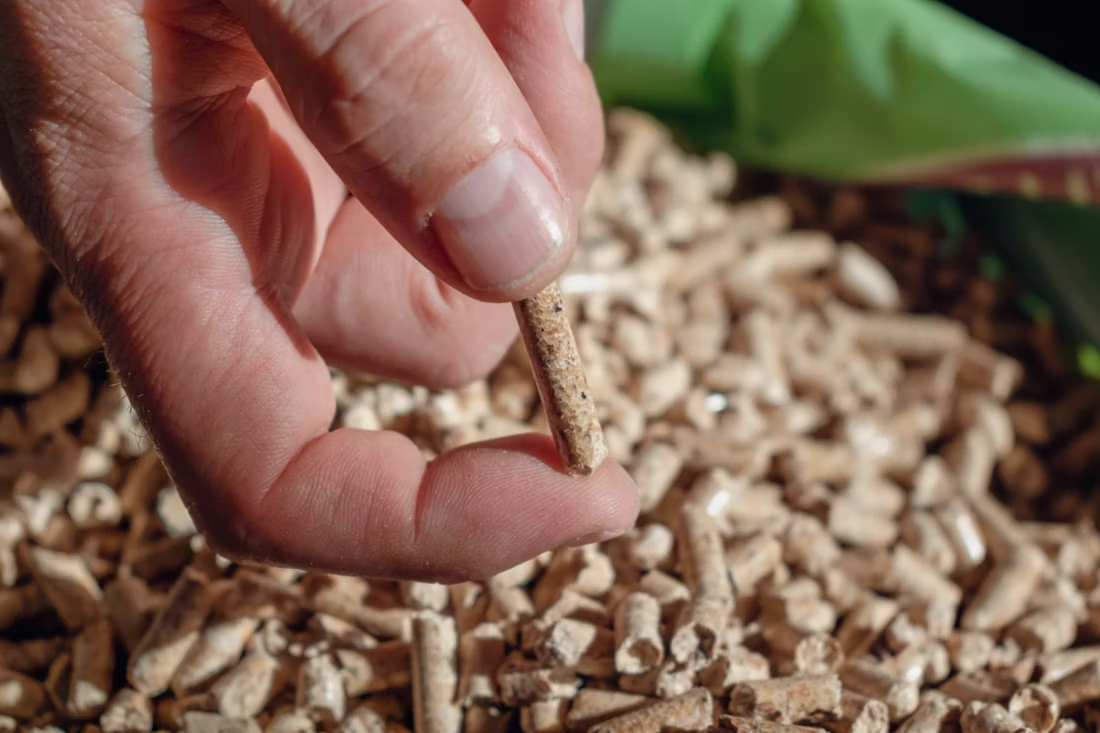
That's where pellet heat earns its place alongside the county's long wood-burning tradition. Oak, maple, birch, and aspen are the common local hardwoods for cordwood, and much of that same regional fiber base feeds the pellet mills that supply Mille Lacs County dealers—including Indeck Energy Services, Lignetics, and Somerset Pellet Fuel. A hopper-fed pellet stove or insert can hold a steady burn for 24 hours or more on a single load, which matters for lake cabins that sit empty for stretches during the week and for anyone who doesn't want to be out splitting and stacking wood in a February cold snap.
Three steps. No salesperson until you're ready.
Tell us about your project
Your zip code, your situation, and the fuel you're leaning toward—or let the answers point you to one.
See what's actually available
The brands dealers within 100 miles genuinely carry—real options, never a catalog mirage.
Get your dealer & Project Guide
A trusted local dealer, plus the free Project Guide & Parts List that names every component of the job.
Frequently Asked Questions
How much does a pellet stove installation cost in Mille Lacs County?
Pellet stove and insert installations in this part of Minnesota typically run in the $3,000 to $6,500 range, with the spread driven by whether you're installing a freestanding stove with new through-wall venting, converting an existing masonry fireplace to a pellet insert, or running electrical for the hopper and blower in an older cabin without nearby outlets. Lake properties with limited existing infrastructure—no gas line, minimal electrical service—tend to land toward the higher end once an electrician is involved. A local dealer will give you a firm number after seeing the space in person.
What size pellet stove do I need for a Mille Lacs County home or cabin?
With a long, cold winter heating season and winter lows averaging around 4°F, sizing tends to run larger here than in milder parts of the Midwest. A stove rated for supplemental heat in a warmer climate may be undersized as primary heat in a Mille Lacs County farmhouse or a lake cabin with minimal insulation. For a well-insulated year-round home in the 1,500-2,500 sq ft range, a mid-size unit with a large-capacity hopper is usually the right call; smaller cabins used seasonally can often get by with a compact stove, but hopper capacity matters more than usual if the cabin sits unattended for days between visits. A dealer familiar with lake-country construction will size around your actual insulation and use pattern, not just square footage.
Are pellets easy to find near Mille Lacs Lake, or do I need to stock up in advance?
Supply is generally reliable. Several pellet producers with a regional footprint—Indeck Energy Services, Lignetics, and Somerset Pellet Fuel among them—distribute through dealers serving this part of Minnesota, so bags are usually available at local hearth shops and farm supply stores through the season. That said, cabin owners around the lake who only make it up on weekends should still plan to buy a season's worth (roughly 2-3 tons for steady seasonal use) early, since demand spikes during the first hard cold snap of the year and popular brands can sell through fast.
What's the difference between a pellet stove and a pellet insert?
A pellet stove is a freestanding unit that vents through an exterior wall or existing chimney and can go almost anywhere with the right clearances—a common choice for lake cabins without an existing fireplace. A pellet insert is built to slide into an existing masonry fireplace opening, using the chimney as part of the venting path while sealing off the old open hearth. For Mille Lacs County homes with an existing wood fireplace that doesn't get much use, an insert is often the more efficient upgrade; for cabins and additions without a fireplace already in place, a freestanding stove is the simpler install.
Do I need a permit to install a pellet stove in Mille Lacs County?
Yes—a building permit is typically required for a new pellet stove or insert installation, issued through the county building department for unincorporated areas or the relevant city office within Milaca, Onamia, or other incorporated towns. There are no air quality non-attainment restrictions in Mille Lacs County, so unlike some western counties, you won't run into burn curtailment periods—pellet appliances here are regulated for safe installation and venting, not for smoke management. Most local dealers handle the permit paperwork as part of the installation.
How much maintenance does a pellet stove need?
Less than a wood stove, but it's not zero. Plan on emptying the ash pan every few days to weekly depending on use, cleaning the burn pot and glass regularly during heavy-use months, and running a full deep clean of the exhaust venting and hopper at least once a season—typically before the heating season starts in Mille Lacs County, given how long that season runs. For a cabin that's only occupied part-time, it's worth doing a thorough cleaning and inspection at the start of every visit-heavy stretch rather than waiting for a set calendar date, since ash and creosote can sit undisturbed longer between uses.
Will my pellet stove still work if the power goes out?
Not without a backup power source. Pellet stoves rely on an electric auger to feed fuel and a blower for combustion air and heat distribution, so a power outage stops the stove even with a full hopper. This matters in Mille Lacs County, where rural power lines can be slower to restore after ice storms or heavy snow. Many homeowners here pair a pellet stove with a small battery backup or generator sized to run the auger and blower, or keep a wood-burning appliance as a true off-grid backup for extended outages. Ask your local dealer about UPS battery backup options specific to your stove model.
Pellet vs. wood—which makes more sense for a Mille Lacs County home?
Wood is the traditional choice here, and with oak, maple, birch, and aspen all common locally, self-cut or locally purchased cordwood keeps fuel costs low and gives you heat that works with no electricity—a real advantage during a rural power outage. Pellet stoves trade that off-grid independence for convenience: no splitting or stacking, longer unattended burn times, and cleaner operation, which is a big draw for lake cabins that sit empty during the week or for owners who don't want to manage a woodpile. Plenty of households here run both—wood for the primary living space, pellet for a cabin or as easier day-to-day heat.
What pellet stove brands should I look for in this climate?
For Mille Lacs County's Zone 7 cold, look for stoves with a larger hopper capacity and a proven cold-climate burn record rather than the smallest, most decorative units built for milder regions. Local dealers typically carry established brands suited to sustained cold-weather use, and pellets from regional producers like Indeck Energy Services, Lignetics, and Somerset Pellet Fuel are formulated for consistent Midwest hardwood-based burn quality. The right match depends on your square footage, insulation, and whether the stove needs to run as primary heat through a full Minnesota winter or as secondary heat for weekend use—a local dealer can walk through the tradeoffs based on your specific home or cabin.
Why is a fireplace insert so efficient?
An insert does two things: it seals the chimney completely, so you stop losing air you already paid to heat, and it radiates warmth into the room through the firebox and glass. Most add a heat-exchange fan that pulls cool room air underneath, wraps it around the hot firebox, and pushes it back out warm. Your home is more efficient before you've even lit the first fire.
Are pellet stoves loud?
They make some noise—there are two fans running plus an auger motor that turns as it feeds pellets. But there's a real range: premium models are engineered quiet, and the best offer a whisper-quiet mode you can comfortably watch TV next to. If noise matters in your room, ask to hear a stove running before you buy—it's a five-minute test that saves years of annoyance.
How much should I budget for a fireplace?
For an average home—covering the fireplace, the vent pipe, and basic installation—a budget between $3,900 and $5,500 gives you a lot of options across wood, gas, and pellet. By the time you add finish work, gas line, and electrical, the average complete installation lands between $5,000 and $12,000 all-in. In a remodel or new build, a good rule is to put about 2.5% of the total project cost toward the fireplace.
Does a fireplace add value to my home?
On average, a fireplace adds back to the home about the same amount you spent installing it. Add the monthly savings from heating the rooms you actually use instead of the whole house—often hundreds of dollars a year—and the value case is strong before you even count what a fire does for how your family uses the room.
Pellet Brands Stocked Around Mille Lacs County
Manufacturers will point you to the nearest stocking dealer.
Find your pellet stove in Mille Lacs County.
Tell us about your home or cabin and we'll match you with a trusted local dealer, plus a free Project Guide & Parts List covering the right stove, venting, and hardware for your Mille Lacs County pellet project.
Find Your Fireplace →