
Instant heat for Mille Lacs County's 8,200-degree-day winters.
From the lake homes ringing Mille Lacs to the farms outside Milaca and Princeton, gas fireplaces deliver reliable warmth at the flip of a switch. Find the right unit and get matched with a trusted local dealer.
Every Project Starts From One of These Five Situations
Heat that doesn't quit when it's four below.
Mille Lacs County sits in climate zone 7 with an average winter low around 4°F and roughly 8,200 heating degree days a year—colder, on average, than Minneapolis and in the same league as International Falls. Around Lake Mille Lacs, where ice fishing and lake cabins drive a lot of the county's housing stock, homeowners want heat that works the moment they arrive, without hauling firewood or waiting for a bed of coals to build. That's the case gas makes for itself here, whether it's a main-floor fireplace in a year-round home in Milaca or a supplemental unit in a weekend place near Isle or Wahkon.
Natural gas mains reach the more developed pockets of the county—around Milaca and parts of Princeton—but a large share of Mille Lacs County, especially rural properties, lake homes, and land on or near the Mille Lacs Band of Ojibwe Reservation, runs on propane instead. Either fuel path works with the same fireplaces and inserts; the difference is just which line runs to your regulator. A trusted local dealer will know which fuel serves your specific road, size the unit and venting correctly for zone-7 cold, and pull the permits so you're not guessing at code.
Three steps. No salesperson until you're ready.
Tell us about your project
Your zip code, your situation, and the fuel you're leaning toward—or let the answers point you to one.
See what's actually available
The brands dealers within 100 miles genuinely carry—real options, never a catalog mirage.
Get your dealer & Project Guide
A trusted local dealer, plus the free Project Guide & Parts List that names every component of the job.
Frequently Asked Questions
How much does a gas fireplace installation cost in Mille Lacs County?
Most gas fireplace and insert installations in this part of central Minnesota run roughly $4,000 to $10,000, depending on the unit, the venting path, and whether new gas or propane line work is required. Converting an existing masonry fireplace to a direct-vent gas insert tends to land on the lower end if a gas or propane line is already nearby. New construction, cabin remodels near the lake, and installs requiring a new propane tank or a longer line run push toward the higher end. Because so much of the county is served by propane rather than piped natural gas, tank placement and line distance are often the biggest cost variables—a local dealer will give you a firm number after seeing the site.
Can I convert my existing wood fireplace to gas?
Yes, and it's a common project for older homes around Milaca, Onamia, and the lake communities where a drafty masonry fireplace is more decorative than functional. A gas insert typically drops into the existing firebox and uses a stainless liner run through your current chimney for venting. Homes already set up with propane service usually see the most straightforward, lower-cost conversions; homes needing a new tank or gas line will run higher. The result is a sealed, efficient unit that keeps the look of the original fireplace while actually heating the room—useful in a climate zone where 4°F winter lows are the norm, not the exception.
Do I need natural gas, or does propane work for a gas fireplace in Mille Lacs County?
Propane works fine, and outside Milaca and parts of Princeton, it's the more common fuel choice across the county—including most lake properties around Isle, Wahkon, and Onamia where natural gas mains simply don't reach. Nearly every gas fireplace model on the market can be set up for either fuel; your installer configures the correct orifice and regulator for whichever line serves your home. If you don't already have a propane tank, your local dealer can coordinate installation with a regional propane supplier as part of the project.
Will my gas fireplace still work if the power goes out?
Most direct-vent gas fireplaces with intermittent pilot ignition (IPI) include a battery backup that automatically takes over when the power drops, so the unit still lights and runs on demand. That matters in Mille Lacs County, where winter storms off the lake can knock out power for hours at a time in outlying areas. Valor fireplaces take a different approach—their pilot assembly generates its own electricity through the thermocouple, so there's no battery to remember or replace. Either way, ask your local dealer about the ignition system on any unit you're considering if outage backup is a priority for a cabin or a primary residence.
What's the difference between a gas fireplace, gas insert, and gas stove?
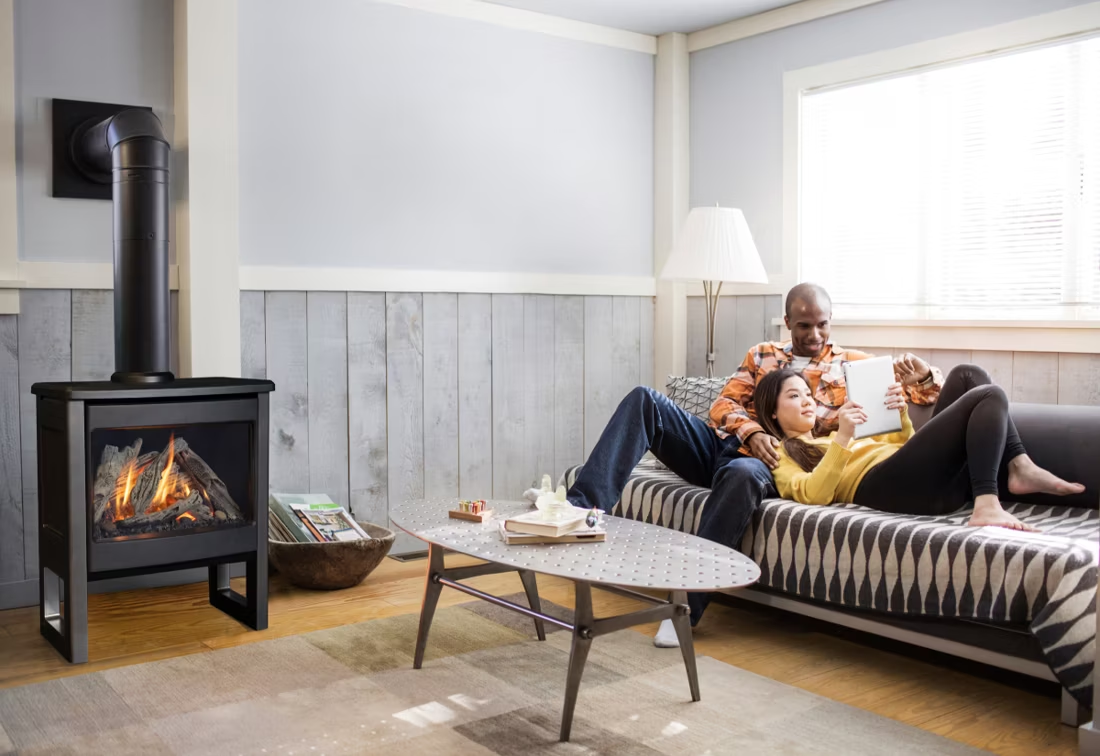
A gas fireplace is a fully built-in unit framed into a wall, typically used in new construction or a full remodel. A gas insert is sized to slide into an existing masonry firebox and vent through the existing chimney with a liner—the right call for older farmhouses and lake cottages around the county that already have a fireplace. A gas stove is a freestanding cabinet-style unit that sits on the floor, similar in footprint to a wood stove, and works well in cabins or additions without an existing chimney. For most Mille Lacs County homeowners upgrading an existing fireplace, an insert is the simplest path; new builds and additions usually call for a built-in fireplace or freestanding stove.
Do I need a permit to install a gas fireplace in Mille Lacs County?
Yes—a building permit is required for a new gas fireplace or insert installation, and any new gas or propane line work needs to be done by a licensed gas-fitter. Permits are handled through Mille Lacs County's building and zoning office for unincorporated areas, or through the relevant city office if you're inside Milaca, Onamia, or another incorporated town. Most local hearth dealers handle the permitting and inspection scheduling as part of the install, which is one of the practical advantages of working with a certified installer rather than a general contractor.
What's the difference between vented and vent-free gas fireplaces?
Vented (direct-vent) gas fireplaces draw combustion air from outside and exhaust it back outside through a sealed vent pipe. Vent-free units burn fuel directly into the room with no external venting, which is more efficient on paper but releases some water vapor and combustion byproducts indoors. Minnesota permits vent-free units under strict room-sizing and ventilation rules, but for Mille Lacs County's long, sealed-up winters—homes are shut tight for months at a time—direct-vent units are the far more common and generally recommended choice. They deliver real heat output without any tradeoff on indoor air quality during the coldest stretches of the year.
How often should my gas fireplace be serviced?
Plan on an annual inspection, ideally before the heavy-use season starts in late fall. A qualified technician checks the burner, pilot assembly, venting, and gas or propane connections, and cleans the glass and interior. This is a much lighter service than wood-stove chimney sweeping, but it's what keeps the unit safe and efficient through a winter with 8,200-plus heating degree days of near-constant use. Local dealers and gas appliance service providers in the Milaca and Onamia area typically handle this for $150 to $250 a visit.
Gas vs. wood—which makes more sense for a Mille Lacs County home?
Wood is deeply rooted here—oak, maple, birch, and aspen are all common regional species, and plenty of county residents split their own firewood or buy it locally, which keeps fuel costs down and gives you heat that works with no electricity, useful during lake-area storm outages. Gas trades that self-sufficiency for convenience: instant on-off operation, no ash or wood handling, and steady heat output that's easy to manage in a cabin you only visit on weekends. For year-round primary homes with an established wood supply, wood still holds appeal. For lake cabins, second homes, and anyone who wants dependable heat without tending a fire, gas is usually the simpler fit—and plenty of county homes end up running both.
What's the difference between an insert and a zero-clearance fireplace?
An insert is a fireplace that slides into a pre-existing wood-burning fireplace—if you don't have one, there's nothing to insert it into. A zero-clearance fireplace is built into a framed wall, which makes it the answer for remodels and new construction. Simple test: existing masonry fireplace means insert; blank or framed wall means zero-clearance.
Why is my open fireplace making my house colder?
Open fireplaces suck—literally. As the fire burns, it consumes air your furnace already paid to heat and pulls it out through the chimney, so the house is actually colder after the fire goes out than before you lit it. An insert fixes this: it seals the chimney, puts fixed glass across the front, and turns that hole in your house into a real heat source.
Does a fireplace add value to my home?
On average, a fireplace adds back to the home about the same amount you spent installing it. Add the monthly savings from heating the rooms you actually use instead of the whole house—often hundreds of dollars a year—and the value case is strong before you even count what a fire does for how your family uses the room.
Can a fireplace actually lower my heating bill?
Yes—by creating a comfort zone. A furnace heats every square foot of the house just to warm the one room you're in; a gas fireplace on low burns roughly a sixth of the gas a typical furnace does. Set the furnace around 55–60 degrees as a baseline, then heat the rooms your family actually uses. Families who heat this way commonly save $20–$60 a month.
Find your gas fireplace in Mille Lacs County.
Tell us a bit about your home, cabin, or lake property, and we'll match you with a trusted local dealer and send over a free Project Guide & Parts List—the right unit, the correct vent kit, and a plan built for Mille Lacs County's cold.
Find Your Fireplace →