
Instant heat and real ambiance, without a chimney.
From lakefront cabins around Mille Lacs Lake to homes in Milaca, Onamia, and Princeton, electric fireplaces add clean zone heat and no-hassle ambiance to a county that averages 8,208 heating degree days a year. Find the right unit and connect with a trusted local dealer.
Every Project Starts From One of These Five Situations
Electric heat that fits lake living.
Mille Lacs County sits in Climate Zone 7—the coldest tier in the national building code, shared with towns like Fargo, ND and International Falls, MN. With an average winter low around 4°F and roughly 8,208 heating degree days a year, this is not a county where a plug-in appliance is going to out-heat a Minnesota winter on its own. That's not a knock on electric—it's just honest framing before you shop.
Where electric fireplaces genuinely shine here is in the second-home and cabin market that ring Lake Mille Lacs—resort cabins in Isle, Wahkon, and Garrison, three-season porches, and rental units where a real chimney isn't practical or allowed. They're also popular as supplemental zone heat in a specific room, in condos and manufactured homes served by Mille Lacs Energy Cooperative where wood-burning restrictions or insurance concerns rule out a stove, and anywhere a homeowner wants the look and feel of a fire without venting, gas lines, or a cord of oak and maple to manage. Paired with an existing furnace or a wood or propane backup for the coldest stretches, electric earns its place.
Three steps. No salesperson until you're ready.
Tell us about your project
Your zip code, your situation, and the fuel you're leaning toward—or let the answers point you to one.
See what's actually available
The brands dealers within 100 miles genuinely carry—real options, never a catalog mirage.
Get your dealer & Project Guide
A trusted local dealer, plus the free Project Guide & Parts List that names every component of the job.
Frequently Asked Questions
How much does an electric fireplace installation cost in Mille Lacs County?
Most electric fireplace and insert installations in Mille Lacs County run $300 to $2,000 depending on the unit—a plug-in freestanding stove or small insert sits at the low end, while a built-in wall unit or a larger insert with custom trim or a mantel surround costs more. If the unit needs a dedicated 120V or 240V circuit rather than a standard outlet, add $150 to $500 for a licensed electrician, which is common for larger units and cabin retrofits around Lake Mille Lacs where older wiring is common. No chimney, venting, or gas line work is involved, which keeps electric the least expensive fireplace fuel to install by a wide margin.
Will an electric fireplace actually heat my home in Mille Lacs County?
For a whole home, no—and any local dealer will tell you the same. At 8,208 heating degree days and average winter lows around 4°F, electric resistance heat can't compete with the county's cold on its own, and most units are capped near 1,500 watts by code, which realistically covers 400 to 600 square feet as supplemental heat. Electric fireplaces work best as zone heat for a single room, a cabin bunkhouse, or a three-season porch—paired with your existing furnace, propane, or a wood stove for the coldest weeks of January and February.
Will my electric fireplace work if the power goes out?
No, and this matters more in Mille Lacs County than in milder climates. Ice storms and heavy lake-effect snow can knock out power for hours or longer in rural parts of the county served by Mille Lacs Energy Cooperative, and an electric fireplace goes dark right along with the rest of the house. If backup heat during outages is a priority—especially for a cabin near the lake that sits empty for stretches in winter—a wood stove or a battery-backed direct-vent gas unit is a better primary choice, with electric reserved for everyday ambiance and convenience.
What's the difference between an electric fireplace, insert, and stove?
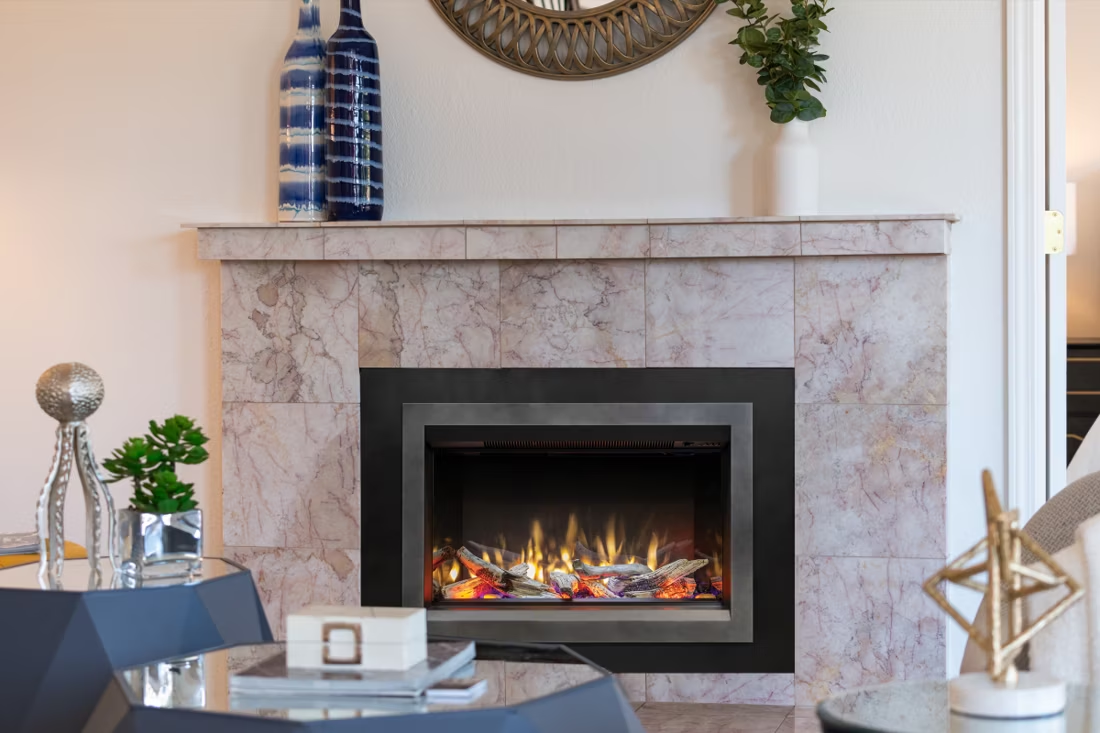
An electric fireplace is typically a built-in unit set into a wall or a framed mantel surround, common in new construction and remodels. An electric insert is sized to slide into an existing masonry or zero-clearance firebox, letting you keep an old wood fireplace's opening while switching to a plug-in, maintenance-free unit. An electric stove is a freestanding cabinet-style unit that just needs an outlet—popular for cabins around Lake Mille Lacs where there's no existing fireplace and no interest in venting work. All three run on standard flame-effect technology and most include a built-in heater, so the choice usually comes down to whether you have an existing opening to fill.
Do I need a permit to install an electric fireplace in Mille Lacs County?
Usually not for the fireplace itself, since there's no venting, gas line, or combustion involved. If the installation requires a new dedicated circuit or panel work, that portion needs to be done by a licensed electrician and typically requires an electrical permit, which most installers or electricians pull as part of the job. Simple plug-in units on an existing standard outlet generally don't trigger any permit at all. If you're unsure, ask your local dealer—they'll know whether your specific unit needs circuit work before they quote the install.
What should I look for in an electric fireplace for a Mille Lacs County cabin?
For cabins around the lake that sit unoccupied for stretches, look for units with a thermostat and a low-idle or ambiance-only mode so the heater can be run separately from the flame effect—useful if you want the look running for a showing or a weekend without burning power on heat. LED flame technology has largely replaced older halogen rotisserie effects and holds up better with intermittent seasonal use. If the cabin is on well water or a septic system that needs frost protection while vacant, talk to your dealer about whether a smart-thermostat-compatible unit or a separate freeze-protection heater makes more sense than relying on the fireplace itself.
Electric vs. wood—which is right for my home?
Wood—burning local oak, maple, birch, or aspen—remains the practical choice for primary or backup heat in Mille Lacs County's rural areas, since it works without power during outages and puts out real BTUs at 4°F average lows. Electric wins on convenience: no wood to split and stack, no ash, no chimney to sweep, and instant on-off operation with a remote. For a main living space in town that's already on a reliable furnace, electric ambiance is an easy upgrade. For a lake cabin used through the winter or a rural home without a backup heat source, wood or a hybrid approach is the safer bet.
How much does it cost to run an electric fireplace?
A typical 1,500-watt electric fireplace running on heat mode costs roughly 15 to 25 cents per hour to operate at current Mille Lacs Energy Cooperative residential rates, depending on your specific rate plan. Running it on flame-only mode without the heater draws only a few watts and costs a fraction of that—a reasonable option if you want the ambiance in a cabin without running up a heating bill in a room that's already served by another heat source.
How much maintenance does an electric fireplace need?
Very little—this is one of the biggest advantages over wood or gas in Mille Lacs County. There's no chimney to sweep, no annual gas line inspection, and no ash to clean. Periodically dust the vents and glass front, and check that the LED flame bulbs or light strip are functioning; most modern units use long-life LEDs rated for years of use before needing replacement. For cabins that sit closed up for months, it's worth a quick visual check each fall before the unit sees regular winter use again.
Can I put a TV above my fireplace?
Yes—with an asterisk. Fireplaces are hot and TVs don't like heat. Either put a mantel between them to deflect rising warmth, or choose a fireplace with heat-management technology that creates a cool zone on the wall above—the wall stays around 125 degrees, barely warm, while the room still gets full heat. If you like clean lines and don't want a mantel, heat management is the answer.
Does an electric fireplace need a vent or chimney?
No—that's its superpower. An electric fireplace needs a wall and an outlet, period. No vent pipe, no gas line, no clearances to design around, which is why it works in bedrooms, offices, apartments, and walls where venting a gas or wood unit would be impractical or impossible. Installation is typically the simplest and least expensive of any fireplace type.
What is an in-home preview and do I need one?
It's a visit where a hearth professional measures your space, confirms the model you picked actually works in your home, and walks the specs—framing, gas line, venting, finish work—before anything is ordered. Some details you just can't know until you see the house. Never make a down payment without one; it's the single most-skipped step that burns buyers.
How much should I budget for a fireplace?
For an average home—covering the fireplace, the vent pipe, and basic installation—a budget between $3,900 and $5,500 gives you a lot of options across wood, gas, and pellet. By the time you add finish work, gas line, and electrical, the average complete installation lands between $5,000 and $12,000 all-in. In a remodel or new build, a good rule is to put about 2.5% of the total project cost toward the fireplace.
Find your electric fireplace in Mille Lacs County.
Tell us about your home or cabin and we'll put together a free Project Guide & Parts List—the right electric fireplace or insert for your space, and a match with a trusted local dealer who can install it.
Find Your Fireplace →