
Find out if pellet heat still makes sense in Faribault.
Pellet stoves aren't the local default here—gas and electric heat carry most Rice County homes through winter. But for the right setup, pellet still has a place. We'll help you find out.
Every Project Starts From One of These Five Situations
Gas and electric dominate—pellet is the exception.
Faribault sits along the Cannon and Straight Rivers in Rice County, at 976 feet elevation, in climate zone 6A. Winters are genuinely harsh—average lows around 5°F and a long, deep heating season stretching from fall into late spring, putting Faribault in the same cold-climate tier as Fargo, ND. Given that, you might expect pellet stoves to be everywhere. They aren't. Most Faribault homes heat with natural gas through Northern States Power (Xcel Energy) or with electric service from NSP-Minnesota and Steele-Waseca Cooperative Electric, and the local hearth market reflects that—pellet equipment and installers are thin on the ground here.
That doesn't mean pellet heat is off the table, just that it's a niche choice rather than a mainstream one. Rice County's farmland setting means no nearby national forest for cheap firewood or a built-in wood-heat culture, so both wood and pellet appliances skew toward supplemental or specialty use—heated workshops, detached shops, hobby farms, or seasonal cabins—rather than primary home heat. If you do go this route, sourcing fuel usually means working with regional distributors like Lignetics, Somerset Pellet Fuel, or Indeck Energy Services rather than picking up bags at a dedicated local hearth shop. Find My Fireplace doesn't sell or stock equipment—we match you with a trusted dealer who can tell you honestly whether pellet is worth pursuing for your specific property, and hand you a free planning packet if it is.
Three steps. No salesperson until you're ready.
Tell us about your project
Your zip code, your situation, and the fuel you're leaning toward—or let the answers point you to one.
See what's actually available
The brands dealers within 100 miles genuinely carry—real options, never a catalog mirage.
Get your dealer & Project Guide
A trusted local dealer, plus the free Project Guide & Parts List that names every component of the job.
Frequently Asked Questions
Are pellet stoves actually used in Faribault, or is gas and electric heat standard?
Gas and electric are the standard here. Most Faribault homes are heated with natural gas through Northern States Power (Xcel Energy), with electric service from NSP-Minnesota or Steele-Waseca Cooperative Electric filling in where gas isn't run. Pellet stoves show up occasionally—usually as supplemental heat in a finished basement, a detached garage, or a hobby farm outbuilding—but they're not part of the everyday heating conversation the way they are in northern Minnesota communities with more wood-heat tradition, like Duluth or International Falls.
How much does a pellet stove installation cost in Faribault?
Because pellet installs are uncommon locally, there isn't a deep pool of Rice County-specific pricing data the way there is for gas. As a general national benchmark, a pellet stove with venting and labor typically runs $3,000 to $6,000, with hopper capacity, exterior venting length, and any hearth pad work driving the final number. Since dedicated pellet installers are scarce in Faribault itself, plan on either a regional dealer traveling in from the Twin Cities metro or a gas/wood hearth retailer who occasionally handles pellet units—get a firm, written quote before committing.
Where can I actually buy pellet fuel near Faribault?
There isn't a dedicated pellet retail presence in Faribault the way there might be in a heavier wood-heat market. Regional suppliers like Lignetics, Somerset Pellet Fuel, and Indeck Energy Services distribute through the upper Midwest, but you'll likely be buying through a farm-supply store, hardware chain, or ordering ahead rather than walking into a hearth shop stocked with pallets. If you go with pellet heat, ask your installer where their customers actually source fuel locally—that answer tells you more than any brand name will.
Why is pellet heat less common in Faribault than in other cold Minnesota towns?
Faribault's cold is real—a long, deep heating season and average winter lows around 5°F put it firmly in Fargo, ND territory. But Rice County is farm country, not forest country: there's no adjacent national forest with cheap cutting permits, and the housing stock here (full basements, attached garages, established gas lines) is built around furnace heat, not supplemental solid-fuel appliances. Communities with a stronger wood-heat culture—Duluth, International Falls, the Iron Range—have both the fuel access and the tradition. Faribault mostly doesn't, which is why gas and electric carry the load.
If I still want a pellet stove in Faribault, is it a bad idea?
Not necessarily—it just needs a clear-eyed use case. Pellet stoves make sense here as supplemental heat for a finished basement, a workshop, or a cabin-style secondary building, especially if you want a hands-off, thermostat-controlled fire without the labor of splitting and stacking wood. What we'd steer you away from is relying on pellet as your only heat source through a Faribault winter—see the outage question below for why. A local dealer can walk your specific space and tell you honestly whether it's worth it.
Pellet stove vs. electric heat—which makes more sense for supplemental heat in Faribault?
Electric is simpler and more common locally. Residential electric rates through Northern States Power run around $0.1698 per kWh, while Steele-Waseca Cooperative Electric customers see closer to $0.1563 per kWh—either way, an electric space heater or zone-heat unit installs with no venting, no fuel storage, and no permitting hassle. A pellet stove costs more upfront and requires a hopper to refill and ash to manage, but it produces real, visible-flame heat and can put out more BTUs per hour for a large, drafty space like a detached shop. For a small supplemental zone, electric usually wins on simplicity; for a bigger footprint you want to genuinely heat, pellet can pull ahead.
Pellet stove vs. gas fireplace—which is the better fit for a Faribault home?
Gas is the better fit for most Faribault homes, mainly because the infrastructure is already there. With Northern States Power natural gas service running through most of the city, a gas insert or fireplace ties into existing lines with straightforward permitting and a strong pool of local installers. Pellet stoves require hopper feeding, periodic ash removal, and a dealer who genuinely understands pellet equipment—a smaller pool locally. If you want real installed heat with minimal daily maintenance, gas is the path of least resistance here; pellet is the choice for someone who specifically wants a visible flame and doesn't mind the extra fuel handling.
Do pellet stoves hold up in Faribault's cold, and what about power outages?
This is the real catch. Pellet stoves need electricity to run the auger, igniter, and combustion blower—no power, no fire, full stop. With a long, deep heating season and winters cold enough to see single-digit lows, a Faribault power outage during a January cold snap is exactly the scenario where a pellet stove goes dark right when you need heat most. A battery backup or small generator can bridge that gap, but if backup heat during outages is your priority, a wood stove or a gas unit with a standing pilot is more failure-resistant by design.
Pellet vs. wood—is either one worth pursuing in Faribault?
Both are genuinely uncommon here, for the same underlying reason: no nearby national forest for cheap firewood, and a housing and utility landscape built around gas and electric furnaces. If you're set on a solid-fuel appliance anyway, wood has the edge for reliability—it needs no electricity and burns species like oak, maple, birch, or aspen that are readily available from regional firewood sellers in southern Minnesota. Pellet offers cleaner, more convenient operation but depends on grid power and sourced fuel bags rather than a cord in the backyard. Neither is the local default, so lean on a dealer conversation to figure out which quirks you can actually live with.
How often does a pellet stove need cleaning?
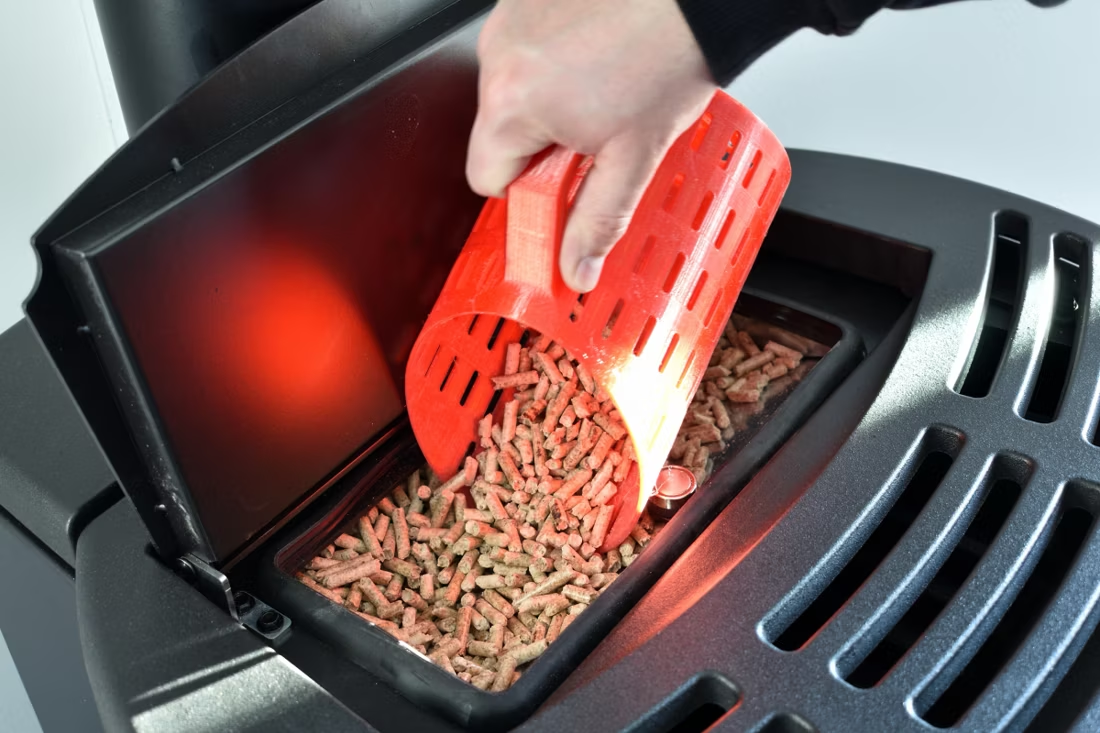
A clean pellet stove is a happy pellet stove. Plan on cleaning the burn pot about once a week when you're burning regularly—ash and clinkers gum up the air holes just like a pellet barbecue. Most pellet stove problems trace back to skipped cleaning that nobody explained up front. Some designs make it easy with a trapdoor burn pot: pull a lever and the gunk drops into the ash pan.
What's the difference between an insert and a zero-clearance fireplace?
An insert is a fireplace that slides into a pre-existing wood-burning fireplace—if you don't have one, there's nothing to insert it into. A zero-clearance fireplace is built into a framed wall, which makes it the answer for remodels and new construction. Simple test: existing masonry fireplace means insert; blank or framed wall means zero-clearance.
Can I install a fireplace myself?
If you're putting a fire in your house on purpose, it's best to work with an expert. Unless you're genuinely experienced in framing, gas line, vent pipe, and the national code on clearances to combustibles, have a professional do it—and ideally the same company that sells you the fireplace, so warranty, service, and liability all live under one roof.
Does a fireplace add value to my home?
On average, a fireplace adds back to the home about the same amount you spent installing it. Add the monthly savings from heating the rooms you actually use instead of the whole house—often hundreds of dollars a year—and the value case is strong before you even count what a fire does for how your family uses the room.
Nearby Dealers
Hearth shops serving Faribault and the surrounding area.
Pellet Brands Stocked Around Faribault
Manufacturers will point you to the nearest stocking dealer.
See if pellet heat makes sense for your Faribault home.
Tell us about your space and how you plan to use it, and we'll give you a straight answer—plus a free Project Guide & Parts List with the exact equipment, venting, and a trusted regional dealer if pellet heat turns out to be the right call.
Find Your Fireplace →