
Find your pellet stove in Rice County.
Steady, low-maintenance heat for the long Minnesota winters between Faribault and Northfield. Get matched with a trusted local dealer who can size and install it right.
Every Project Starts From One of These Five Situations
Consistent heat for a county that racks up over 8,000 heating degree days.
Rice County sits in climate zone 6A, where average winter lows hover around 5°F and the heating season stretches from October well into April. With roughly 8,032 heating degree days a year—a load in the same range as Fargo or Bismarck—homeowners in Faribault, Northfield, Lonsdale, and the surrounding townships need heating equipment that runs hard, runs often, and doesn't demand constant attention. Pellet stoves fit that need well: load the hopper, set the thermostat, and let it maintain a room-by-room temperature through a stretch of single-digit nights without the daily wood-splitting routine.
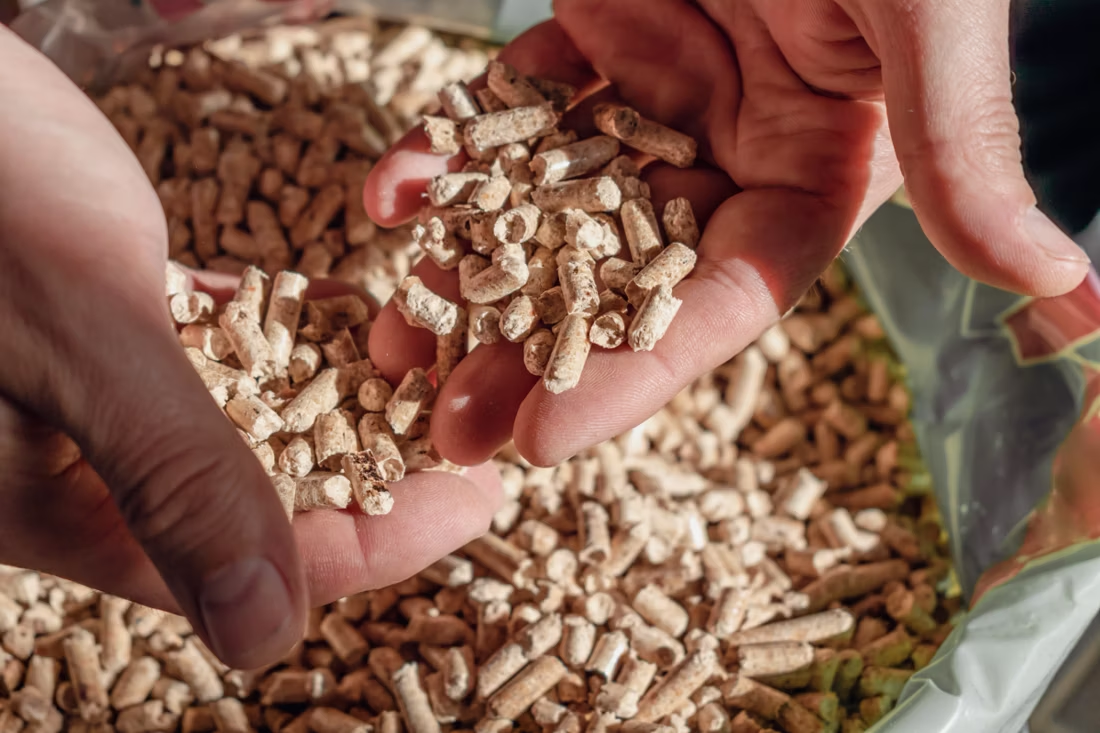
Regional pellet supply is solid here. Indeck Energy Services, Lignetics, and Somerset Pellet Fuel all distribute into the Rice County area, so homeowners aren't stuck driving to the Twin Cities for fuel during a cold snap. Compared to wood—which is abundant locally thanks to oak, maple, birch, and aspen stands across the county—pellet appliances trade some BTU-per-dollar for convenience: automated feed, lower ash output, and a cleaner burn that doesn't require daily attention to a firebox. For a lot of Rice County households, that trade makes sense for a primary living space, with wood or a backup furnace covering the rest.
Three steps. No salesperson until you're ready.
Tell us about your project
Your zip code, your situation, and the fuel you're leaning toward—or let the answers point you to one.
See what's actually available
The brands dealers within 100 miles genuinely carry—real options, never a catalog mirage.
Get your dealer & Project Guide
A trusted local dealer, plus the free Project Guide & Parts List that names every component of the job.
Frequently Asked Questions
How much does a pellet stove installation cost in Rice County?
Pellet stove and insert installations in Rice County generally run in the $2,500 to $5,000 range depending on the unit, whether you're converting an existing wood-burning fireplace, and how much venting work is involved. Pellet stoves vent through a smaller-diameter pipe than wood stoves, which usually keeps installation labor lower than a comparable wood setup. Homes without an existing chimney or masonry fireplace will run toward the higher end once wall penetration and exterior venting termination are factored in. A local dealer serving Faribault or Northfield can give you a firm number after seeing your floor plan.
How much pellet fuel will I need to get through a Rice County winter?
With roughly 8,032 heating degree days a year, a pellet stove used as a primary heat source in a Rice County home can burn through 2 to 3 tons of pellets over a full winter, and more in an older, less-insulated farmhouse. Homes using pellet heat as a supplemental source in one main living area typically use closer to 1 to 1.5 tons. Indeck Energy Services, Lignetics, and Somerset Pellet Fuel all supply the region, so buying a full winter's worth in the fall—rather than restocking bag by bag mid-January—is the more reliable approach when a cold front settles in from the northwest.
What size pellet stove do I need for my home?
Sizing depends on square footage, ceiling height, insulation quality, and whether the stove is meant to be a primary or supplemental heat source. As a general guide for Rice County's climate: smaller units (up to about 1,200 sq ft) suit a single room or a well-insulated addition, while larger units (1,500-2,500+ sq ft) can carry a main living area or a modest whole-home load in an older farmhouse near Northfield or Lonsdale. Given how many heating degree days the county racks up, it's worth sizing slightly larger than a mild-climate chart would suggest—a stove working near its max output every night in January wears down faster than one with some headroom. A local dealer will size this properly during an in-home visit.
What's the difference between a pellet stove and a pellet insert?
A pellet stove is a freestanding unit that sits on its own hearth pad and vents through a wall or existing chimney chase—it can go into almost any room with the right clearances. A pellet insert is built to slide into an existing masonry fireplace opening, turning an old wood-burning fireplace into an automated, thermostat-controlled heat source while using the existing chimney as a venting chase (typically with a liner). For Rice County homes with an older masonry fireplace that's rarely used because tending a wood fire is inconvenient, an insert is usually the more practical upgrade. New construction or rooms without an existing fireplace are better suited to a freestanding stove.
Do pellet stoves need electricity to run?
Yes—pellet stoves rely on an electric auger to feed pellets into the burn pot and an electric blower to distribute heat, so they stop working during a power outage unless you have a battery backup or generator. This is worth thinking through carefully in Rice County, where winter storms occasionally take down power lines for extended stretches. Homeowners who want heat that keeps running through an outage often pair a pellet stove with a small backup generator, or install a wood-burning unit elsewhere in the house as a true off-grid backup. Ask a local dealer about battery backup options—some pellet stove models now offer this built in.
Do I need a permit to install a pellet stove in Rice County?
Most pellet stove and insert installations require a building permit through the applicable jurisdiction—the City of Faribault, City of Northfield, or Rice County directly for installations outside city limits. Requirements generally cover venting clearances, hearth pad specifications, and confirming the unit meets current EPA emissions standards. Most established local dealers handle the permitting paperwork as part of the installation, so you typically don't need to file anything yourself, but it's worth confirming with your installer before work begins.
How often does a pellet stove need to be cleaned and serviced?
Pellet stoves need more frequent attention than people expect, even though they burn cleaner than wood. The ash pan should be emptied every few days during regular winter use, the burn pot scraped weekly to prevent clinker buildup, and the glass cleaned as needed. A full professional service—checking the auger motor, blower, gaskets, and venting—is recommended once a year, ideally before the heating season starts in the fall. For a Rice County household running a pellet stove hard from October through April, staying on top of the weekly maintenance makes a real difference in burn efficiency and appliance lifespan.
Where can I buy pellets locally in Rice County?
Indeck Energy Services, Lignetics, and Somerset Pellet Fuel are the main regional brands supplying this part of Minnesota, and bags or pallets are typically available through farm supply stores and hearth retailers serving Faribault and Northfield rather than requiring a drive to the Twin Cities. Buying pellets by the pallet (roughly a ton) ahead of the season is usually more economical than buying bags as needed, and it protects against the supply crunches that can happen during an extended cold stretch when everyone in the region is buying at once.
Pellet stove vs. wood stove—which is right for my Rice County home?
Wood stoves work without electricity, burn fuel that's genuinely abundant in Rice County given the local oak, maple, birch, and aspen stands, and give you a true backup heat source during a power outage—a real consideration with roughly 8,032 heating degree days of exposure each winter. Pellet stoves trade that off-grid resilience for convenience: load a hopper instead of splitting and stacking wood, get more consistent thermostat-controlled output, and deal with less ash and creosote. For a primary living space in a home with reliable power, pellet is often the easier day-to-day choice. For a cabin, a rural property prone to outages, or households that already have a wood supply, a wood stove may make more sense as at least a secondary unit. A local dealer can walk through both options against your specific home and property.
Why is a fireplace insert so efficient?
An insert does two things: it seals the chimney completely, so you stop losing air you already paid to heat, and it radiates warmth into the room through the firebox and glass. Most add a heat-exchange fan that pulls cool room air underneath, wraps it around the hot firebox, and pushes it back out warm. Your home is more efficient before you've even lit the first fire.
Why is my open fireplace making my house colder?
Open fireplaces suck—literally. As the fire burns, it consumes air your furnace already paid to heat and pulls it out through the chimney, so the house is actually colder after the fire goes out than before you lit it. An insert fixes this: it seals the chimney, puts fixed glass across the front, and turns that hole in your house into a real heat source.
Can I install a fireplace myself?
If you're putting a fire in your house on purpose, it's best to work with an expert. Unless you're genuinely experienced in framing, gas line, vent pipe, and the national code on clearances to combustibles, have a professional do it—and ideally the same company that sells you the fireplace, so warranty, service, and liability all live under one roof.
What is an in-home preview and do I need one?
It's a visit where a hearth professional measures your space, confirms the model you picked actually works in your home, and walks the specs—framing, gas line, venting, finish work—before anything is ordered. Some details you just can't know until you see the house. Never make a down payment without one; it's the single most-skipped step that burns buyers.
Stove and Fireplace Dealers in Rice County
Pellet Brands Stocked Around Rice County
Manufacturers will point you to the nearest stocking dealer.
Get your Rice County pellet stove Project Guide & Parts List.
Tell us a bit about your home and heating goals, and we'll match you with a trusted local dealer serving Rice County plus a free Project Guide & Parts List—the exact parts, vent kit included, for your pellet install.
Find Your Fireplace →