
Keep Your Family Warm and Safe—No Matter What
Between DTE's gas and electric infrastructure and Pontiac's tighter city lots, most homes here aren't set up for wood. A small number of homeowners still install a stove or insert for backup heat or ambiance—we'll connect you with a dealer who does it right.
Every Project Starts From One of These Five Situations
An industrial city built on gas and grid power, not cordwood.
Pontiac sits in Oakland County at just under 1,000 feet elevation, with winters cold enough to matter—average lows around 17°F and a long, cold heating season comparable to Buffalo, NY. But unlike rural cold-climate towns where wood heat is a cultural default, Pontiac grew up as a dense industrial city, and its housing stock reflects that: smaller lots, closer setbacks, and older homes where a code-compliant chimney or clearance-to-combustibles run is genuinely harder to fit. DTE's electric and gas service covers essentially the entire city, so most homeowners never had a reason to burn wood as a primary heat source.
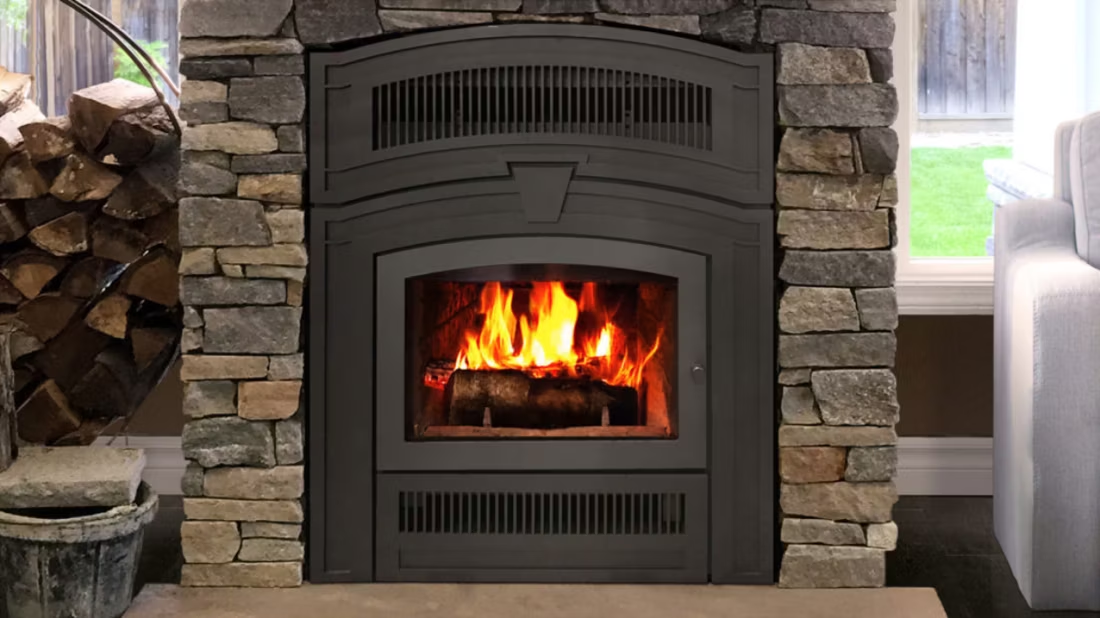
That said, wood isn't off the table. Pontiac has plenty of older homes with existing masonry fireplaces, and southeastern Michigan has no shortage of oak, maple, birch, and ash from local tree services and firewood dealers. Homeowners who install wood here are usually doing it for one of two reasons: they want heat that works when a DTE outage takes down the furnace during an ice storm, or they want the ambiance of a real fire in a fireplace that's currently just decorative. If that's you, it's absolutely doable—it just takes an installer who knows how to make an urban lot work.
Three steps. No salesperson until you're ready.
Tell us about your project
Your zip code, your situation, and the fuel you're leaning toward—or let the answers point you to one.
See what's actually available
The brands dealers within 100 miles genuinely carry—real options, never a catalog mirage.
Get your dealer & Project Guide
A trusted local dealer, plus the free Project Guide & Parts List that names every component of the job.
Frequently Asked Questions
How much does a wood stove or insert cost to install in Pontiac?
Because wood isn't a high-volume category here, pricing varies more than in wood-heavy markets, but installers serving Oakland County typically quote $3,500 to $8,000 for a wood insert into an existing masonry fireplace, and $4,500 to $9,500 for a freestanding stove where new Class A chimney pipe has to be run through a roof or wall. Homes in Pontiac's older neighborhoods with tighter lot lines sometimes need extra work to meet clearance-to-combustibles requirements, which can push costs toward the higher end. Get a firm number from a local dealer after an in-home look—this is one category where a phone quote isn't reliable.
Does it even make sense to install a wood stove in Pontiac if I already have gas?
For most Pontiac homes, no—not as a primary heat source. DTE's natural gas service is reliable and widely available across the city, and a modern gas furnace or fireplace will out-perform wood on convenience every time. Where wood still makes sense is as backup: Michigan ice storms occasionally knock out power for days, and a wood stove keeps producing heat with zero electricity, which a gas furnace with an electric igniter and blower cannot do. If your priority is emergency resilience or you love the look and heat of a real fire, wood is worth considering as a second heat source—just not a replacement for your gas system.
What permits do I need for a wood stove in Pontiac?
Any new wood-burning appliance install requires a building permit through the City of Pontiac Building Department (or your local jurisdiction if you're just outside city limits in Oakland County), and the unit needs to meet current EPA emissions standards. Because Pontiac's lots tend to run smaller and homes sit closer together than in rural parts of the county, clearance-to-combustibles requirements are worth checking early—a stove that fits easily in a farmhouse floor plan may need a heat shield or repositioning in a tighter city home. Most local installers handle the permit paperwork as part of the job.
What kind of firewood burns best in Pontiac?
Oak, maple, birch, and ash are the most common species available from tree services and firewood dealers around Oakland County, and all four are solid choices. Oak and maple are dense hardwoods that burn long and hot once properly seasoned (aim for at least 6-12 months split and stacked)—good for overnight burns in cold snaps. Birch lights easily and burns fast, making it useful for quick fires or getting a load going. Ash is a Michigan staple thanks to emerald ash borer die-off over the past two decades, and it's known for burning reasonably well even at slightly higher moisture content than other species—though seasoned is always better.
Where can I buy firewood in the Pontiac area?
Firewood in Pontiac typically comes from local tree services, landscaping supply yards, and seasonal firewood sellers rather than public land permits—Oakland County doesn't have the national forest cutting-permit system you'd find out west. Expect to pay roughly $250 to $375 per cord for seasoned hardwood delivered, with oak and maple usually priced at the higher end and mixed loads (often including ash) coming in cheaper. Ask any seller how long the wood has been split and stacked—unseasoned wood is the single biggest cause of poor stove performance and creosote buildup.
Should I get a wood stove or a wood insert for my Pontiac home?
If your home already has a working masonry fireplace—common in Pontiac's older housing stock—a wood insert is usually the better call. It slides into the existing firebox, uses a stainless liner run through your current chimney, and turns a drafty, inefficient fireplace into a real heat source without any new structural work. A freestanding stove makes more sense in a home without an existing fireplace, or in a basement or addition, but it requires running new Class A chimney pipe, which is where costs and clearance issues climb in a tighter urban lot.
Is a wood stove a good backup heat option during a DTE power outage?
Yes, and it's one of the strongest arguments for installing one in Pontiac specifically. Michigan's ice storms and high-wind events occasionally take DTE lines down for extended stretches, and a standard gas furnace won't run without electricity to power its blower and controls. A wood stove needs nothing but wood and a match, which makes it genuinely useful as an emergency heat source in a house that otherwise depends entirely on the grid and gas lines. Even a modest stove in one central room can keep a home livable during a multi-day outage in January.
How do I find a certified wood stove installer near Pontiac?
Because most hearth businesses in the Detroit metro area focus heavily on gas—reflecting local demand—fewer installers specialize in wood-burning appliances, so it's worth confirming credentials directly. Look for NFI (National Fireplace Institute) or CSIA (Chimney Safety Institute of America) certification specific to wood-burning systems, not just gas. A dealer who regularly installs wood stoves and inserts will know how to handle Pontiac's tighter clearance situations and older masonry chimneys—a general contractor without that specific training is a real risk for wood-burning work.
Wood vs. gas—which makes more sense for a Pontiac home?
For nearly everyone in Pontiac, gas wins as the primary heat source: DTE's natural gas infrastructure is already in place, gas fireplaces and furnaces require no wood handling or ash cleanup, and installation is usually simpler given the city's tighter lots. Wood's real advantage is independence—it heats without electricity or a gas line, which matters during outages, and it appeals to homeowners who want a genuine wood fire's look, smell, and radiant heat. Most Pontiac homeowners who go with wood are adding it as a second heat source alongside their existing gas system, not replacing it.
Why is my open fireplace making my house colder?
Open fireplaces suck—literally. As the fire burns, it consumes air your furnace already paid to heat and pulls it out through the chimney, so the house is actually colder after the fire goes out than before you lit it. An insert fixes this: it seals the chimney, puts fixed glass across the front, and turns that hole in your house into a real heat source.
What's the difference between an insert and a zero-clearance fireplace?
An insert is a fireplace that slides into a pre-existing wood-burning fireplace—if you don't have one, there's nothing to insert it into. A zero-clearance fireplace is built into a framed wall, which makes it the answer for remodels and new construction. Simple test: existing masonry fireplace means insert; blank or framed wall means zero-clearance.
How much should I budget for a fireplace?
For an average home—covering the fireplace, the vent pipe, and basic installation—a budget between $3,900 and $5,500 gives you a lot of options across wood, gas, and pellet. By the time you add finish work, gas line, and electrical, the average complete installation lands between $5,000 and $12,000 all-in. In a remodel or new build, a good rule is to put about 2.5% of the total project cost toward the fireplace.
Can a fireplace actually lower my heating bill?
Yes—by creating a comfort zone. A furnace heats every square foot of the house just to warm the one room you're in; a gas fireplace on low burns roughly a sixth of the gas a typical furnace does. Set the furnace around 55–60 degrees as a baseline, then heat the rooms your family actually uses. Families who heat this way commonly save $20–$60 a month.
Nearby Dealers
Hearth shops serving Pontiac and the surrounding area. Every listing shows whether it is a WhyFire partner, a dealer we have verified as authorized for the brands we recommend, or a local business carrying hearth products. No manufacturer pays for placement. How we verify dealers →
Creative Design Build Associates
D & S Masonry Inc
Pine Tree Furniture & Lighting
This Is It Shop's House Of Fire
Grate Fireplace Shop
American Grill And Patio
Fireside Hearth & Home - Royal Oak
Fireside Hearth & Home - Utica
AirMaster
Bourlier & Sons Inc
Allstate Billiards, Patio, Fireplace
Allstate By Watsons
Glenn's Fireplace & Spa
Bourlier's (Macombs)
Cjw Chimney & Fireplace
Creekside Hearth, Patio, Bbq
Find your wood fireplace in Pontiac.
Tell us about your home and whether you're after backup heat or fireplace ambiance, and we'll match you with a local dealer who installs wood stoves and inserts in the Pontiac area—plus a free Project Guide & Parts List with the exact parts, including the vent kit, for your project.
Find Your Fireplace →