
Reliable gas heat for Oakland County's long, cold winters.
Pontiac homes face a long, cold winter each year. A direct-vent gas fireplace or insert gives you real, instant heat—matched with a trusted local installer who handles the gas line and venting.
Every Project Starts From One of These Five Situations
Instant heat for a genuinely cold climate.
Pontiac sits at roughly 974 feet in climate zone 5A, with winter lows averaging 17°F and a heating season on par with Buffalo, NY. In a city with this much winter, a fireplace isn't just for ambiance; homeowners want a unit that produces real, useful heat on demand, night after night, from November through March.
Wood and pellet stoves are rare across Pontiac's dense in-city lots and Oakland County subdivisions—most homes simply aren't set up for firewood storage, chimney sweeping, or ash handling, and city ordinances in older neighborhoods make new wood-burning installs uncommon. Gas is the practical default here, running off the natural gas infrastructure DTE maintains throughout southeastern Michigan. A direct-vent gas fireplace or insert delivers steady BTU output, can be equipped to run during a power outage, and skips the maintenance that makes wood impractical on a typical Pontiac lot.
Three steps. No salesperson until you're ready.
Tell us about your project
Your zip code, your situation, and the fuel you're leaning toward—or let the answers point you to one.
See what's actually available
The brands dealers within 100 miles genuinely carry—real options, never a catalog mirage.
Get your dealer & Project Guide
A trusted local dealer, plus the free Project Guide & Parts List that names every component of the job.
Frequently Asked Questions
How much does a gas fireplace installation cost in Pontiac?
Most gas fireplace installations in Pontiac fall between roughly $3,500 and $9,500, depending on the unit, the venting path, and whether new gas line work is required. A direct-vent gas insert dropped into an existing masonry fireplace with gas already run nearby lands on the lower end. A new built-in direct-vent fireplace in a remodeled room—with framing, venting through an exterior wall, and a fresh gas line—sits toward the higher end. Local installers will give you a firm number after seeing your home in person.
Can I convert my existing wood-burning fireplace to gas?
Yes, and it's one of the most common projects for Pontiac's older homes, many of which were built with a wood-burning masonry fireplace decades ago that's rarely, if ever, used today. A gas insert typically drops into that existing firebox and vents through a stainless liner run up the old chimney, or through a direct-vent kit out the back wall if the chimney isn't usable. The conversion keeps the look of your original fireplace while giving you real, on-demand heat without the wood storage and cleanup that most Pontiac lots don't have room for.
Do I need natural gas, or is propane an option in Pontiac?
Natural gas service covers essentially all of Pontiac and the surrounding Oakland County suburbs, so most homeowners already have gas run to their furnace or water heater and extending a line to a fireplace is straightforward. Propane is really only relevant for a handful of homes on the outer edges of Oakland County that aren't on the natural gas grid. Almost every gas fireplace model on the market can be configured for either fuel—your installer sets the correct orifice and regulator for whichever you have.
Will my gas fireplace still work if the power goes out?
It depends on the ignition system. Units with intermittent pilot ignition (IPI) run on a small battery backup that kicks in automatically when power drops, so the fireplace still lights on demand. Valor's gas fireplaces take a different approach—the pilot's thermocouple generates its own electricity, so there's no battery to remember or replace, ever. Given how many ice storms and windstorms roll through southeastern Michigan each winter, that self-powered detail is worth asking about when you're comparing units with a local dealer.
What's the difference between a gas fireplace, insert, and stove?
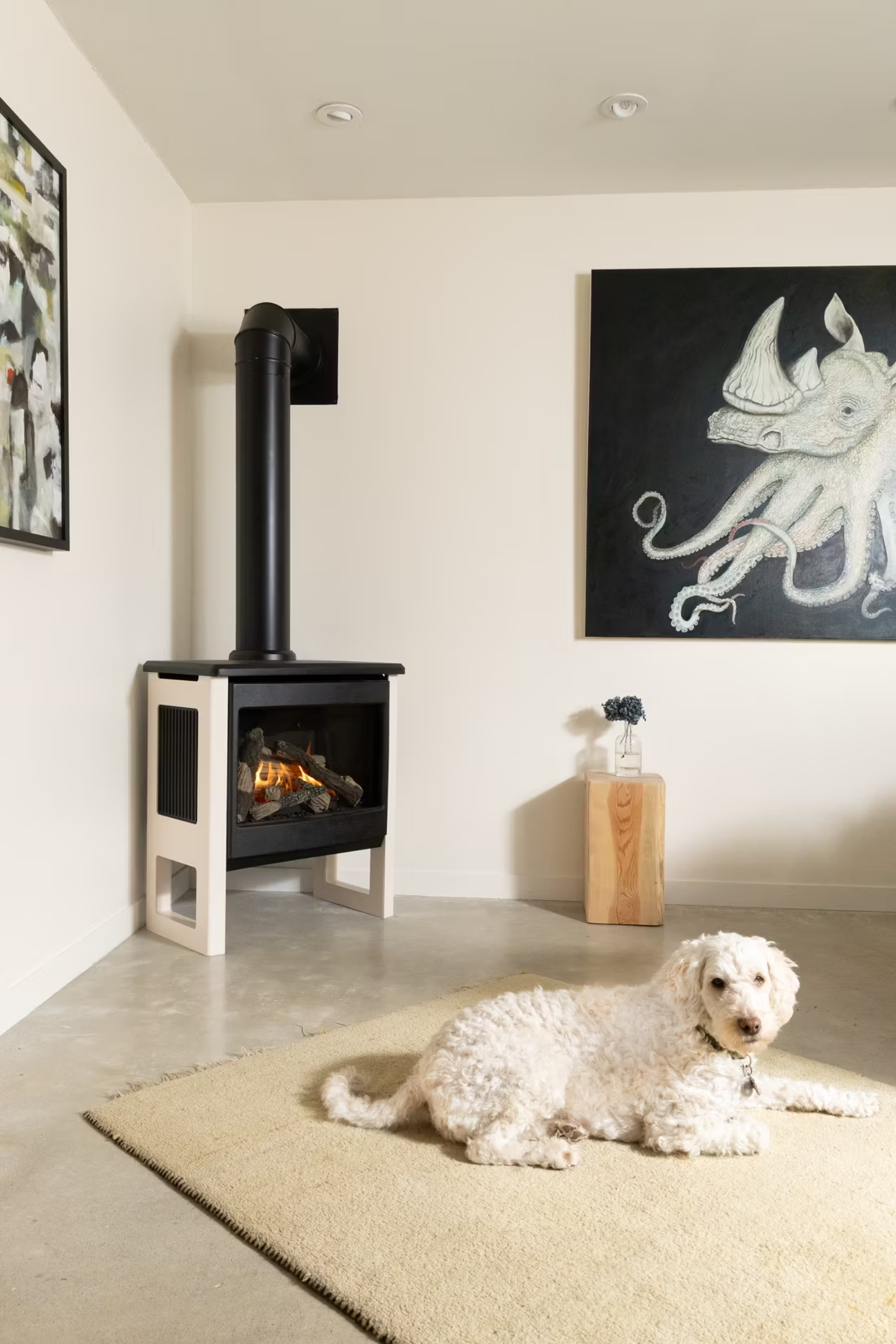
A gas fireplace is a fully built-in unit set into a framed wall or new construction. A gas insert is built to slide into an existing masonry firebox, sealing it up and venting through the chimney or an exterior wall. A gas stove is a freestanding cabinet unit that sits on the floor, similar in footprint to a wood stove but running on gas. Given how many Pontiac homes already have an unused wood fireplace, an insert is the most common upgrade path—new construction or additions without an existing firebox are better suited to a built-in unit or freestanding stove.
Do I need a permit to install a gas fireplace in Pontiac?
Yes—the City of Pontiac Building Department requires a building permit and a licensed gas-fitter for the gas line connection on any new gas fireplace or insert installation, and Oakland County Building follows the same standard for unincorporated areas. Most established hearth retailers coordinate the permit, the gas line trade, and the venting inspection as part of the install price, so it typically isn't something you have to manage yourself.
What's the difference between vented and vent-free gas fireplaces?
Vented (direct-vent) units draw combustion air from outside and exhaust combustion byproducts back outside through a sealed pipe—they're the cleanest option and produce genuine, sustained heat, which matters in a climate as cold as Pontiac's. Vent-free units burn directly into the room with no outside venting; they're legal in Michigan under strict room-size and ventilation rules, but they release water vapor and small amounts of combustion byproducts indoors. For a primary heat source through a Michigan winter, direct-vent is what most local installers recommend, reserving vent-free for occasional-use rooms.
How often should a gas fireplace be serviced?
Plan on an annual inspection, ideally before the heating season ramps up in the fall. A technician checks the burner, pilot assembly, venting, and gas connections, and cleans the glass and interior—a much shorter visit than a wood chimney sweep, but just as important for safety and for keeping the unit running efficiently through a long Pontiac winter. Most local service providers charge in the $150–$250 range for this visit.
Gas vs. electric fireplace—which makes more sense in Pontiac?
Electric fireplaces are simple to install (often just a standard outlet) and work well for supplemental or accent heat in a bedroom or apartment, but they're limited by DTE Electric's residential rate of about 20.1 cents per kWh—noticeably above the national average—which makes running one as real heat for hours at a time relatively expensive. A gas fireplace costs more upfront and requires venting and a gas line, but delivers meaningfully more BTU output per dollar for the kind of sustained heating a Pontiac winter demands. For a room you actually want to heat, not just brighten, gas is usually the better economic and comfort trade in this climate.
Is my gas fireplace wasting gas?
If it was installed more than 15 years ago, probably. Older gas fireplaces keep a standing pilot light burning all the time, and that little flame can cost a couple hundred dollars a year. Newer models use pilot-on-demand ignition—the pilot lights only when you use the fireplace and goes out when you turn it off.
Why is my open fireplace making my house colder?
Open fireplaces suck—literally. As the fire burns, it consumes air your furnace already paid to heat and pulls it out through the chimney, so the house is actually colder after the fire goes out than before you lit it. An insert fixes this: it seals the chimney, puts fixed glass across the front, and turns that hole in your house into a real heat source.
Does a fireplace add value to my home?
On average, a fireplace adds back to the home about the same amount you spent installing it. Add the monthly savings from heating the rooms you actually use instead of the whole house—often hundreds of dollars a year—and the value case is strong before you even count what a fire does for how your family uses the room.
Can I install a fireplace myself?
If you're putting a fire in your house on purpose, it's best to work with an expert. Unless you're genuinely experienced in framing, gas line, vent pipe, and the national code on clearances to combustibles, have a professional do it—and ideally the same company that sells you the fireplace, so warranty, service, and liability all live under one roof.
Nearby Dealers
Hearth shops serving Pontiac and the surrounding area. Every listing shows whether it is a WhyFire partner, a dealer we have verified as authorized for the brands we recommend, or a local business carrying hearth products. No manufacturer pays for placement. How we verify dealers →
Creative Design Build Associates
D & S Masonry Inc
Pine Tree Furniture & Lighting
This Is It Shop's House Of Fire
Grate Fireplace Shop
American Grill And Patio
Fireside Hearth & Home - Royal Oak
Fireside Hearth & Home - Utica
AirMaster
Bourlier & Sons Inc
Allstate Billiards, Patio, Fireplace
Allstate By Watsons
Glenn's Fireplace & Spa
Bourlier's (Macombs)
Cjw Chimney & Fireplace
Creekside Hearth, Patio, Bbq
Find your gas fireplace in Pontiac.
Tell us about your home and heating goals, and we'll match you with a trusted local Pontiac-area dealer plus a free Project Guide & Parts List—the exact parts, vent kit, and installer recommendation for your gas fireplace project.
Find Your Fireplace →