
The fastest fireplace upgrade in Pontiac, no chimney required.
Oakland County winters are long, cold stretches that run from fall well into spring, and a lot of Pontiac's housing stock—from older bungalows near downtown to newer multi-family builds—was never set up for a masonry chimney. Electric solves that: plug it in or wire it in, and you have zone heat and ambiance the same day.
Every Project Starts From One of These Five Situations
No flue, no fuel deliveries—just a plug.
Pontiac's winters are long and gray, with average lows around 17°F and a heating season on par with Buffalo, NY. Oak, maple, birch, and ash are common in Oakland County's older neighborhoods, but wood- and pellet-burning appliances are effectively off the table inside city limits—closely spaced lots, older multi-unit housing, and local ordinances in much of Pontiac make chimney or venting retrofits impractical for most homeowners. That's part of why electric has become the default answer for anyone who wants fireplace ambiance without a construction project.
DTE Electric serves the city, and at roughly $0.2013 per kWh, Pontiac's residential rate runs noticeably above the national average—which is exactly why most local electric fireplace installs make sense as zone heat rather than a whole-home heating swap. Pair an electric insert or built-in with an existing gas furnace, and you can shut off registers in one room and let a 1,500-watt unit carry the space during a cold snap, cutting furnace runtime without touching a chimney, gas line, or exterior wall.
Three steps. No salesperson until you're ready.
Tell us about your project
Your zip code, your situation, and the fuel you're leaning toward—or let the answers point you to one.
See what's actually available
The brands dealers within 100 miles genuinely carry—real options, never a catalog mirage.
Get your dealer & Project Guide
A trusted local dealer, plus the free Project Guide & Parts List that names every component of the job.
Frequently Asked Questions
How much does an electric fireplace installation cost in Pontiac?
It depends heavily on the unit type. A plug-in electric insert or freestanding stove that uses a standard 120V outlet typically runs $150 to $600 installed, since there's no electrical work involved beyond placement. A built-in wall unit or a linear electric fireplace set into new framing usually needs a licensed electrician to run a dedicated circuit, plus finish carpentry around the unit—that combination generally lands between $1,500 and $4,500 in Oakland County, depending on wall prep and any custom surround work. Local dealers will quote a firm number once they see the room and the wall you're working with.
What size electric fireplace do I need for my Pontiac home?
Most electric fireplaces top out around 5,000 to 9,000 BTU, which is enough to comfortably heat a single room of roughly 400 to 1,000 square feet as supplemental warmth—not a whole house. Older homes near downtown Pontiac with single-pane windows and less insulation may need a unit on the higher end of that range, or won't feel a big difference from the heater alone and should think of it mostly as ambiance with a heat boost. A local dealer can size the unit to your actual room and wall configuration during a quick consultation.
What does it actually cost to run an electric fireplace with DTE's rates?
At Pontiac's residential rate of about $0.2013 per kWh, a typical 1,500-watt heater setting costs roughly $0.30 per hour to run. Used for five hours a day through a cold Michigan evening, that's about $1.50 a day, or somewhere around $40 to $45 a month if you run it daily all winter. That's higher than the same math would work out to in a lower-rate state, which is another reason most Pontiac homeowners use electric fireplaces for zone heat in the room they're actually sitting in, rather than as a full-time heat source.
Do I need a permit or an electrician to install an electric fireplace in Pontiac?
Plug-in units that use an existing standard outlet don't require a permit or an electrician—you can place and use them the day they arrive. Built-in and wall-mount electric fireplaces that need a new dedicated circuit do require an electrical permit through the City of Pontiac Building Department (or Oakland County, depending on jurisdiction), and the wiring itself should be pulled by a licensed electrician to meet National Electrical Code requirements. Most hearth dealers who sell built-in electric units either employ a licensed electrician or coordinate directly with one as part of the install.
What's the difference between an electric insert, a wall-mount unit, and a freestanding electric stove?
An electric insert is built to slide into an existing masonry fireplace opening, which works well for Pontiac homes with an old wood-burning fireplace that's been unused or blocked off. A wall-mount or built-in linear unit is designed to be recessed into a wall or framed like a TV, giving a modern, flush look—but it usually needs that dedicated electrical circuit. A freestanding electric stove looks like a small wood stove, plugs into a standard outlet, and can go almost anywhere in a room with no installation at all. For renters or anyone who doesn't want electrical work, freestanding units are the simplest option.
Will my electric fireplace still work if the power goes out?
No—and this is worth being clear about. Electric fireplaces require power to run the heater, blower, and flame effect, so during a DTE outage after an ice storm or high winds, the unit simply won't operate, unlike a gas unit with battery-backed ignition or a wood stove. If backup heat during outages matters to you, an electric fireplace shouldn't be your only heat source in the house—some Pontiac homeowners pair one with a portable generator or battery backup system, but for most, electric is chosen specifically for convenience and ambiance rather than storm resilience.
Electric vs. gas—which fits a Pontiac home better?
Natural gas remains the dominant primary heating fuel across most Oakland County homes, and a gas fireplace or insert can produce real, sustained heat output and often keeps working during a power outage with the right ignition system. Electric fireplaces can't compete with that heat output or outage resilience, but they install in an afternoon with no gas line, no venting, and no combustion byproducts—and they cost far less upfront. For a Pontiac homeowner who wants a fast, low-cost focal point in a bedroom, basement, or living room without touching gas lines or masonry, electric is usually the better fit. For anyone counting on the fireplace as real supplemental heat during Michigan's coldest stretches, gas is worth the extra install cost.
Can an electric fireplace actually heat a room, or is it just for looks?
It can genuinely take the edge off a single room. Most units put out 5,000 to 9,000 BTU, comparable to a space heater, which is enough to noticeably warm a bedroom, home office, or den in Pontiac's climate—but it won't replace a furnace through the long, cold stretch of a Michigan winter. Homeowners who run the flame effect without the heater get pure ambiance with almost no electricity cost; running the heater is where the DTE bill math above comes into play. Most people land on using the heat setting on the coldest days and the flame-only mode the rest of the season.
Where can I find someone to install a built-in electric fireplace near me?
For plug-in units, most hearth and appliance retailers in Oakland County carry a range of freestanding and insert options in stock. For built-in or wall-recessed units that need electrical work, you'll want a hearth dealer who either has a licensed electrician on staff or works with one regularly, so the circuit, the finish carpentry, and the fireplace itself are coordinated by one team instead of you juggling separate contractors. That's the kind of local match Find My Fireplace makes—we don't sell or ship product ourselves, we connect you with a trusted local dealer who knows what's actually installable in your specific home.
Do electric fireplaces actually produce heat?
Yes—most put out around 4,800–5,000 BTUs from a standard outlet, which comfortably warms a bedroom, office, or den as a comfort-zone heater. What they won't do is carry a whole house the way wood, gas, or pellet can. Think of electric as ambiance-first with honest supplemental heat: flames on with no heat in July, flames plus warmth in January.
Can I put a TV above my fireplace?
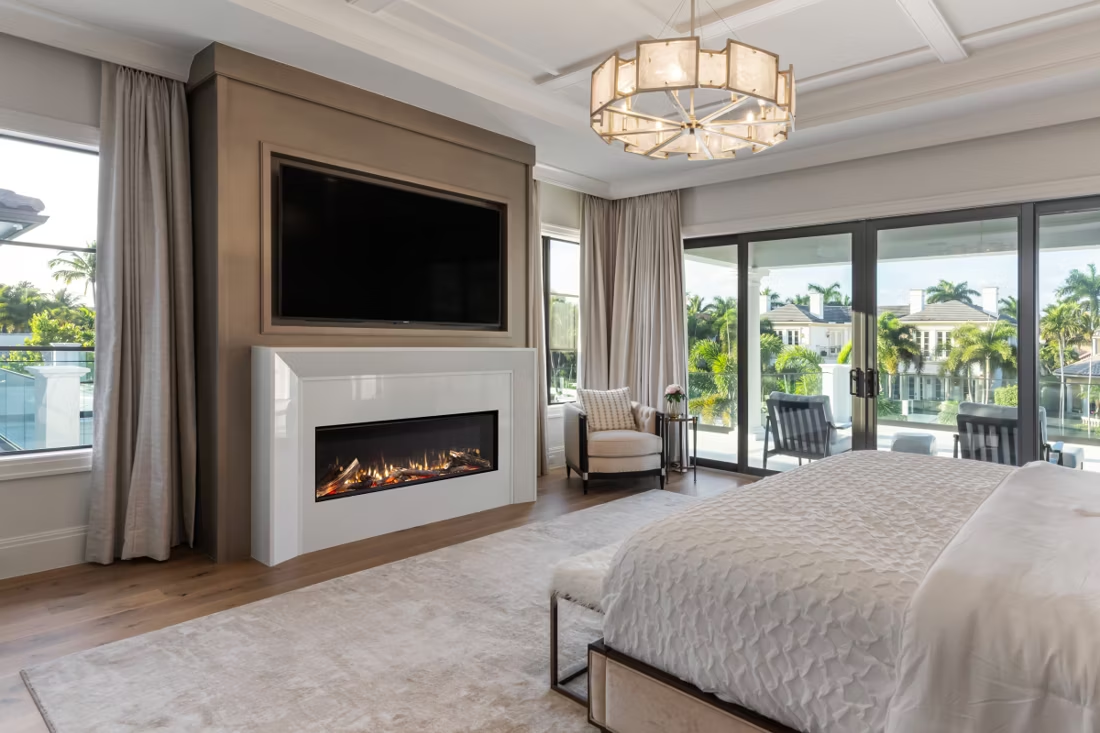
Yes—with an asterisk. Fireplaces are hot and TVs don't like heat. Either put a mantel between them to deflect rising warmth, or choose a fireplace with heat-management technology that creates a cool zone on the wall above—the wall stays around 125 degrees, barely warm, while the room still gets full heat. If you like clean lines and don't want a mantel, heat management is the answer.
Does a fireplace add value to my home?
On average, a fireplace adds back to the home about the same amount you spent installing it. Add the monthly savings from heating the rooms you actually use instead of the whole house—often hundreds of dollars a year—and the value case is strong before you even count what a fire does for how your family uses the room.
Can a fireplace actually lower my heating bill?
Yes—by creating a comfort zone. A furnace heats every square foot of the house just to warm the one room you're in; a gas fireplace on low burns roughly a sixth of the gas a typical furnace does. Set the furnace around 55–60 degrees as a baseline, then heat the rooms your family actually uses. Families who heat this way commonly save $20–$60 a month.
Nearby Dealers
Hearth shops serving Pontiac and the surrounding area. Every listing shows whether it is a WhyFire partner, a dealer we have verified as authorized for the brands we recommend, or a local business carrying hearth products. No manufacturer pays for placement. How we verify dealers →
Creative Design Build Associates
D & S Masonry Inc
Pine Tree Furniture & Lighting
This Is It Shop's House Of Fire
Grate Fireplace Shop
American Grill And Patio
Fireside Hearth & Home - Royal Oak
Fireside Hearth & Home - Utica
AirMaster
Bourlier & Sons Inc
Allstate Billiards, Patio, Fireplace
Allstate By Watsons
Glenn's Fireplace & Spa
Bourlier's (Macombs)
Cjw Chimney & Fireplace
Creekside Hearth, Patio, Bbq
Electric Service in Pontiac
An electric fireplace's heater draws about 1,500 watts—pennies per hour at local rates.
Dte Electric Company
Find your electric fireplace in Pontiac.
Tell us about your room and your wall setup, and we'll match you with a trusted local Pontiac-area dealer and send over a free Project Guide & Parts List—the exact parts, electrical specs, and finish materials for your project, plus who to call to install it.
Find Your Fireplace →