
Reliable pellet heat for Luce County's brutal Zone 7 winters.
Luce County sits in IECC Climate Zone 7—the coldest heating zone in the Lower 48—with a population under 1,200 spread across Newberry, McMillan, and long stretches of forest and cabin country. Find the right pellet stove or insert, sized for that cold, and get connected with a trusted local dealer.
Every Project Starts From One of These Five Situations
Automated warmth for the Upper Peninsula's harshest climate zone.
Luce County, anchored by Newberry and stretching out toward Tahquamenon Falls State Park and the Lake Superior State Forest, is classified Climate Zone 7 under the IECC—the same designation given to far northern Minnesota and interior Alaska border regions, and the coldest zone recognized in the continental U.S. building code. With just over a thousand year-round residents spread across a heavily wooded, sparsely developed county, a lot of housing stock here is older, seasonal, or built for hunting-camp use rather than full-time occupancy—which puts real pressure on whatever heat source is doing the work through a long, hard winter.
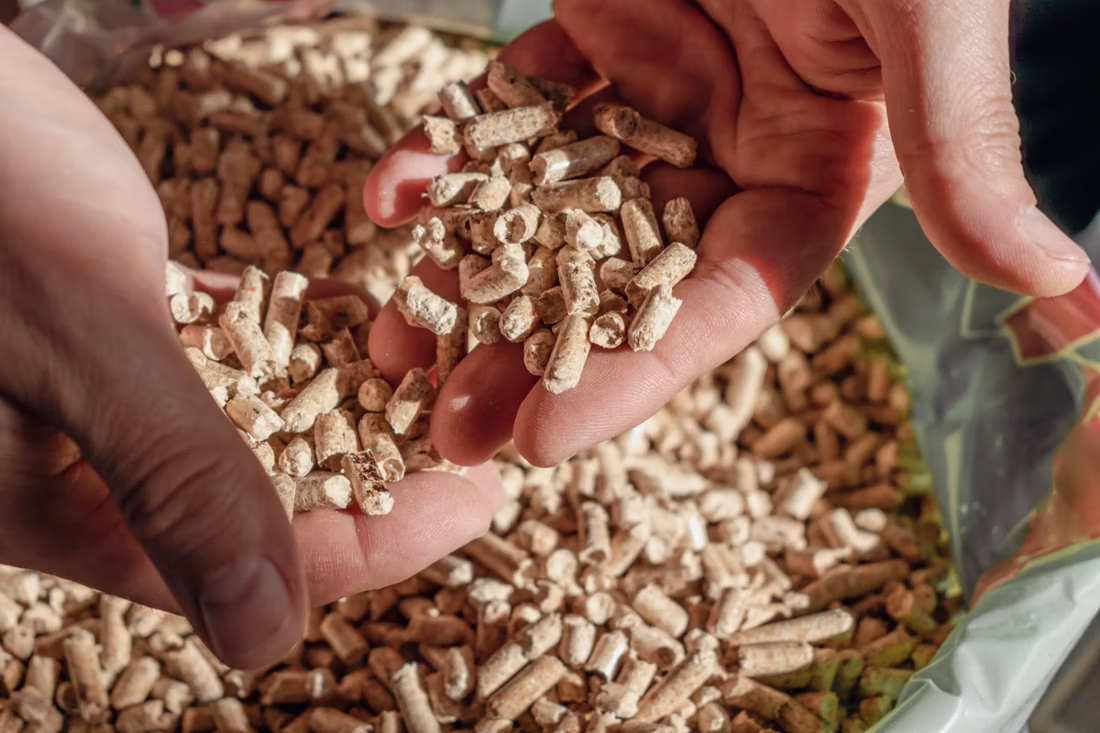
Pellet stoves have earned a place in a lot of Luce County homes and camps because they take the labor out of wood heat without giving up the radiant comfort. You're not splitting, stacking, or hauling oak, maple, birch, or ash rounds—you're loading a hopper and setting a thermostat, with a burn that's far more consistent than an open wood stove through a Zone 7 night. Regional pellet suppliers including Indeck Energy Services, Lignetics, and Somerset Pellet Fuel keep bagged hardwood pellets within reasonable reach of the county, which matters in a place where the nearest big-box store might be an hour or more away. With no local air quality non-attainment issues or winter burn curtailments to work around, pellet appliances here are a straightforward, unrestricted choice.
Three steps. No salesperson until you're ready.
Tell us about your project
Your zip code, your situation, and the fuel you're leaning toward—or let the answers point you to one.
See what's actually available
The brands dealers within 100 miles genuinely carry—real options, never a catalog mirage.
Get your dealer & Project Guide
A trusted local dealer, plus the free Project Guide & Parts List that names every component of the job.
Frequently Asked Questions
How much does a pellet stove installation cost in Luce County?
Pellet stove and insert installations typically run in the $3,000 to $6,000 range depending on the unit, whether venting runs through an existing chimney or requires new wall penetration, and whether any hearth pad work is needed for clearance. Because Luce County is rural and dealer coverage is thin compared to lower-Michigan counties, expect installers based out of Newberry or traveling in from Sault Ste. Marie or the Marquette area to factor a trip charge into camps and homes further off the main corridors. Ask any local dealer for a firm number after an in-home look, especially if you're outfitting a seasonal cabin rather than a full-time residence.
Pellet stove or wood stove—which makes more sense for a Luce County cabin?
It depends on how the place is used. Pellet stoves give you thermostatic, hands-off heat that's easier to manage if you're not on-site every day, and hardwood pellets burn cleaner with far less chimney maintenance than cordwood. Wood stoves, on the other hand, need no electricity at all—a real advantage for camps around Tahquamenon Falls or out toward Dollarville that lose power during winter storms and aren't checked daily. With local hardwoods like oak, maple, birch, and ash readily available for cutting or purchase, a lot of full-time Luce County homes run a wood stove as backup even when pellet is the primary heat source in the main living space.
Where can I buy pellet fuel in Luce County?
Regional producers including Indeck Energy Services, Lignetics, and Somerset Pellet Fuel supply hardwood pellets that reach dealers and hardware stores serving the county, though given how spread out Luce County is, most residents buy by the pallet rather than the bag to avoid repeat trips. Given the length and severity of a Zone 7 heating season here—often running from October well into April—it's worth ordering or reserving your pellet supply early in the fall rather than assuming stock will be sitting on a shelf in January.
Do I need a permit to install a pellet stove in Luce County?
Most new pellet stove and insert installations require a building permit through the local building department covering Luce County, along with confirmation that the unit and venting meet current EPA certification standards. Most established hearth dealers handle this paperwork as part of the installation rather than leaving it to the homeowner. If you're heating a hunting camp or seasonal structure rather than a year-round residence, it's still worth confirming permit requirements before installation—rules can differ for structures without full-time occupancy.
How well do pellet stoves perform in Luce County's cold?
Pellet stoves are a legitimate primary heat source in Climate Zone 7 as long as they're sized correctly. Mid-size units putting out 40,000 to 60,000 BTUs can carry a well-insulated 1,500 to 2,000 square foot home through a Luce County winter, but older camps and farmhouses with less insulation often need to size up or supplement with a second heat source on the coldest stretches. Because pellet stoves rely on an electric auger and blower to feed fuel and move heat, a battery backup or small generator is worth budgeting for—a power outage during a January cold snap is exactly when you need the stove running.
What size pellet stove do I need for my home?
Sizing in Luce County should lean toward the larger end of manufacturer recommendations given the Zone 7 design temperatures. A small unit (under 1,000 sq ft rating) suits a single-room camp or bunkhouse; a medium unit (1,000 to 1,800 sq ft rating) covers most year-round homes in Newberry or McMillan; larger, whole-home units make sense for bigger farmhouses or homes with open floor plans and higher ceilings. Older, less-insulated housing stock common in the county often benefits from sizing up a step beyond the manufacturer's square-footage chart. A local dealer can size your specific home during an in-person visit.
Are there air quality restrictions on pellet stoves in Luce County?
No—Luce County has no air quality non-attainment designation and no winter burn curtailment periods, unlike some western states where wood smoke inversions trigger restrictions. That said, choosing an EPA-certified pellet appliance is still worth doing for efficiency and lower particulate output, even where it isn't legally required. It also keeps you in a better position if state rebate programs tied to certified appliances become available down the road.
How reliable is pellet delivery to a remote part of Luce County?
Reasonably reliable during the season, but plan ahead. Suppliers tied to Indeck Energy Services, Lignetics, and Somerset Pellet Fuel move product into dealers serving the Upper Peninsula, but Luce County's low population density and long distances between towns mean fewer delivery trucks and less frequent restocking than you'd see in a denser market. Heavy snowfall around Tahquamenon Falls and the county's back roads can also complicate late-season deliveries, so buying your winter's supply in the fall rather than mid-season is the safer approach here.
Pellet stove vs. propane heater for backup heat—which is better for Luce County?
Both have a place, but they solve different problems. A pellet stove gives you efficient, thermostatically controlled zone heat and burns a domestically produced hardwood fuel, but it needs electricity to run the auger and blower. Propane heaters and furnaces will typically run through outages if they're on a standing pilot or battery-ignition system, which matters in a county where winter power interruptions aren't rare. Many Luce County homes end up running pellet as the everyday heat source in the main living area and keeping propane or a wood stove in reserve for true grid-down situations.
Why is a fireplace insert so efficient?
An insert does two things: it seals the chimney completely, so you stop losing air you already paid to heat, and it radiates warmth into the room through the firebox and glass. Most add a heat-exchange fan that pulls cool room air underneath, wraps it around the hot firebox, and pushes it back out warm. Your home is more efficient before you've even lit the first fire.
How often does a pellet stove need cleaning?
A clean pellet stove is a happy pellet stove. Plan on cleaning the burn pot about once a week when you're burning regularly—ash and clinkers gum up the air holes just like a pellet barbecue. Most pellet stove problems trace back to skipped cleaning that nobody explained up front. Some designs make it easy with a trapdoor burn pot: pull a lever and the gunk drops into the ash pan.
Can a fireplace actually lower my heating bill?
Yes—by creating a comfort zone. A furnace heats every square foot of the house just to warm the one room you're in; a gas fireplace on low burns roughly a sixth of the gas a typical furnace does. Set the furnace around 55–60 degrees as a baseline, then heat the rooms your family actually uses. Families who heat this way commonly save $20–$60 a month.
Does a fireplace add value to my home?
On average, a fireplace adds back to the home about the same amount you spent installing it. Add the monthly savings from heating the rooms you actually use instead of the whole house—often hundreds of dollars a year—and the value case is strong before you even count what a fire does for how your family uses the room.
Pellet Brands Stocked Around Luce County
Manufacturers will point you to the nearest stocking dealer.
Find your pellet stove in Luce County.
Tell us about your home or camp and Luce County's Zone 7 winters, and we'll match you with a trusted local dealer and send over a free Project Guide & Parts List—sized right, vented right, with the parts and dealer recommendation for your pellet project.
Find Your Fireplace →