
Heat that holds through Upper Peninsula winters.
Wood, gas, pellet, and electric fireplace resources for Newberry and every community across Luce County. Get matched with a trusted local hearth dealer and a free Project Guide & Parts List for your home.
Every Project Starts From One of These Five Situations
Zone 7 winters in Michigan's Upper Peninsula.
Luce County sits in IECC climate zone 7—the same severity of winter you'd find in International Falls, Minnesota—with heavy lake-effect snowfall off Lake Superior and a heating season that stretches from October well into April. The county is one of Michigan's least populated, with roughly 1,100 residents spread across Newberry, the townships of McMillan and Lake, and the crossroads community of Dollarville. Much of the land is Lake Superior State Forest, and the hardwood mix here—oak, maple, birch, ash—is exactly what fills wood sheds and pellet hoppers across the county each winter.
This hub rounds up hearth retailers, service technicians, and fuel suppliers covering Luce County. Because the county is so sparsely populated, some of those businesses are based in neighboring communities like Sault Ste. Marie or Marquette and travel in for installs and service calls. Pick your fuel below to see local dealers, typical installation costs, and the specifics for your project—whether you're heating a year-round home near Newberry or a hunting camp off a Lake Superior State Forest road.
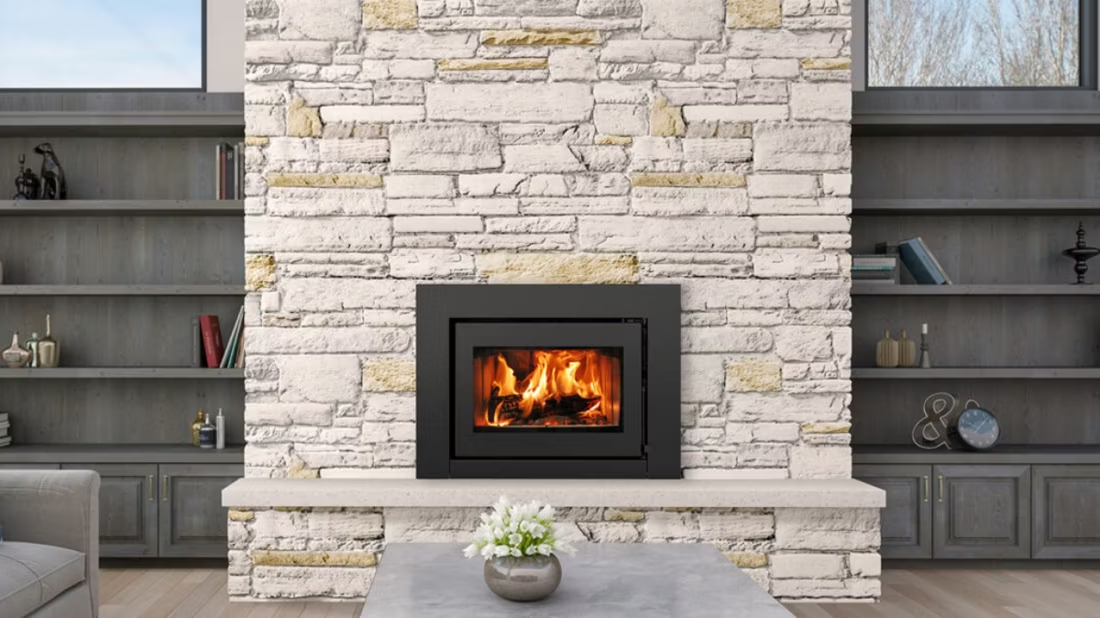
Four fuels. One honest answer for Luce County.
Three steps. No salesperson until you're ready.
Tell us about your project
Your zip code, your situation, and the fuel you're leaning toward—or let the answers point you to one.
See what's actually available
The brands dealers within 100 miles genuinely carry—real options, never a catalog mirage.
Get your dealer & Project Guide
A trusted local dealer, plus the free Project Guide & Parts List that names every component of the job.
Frequently Asked Questions
Which fuel works best in Luce County?
Wood remains the practical backbone for a lot of Luce County homes—the oak, maple, birch, and ash that fill the Lake Superior State Forest make for dense, long-burning firewood, and a catalytic or non-catalytic wood stove will carry a home through a zone-7 winter without depending on the grid. Gas is the convenience option, though almost all of it here runs on propane rather than piped natural gas, since the county's rural infrastructure doesn't support widespread gas lines. Pellet stoves are a solid middle ground—less labor than splitting wood, and regional supply from brands like Indeck Energy Services and Lignetics keeps fuel reasonably accessible. Electric fireplaces work well as supplemental heat in a bedroom or cabin room, but with winters this cold, they're not a primary heat source on their own. Most year-round Luce County homes end up running wood or pellet as the main heater with propane or electric backup for convenience and outages.
Do I need a permit to install a fireplace in Luce County?
In most cases, yes. New wood stoves, wood inserts, gas appliances, and pellet stoves typically require a building permit through the Luce County Building Department, and any gas conversion work needs a licensed propane technician for the fuel-line connection since most of the county runs on propane rather than piped gas. Electric fireplaces are usually permit-exempt unless you're hardwiring a built-in unit into a new circuit. Most local dealers who install in Luce County—whether based in Newberry, Sault Ste. Marie, or Marquette—handle the permit paperwork as part of the installation, so it's rarely something homeowners need to file themselves.
Are there air quality restrictions on wood burning in Luce County?
No—Luce County has no non-attainment designation and no local wood-burning curtailment program. The county's low population density and rural setting mean wood smoke simply isn't the concentrated issue it can be in more populated basins. That said, any new wood stove installed today still needs to meet current EPA emissions standards, and a well-seasoned load of local hardwood—oak, maple, birch, or ash—burns cleaner and more efficiently than green or softwood fuel regardless of local regulation.
Can one local hearth retailer handle all four fuel types?
It varies. Because Luce County's population is small, dealers who serve the area—whether based in Newberry or making the drive from Sault Ste. Marie or Marquette—often carry multiple fuel types out of necessity rather than specializing narrowly in one. If you're cross-shopping wood, gas, pellet, and electric, ask any dealer directly which fuels they stock and install; coverage can differ retailer to retailer, and the county + fuel pages on this hub note each dealer's specific fuel lineup.
How does service work in rural areas of Luce County?
Many technicians who service Luce County are based in Sault Ste. Marie or Marquette and run seasonal routes out to Newberry, Dollarville, and the surrounding townships. Given the driving distances and the lake-effect snow that can close roads for stretches in January and February, it's worth scheduling annual chimney sweeps and gas inspections in early fall before the first heavy snowfall rather than waiting for a mid-winter emergency call. Expect a modest travel fee built into rural service calls, and if you're heating with wood or pellet as a primary source, keep a backup fuel or heater on hand in case a storm delays a scheduled visit.
What's the typical cost range for fireplace installation across all fuel types in Luce County?
Wood stove or insert installation: roughly $4,000–$8,500 for a typical install, more if new chimney chase work is needed. Gas fireplace, insert, or stove (propane, in most of the county): roughly $4,500–$10,000 depending on the propane line run and venting. Pellet stove or insert: roughly $4,000–$7,000 for a typical install. Electric fireplace: $200–$3,000 for the unit itself, plus $400–$1,200 in labor for anything beyond a plug-and-play placement. Rural travel distance can add modestly to labor costs here compared to more densely populated counties—ask your dealer whether a trip fee applies before you book.
Can a fireplace actually lower my heating bill?
Yes—by creating a comfort zone. A furnace heats every square foot of the house just to warm the one room you're in; a gas fireplace on low burns roughly a sixth of the gas a typical furnace does. Set the furnace around 55–60 degrees as a baseline, then heat the rooms your family actually uses. Families who heat this way commonly save $20–$60 a month.
Can I install a fireplace myself?
If you're putting a fire in your house on purpose, it's best to work with an expert. Unless you're genuinely experienced in framing, gas line, vent pipe, and the national code on clearances to combustibles, have a professional do it—and ideally the same company that sells you the fireplace, so warranty, service, and liability all live under one roof.
Should the dealer who sells my fireplace also install it?
Ideally, yes. A fireplace project involves vent pipe, gas line, electrical, and often tile or stone. Hire three or four separate trades and you own the liability and the game of telephone between them. One company selling and installing means one accountable party, start to finish—ask about factory training, on-time completion records, and what happens if an inspection fails.
What is an in-home preview and do I need one?
It's a visit where a hearth professional measures your space, confirms the model you picked actually works in your home, and walks the specs—framing, gas line, venting, finish work—before anything is ordered. Some details you just can't know until you see the house. Never make a down payment without one; it's the single most-skipped step that burns buyers.
Stove and Fireplace Dealers in Luce County
Listings include WhyFire partner dealers, dealers we have verified as authorized for the brands we recommend, and established local businesses that carry hearth products. Every listing shows which one it is. The ones marked Preferred run on WhyFire's software, so they can show you real pricing and book your appointment right here. No manufacturer pays for placement. How we verify dealers →
Hiawatha Log Homes
Great Lakes Services
Superior Home Comfort
Find your fireplace in Luce County.
Tell us about your home and we'll match you with a trusted local dealer and a free Project Guide & Parts List—the exact parts, vent kit, and recommended installer for your Luce County project.
Find Your Fireplace →